
Getty
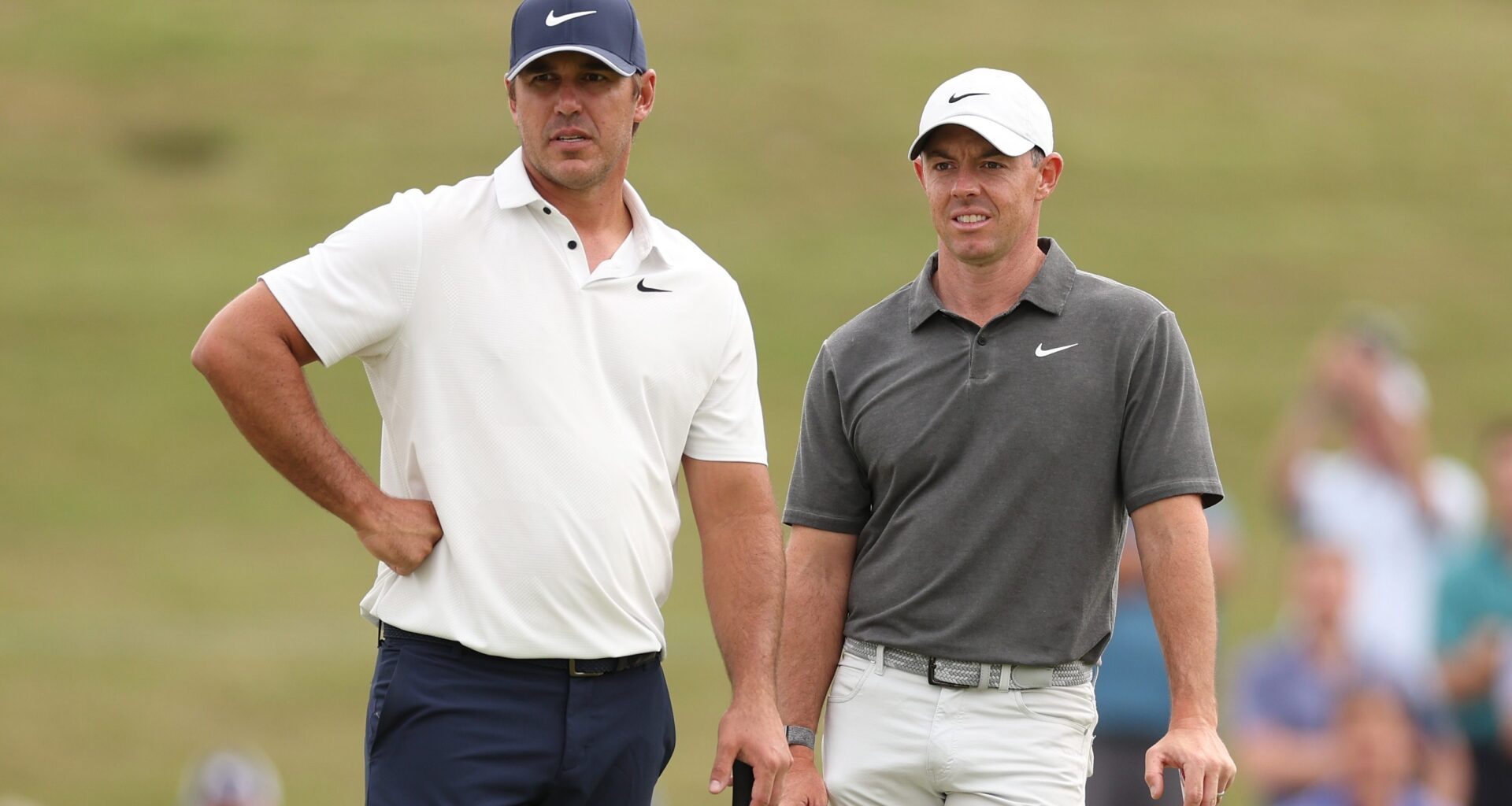
Brooks Koepka of the United States and Rory McIlroy of Northern Ireland on the 11th green during the first round of the 123rd U.S. Open Championship at The Los Angeles Country Club on June 15, 2023.
The world of professional golf is never short on big personalities, on-course rivalries and off-course narratives, and few relationships have drawn as much interest as the one between Rory McIlroy and Brooks Koepka. Those who follow the sport closely know that the dynamic between these two elite competitors runs deeper than headlines about tour alignments or league allegiances, and recent developments have only underscored that complexity.
Koepka’s recent decision to leave LIV Golf after four seasons has rekindled conversations around his place in the modern golf landscape and sparked speculation about how fans and fellow pros view his future.
“Family has always guided Brooks’ decisions, and he feels this is the right moment to spend more time at home,” Koepka’s management team said. “Brooks will continue to be a huge supporter of LIV Golf and wishes the league and its players continued success. Brooks remains passionate about the game of golf and will keep fans updated on what’s ahead.”
Origins of a Competitive Yet Respectful Bond
Both McIlroy and Koepka rose to prominence at roughly the same time in men’s golf, each bringing a different but equally fierce energy to the game. Only a year a part, McIlroy established himself as one of the sport’s most consistent major contenders with a smooth swing and unwavering focus, while Koepka’s power, competitive edge and peak performances made him formidable on golf’s biggest stages.
“I think, especially when I was first coming up, from ’12 to ’16, obviously I don’t want to say ‘idolised,’ that would be the wrong word,” Koepka said in 2024.” But I looked up to him [McIlroy] a little bit. Then our friendship has just developed over the years.
“I’ve enjoyed playing with him, playing against him. I’m pretty sure he’s done the same thing. But it’s a lot of fun, man. We practice at the same place. Live in the same area. How could you not?”
They’ve competed side by side in the majors and key PGA Tour events throughout the 2010s and early 2020s, often trading leaderboard spots and sometimes teeing off in the same groups. Golf’s inherently individual nature makes these on-course rivalries particularly intense, and both players have embraced that challenge.
Even during the height of the PGA Tour-LIV Golf tensions, which roiled the sport beginning in 2022, both McIlroy and Koepka found moments that revealed nuance rather than outright animosity. In the Crypto.com Showdown Exhibition match in December 2024, McIlroy partnered with Scottie Scheffler against Koepka and Bryson DeChambeau in a rare spectacle meant to bridge divisions in the game. McIlroy described the event as an effort to “bring the best together” and entertain fans, and not purely as a political statement about either tour.
That match, widely covered because it temporarily blended PGA Tour and LIV Golf stars, concluded with McIlroy and Scheffler victorious. But more importantly, it highlighted that apples-to-apples competition between the best players in the sport remained compelling regardless of league affiliation.
After Koepka’s 2023 PGA Championship win, McIlroy (though upset over his own performance) could be heard shouting, “Brooks! Brooks! I am really happy for you.” Followed by a quick embrace and Koepka saying, “I’ll give you a shout man.”
Recent Events Cast a New Light
Koepka’s departure from LIV Golf ahead of the 2026 season represents a major moment in professional golf. A five-time major winner, Koepka was one of the most prominent names to have jumped to the breakaway league in 2022, joining other stars including Phil Mickelson and Dustin Johnson under lucrative contracts. His exit, described as “amiable and mutually agreed” with LIV leadership, was reportedly driven by a desire to focus on family and personal priorities.
That news has prompted a fresh round of speculation (especially on social platforms) about whether McIlroy might welcome Koepka back into the PGA Tour fold. Some fans argue that despite past league differences, McIlroy could be among the voices supportive of Koepka’s reintegration into golf’s traditional structure.
Others point out that the PGA Tour’s formal rules mean Koepka would likely need to observe a one-year suspension, which would place his return in August, if he wishes to pursue that path. According to The Mirror, “Koepka retains the right to compete in the four major championships and can still participate on the DP World Tour.”
Yet listening to McIlroy’s own words over the years shows a more balanced viewpoint. While he has been a vocal defender of the PGA Tour and its traditions, often pushing back against the concept of rival leagues, he has also repeatedly emphasized his commitment to growing the game and putting fans first, not settling scores. His participation in exhibition and cross-tour matches was framed as entertainment and reconciliation, not as a weapon in league politics.
A Shared Chapter in Golf History
At its core, the story between McIlroy and Koepka is one of two champions defined by excellence, grit and mutual respect. Their competitive encounters, from Ryder Cup battles to major championship shootouts, have provided some of golf’s most memorable moments over the past decade.
Their shared history isn’t rooted solely in personality clash or tour affiliations, and can’t be reduced to headlines about league shifts or political positioning. Instead, it’s grounded in long-standing rivalry and acknowledgment of each other’s greatness–the essence of elite sport.
“For me, I want to try and be a little bit better than him because I think he’s arguably one of the best players ever, so it’s about trying to be one up,” Koepka said earlier this year.
As Koepka’s career enters a new chapter, the world will watch not just where he ends up, but how elite peers respond. If recent patterns hold, that response will likely reflect respect more than resentment, because great players understand the sport’s competitive fabric and, ultimately, the value of having worthy rivals.