
Mercedes opted for a more spaced out development programme in 2025, with no new parts arriving for the W16 at the opening five rounds of the championship.
That doesn’t mean they didn’t have a decent clutch parts at their disposal though, which we’ll take a look at below, along with some of the other lesser seen aspects of the W16.
One last peek beneath the covers
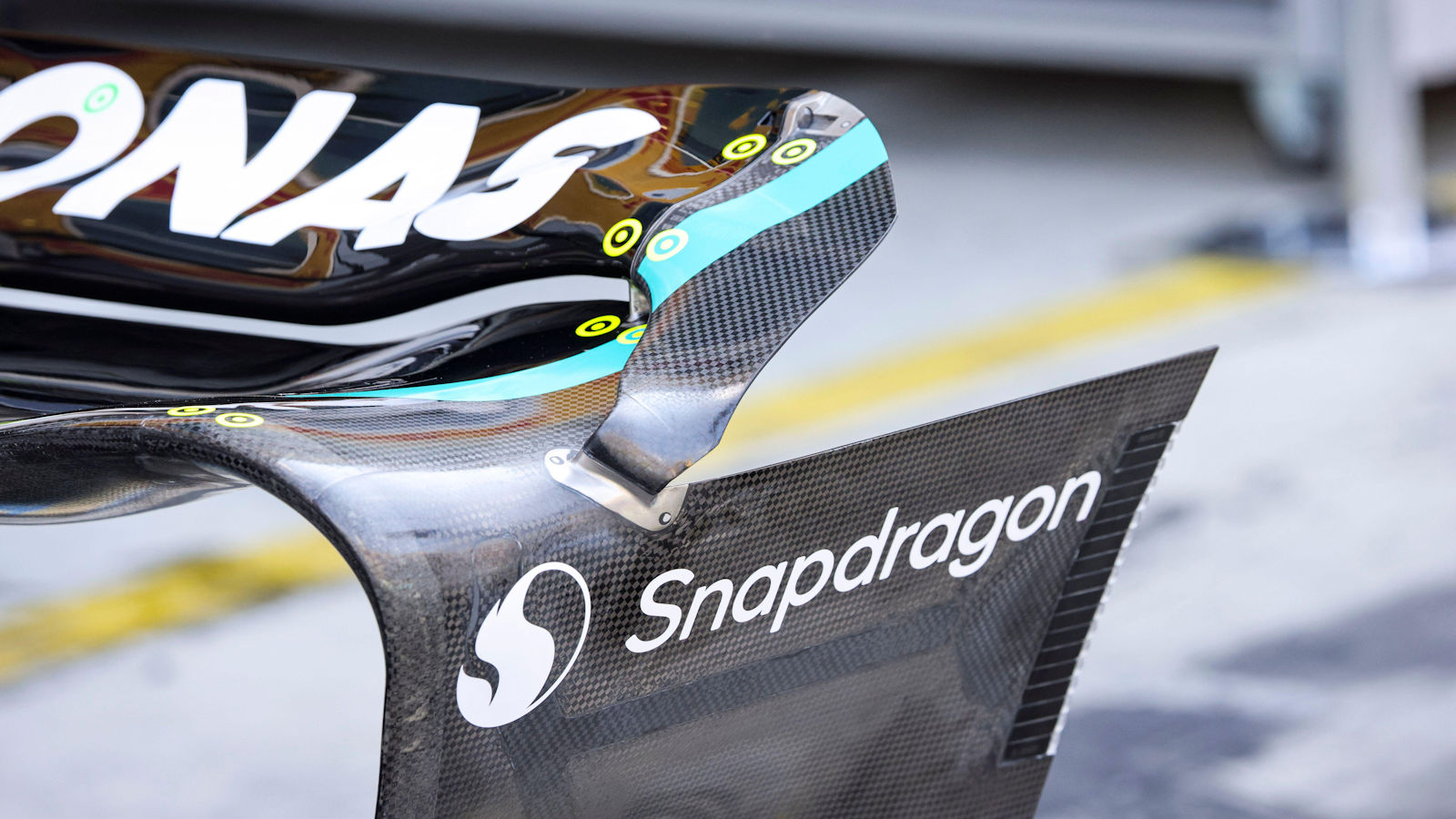
A close up of the tip section extension used by Mercedes to enable a much larger cutout in the endplate than might otherwise be possible.
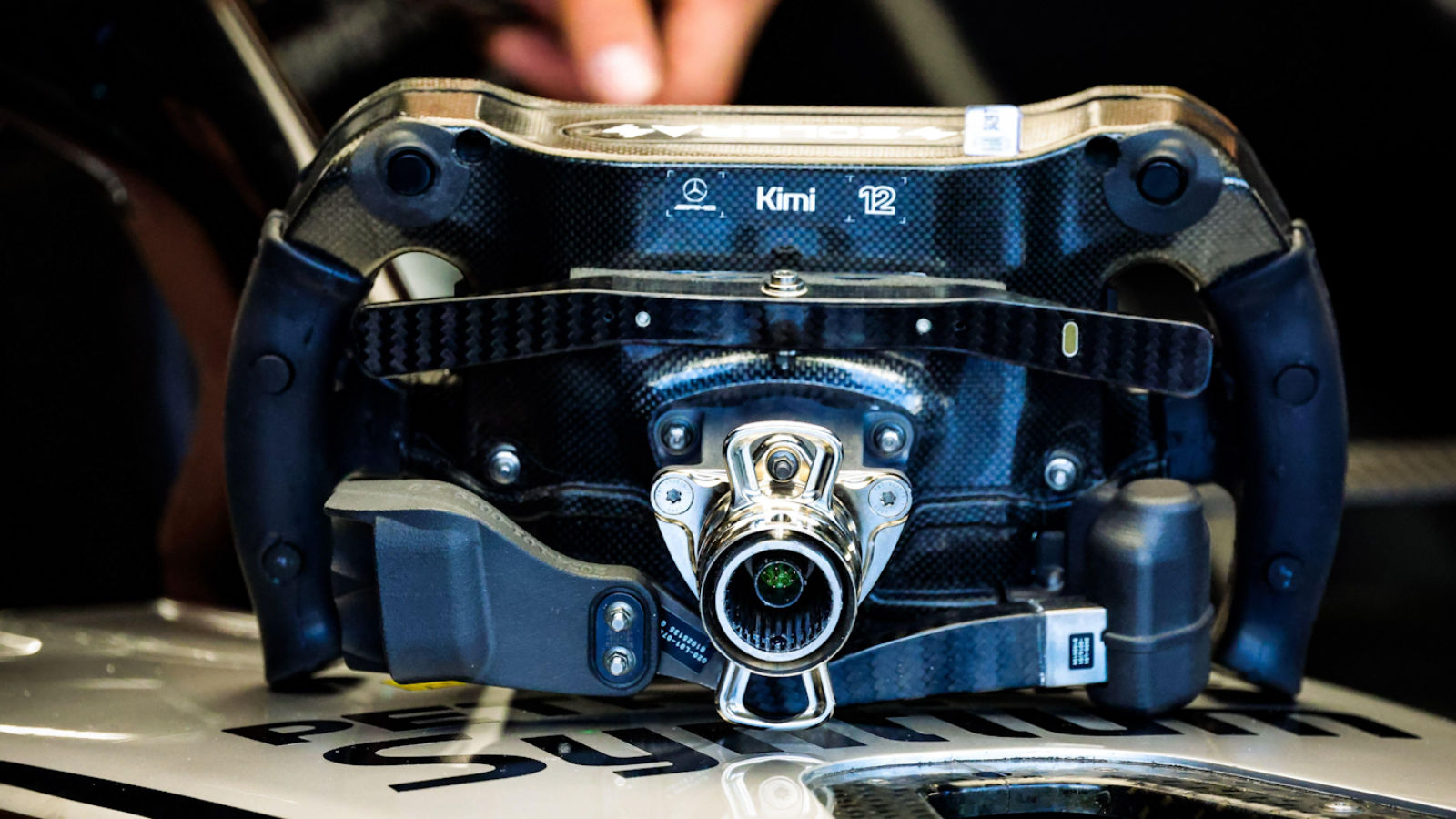
The rear of Antonelli’s steering wheel, showing the paddle layout, including the wishbone-style clutch paddle, which incorporates a finger socket to help modulate the clutch bite point.
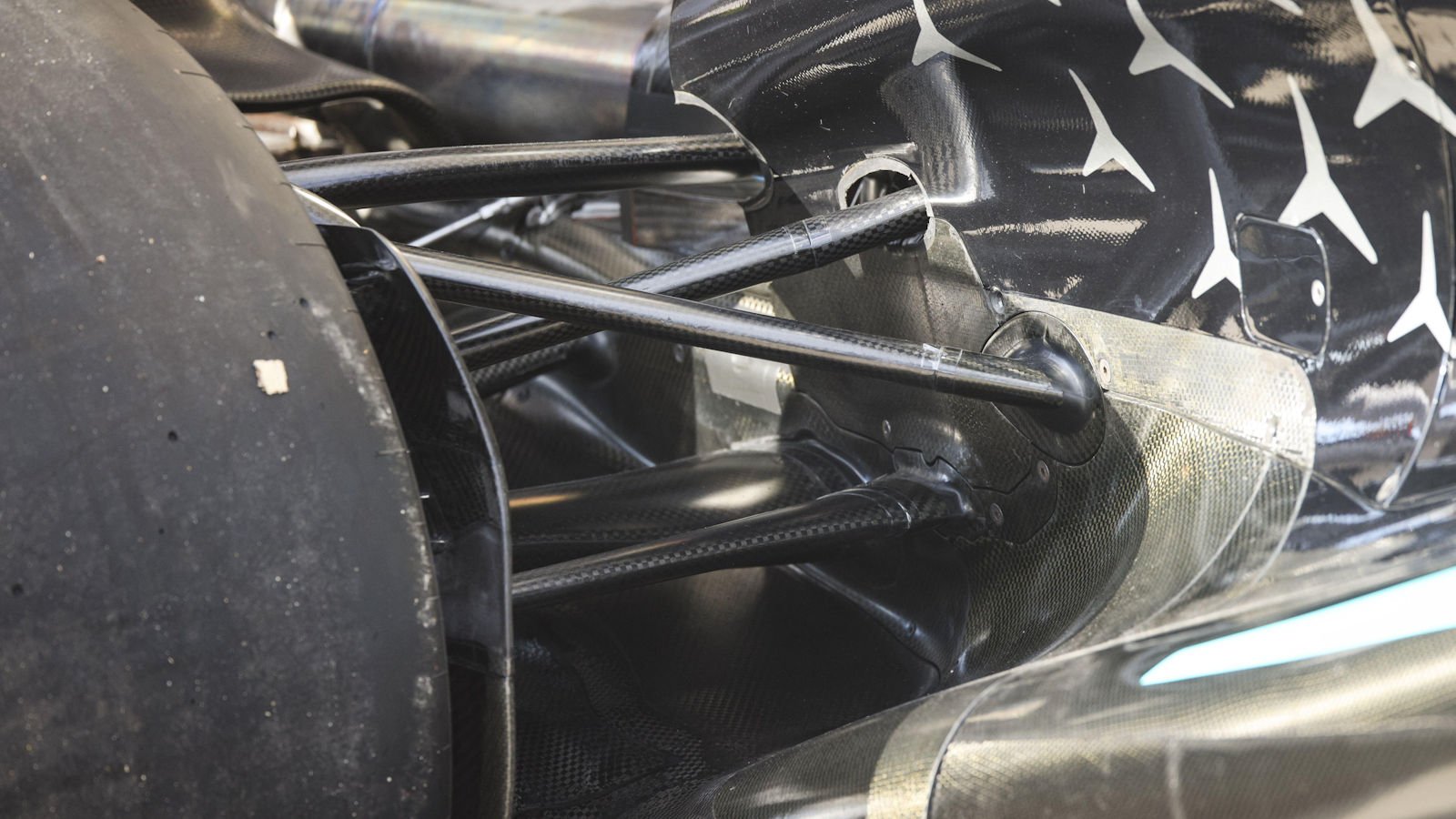
The W16’s rear suspension with the bodywork and fairings in place.
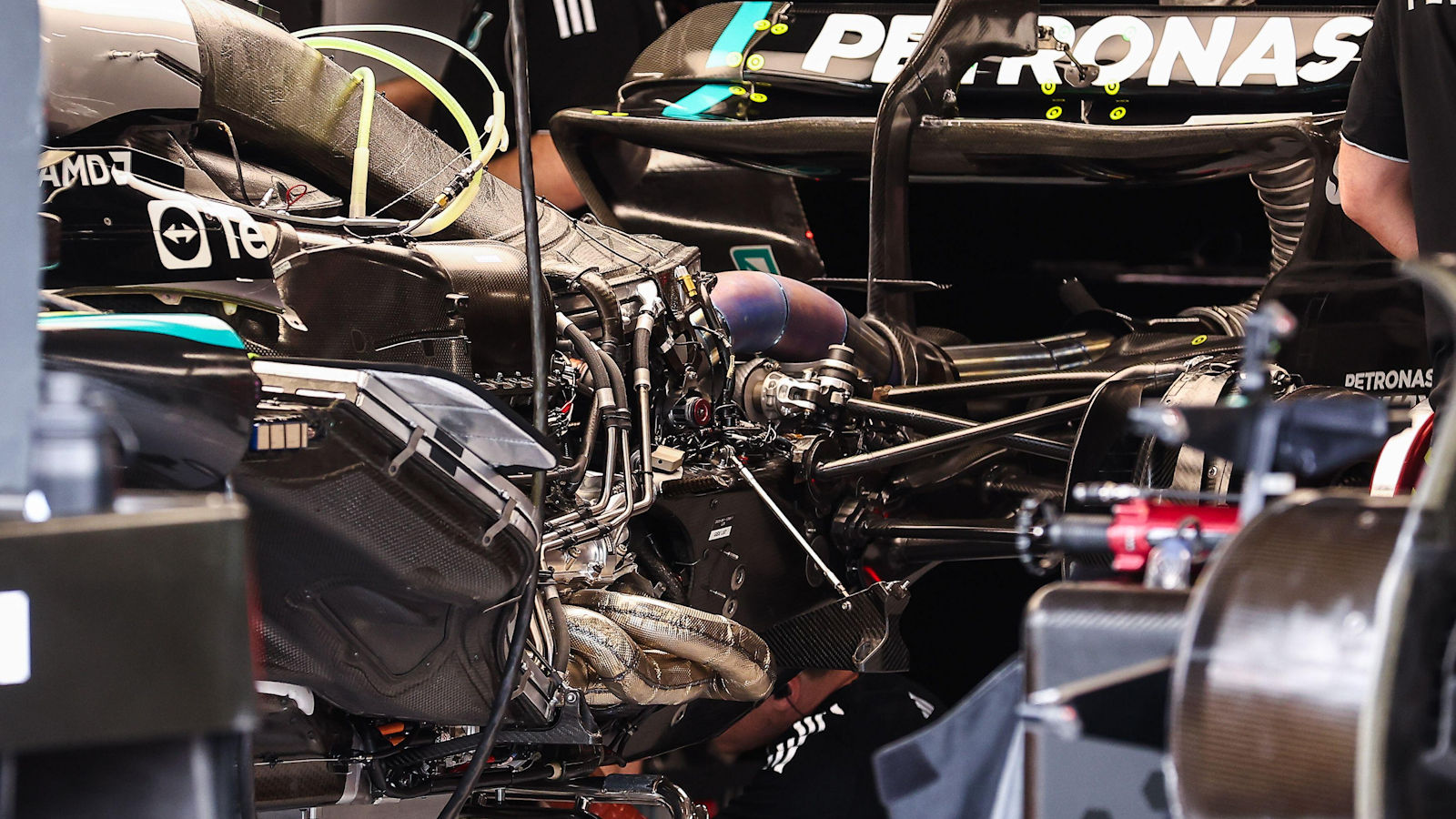
A zoomed out version of that image but without the floor in place gives us more insight into the powerunit’s installation and the design of the rear suspension.
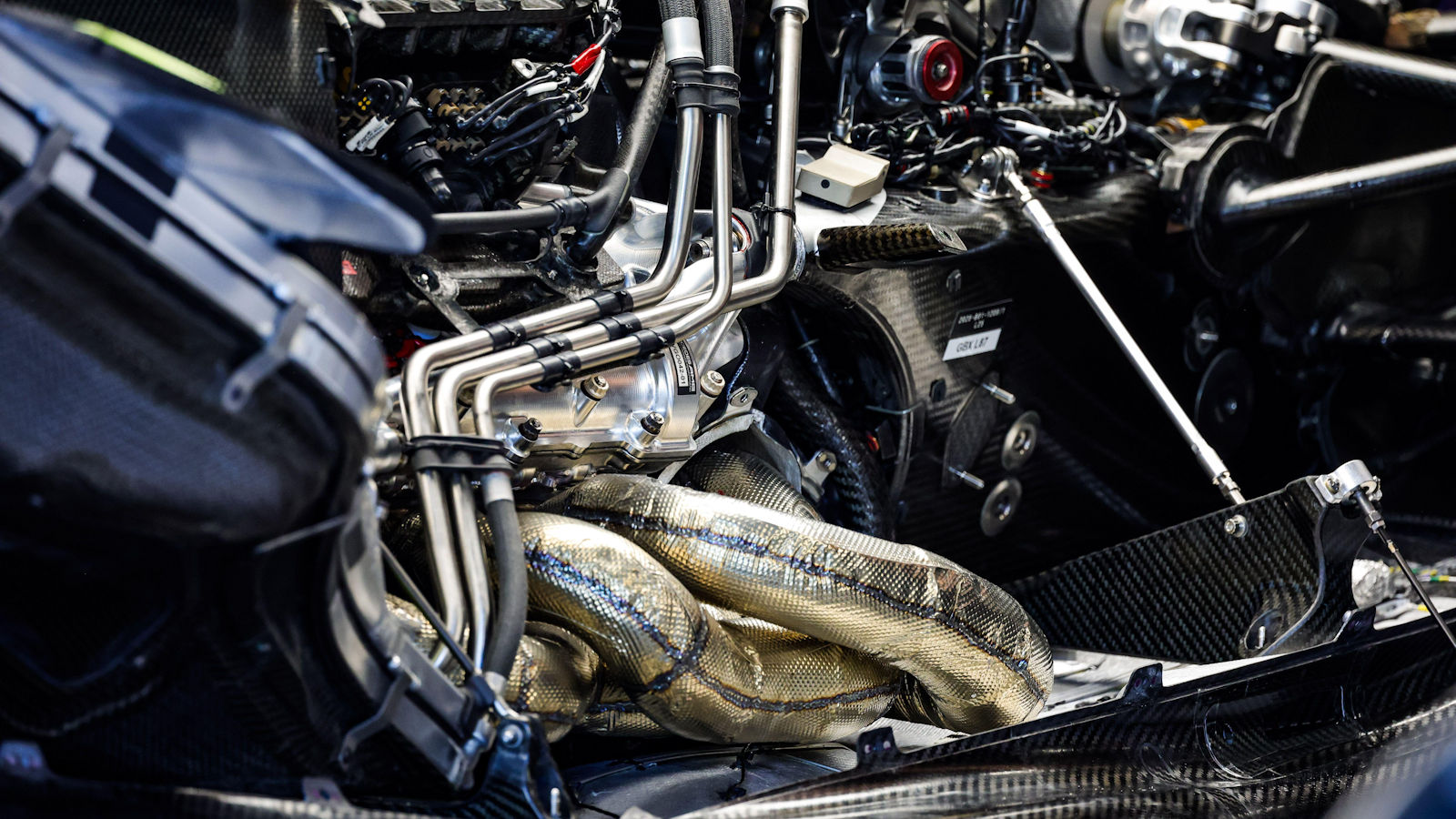
Under the covers of the W16 and looking at the exhaust arrangement, whilst just beyond it we’re able to see the beam and support bracket system used internally to prevent the floor from flexing.
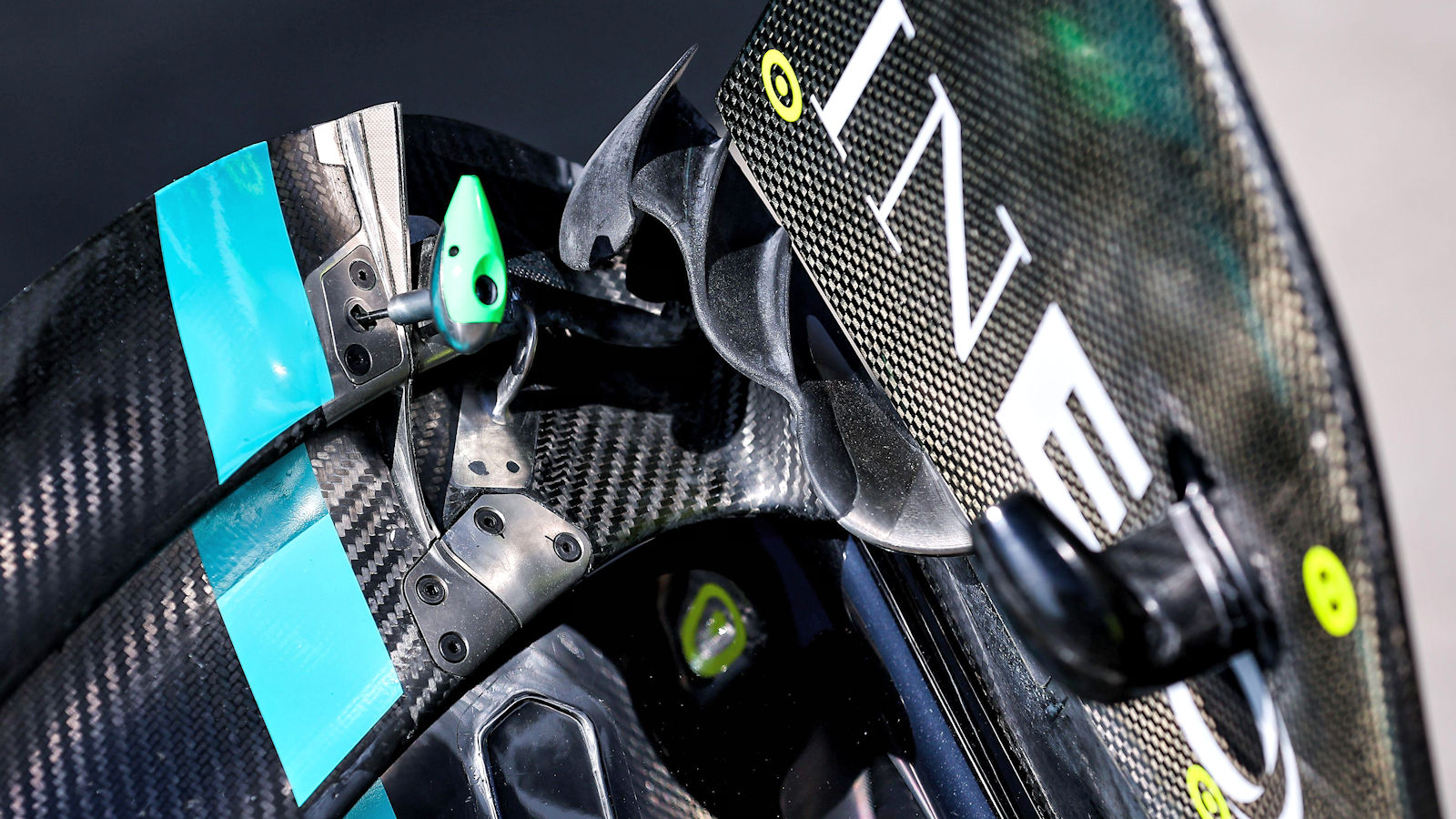
A close up of the outer portion of the front wing, with an emphasis on the outwash vane sat astride the flap tips to help drive out and around the front tyre.
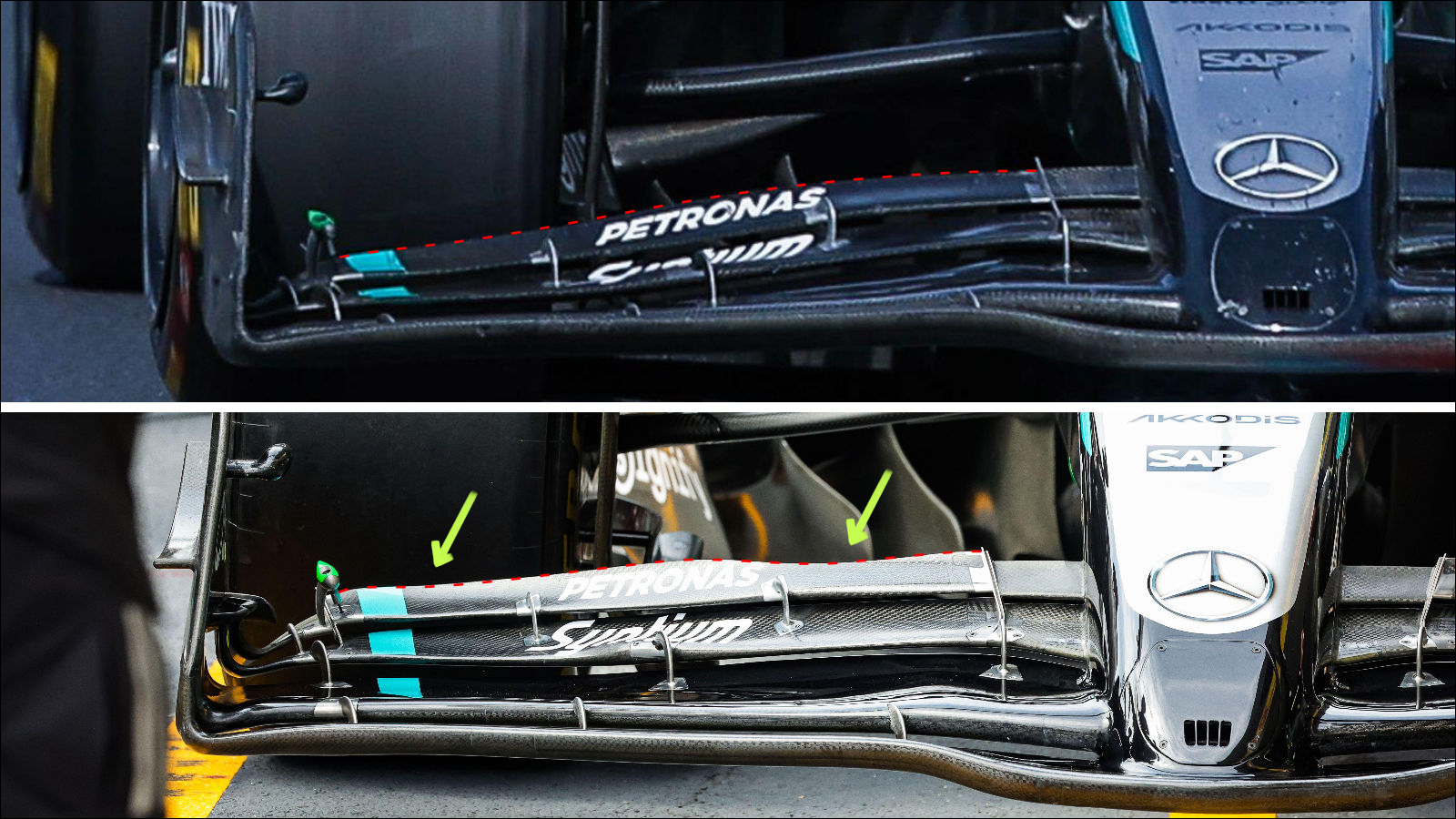
A comparison showing the trimmed variant front wing (arrowed).
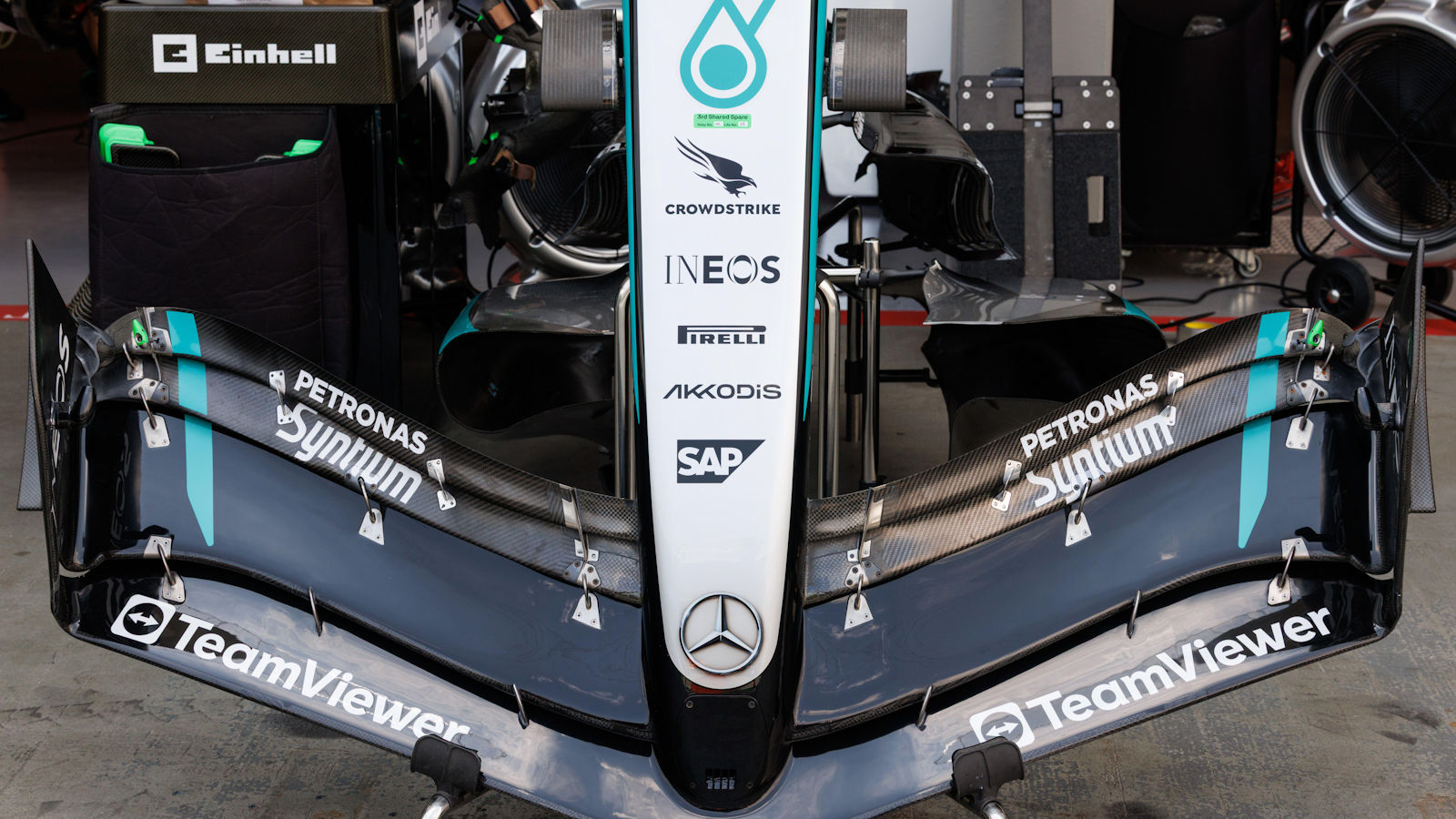
The top-down overview shows this flap distribution too, with a relatively uniform height across the entire span of the wing employed by Mercedes.
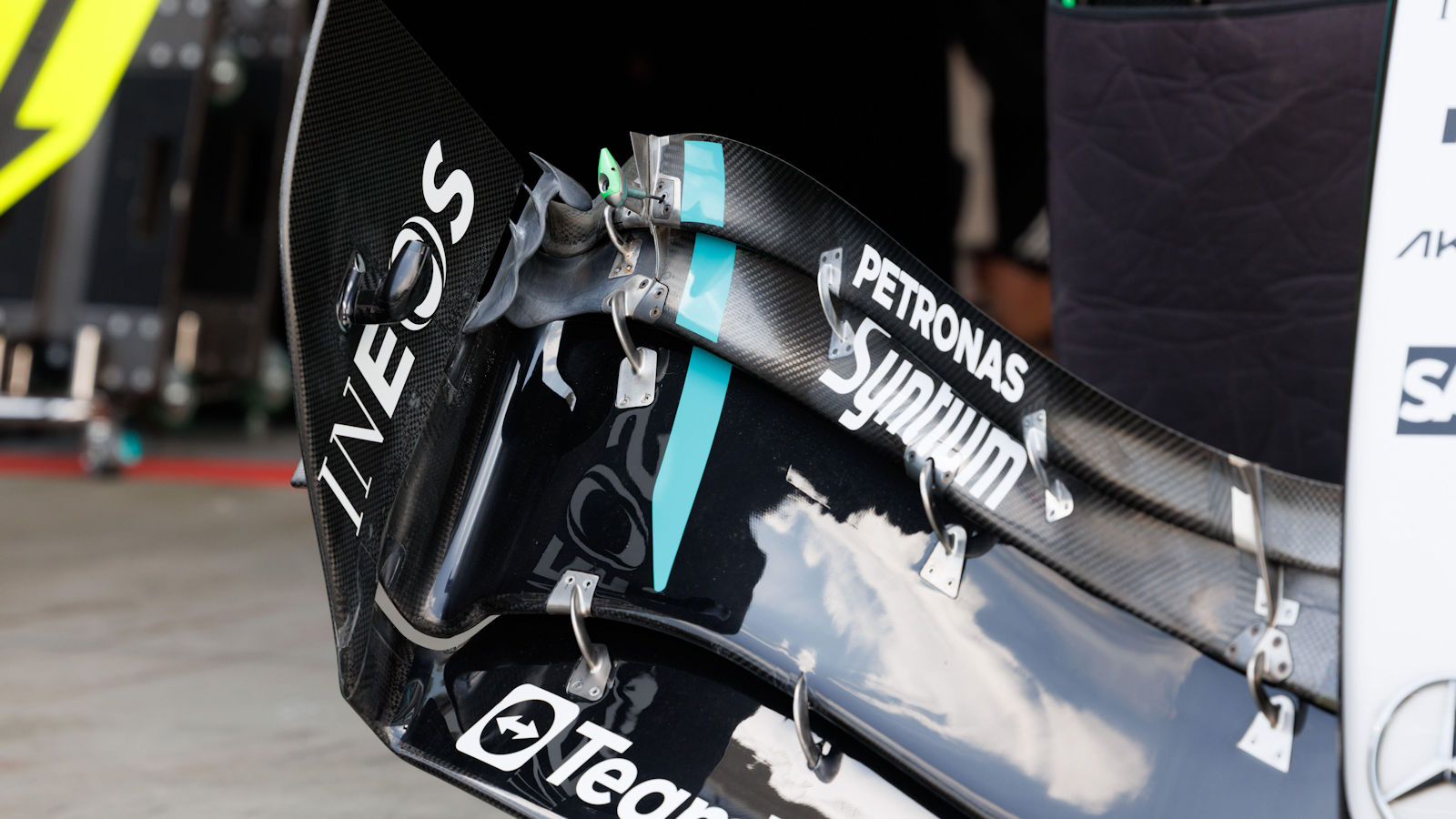
A nice overview of the outboard portion of the W16’s front wing, showing the flap distribution, with a much longer second element utilised in their case.
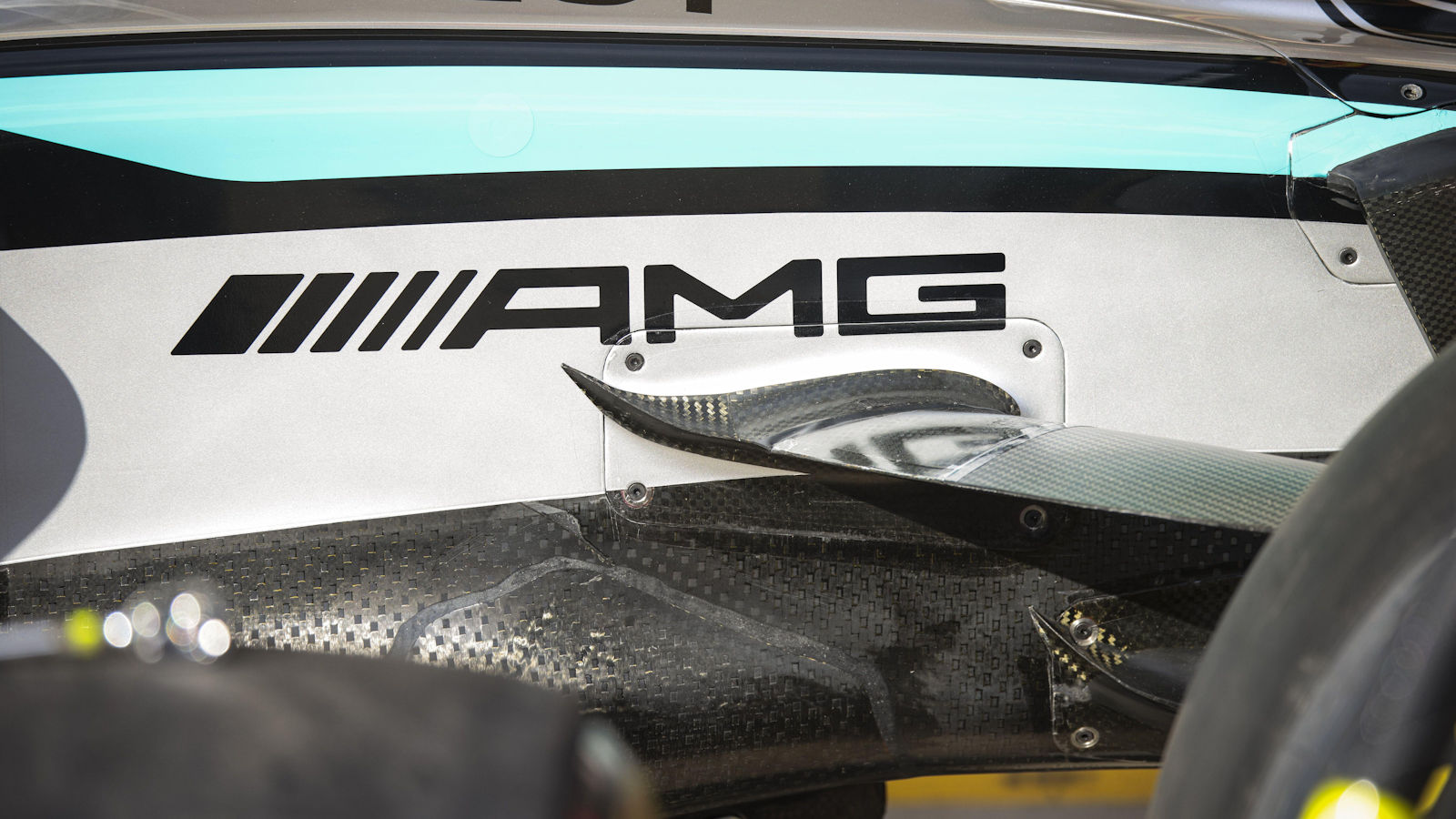
A close up of the rear leg of the upper front wishbone on the W16, showing how a wing-shaped profile was applied to promote a certain flow pattern.
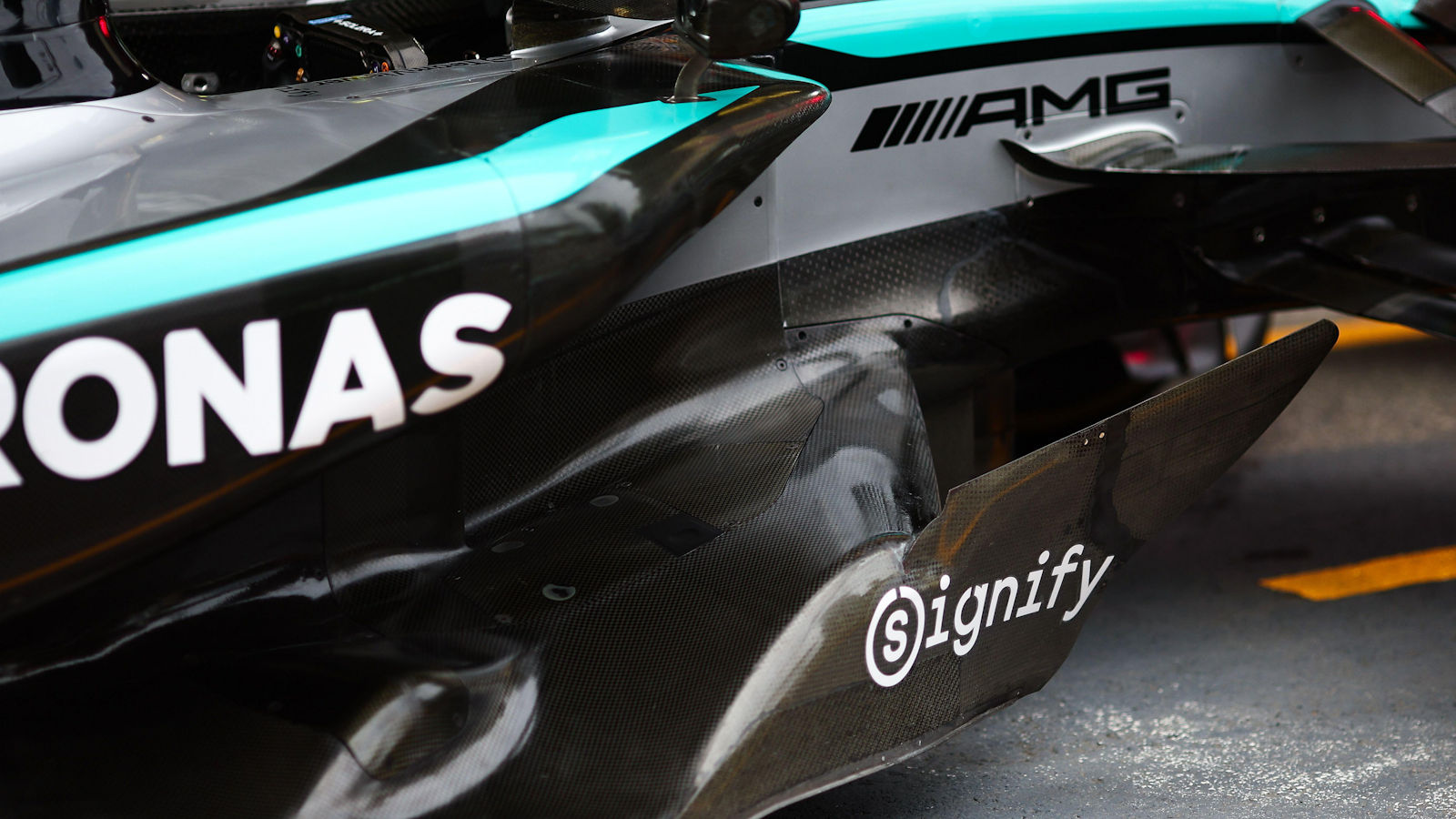
A look back down over the floor fences and leading edge and at the wing-shaped profiles on the suspension legs.
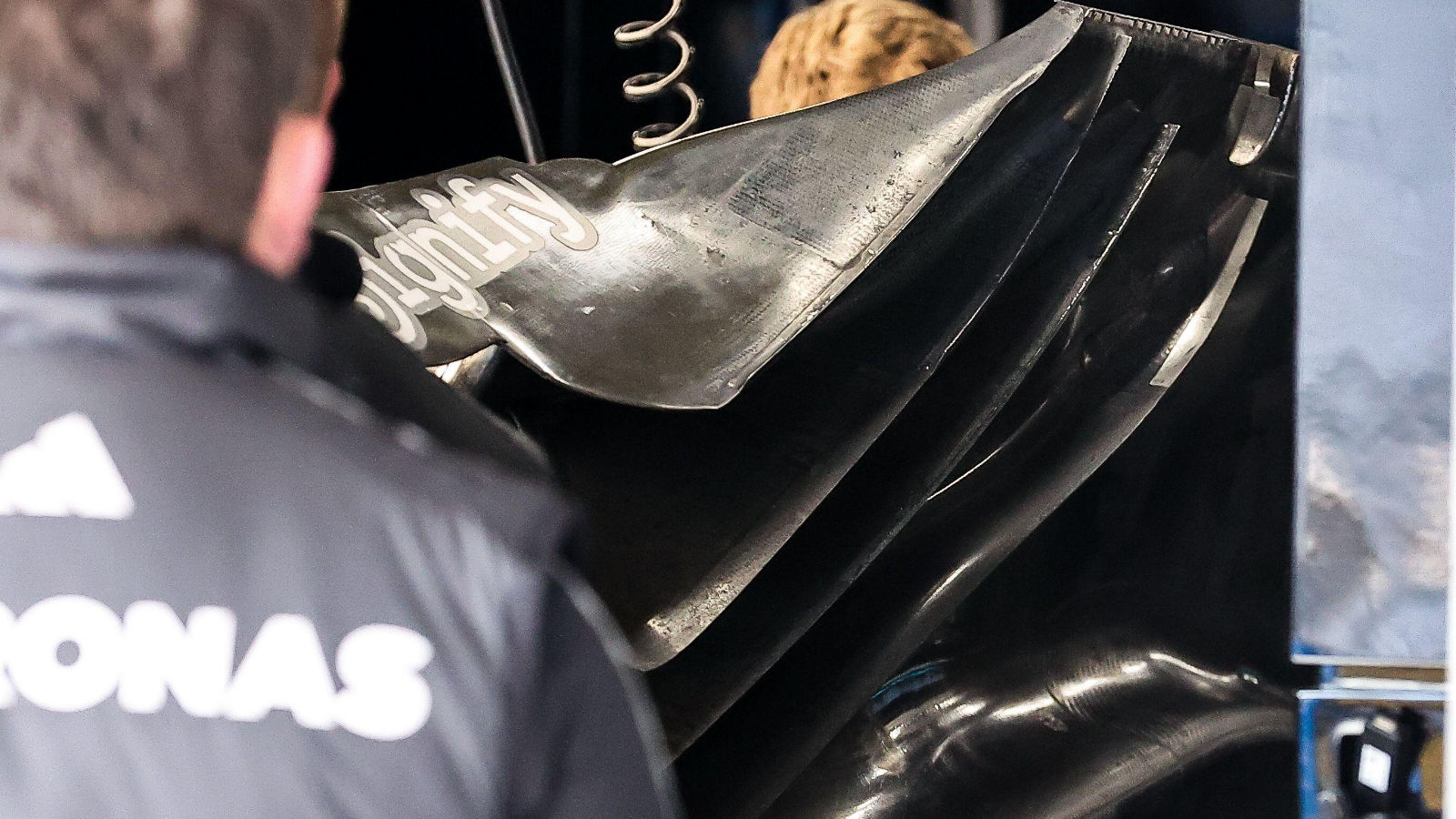
Further back we get to see how those fences terminate at the side of the floor, which is not a uniform design.
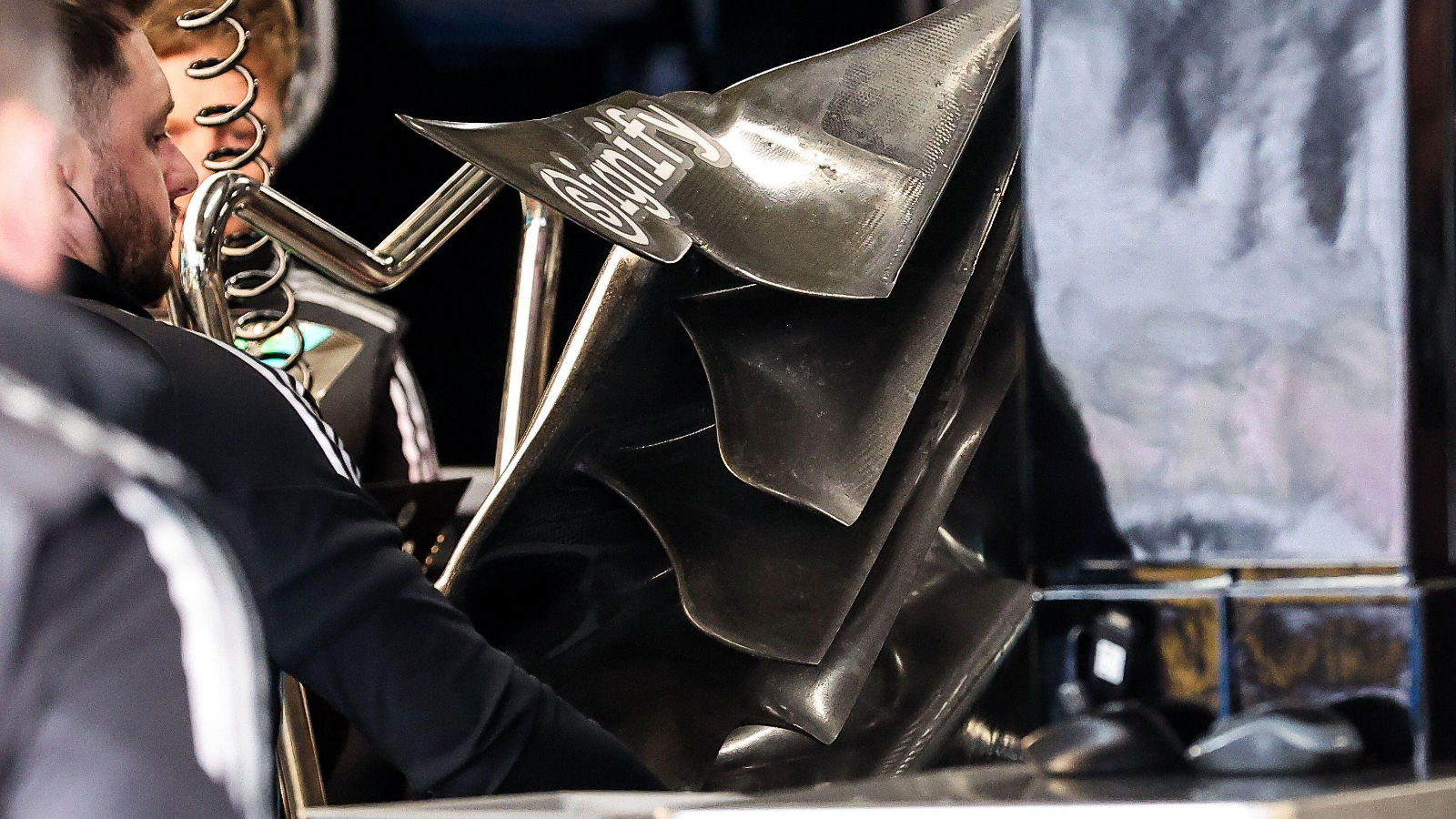
A peek at the front of the floor fences shows how they’re shaped to create the conditions that the designers are looking for.
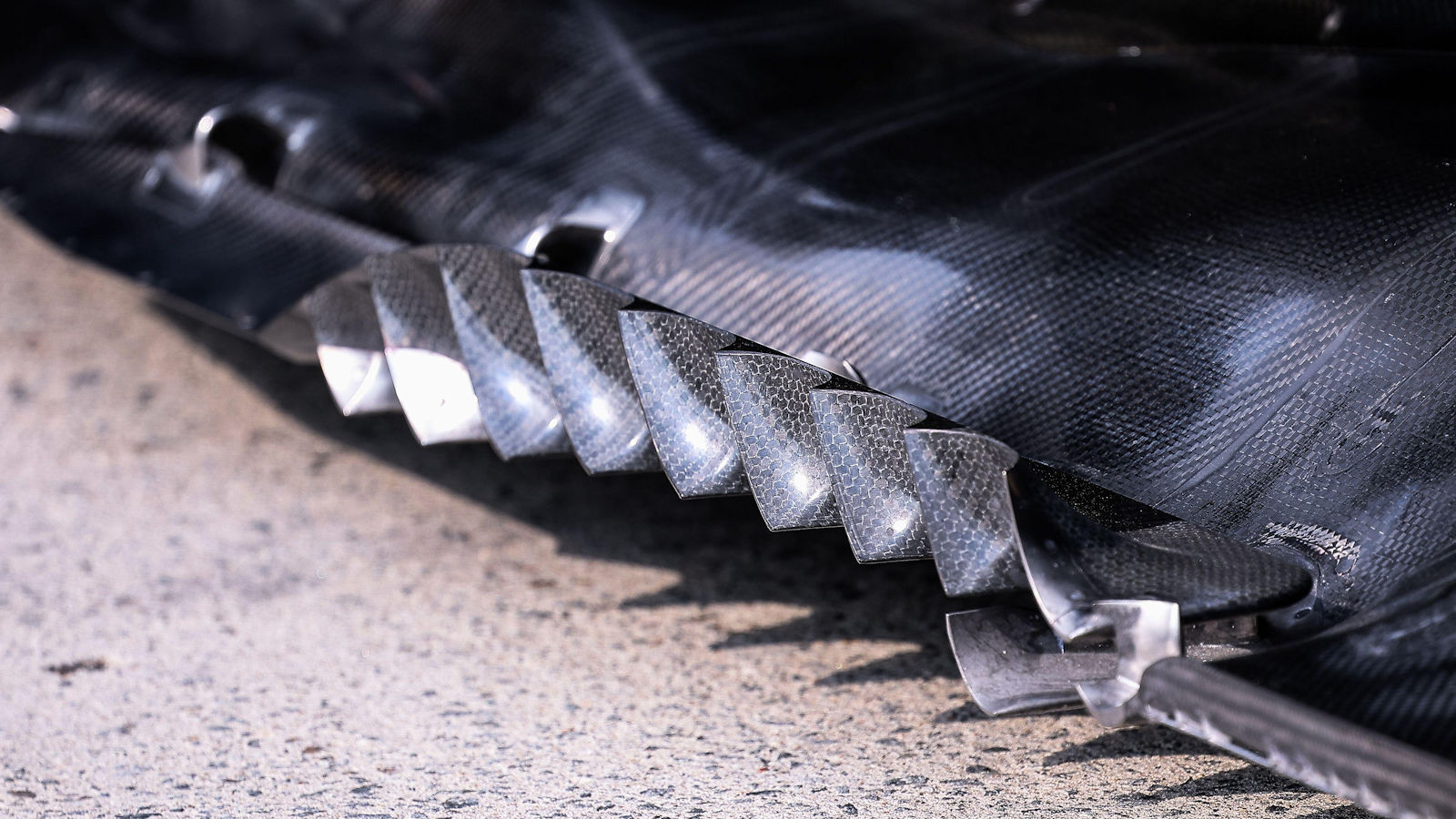
A close up of the edge wing solution, which shows how steeply angled the surface was designed, with the vanes also acutely angled. Also note how the first vane sits atop the upturned section of the floor below.
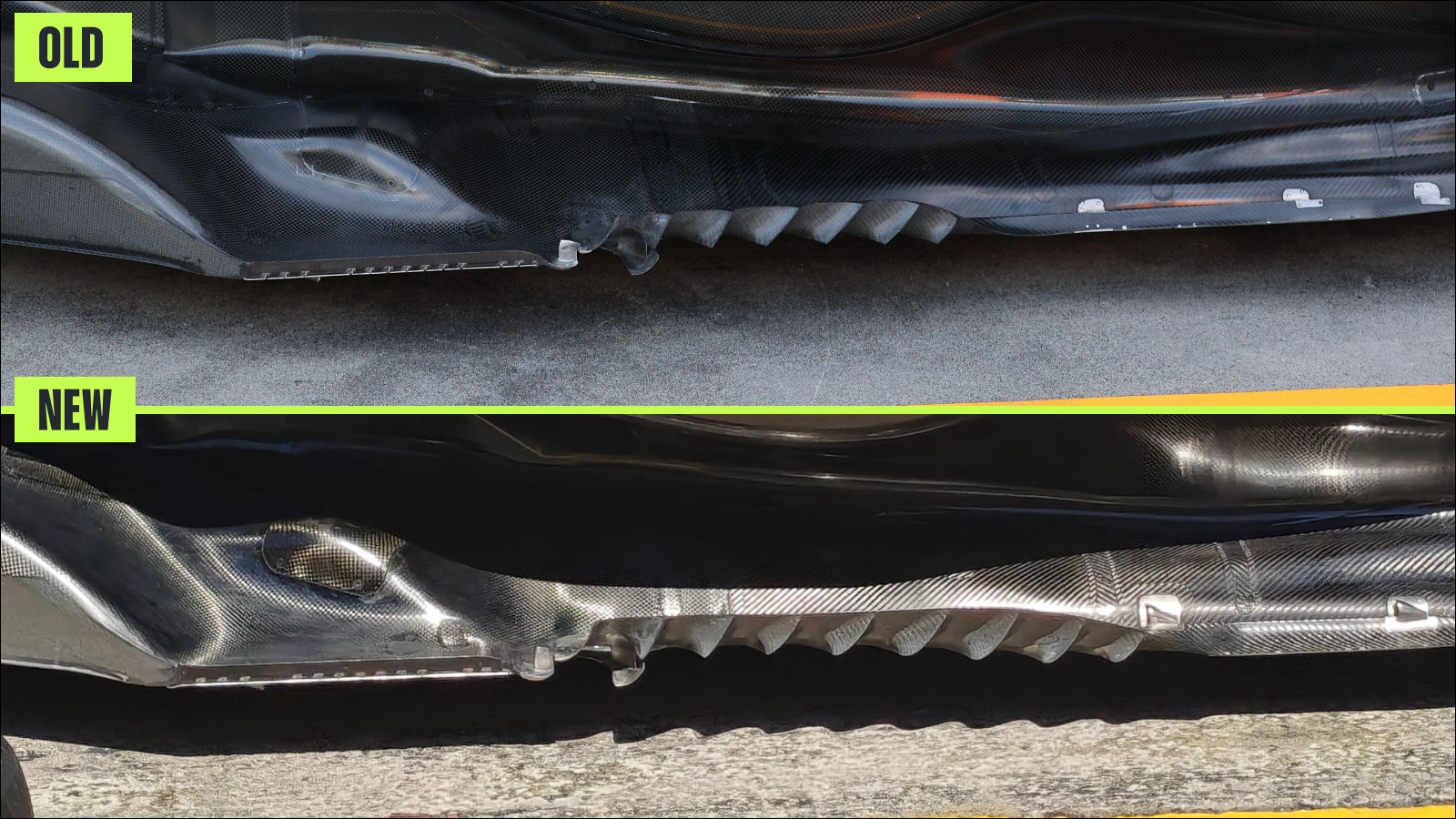
A comparison of two of the floor edge wing solutions used by Mercedes, with the pitch and length of the swept altered, along with the frequency of vanes used to help control the flow around the surface.
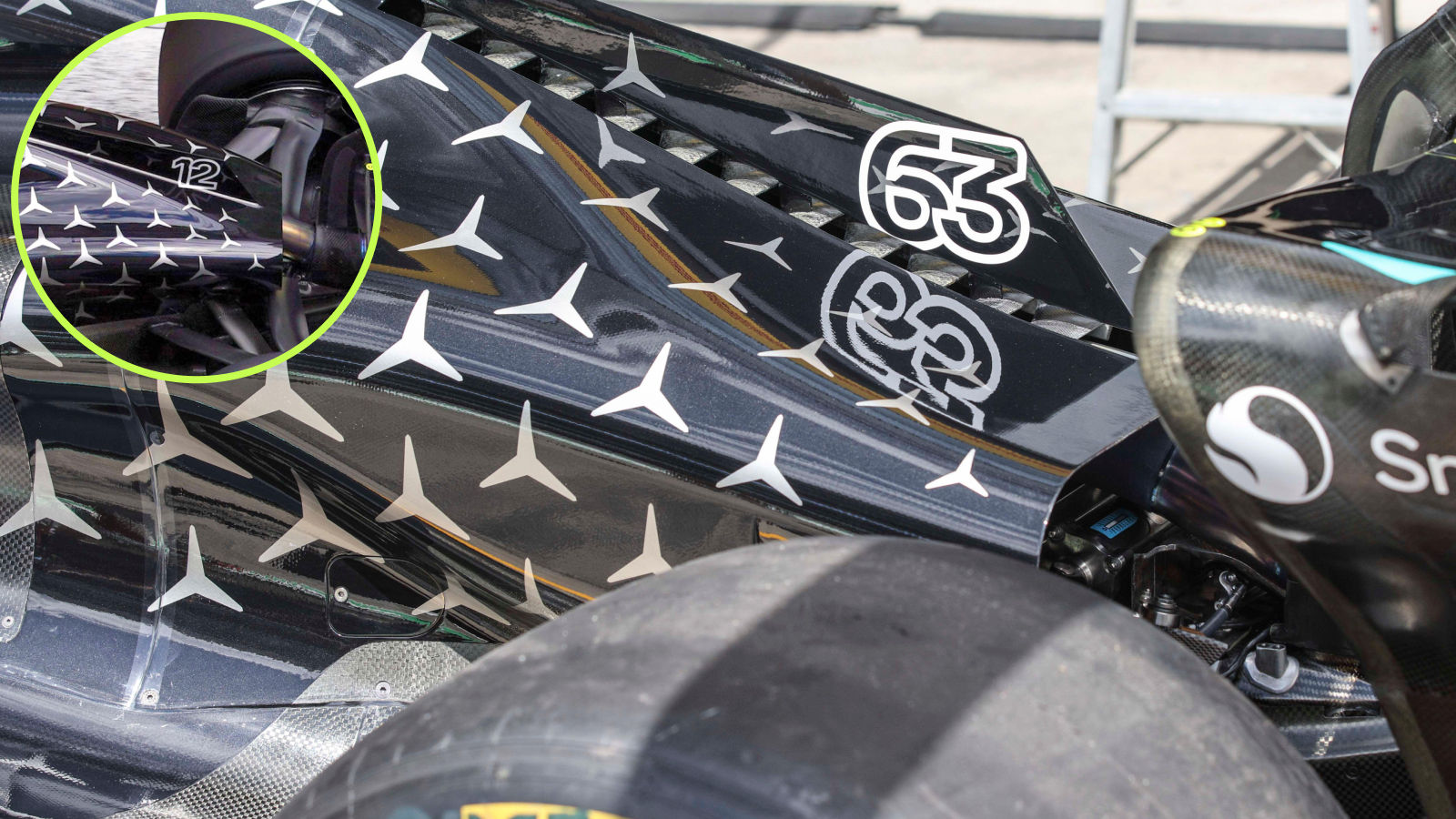
Comparing engine cover solutions for the W16, with the standard option inset, whilst additional cooling is taken care of by a row of louvres on the covers spine that’s split by the shark fin.
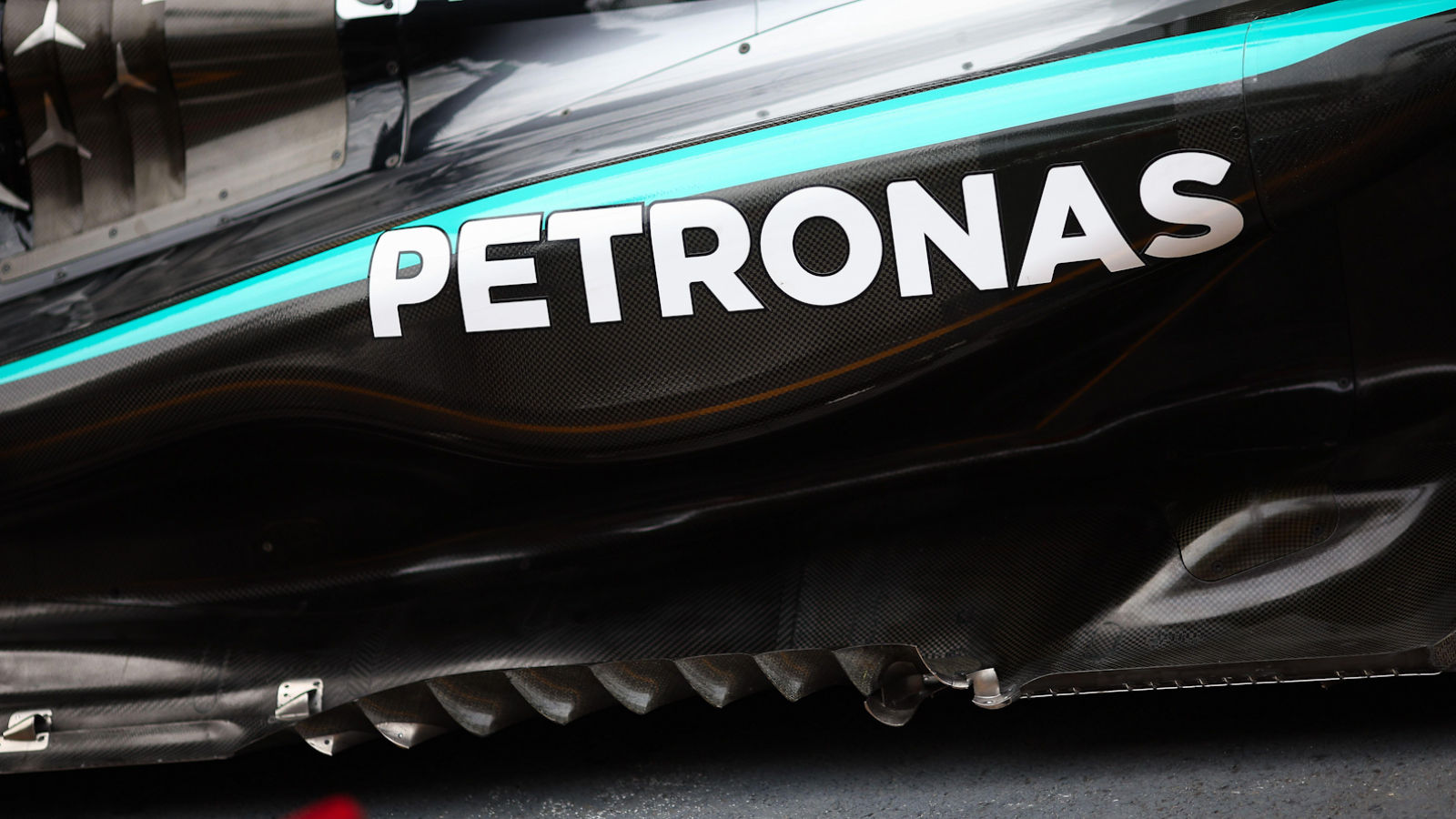
An overview of the floor edge wing on the W16, which featured seven vanes on the upturned profile in this specification.
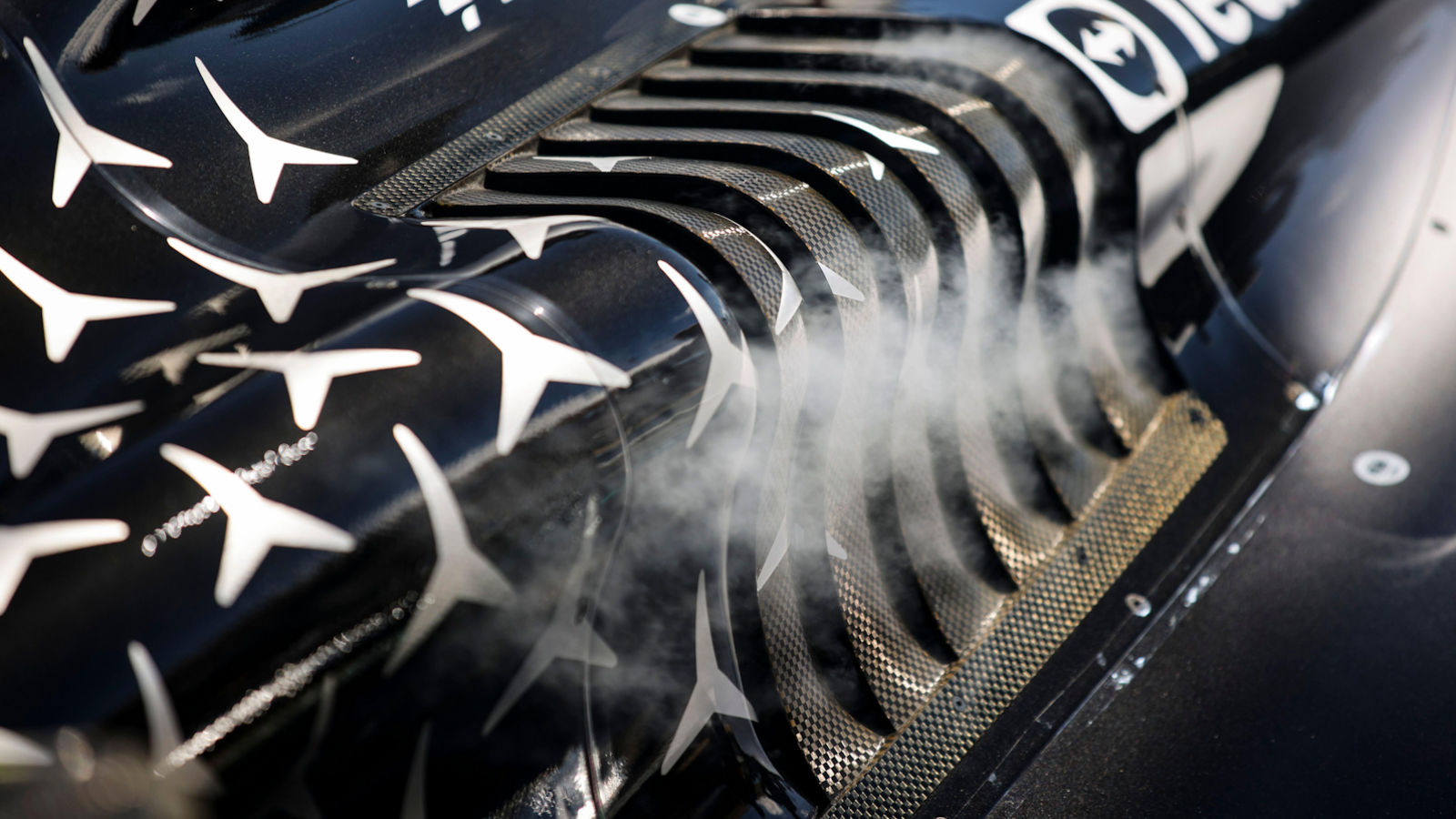
The larger cooling louvre panel arrangement for the W16 straddled the shoulder of the engine cover and sidepod bodywork.
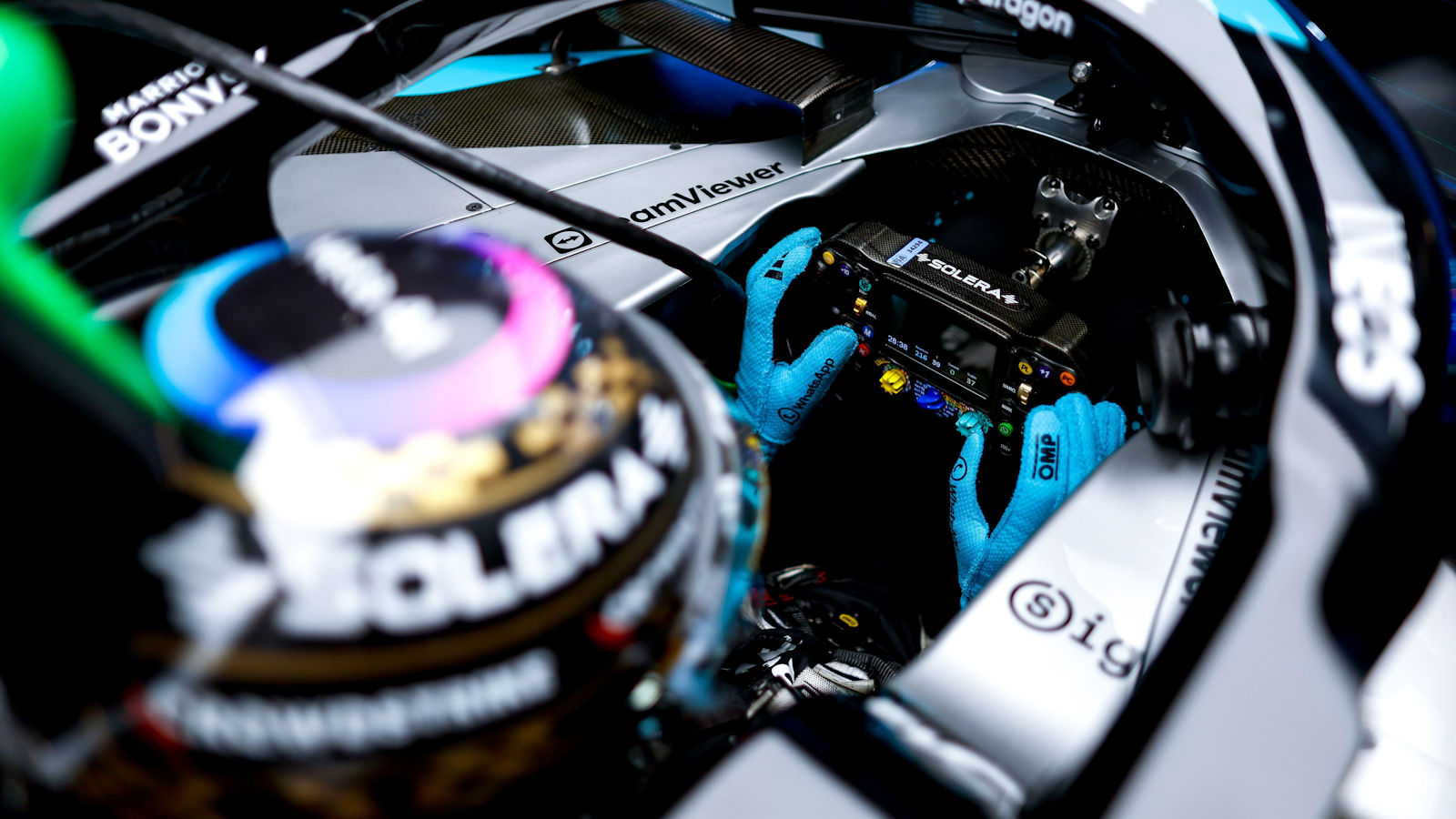
Looking over the driver’s shoulder into the cockpit of the W16, with the various rotaries, buttons and switches on the steering wheel responsible for controlling powerunit and chassis functions.
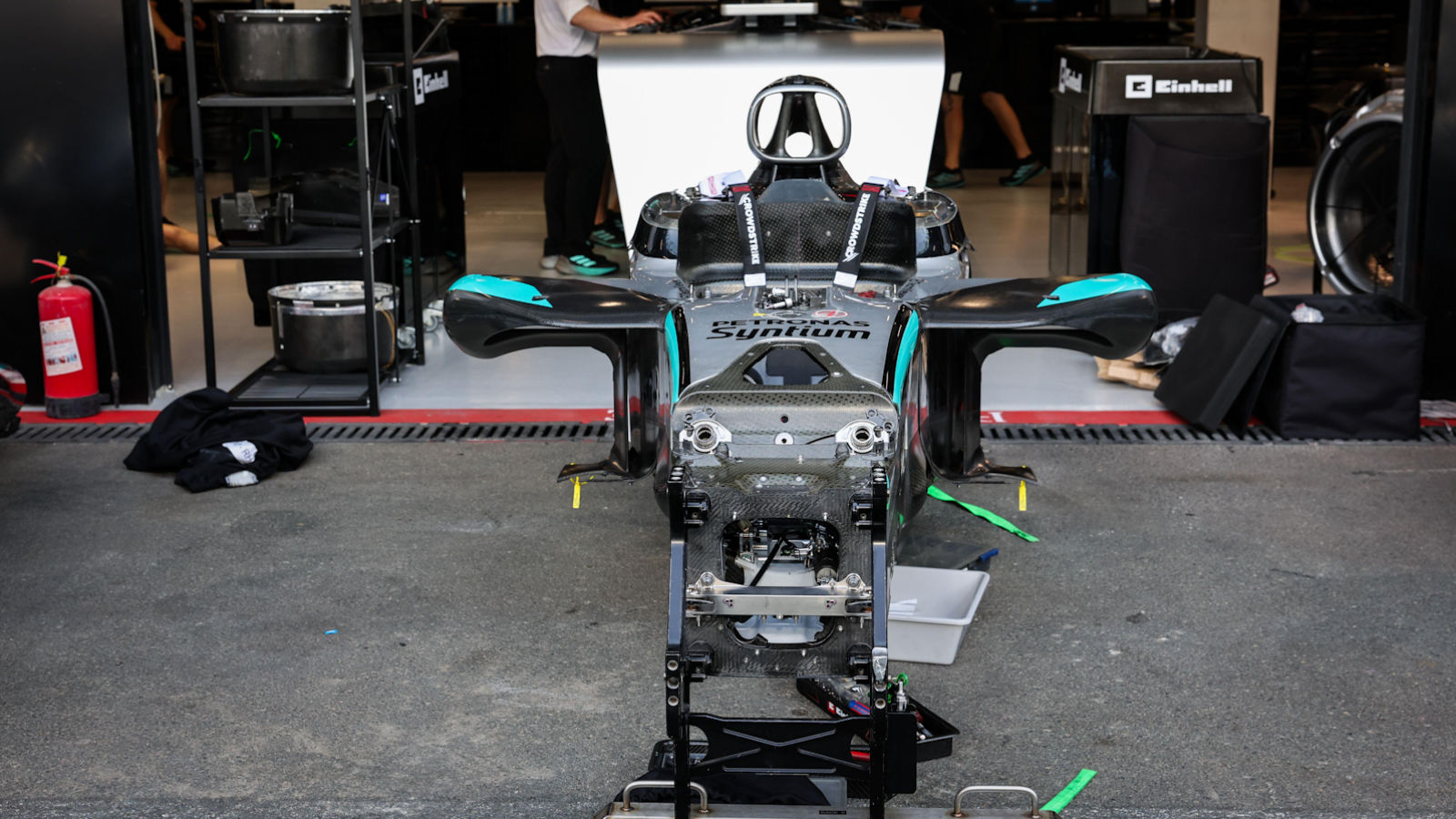
The spare W16 chassis from the front gives an idea of how much the sidepods hung out over the floor.
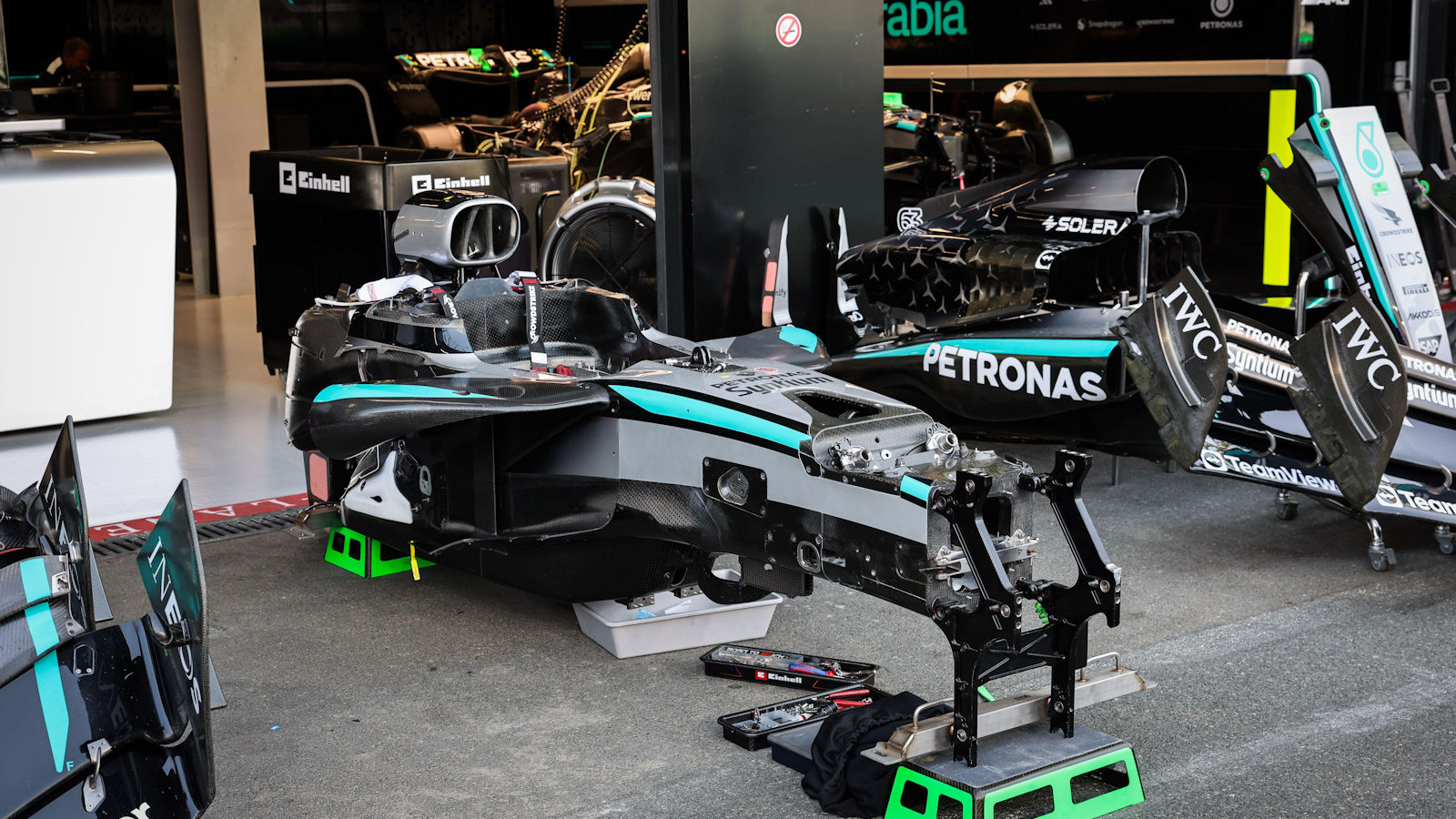
The spare W16 chassis sat outside the Mercedes garage provides some insight into its design without any of the other components attached to it.
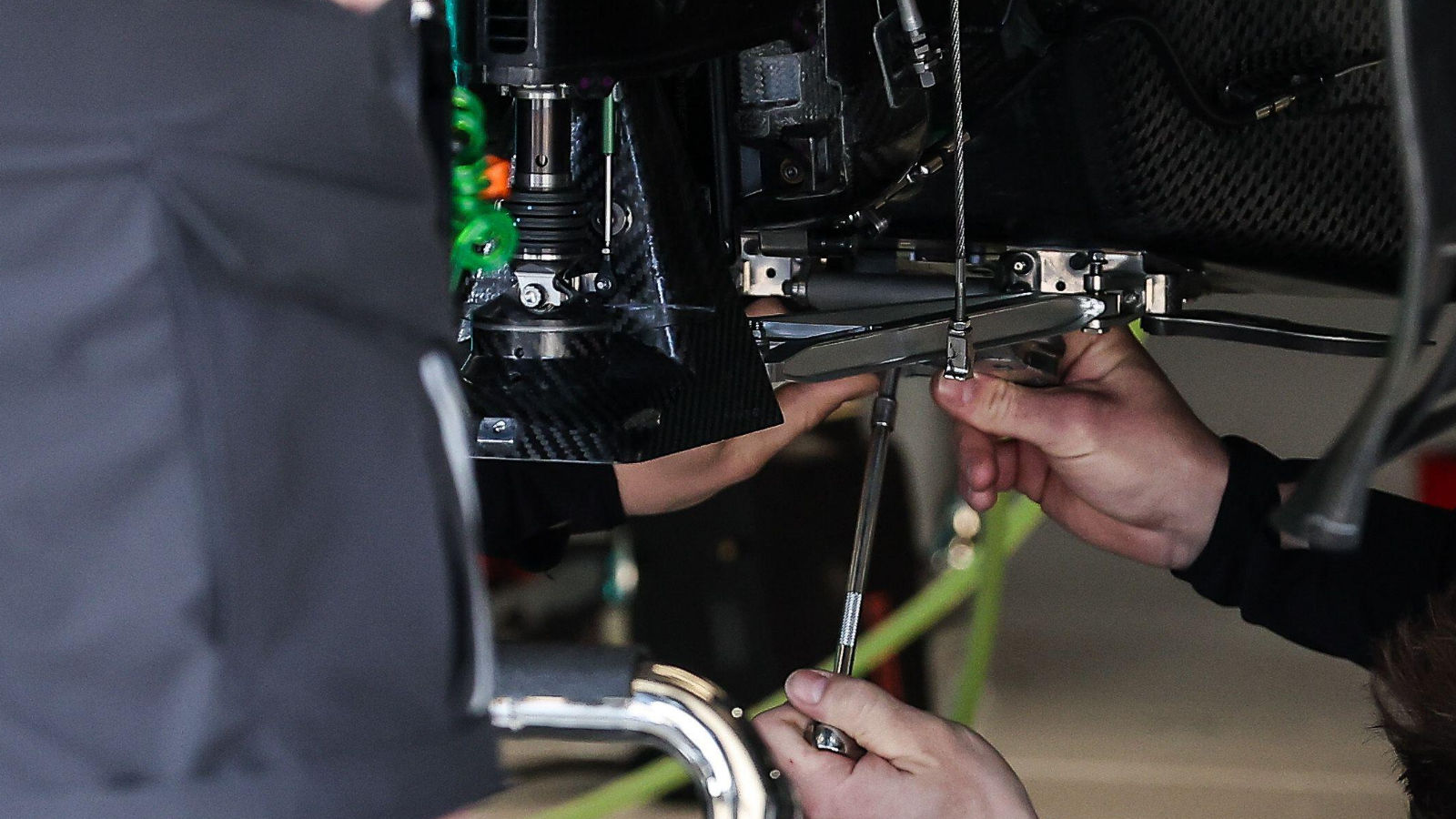
A close up of the bib and sprung mechanism, including a Belleville spring arrangement, mounted under the chassis.
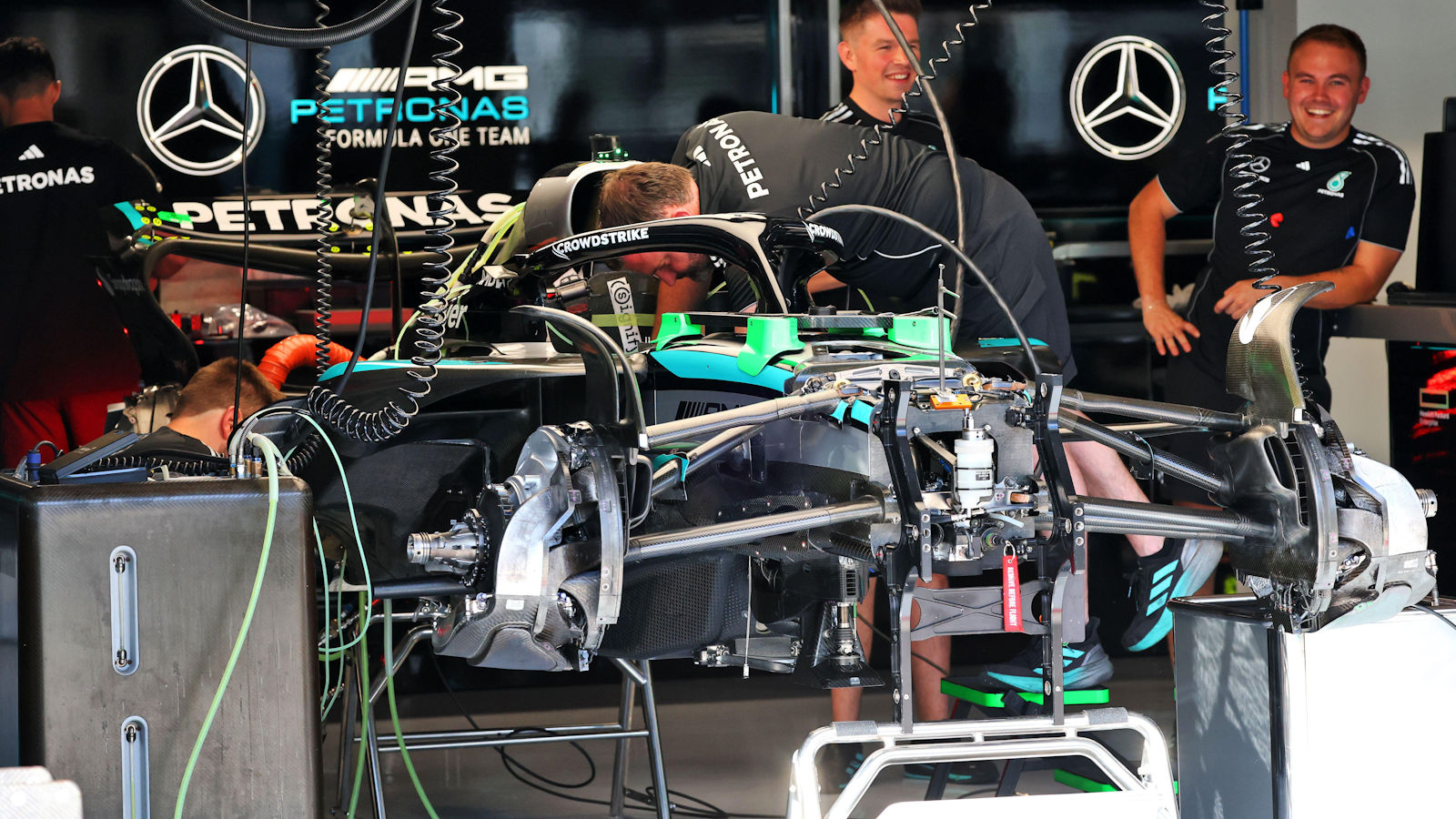
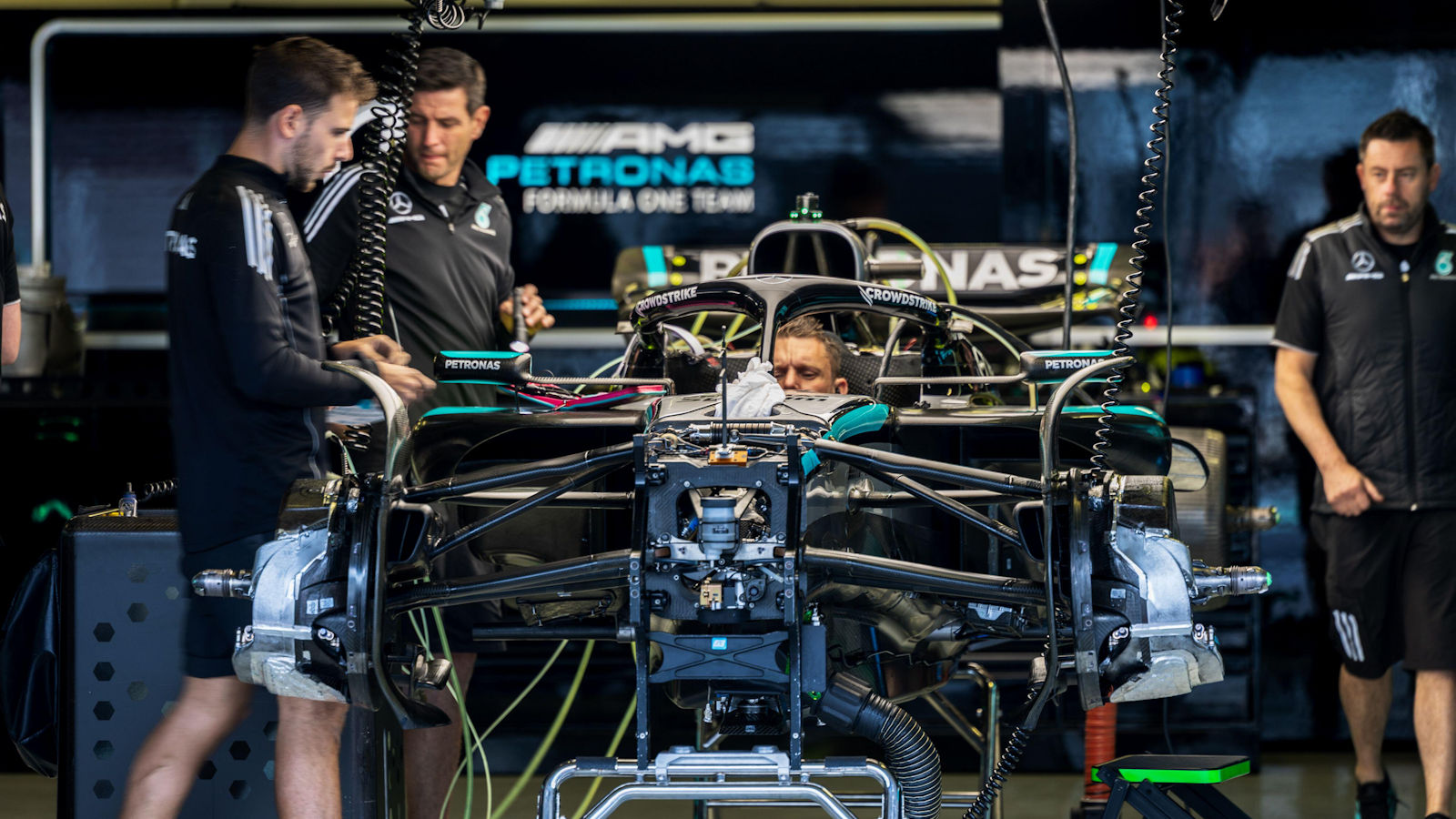
An overview of the W16 with a number of details exposed whilst it’s worked on ahead of a Grand Prix.
Read next: F1 uncovered: Exposing the hidden details of the Red Bull RB21