
Parramatta’s first season under Jason Ryles was never going to be smooth. It was a reset, not a sugar hit. New systems, new standards, and a club that finally looked willing to wear short term pain if it meant building something that lasts.
The early part of 2025 was rough. Results weren’t there, combinations were unsettled, and the squad often looked caught between old habits and new expectations. Ryles made it clear he was looking forward, and he made tough calls on players who were not part of the long term picture, even if they could have helped win games in the short term.
The Dylan Brown situation became the lightning rod. Brown’s talent never disappeared. He later played outstanding football for New Zealand, and at times looked like one of the most dangerous five eighths in the world. But once he chose Newcastle on a 10 year deal, Parramatta moved on quickly. Ryles prioritised giving time to younger halves and depth options, and he started blooding players like Joash Papali and giving Dean Hawkins extended opportunities.
There was also significant movement around the roster. Reagan Campbell Gillard departed, Bryce Cartwright moved on, and Sean Lane retired. Mid season, Parramatta added Dylan Walker from the Warriors, and he quickly became a useful bench option as a ball playing forward who could settle games. At dummy half, young hooker Ryley Smith became a week to week NRL player, and Talon De Silva arrived mid season to strengthen the depth and competition in that role.
The Jonah Pezet signing for 2026 drew debate. Some questioned how a one year deal for a player already committed elsewhere aligned with the youth first approach. Yet on pure football logic, it also made sense. Pezet gets a full season learning next to Mitchell Moses, and Parramatta add a high calibre organiser to stabilise their spine, especially considering Moses’ injury interruptions.
When Moses returned in 2025, Parramatta looked like a different side. Their best footy came with shape, kicking control, and confidence in the moments that matter. They finished 11th, winning 10 and losing 14, and for a first year under a new coach and new direction, it gave the club something to build on.
If Parramatta want the rebuild to turn into a finals push in 2026, these five players must take a clear step.
5. Ryley Smith
Why his role is important
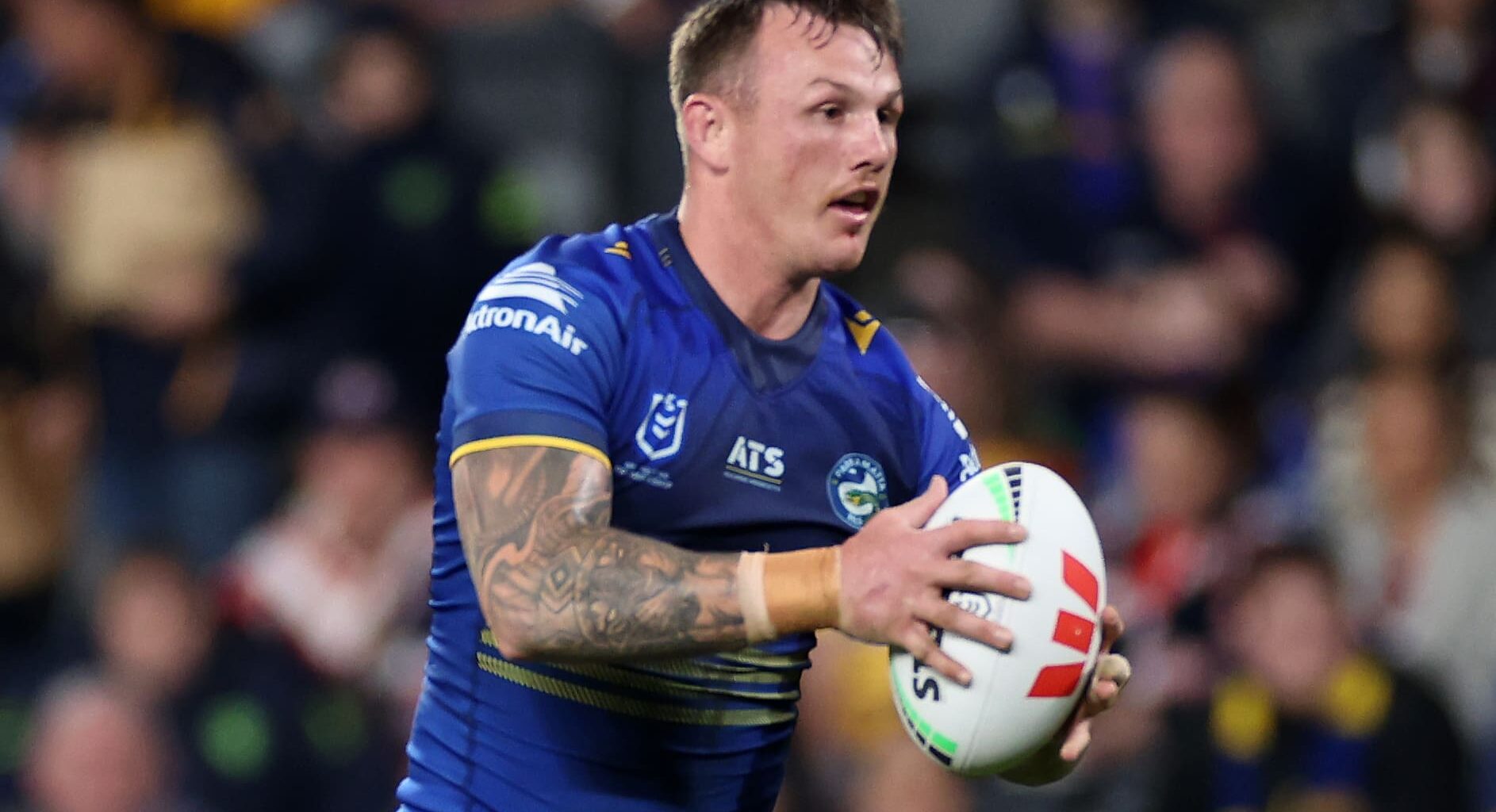
Ryley Smith became one of Parramatta’s most important development pieces in 2025. Playing 22 matches in his debut season and earning an extension through to the end of 2027, he showed the club trusts him as a genuine NRL hooker.
Smith plays a traditional dummy half game. His main focus is service. Get the ball off the deck cleanly and give the halves time to work. That is why the Reed Mahoney comparison exists (plus the headgear and similar look) Similar frame, similar approach, defence first, service first, and a mentality built around reliability.
Parramatta now have two young hookers with real potential, with Talon De Silva arriving mid-season and likely to play off the bench. That means Smith is expected to start, absorb the early sting, and set a defensive tone through the middle.
What must improve
For a first-year hooker, Smith’s base is strong. He tackled at 93 percent, and he averaged 37 kicking metres per game, showing he has some kicking ability from dummy half when needed.
Now the game must expand.
Sometimes his service can be hit and miss. That is normal for a rookie, but it must improve quickly because Parramatta’s spine depends on timing. The ball has to hit Moses and Pezet in the hands where they want it, when they want it, especially under fatigue and defensive pressure.
He also needs to develop a running game. Not a running hooker identity, but a selective threat. If markers are lazy or rucks are slow, he must have the confidence and the instinct to go himself. At the moment, he is too focused on being a distributor, and that makes him easier to defend.
Defensively, he will be targeted. Oppositions will go after him to test his contact and his resilience. Tightening up in the middle is non-negotiable.
Why his improvement matters
If Smith improves his service consistency and develops a selective running threat, Parramatta’s spine becomes far more dangerous. Dummy half becomes a weapon, not just a link. That gives halves more time. It holds defenders in the middle. It improves the whole attack.
Smith does not need to become flashy. He needs to become dependable at a higher level, and he needs to grow quickly, because Parramatta’s two hookers are both inexperienced, and the clubs rebuild depends on that position becoming a strength.