
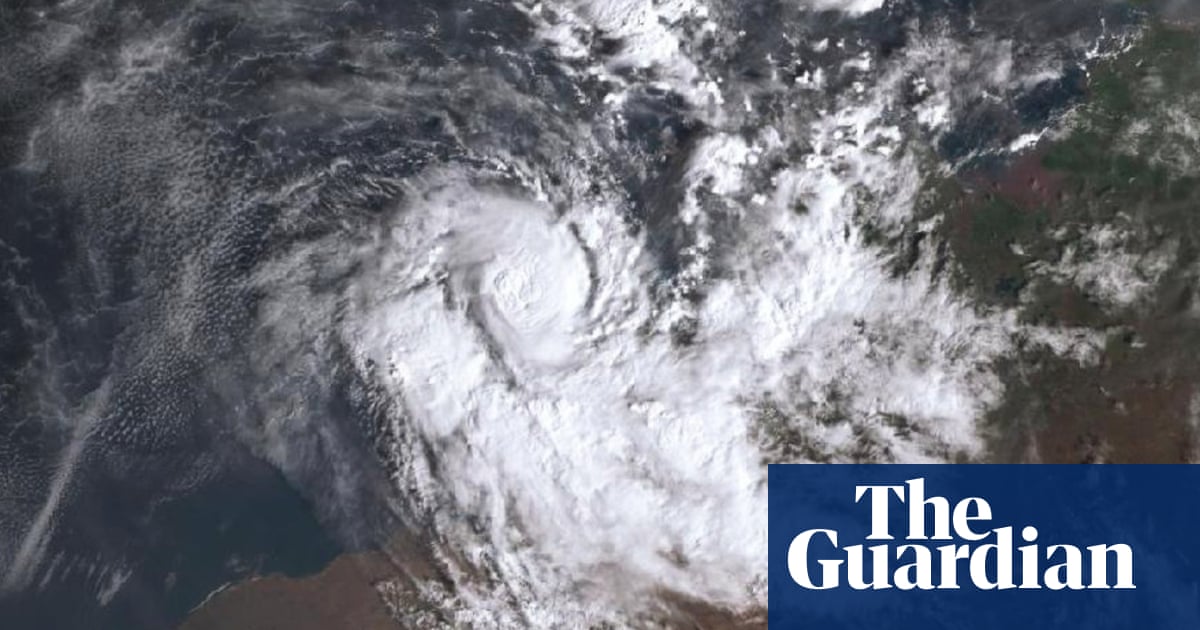
There’s only one road in and out of Derby on Western Australia’s remote Kimberley coast.
With a population of about 3,200, the town – along with Broome and Kununurra – is one of the largest servicing the region.
But as severe Tropical Cyclone Hayley – now a category-three system – approaches on Tuesday , bringing destructive winds, heavy rain and the potential for flash flooding, the risks are fresh in everyone’s minds.
It was only three years ago that rain dumped by ex-Tropical Cyclone Ellie led to catastrophic floods that left Derby residents and nearby communities isolated for weeks.
Tameka Plummer, who runs the local bakery and manages the bottle shop at the IGA supermarket, said she hoped the town didn’t get cut off. The only other option for bringing in goods was by barge to the port. “That’s a very expensive mission, if they have to do that.”
She said staff were well prepared with essentials like water, torches and power banks, and trucks had already taken away excess stock and pallets.
Peter McCumstie, the president of Derby/West Kimberley shire, said although Hayley was “packing a punch” it wasn’t the first time cyclones had come close to Derby, with preparations beginning well in advance for the cyclone season – namely tree trimming, drainage and culvert clearing.
“People, as being advised, will ensure they have additional water supply, vehicles fuelled up – power can and usually is lost for a time – and dry foods and essential items ready to use,” he said.
“Flooding during and after will occur and, as TC Ellie taught us in 2023, this can be devastating.”
Hayley, located on about 185km north-west of Broome, was heading east and expected to reach the coast near Cape Leveque on Tuesday evening.
The Bureau of Meteorology’s Jonathan How said favourable conditions, including warm seas, had allowed the cyclone to “ramp up quite quickly overnight”. On Tuesday morning (11:43 local time), winds near the centre had reached 140km/h with gusts up to 195km/h.
As the cyclone approached the coast, damaging gales were expected, How said. “Tonight, ahead of landfall, we are expecting destructive winds above 150km/h.” Very destructive winds to 170km/h were possible in some areas.
Winds were likely to bring down trees and power lines, and heavy rainfall could cause some outback roads to be closed due to flash flooding.
How said the warning area extended north of Broome to Kuri Bay, and included Derby, Beagle Bay and the entire Dampier Peninsula.
Derby, which is at the bottom of the King Sound, is famous for its massive tides, which reach up to 12 metres and are some of the largest in Australia. Tuesday’s high tide about 6pm could bring big tides and large waves, How said.
Assistant commissioner Stuart Wade from WA’s Department of Fire and Emergency Services said people in the emergency warning area must shelter indoors now. “Stay in the strongest, safest part of the building. It is too late to leave.”
An evacuation centre was open at the Broome Recreation and Aquatic Centre.
Anthony Albanese said Australia’s thoughts were with the community.
Australia’s tropical cyclone season runs from November to April and in an average year two or three systems reach category-four severity. In future cyclones may be fewer but stronger, due to climate change, according to Australia’s national climate risk assessment.
In November Tropical Cyclone Fina became the earliest cyclone to cross the Northern Territory coastline and equalled the earliest to make landfall in Australia.
On the other side of the country, in northern Queensland, communities were dealing with flooding from days of heavy rain – widespread totals of 200mm a day – due to a slow-moving monsoon trough.
The highest falls were at South Mission Beach, a town about a three-hour drive north of Townsville, which recorded 796mm in 72 hours, according to How.
The Queensland premier, David Crisafulli, said the full impact wasn’t yet known but the government had pre-positioned fuel and emergency services in key locations and was ready to assist.
Over in WA, Plummer said so long as there wasn’t flooding, some rain would be welcome. “We’re praying for rain,” she said. “We haven’t had much rain at all this wet season.”