
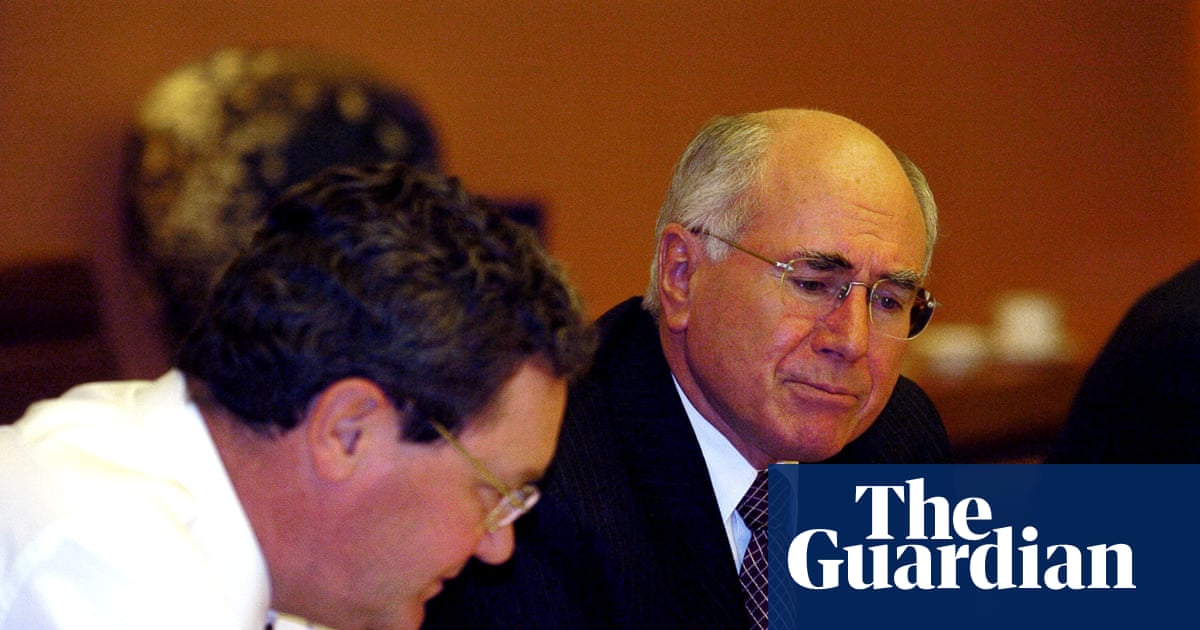
Health officials warned the Howard government that Australia might need to close schools and shut international borders in the event of a global influenza pandemic, nearly 15 years before the arrival of Covid-19.
Previously unreleased cabinet papers made public by the National Archives of Australia on Thursday show planning for an influenza pandemic reached all the way to the national security committee of federal cabinet in October 2005. The discussions, two years after the Sars viral respiratory disease spread across Asia, presaged much of the response as Covid-19 spread around the world.
In November 2005 the then foreign affairs minister, Alexander Downer, told senior colleagues there was a significant risk the H5N1 strain of bird flu could mutate into a virus easily transmissible between humans, sparking a pandemic “with potentially devastating consequences” for Australia and the world.
Sign up: AU Breaking News email
Advice to cabinet flagged possible bans on cruise ships and foreign aircraft entering Australia, as well as the isolation of travellers to stop the spread of the virus.
Officials warned the fallout from a pandemic could be damaging.
“Possible consequences of a severe pandemic include loss of life; a deep negative economic shock leading to significant declines in the workforce and disruption to international trade (especially if stringent border controls were established),” a note to cabinet said.
Australians caught up in hard-hit areas overseas would be especially vulnerable, it said.
“The gap between notification of an outbreak and imposition of local response measures like travel restrictions could be very short, potentially stranding Australians who do not leave early.”
A cabinet minute from the period shows the chief medical officer briefed ministers, acknowledging that expert opinion was divided on the likelihood of a pandemic.
The country had a stockpile of anti-viral drugs sufficient to cover nearly 20% of the population and trials of a domestically produced vaccine were “underway”.
The cabinet was told countries including China, Indonesia and Vietnam had low levels of readiness for the outbreak and warned calls to help Australians in affected regions were likely in the event of a major outbreak.
Strong domestic protections were planned if a pandemic was declared, including closure of international borders, restrictions on travel within Australia, quarantining of affected areas and the closure of schools and businesses.
As occurred during the Covid crisis, state and territory governments were expected to provide a “high level response” in the event of a medical emergency. That could include measures to ensure public services continued, law and order was maintained and communications with the public proceeded “to prevent panic”.
The cabinet was told the measures would be similar to the response to a terrorist attack or a natural disaster.
A national security committee cabinet minute on the international ramifications of the threat from a pandemic said in November contingency planning to help Australians overseas was being refined.
It warned “in the event of a pandemic, evacuation of Australians from affected countries overseas would be difficult” and costly, and said pandemic planning should consider what would happen to the more than 1 million foreign nationals living in Australia.
Officials discussed the use of drugs including Tamiflu and Relenza in the event of a pandemic and planned drills to test the government’s response.
In October 2024, a national review into the Covid-19 response found many citizens lost trust in Australian governments during the pandemic. More than 21,000 people died from Covid in Australia between March 2020 and January 2024.