
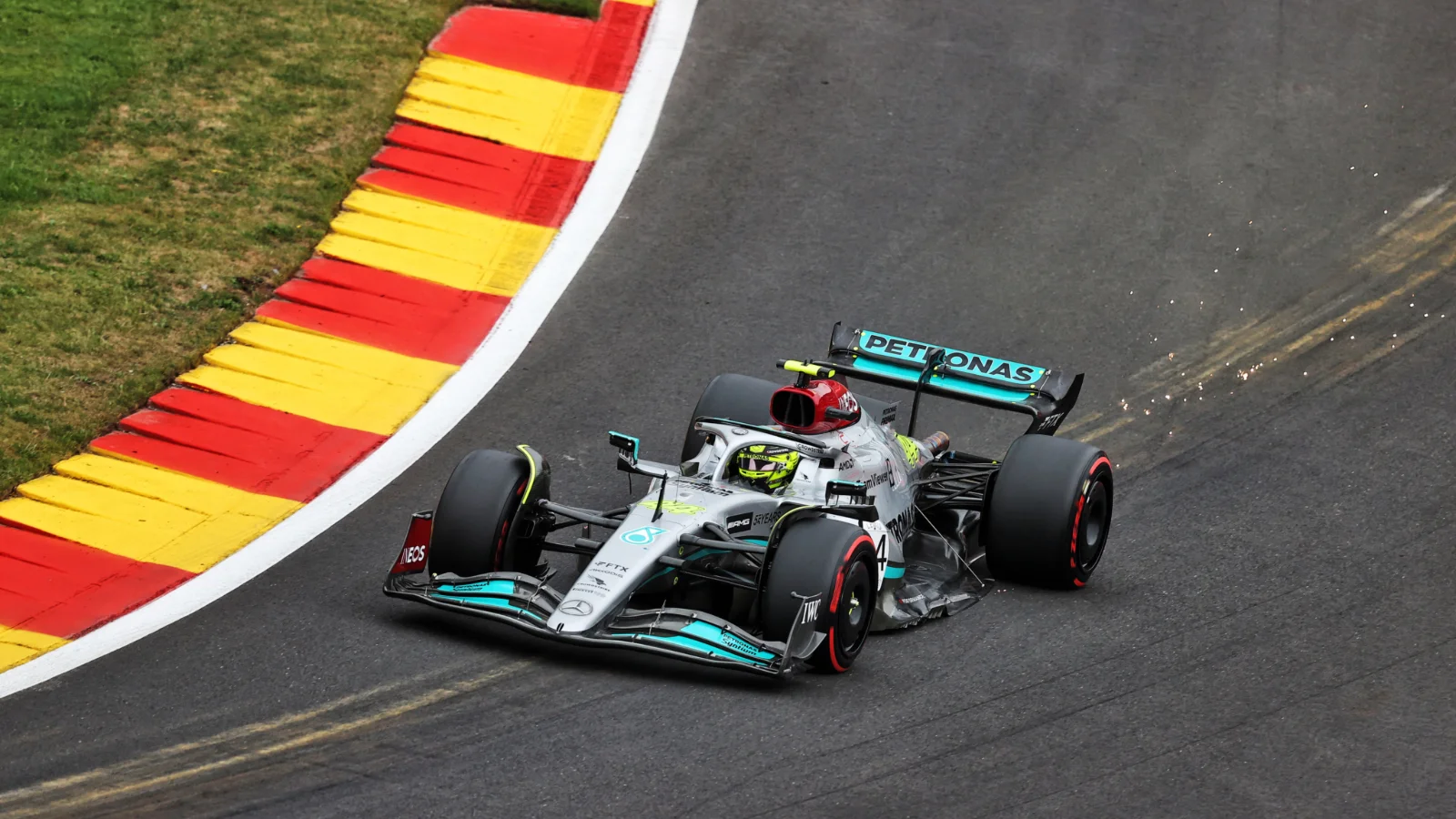
The FIA single-seater director, Nikolas Tombazis, has admitted that the sport’s governing body missed a key flaw in the Formula 1 cars of the ground-effect era.
The four-year cycle of the cars came to an end at the Abu Dhabi Grand Prix last month, bringing to a close a maligned period for the sport.
Its cessation brought reflection from many drivers that were in no way positive, with marquee figureheads like Lewis Hamilton and Max Verstappen delivering scathing rebukes.
Two big areas that were brought under scrutiny were the extreme porpoising that came about strongly in the first season, as well as the extreme plank wear.
The latter led to teams being forced to increase their ride height, which could lead to miscalculations and, therefore, disqualifications, such as with Ferrari and McLaren in 2025.
“The fact that the optimum [ride height] of the cars moved so much lower was a miss in the 2022 regulations,” Tombazis admitted.
“It’s something that we missed — and not only us but also the teams. In all discussions, nobody raised that issue. It was something that became obvious very, very close to the start of the championship, when it was too late to change the regulations.
“The initial porpoising, which hasn’t totally disappeared but has obviously improved massively, was also something that had not been anticipated. I wish we had done better there.”
But Tombazis rejected the possibility that teams would have suffered less if the regulations had been more stringent on suspension.
“We don’t believe that suspension changes would have had a first-order effect,” he said. “It would perhaps have given them a [different] set of options, but we don’t think the simplification of the suspension rules would have had a first-order effect.”
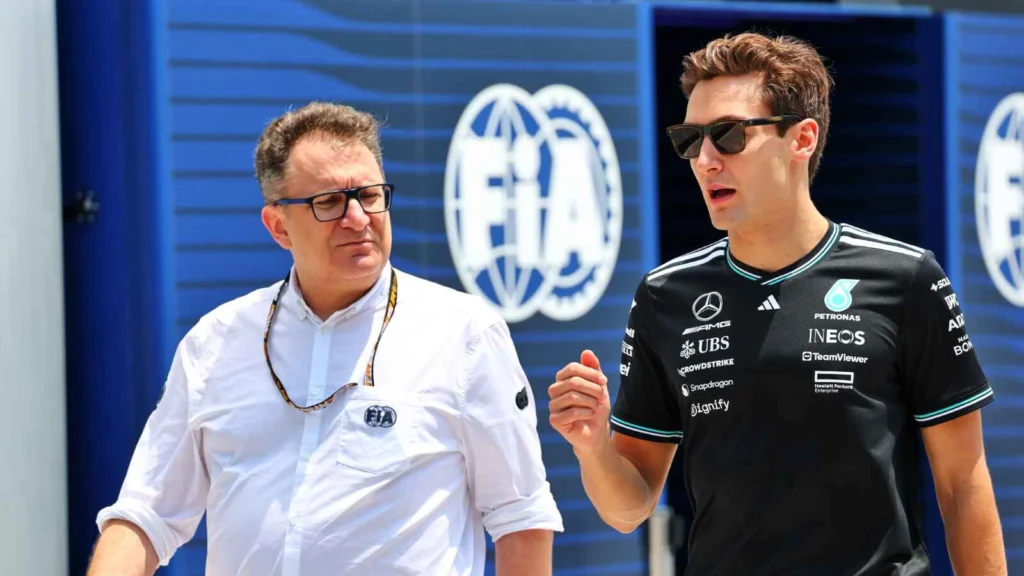 The FIA single seater director, Nikolas Tombazis, has admitted the porpoising and plank wear flaws were missed in the ground-effect era of F1
FIA cautious but confident porpoising to be a thing of the past in F1 2026
Tombazis was pressed on the issue of whether porpoising will pose a risk of being present within the 2026 cars, which boast different aerodynamic characteristics.
But he stated that, due to the nature of the floor on the ’26 challengers, such a problem should not rear its head again.
“We believe it is very unlikely to have similar characteristics because of a much flatter floor,” he said. “How much the downforce increases as you go lower is not as pronounced with this car as it was in last year’s car. We believe that will reduce the chance of porpoising.”
But Tombazis added caution, and failed to completely rule it out until the cars hit the track for the first time, initially in Barcelona later this month, and then in Bahrain for two official pre-season testing schedules in February.
“When the cars run for the very first time and have some issue, I wouldn’t exclude it,” he conceded. “But I would say that the rules are inherently less in that direction.
“So given the teams did a pretty good job of solving the issue with the previous generation of cars, it should be a much easier problem next time.”
READ MORE – Oscar Piastri reveals 2026 mindset after narrow F1 title defeat