
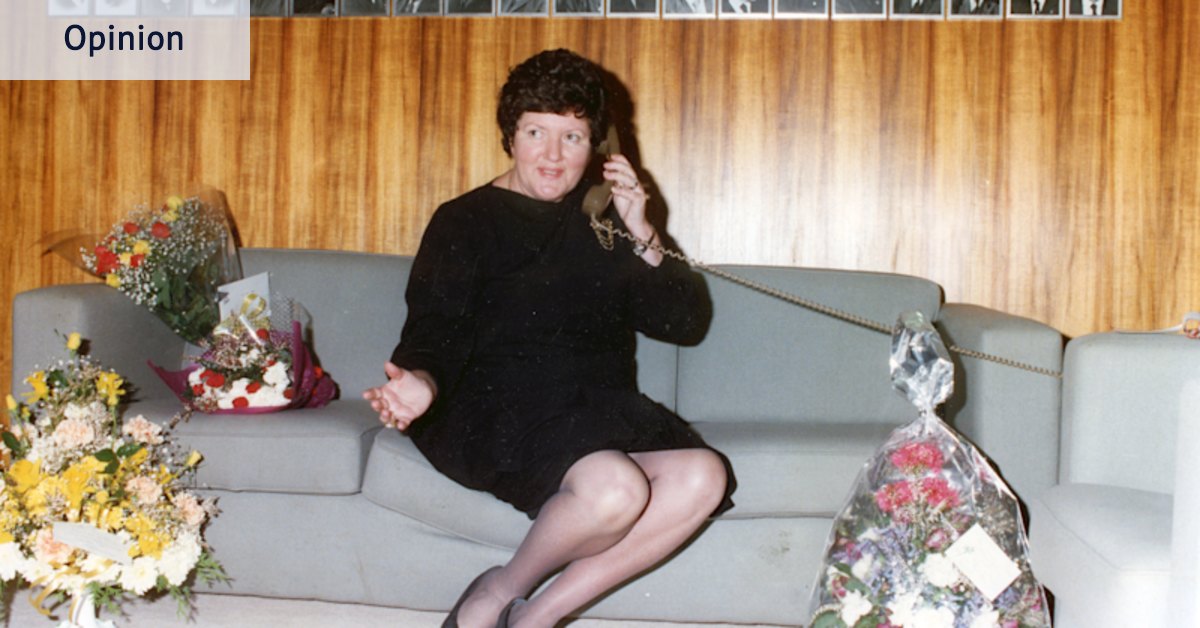
The unemployment rate in 1992 was 11.4 per cent, and youth unemployment was reaching 30 per cent. By comparison, Victoria’s unemployment rate now sits at 4.7 per cent and about 10.5 per cent of young people have not found work. These figures are trending in the wrong direction but are nowhere near the tough circumstances of the 1990s.
There are difficulties looming in terms of energy costs and keeping Victoria’s manufacturing base at home, but that base is not yet hollowed out and can be preserved and modernised.
Monash University politics professor Paul Strangio concedes there are parallels between then and now, but says the current situation is far less dire for Labor.
“We can all imagine that Labor will still survive the next election. A lot can happen over the next 12 months,” he says. “Kirner was doomed, the government was doomed, pretty much from 1990 if not 1989.”
So if history is not repeating, are there still lessons to be learnt from these insights into a long-term Labor government?
Kirner was forced to turn to selling off government businesses to support the budget, and managed to do so for significantly better prices than the cabinet expected. Perhaps that indicates what can be done when embracing innovative approaches to find budget solutions. Allan’s challenge is that in the modern era there is little left to sell.
The premier could also use the release of documents that informed the rollout of poker machines in Victoria as evidence why the government could go harder on tackling gambling harm or bring its reforms forward.
Loading
In the 1980s, the industrial relations minister authorised a raid on the Builders Labourers Federation, the union was deregistered, and the government locked it out of work on state-funded projects amid concerns about its operations.
Allan has promised to root out the rotten culture at the CFMEU exposed by The Age, and late last year passed reforms to labour hire laws. The just-released cabinet documents show the state has the capacity to go further if the premier’s current planned solutions fail to fix the industry.
The cabinet papers also reveal a government committed to serious reform in areas such as social justice, education, transparency and electoral policy.
Removing antiquated laws that allow upper house parties with small vote shares to pool preferences and get elected, a move that is widely anticipated, would be a good start in modern times but should be accompanied by reforms to make the upper house as representative as possible.
There are no votes to be gained in improving freedom-of-information legislation, but an overhaul of the current system to favour disclosure would be a fitting tribute to John Cain, the premier who introduced the laws and who is the reason we are reading cabinet documents today.
But the most useful lesson in these cabinet papers may suit the purposes of Opposition Leader Jess Wilson.
They paint a picture of a government that achieved much having formulated major policy platforms before coming to power.
“It was a government also underpinned by a lot of work in opposition in terms of developing policy. You don’t seem to see that sort of activity emulated by modern political parties,” Strangio says.
Loading
The cabinet knew what it stood for and what it wanted to achieve. This allowed it to undertake significant transformation for the state and continue the modernising of Victoria begun under Liberal premier Rupert Hamer.
There is less than 12 months to go until the state election. The Coalition would be wise to emulate the work of Cain and have a significant policy agenda that would give it, and the public, confidence it is capable of governing.
It’s a sentiment echoed by James Cain, John’s son, who says a lot of the reforms of his father’s government can be directly linked to the work done in opposition.
“If there’s one thing that echoes through the decades, that truth in political life exists now as it did then,” he says.
“If you do the hard work and you’ve got a really sound policy proposition to offer, and you have the privilege of being elected, you can do extraordinary things.”
Kieran Rooney is a Victorian state political reporter.
The Opinion newsletter is a weekly wrap of views that will challenge, champion and inform your own. Sign up here.