
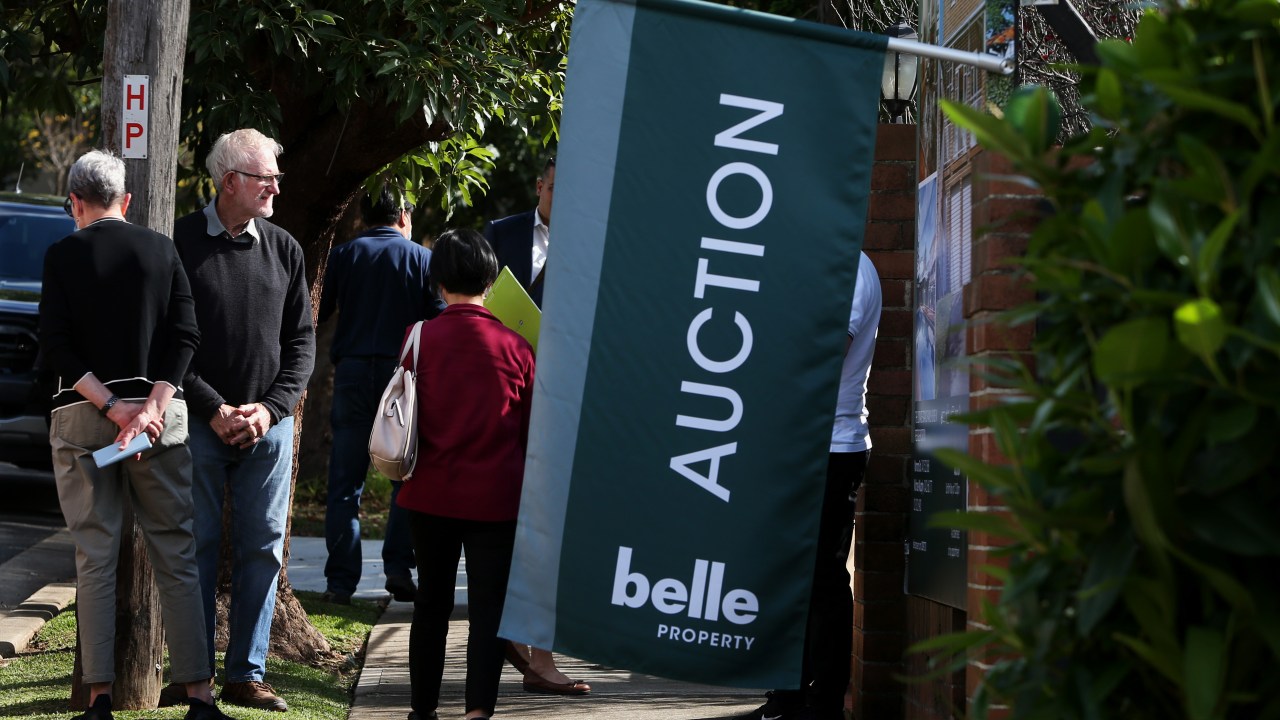
Looming rate hikes and sticky inflation have hurt house price growth after a strong lift across the nation where prices rose by $71,400 on average in 2025.
Fresh data from analytics firm Cotality (formerly CoreLogic) showed the average dwelling value lifted by 8.6 per cent last year while three capital cities enjoyed double digit increases.
Darwin property prices boomed 18.9 per cent last year while Perth values lifted 15.9 per cent and homes in Brisbane jumped 14.5 per cent.
Despite major increases in property prices throughout the year, values took a hit in December with average dwelling values in Sydney and Melbourne both sinking 0.1 per cent.
All other capitals saw price rises last month but some of the momentum in the market evaporated over concerns the Reserve Bank of Australia’s next cash rate move could be up.
Values lifted 0.7 per cent in December, below a 2025 peak of 1.2 per cent in October.
Cotality’s research director Tim Lawless said this softening in the market pointed to a sluggish start for house prices in 2026.
“Renewed speculation that the rate-cutting cycle is over and the next move from the RBA could be a hike has dented housing confidence,” Mr Lawless said in a statement.
“A ‘higher for longer’ setting on interest rates, alongside a resurgence in cost-of-living pressures and worsening affordability pressures, looks to have taken some heat out of the market.”
Money markets say there is about a 39 per cent chance of a rate hike when the RBA meets in February.
Commonwealth Bank of Australia and NAB are now tipping a 0.25 per cent hike in February while RBA governor Michele Bullock in December said the central bank was considering the possibility of hikes at future meetings.
It comes as inflation rose 3.8 per cent in the year to October, well outside the RBA’s 2-3 per cent target band.
AMP’s chief economist Shane Oliver said the slowdown in house prices was “partly seasonal” but also related to concerns about interest rates.
“The slowdown likely also reflects increasing talk of rate hikes for this year depressing home buyer demand at a time when affordability is already very poor,” Mr Oliver said.
“Poor affordability is likely particularly biting in Sydney along with less negative listings and stronger supply and the malaise around Victoria is likely impacting Melbourne.”
Despite a slowdown in the market, properties in regional areas reported major lifts throughout 2025.
Dwellings in regional Western Australia jumped 16.1 per cent as properties in regional Queensland lifted 12.6 per cent and homes in regional South Australia boosted 11.1 per cent.
Regional property values lifted 9.7 per cent throughout the year, outpacing the 8.2 per cent lift across all capital cities.
Three interest rate cuts from the RBA throughout 2025, where the rate fell from 4.35 per cent to 3.6 per cent, were the single most important factor behind dwellings rising, Mr Lawless said.
“Stimulus from our interest rates alongside the already really tight supply levels is probably the best explanation of why we’ve seen a pretty strong growth outcome through the year,” he said.
High value homes experienced a relatively minor rise in December (0.2 per cent) compared the lower and middle market properties (1.1 per cent) as first home buyers and average Australians search for affordable houses.
“This trend, where upper quartile values have recorded a lower rate of growth, has played out across every capital city through the year, as affordability and serviceability pressures deflect demand towards the lower price points,” Mr Lawless said.