
This article was first published in Rouleur Issue 140
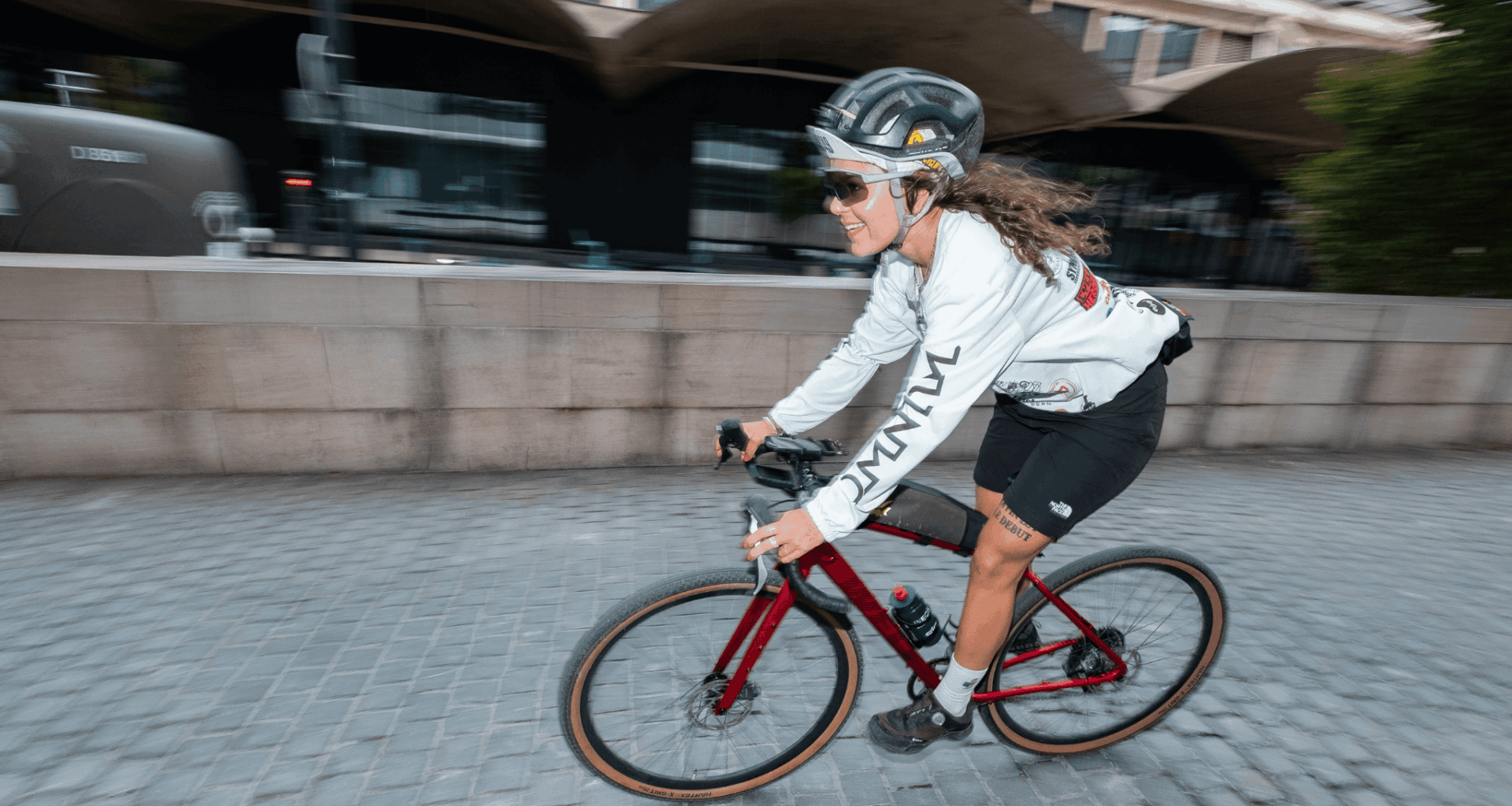
Even in the dead of winter, when the sun set hours ago, and rain is coming down steadily, Paname Gravel Ride goes on. Every Wednesday evening, Paris-based gravel enthusiasts take the train out from the city, escaping crowds, irritated bike commuters, and traffic, returning via singletrack trails, unmaintained farm roads, and all sorts of unpaved terrain. Gravel is a loose description around Paris, and some of these routes involve more mountain bike tracks and untamed fields than the smooth white gravel of Strade Bianche, but that only appears to stoke people’s enthusiasm. The “no-drop” weekly group rides offer a warm community atmosphere, if you’re willing to rally after work and return home around 11, perhaps even after a beer or two.
When I joined one Wednesday, we took the train to Conflans-Sainte-Honorine, west of Paris, and cruised 50 kilometres back to the city, weaving through winding singletrack trails in the forest, chunky dirt roads, and canal paths. People stopped for photos and jokes, and everyone waited for the whole group to catch up after any technical sections or steep hills. After several hours away from the urban chaos of Paris, we hit the quays of the Seine after dark, with the Eiffel Tower illuminated.
“One of the best parts of cycling at night is discovering the city and the surrounding areas with a completely new perspective – and tracing the group’s headlamps through dark forests adds the dose of adrenaline I wouldn’t otherwise find on a casual ride,” Kam Butler, a regular rider with PGR, told Rouleur.
With cycling’s evolution, even amateur cyclists pay attention to how many grams of carbs they’re eating per hour while riding, tracking their FTP, buying aero helmets and, of course, colour coordinating their kits. Some people who have never raced still bring €12,000 bikes to group rides, and will proffer opinions on Rapha versus MAAP. When even recreational cyclists are concerned about marginal gains, getting into the sport can feel very intimidating. And expensive. Paris is no exception, but although the city is known as a fashion capital, there is also a strong cycling counterculture movement – eschewing the serious side of cycling and focusing on community, inclusion, adventure, and good vibes.
Vincent Roche, who has been riding with PGR since the start, said the group manages to be a perfect mix of sporty and welcoming.
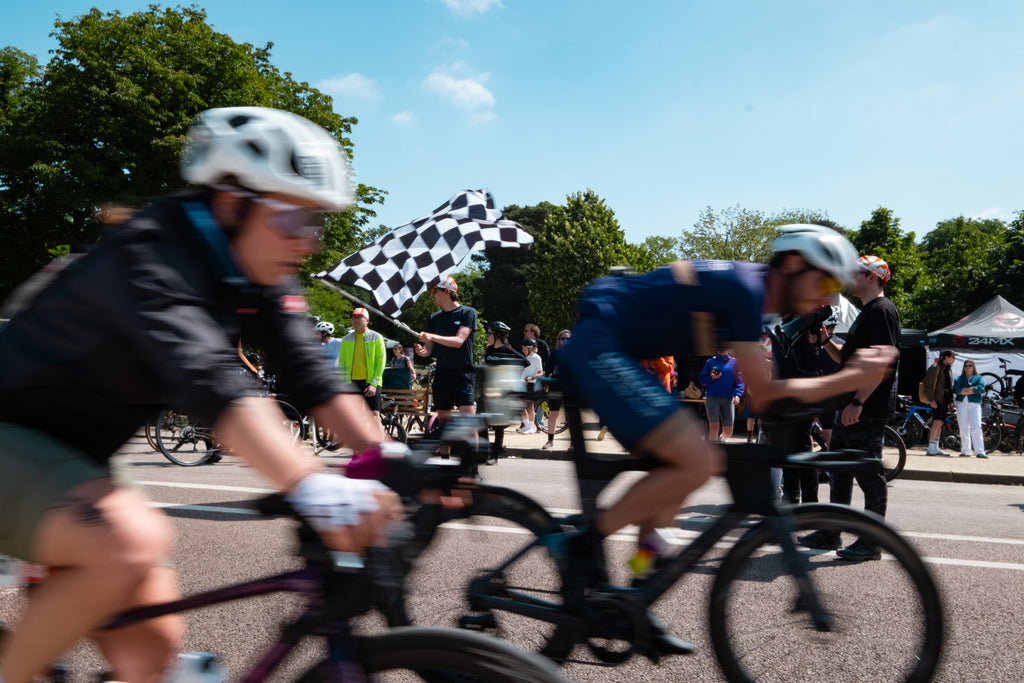
“I joined when it must have been the second or third ride, and I was immediately hooked. It was so cool. It was the community and athletic elements that I was looking for from the start,” Roche told Rouleur. “You’re never alone, even if you’re exhausted. There will always be someone waiting for you; the group will wait for you. The community aspect is a great dynamic, and no matter what your level is, knowing that there’s a fast group and a light group, there are two levels that allow you to adapt.”
Butler agreed. He moved to France two years ago. With PGR, he found a welcoming community of people who love to ride bikes on spicy trails, without taking themselves too seriously.
“I was looking for a community of adventure and some sort of accessible adrenaline around Paris. And what I found was a group of people who I think share that same desire to have these sorts of extra adventures while still being in a city like Paris, which isn’t necessarily known for being incredibly accessible to adrenaline or mountain sports,” Butler said.
“I was really appreciative of just how welcoming a crew it is. For me, being new to gravel biking and even group riding in general, it was super easy to feel like I could turn to anybody in the group and ask for help. I never felt like there is a risk of being dropped or left behind. They have a really good culture of making sure they rally and support everybody,” he added.
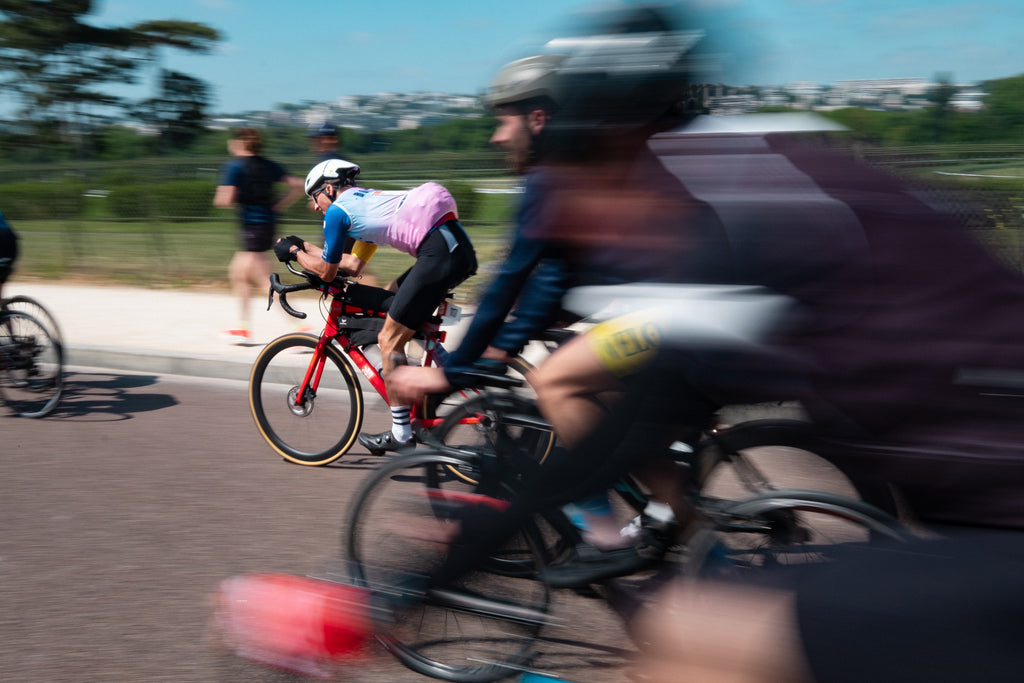
For Lianxin Wang, adventure, gravel rides, and alternative cycling groups have helped him rediscover his love for the sport, which had started to wear away when he was more narrowly focused on performance.
“I’ve grown tired of chasing watts and performance charts. I want to remember why I started cycling in the first place. It was never about burying my head in the handlebars – it was about that first spark,” Wang told Rouleur. “I miss that flame. That’s why I turned to gravel, to adventure, to the simplicity that first made me fall in love with the bike. At the end of the day, I’m just an ordinary bloke searching to feel alive again.”
City slickers
At the other end of the spectrum from spending hours in the forest, weaving through occasionally questionable – or nonexistent – trails, Paris also has a strong community of urban riders, who enjoy taking advantage of the city’s network of bike lanes and ripping through the streets at night, when most people are home or out eating dinner.
Every Monday evening, about 150 people meet at Place de la Bastille in Paris for a casual urban group ride through the city. There are, of course, some riders on carbon bikes, but others are on cargo or foldable bikes, with dogs in backpacks and kids riding on standing platforms of commuter bikes. The Mayo Jaune rides – a play on maillot jaune – cover about 20-35 kilometres through the streets of Paris at a relaxed pace, open to everyone.
“The first time I went there, I arrived in my full jersey, bibs, everything,” Anya Kucheryavaya said. “I realised that nobody was actually wearing full cycling attire unless they were literally cycling before or after. So it was a much chiller kind of ride.”
On the next Mayo Jaune rides, Kucheryavaya brought her dog in her backpack and wore casual clothes. She said that she sees these Monday rides more as a fun social event, rather than part of her training.
“It’s very all-inclusive. The vibe is very nice. Everyone is friendly. They are blasting music,” Kucheryavaya said. “It’s a great opportunity for cyclists who are just starting, or the ones who are not used to cycling the city centre because Mayo Jaune is great in terms of teaching you how to ride in big groups without being scared of anything.”
Other groups, like Ride du mercredi, host urban rides through the streets of Paris, with broadly similar aims: to promote cycling for everyone, reclaiming the city for people on two wheels. And because these urban rides are focused on having a good time and relaxing after work, they tend to finish with drinks at a bar—or even a picnic in the warm summer months when the sun does not set until late.
Revolution and evolution
Perhaps it’s not surprising that a city with a deep history of anarchy, revolution, and sometimes, reticence to evolve has so openly embraced the more fringe aspects of cycling. At the superficial level, many French riders still favour rim brakes over disc brakes today. On a deep level, some of the country’s strong social and political beliefs seep into the cycling culture – or counterculture – as well.
France’s modern history with anarchy can be traced back to the Revolution in 1789, and later, in many of the policies and ideas of the Paris Commune, a revolutionary government that held parts of the city for several months in 1871. Now, many of the volunteer associations that organise bike repair workshops and used gear sales describe their work as ‘activité militante’ (activism).
Vélorution has multiple workshops across France, including in Paris near Bastille, the iconic French Revolution site. For members, the association offers a studio and tools for bike repairs, as well as a community environment for people to learn how to maintain their bikes – including specific workshop hours for women and trans people. Vélorution also hosts ‘apéros-démontage,’ after-work drinks and bike dismantling sessions, using both donated bikes and items from a bicycle dump at the Porte des Lilas waste collection centre on the eastern edge of Paris. Twice per month, the association brings back bike ‘carcasses’ on homemade carts that people can harvest for parts. At these apéro events, people collectively disassemble the bikes and organise the usable parts to stock the workshop.
Vive la différence
Although it can be fun to take training and racing seriously, sometimes, it can be too much, especially for newer cyclists. This is where 24h Longchamp, an all day and night race where cyclists loop the 3.5-kilometre track and famous training ground in western Paris. Some cyclists take the competition seriously, but many see Longchamp as a social event rather than a race. There is no official ranking, and the event explicitly states that “the ultimate goal is not to cover the most kilometres”.
Everyone has their own ambitions, and many compete as relay teams, setting up camp with tents and snacks and alternating laps.
Camille Sohier rode 24h Longchamp as a relay with her boyfriend and two friends – a very different experience to the solo ultra races and other rides that she usually participates in.
“I threw myself into it. I went in not knowing what to expect, and actually really enjoyed it, especially because we did it as a team, which brought cohesion and team spirit into a sport that you usually do on your own,” Sohier explained.
For 24 hours on the track, people ride Bromptons, Vélibs (Paris’s city bike share network), mountain bikes, fixies, and cruisers. With the tents, megaphones, and foldable chairs, the grassy field near the cycling track looks more like a music festival than a bike competition.
“When you’re riding on the track, you’re all alone, while your friends, the other three on the team, are fully enjoying the atmosphere,” Sohier said.
For Sohier, the team connection and festive ambiance made 24h Longchamp a unique event.
“When you’ve only slept for an hour and a half because that’s all you could fit in, and you’re cosy in your little sleeping bag in the middle of Longchamp, honestly, you don’t want to ride. The only reason you do it is for the team. And I really liked that. There’s a true team spirit, which is something you don’t normally find in cycling, which is still a fairly solitary sport.”
With inspiration from the team, Sohier also found a way to challenge herself differently as a cyclist.
“It was an effort I wasn’t used to, since I’m normally more of an endurance rider, where I go for a long time without pushing myself too hard, but I really enjoyed it. I liked the team spirit and the fact that it pushed me to ride differently, to ride fast and hard for an hour and a half, and that was it. It also made me realise that I was capable of doing something other than riding for a long time at a slow pace, and that I was also capable of riding a little harder and maintaining that pace.”
Going underground
In Paris, alleycat races evolved from newspaper deliveries by bike — creating a race that emulates their work environment.
Alleycats are unsanctioned bicycle races that typically occur in cities, and are often organised by coursiers, bicycle messengers, and delivery people.
“Alleycats are a way to compete with others, but also a way to get everyone together and have fun around a race and an adrenaline rush. It’s another aspect of the coursier community,” Romain Abeille told Rouleur. Abeille has been a coursier for 18 years and participated in alleycat races for almost as long.
For 11 years, Boss 2 Paname has been organising an alleycat championship, cargo bike races, and other underground events. The races involve checkpoints, incorporating tasks and tricks at each stop in a scavenger hunt style. Although these are competitive and focus on performance, chaotic fun is still a priority.
The Paris group puts on a series of alley-cat races through the summer and autumn, starting with ‘BivouAlleycat’ in May, a ride and street camping event in Paris’ 13th arrondissement. The main race is in September, and the series concludes with a costume and Halloween-themed race in November.
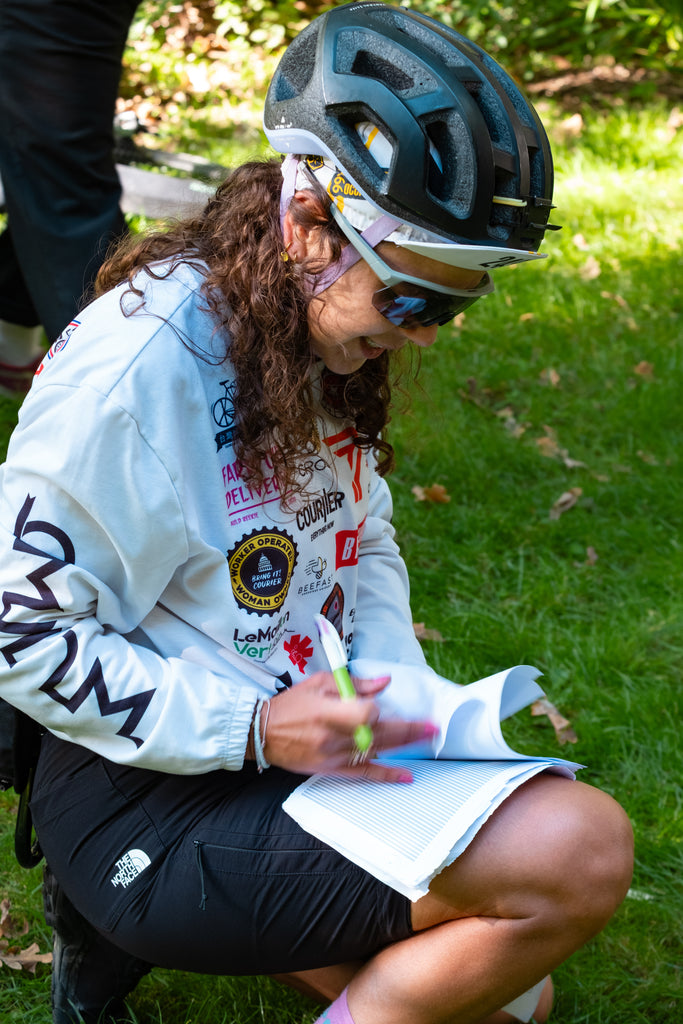
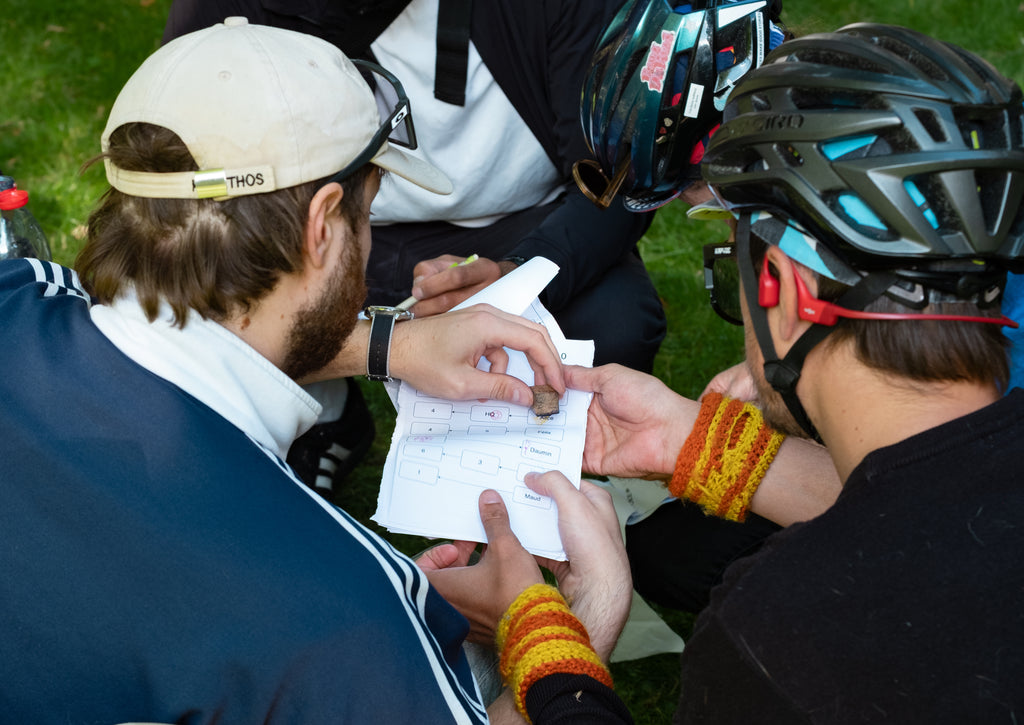
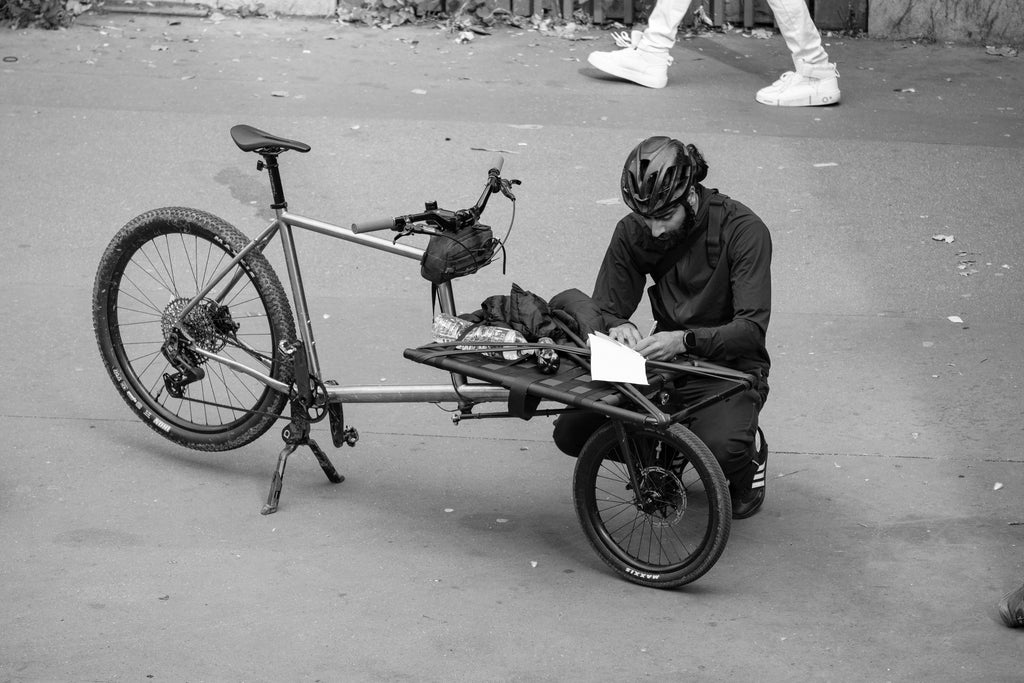
In September, more than 30 riders on an eclectic mix of cargo bikes, vintage road bikes, fixies, and mountain bikes gathered in the 13th arrondissement, where they were handed roadbooks with a map of checkpoints, a Microsoft Paint sketch map, and various challenges to decode and complete. To a casual observer, deciphering the codes and drawings in the roadbook were like reading another language, but the instructions seemed clear to everyone participating – their own sort of bike messenger code.
Riders raced around the neighbourhood, carrying tiny paper cups filled with water, stopping to complete track stands, take selfies, and turn their socks inside out. Each challenge and checkpoint had a corresponding stamp in the roadbook.
“It’s really like an orienteering race,” Abeille explained. “Navigation is the main factor that will determine whether you’ll manage to get to a checkpoint quickly or not. There’s no point in pedalling like crazy and taking risks if you’re not going in the right direction. An alleycat is also a race where you have to be clear-headed. If you put everything into the bike and your legs, your brain stops working and you make bad decisions.”
Throughout all these events, regardless of the terrain and the type of bikes people ride, there is a strong sense of community and solidarity. In Paris, anyone is able to find the right cycling niche for them – there is something for everyone. Bikes really can take you anywhere.