
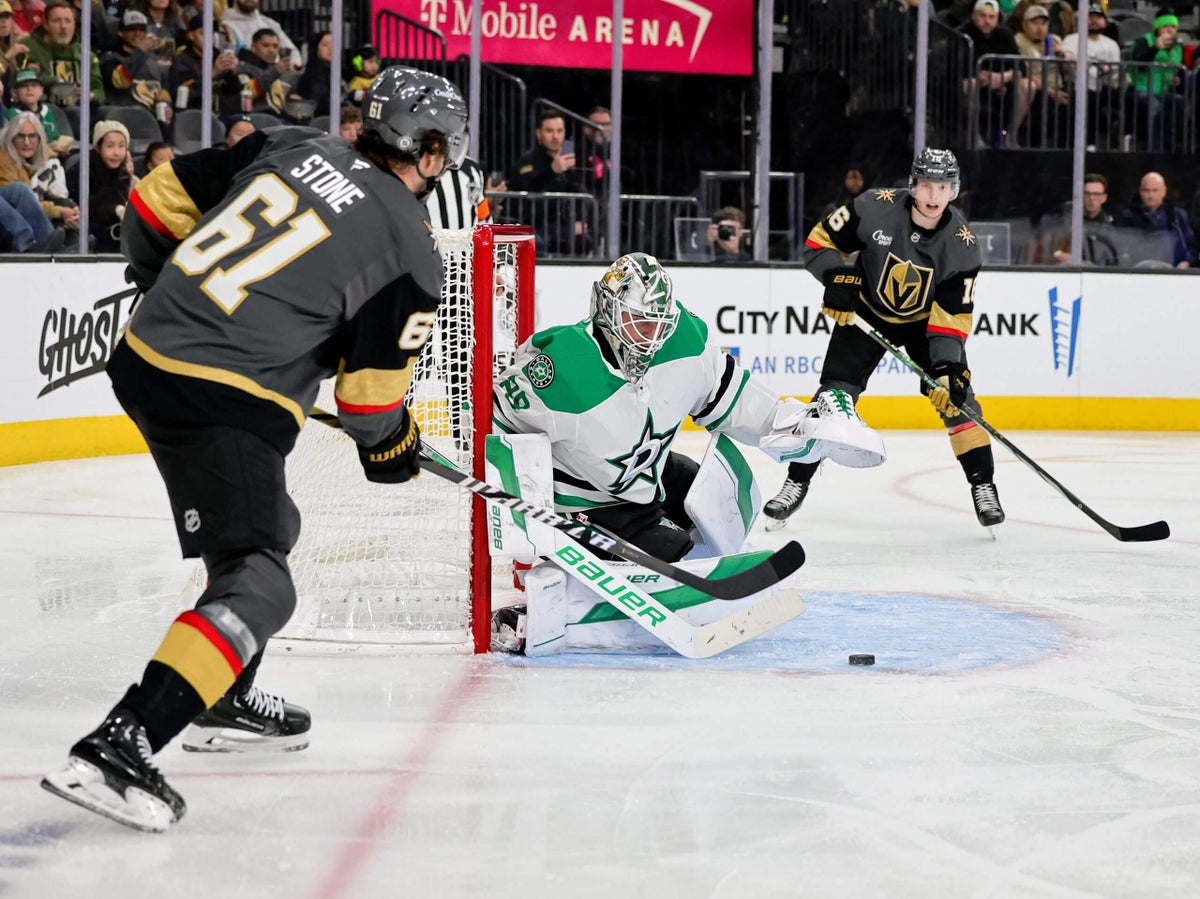
When Joonas Korpisalo played for the Columbus Blue Jackets, then-coach John Tortorella gave him one assignment against the Washington Capitals power play: handle Alex Ovechkin’s left-elbow one-timer. The Columbus penalty killers would take care of everything else.
Korpisalo didn’t mind the task. During the goalie’s time in Columbus, Ovechkin ripped 14 power-play shots on Korpisalo. The ex-Blue Jacket stopped all but one.
It is with a sprinkle of sadness, then, that Korpisalo has noticed shooters, including Ovechkin, considering alternatives.
“One hundred percent,” the Boston Bruins goalie answered on whether he was seeing fewer elbow one-timers on the power play. “Especially the top-down one-timers — way less. Everyone’s so skilled. I think they can make even better plays. Everything goes down low, and they make the plays down there.”
That Korpisalo, mostly a backup, feels confident against the NHL’s premier power-play striker underscores the following point: a PP one-timer from Ovechkin’s office is not a high-danger scoring chance. Today’s goalies stop them all day.
This season, Ovechkin has two power-play goals. Neither has taken place from his signature location.
According to Clear Sight Analytics, there had been 339 PP one-timers taken league-wide from Ovechkin’s playground as of Dec. 30, 2025. Only 13 had gone in (3.8 percent shooting percentage).
“We love it,” Clear Sight Analytics chief operating officer John Healy said of the PP elbow one-timer. “It sounds great. You’re obviously excited when you score on it. They do happen, right? It’s not that it’s ever a zero. It’s just low percentage. That’s where the struggle is. Because you’ll have coaches say, ‘It’s Ovechkin. I still want him shooting it.’ We’re not going to disagree. We’re just going to tell you it just doesn’t go in as often as you think.”
The best power plays are focusing their firepower on more dangerous ice near the net. They’ve seemingly made a breakthrough.
The Edmonton Oilers (33.3 percent) are on pace to record the best power play of all time. The Pittsburgh Penguins (30.2), Dallas Stars (29.8) and Detroit Red Wings (25.2) are also in the neighborhood.
“Nowadays, everything is down and in. Down and in,” said the Bruins’ Mark Kastelic. “To the goal line. To the bumper. The one-timer, there’s only a few guys in the league that can beat the goalies clean nowadays. You have to be aware of it. There’s just a lot more threats out there now.”
Selective shooting
Entering 2025-26, the NHL was trending downward in terms of PP shots. In 2024-25, there were 10,118 shots taken on the power play. That was down from 11,998 in 2023-24. In 2022-23, there were 12,247.
Through Thursday, teams were on pace to take 11,287 shots by the conclusion of 2025-26. Time will tell whether this is a midseason blip or a real turn. It may be because teams were averaging 3.0 power-play opportunities per game, up from 2.7 in 2024-25.
As for individuals, only Nathan MacKinnon is projected to land 100 or more shots on the power play by season’s end. In 2024-25, Brady Tkachuk led all players with 79.
Up top, you would encounter little disagreement if you classified Adam Fox, Quinn Hughes and Cale Makar among the best PP quarterbacks. Each has just two power-play goals. Without traffic in front, a shot from the point is a wasted opportunity.
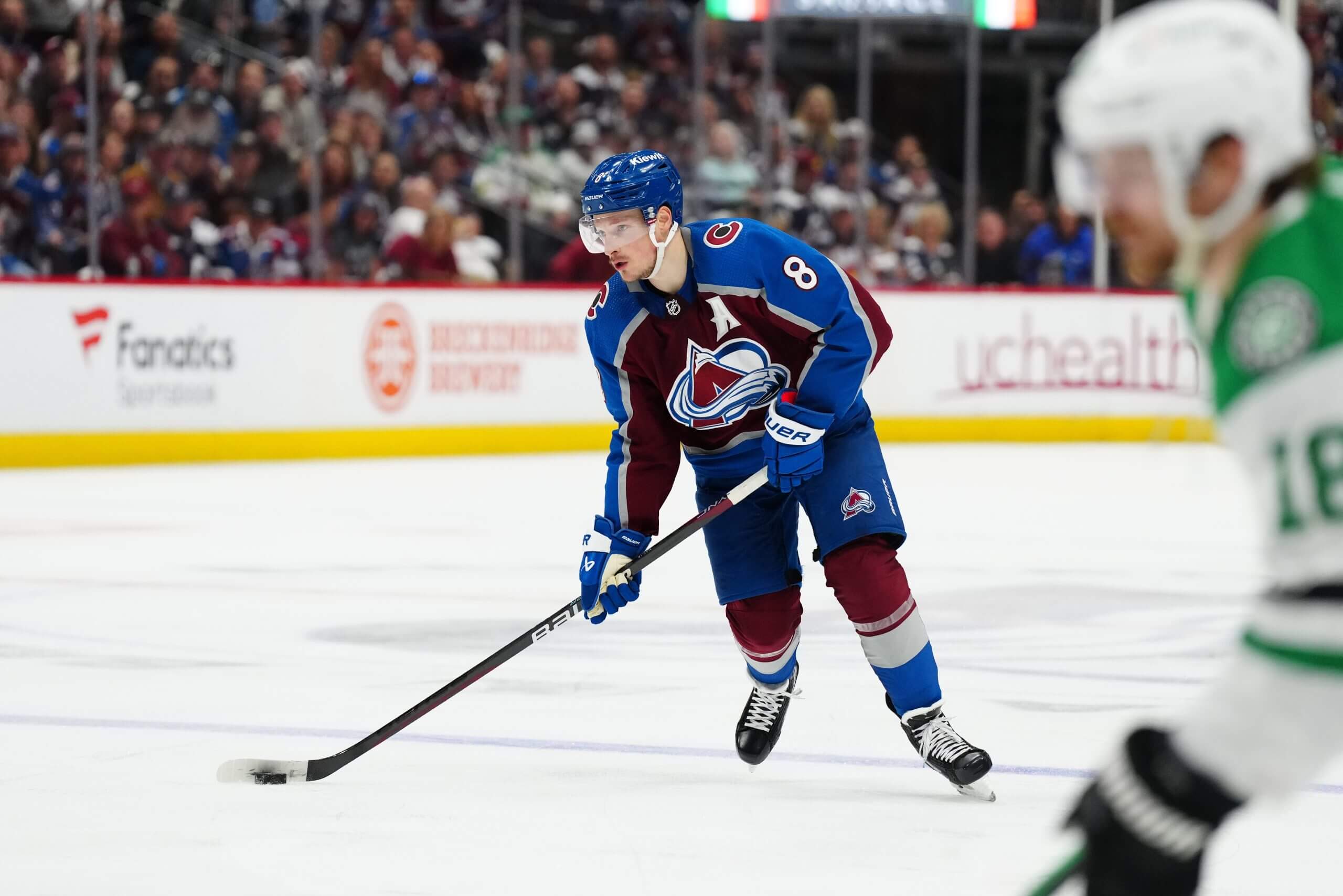
Cale Makar’s vision and passing get the Avalanche more power-play goals than his shots. (Ron Chenoy / USA Today)
The emphasis, then, is on quality over quantity.
Consider that the Red Wings had an NHL-best 17.5 expected shooting percentage on the power play as of Dec. 30, per Clear Sight Analytics. In 2024-25, the Tampa Bay Lightning and New Jersey Devils led the NHL at 15.5 percent. Detroit’s No. 1 PP unit of Moritz Seider, Alex DeBrincat, Lucas Raymond, Patrick Kane and Dylan Larkin is practicing patience to create high-percentage looks, regardless of how much time it takes.
“I know it’s going to bother every fan, usually in the 300s, that are yelling ‘shoot it’ when they go 10, 12 seconds without shooting,” Healy said. “But we don’t need four low-danger chances. We need, literally, one high-danger.”
The most dependable way to score on the power play is off a slot-line pass below the faceoff dots. A goalie simply cannot keep pace with a Connor McDavid pass across the slot line, for example, for Leon Draisaitl to one-time, often from a sharp angle.
But what is obvious to power plays is similarly straightforward for penalty kills. The PK’s No. 1 priority is to eliminate the slot-line pass. With more teams employing the diamond formation, there are enough sticks and bodies in place to deny the look. This way, penalty killers can contain power plays to half of the offensive zone.
“We’re taking it away,” said the Bruins’ Sean Kuraly, citing how his team uses three-point pressure at the top, half-wall and bumper. “Anything that goes across center ice for our goalie just gets exponentially more difficult to save. So let’s play half ice, three-on-four — the idea that you take away the back side and play three-on-four on one side of the ice.”
The latest innovations, however, are happening within half ice.
Below the line
Perhaps because of the increase in skill league-wide, teams are executing close-quarters plays. The down-low threat who used to set up on the goal line is now accepting pucks below it.
This makes life hard on a goalie. He must twist his head to one side and lower it to track the puck while sealing the strong-side post, sometimes using the reverse vertical-horizontal technique. He has to shoulder-check to read the primary threats: half-wall, bumper, back door. Then, if a pass comes out to the slot, it usually produces a high-danger chance because of how much movement is required of the goalie to achieve proper squareness and depth.
The Oilers executed this sequence perfectly against the Bruins on Dec. 18. When Draisaitl settled the puck on the right-side half-boards, McDavid, who had gained the offensive-zone entry, skated below the line. Zach Hyman stepped into the bumper for the one-time threat. This drew Charlie McAvoy and Nikita Zadorov. Meanwhile, Ryan Nugent-Hopkins slipped behind Kuraly and went back door. McDavid hit Nugent-Hopkins for a point-blank chance. Jeremy Swayman, who was in RVH, had no chance.
RNH PPG 🚨 #LetsGoOilers pic.twitter.com/mLF3iHJr5l
— Edmonton Oilers (@EdmontonOilers) December 19, 2025
“For a second, I see Hyman come in,” Kuraly said. “Then you realize this guy’s behind you. The second you realize he’s behind you, he’s this way. He’s that way. He’s gone. That’s it.
Personnel matters, of course. The Oilers, for example, have an elite power play partly because McDavid and Draisaitl cause chaos everywhere they go. Edmonton coach Kris Knoblauch can practically cede control and let McDavid and Draisaitl do whatever they want behind the wheel, systems be damned.
The Montreal Canadiens, in comparison, catch Knoblauch’s eye because of how they run their action through the right side. Whether they’re in the corner or at the goal line, Ivan Demidov and Juraj Slafkovsky like to control the puck and initiate options: into Nick Suzuki in the bumper, across the slot line for Cole Caufield.
“Every team’s a little bit different,” Knoblauch said. “Obviously the goals come from around the net, whether that’s a tip or a rebound or making a pass into the slot. But you look at teams and they generate their offense differently. There’s some good power-play teams. We just saw one on the road. Montreal, they’re dangerous making that pass from the guy in the corner having options. There’s some teams that rely on getting the puck over to the other side for the one-timer. But I don’t think there’s one way to do it. Kills are always adjusting. They want to dictate where that puck goes.”
The best power plays counter by advancing the puck one step further.
Out of the slot
Every power play is happy when they get the puck in the slot. Goalies and penalty killers panic because of the location of the chance to come.
But if the PK can contest a shot from the slot, a good goalie isn’t necessarily in trouble. As of Dec. 30, there had been 428 slot shots taken under penalty-killing duress. Only 19 resulted in goals (4.4 percent). Even if a player has a moment to shoot the puck, a dialed-in goaltender can get square to the shot. There were 230 shots where Clear Sight Analytics determined the shooter had time and space. Twenty-four went in (10.4 percent).
The elite PP attackers use slot chances to create better ones elsewhere.
“If (David Pastrnak) gets the puck in the slot, the goalie’s going dead red. He’s shooting to score,” Healy said. “I have to lock in and make the save. Everybody else in the world is worrying about trying to get in there and block it, whatever they can do. So what are you not doing at that point? Worrying about where any of the other four players on the ice are. So now you make that pass. The goalie has to go from locked and loaded to uh-oh and find where he’s going. The players who were supposed to be defending the pass aren’t, because everyone in the world is expecting a shot. What do you do when everyone in the world is expecting A? You give them B and give yourself an advantage.”
The player in the bumper, in other words, becomes less of a shooting threat. When, for example, Demidov hits Suzuki between the dots, Caufield gets open because the penalty killers have collapsed on the slot. With a short bump instead of a one-timer, Suzuki can find Caufield for a more dangerous chance.
A top power play, then, is not afraid to defer good shots. The best PPs work to produce better ones.