
Rugby fans who sat through RTE’s Sportsperson of the year the week before Christmas may have felt short-changed. The only highlights package came from Ireland’s 1985 Triple Crown campaign, to coincide with Ciaran Fitzgerald’s induction into a Hall of Fame. Leinster, reigning URC champions, were not represented. Nor were the 18 Irish Lions who contributed to a Test series win in Australia.
But no one complained out loud and maybe that’s because Irish rugby is not feeling especially positive about itself right now. In fact, it is not feeling positive about rugby in general, judging by recent comments from players and coaches about the predominance of kicking.
Munster’s attack coach Mike Prendergast linked the shortage of “standout games” directly to the data that says the most successful teams are ones who kick most frequently.
Gloucester’s Ross Byrne suggested that the IRFU should be re-training locks to become kick-chasing wingers, such is the importance of the aerial battle. Last weekend Tadhg Beirne put it rather bluntly when he said that “the style of the game has gone backwards”.
The subtext here is that Irish teams are being adversely affected by the year-old guideline to referees to penalise any defender ‘escorting’ kick-chasing opponents. More kicking is supposedly not just anti-rugby but anti-Irish, given that more aerial contests means more knock-ons means more scrums — and this favours the powerful packs of France, England and South Africa.
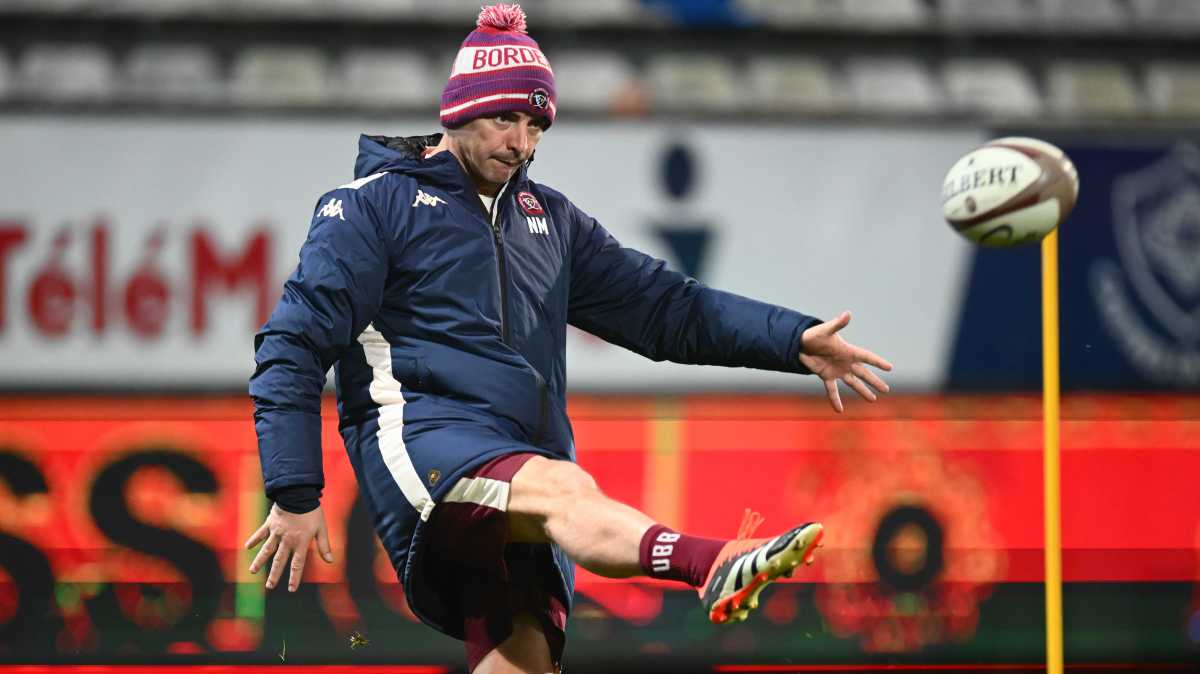
A week before the Champions Cup swings into action again, it made sense to seek the opinion of Noel McNamara, attack coach at Bordeaux, partly because they are reigning European champions and partly because there is a distinctly Gallic flavour to the next fortnight, with Leinster meeting La Rochelle and Bayonne, while Munster take on Toulon and Castres.
It also made sense because Bordeaux were easily the most watchable club team in 2025 — admittedly a year when Toulouse were without Antoine Dupont. Judging by their thrilling Mathieu Jalibert-inspired victory over the Bulls in Round One, Bordeaux are still playing beautiful rugby. The stats back this up — 75 tries in 15 games across Europe and the Top 14, where they lie fifth. But if you are expecting McNamara to join the chorus of Irish disapproval against kick-fests, prepare to be disappointed.
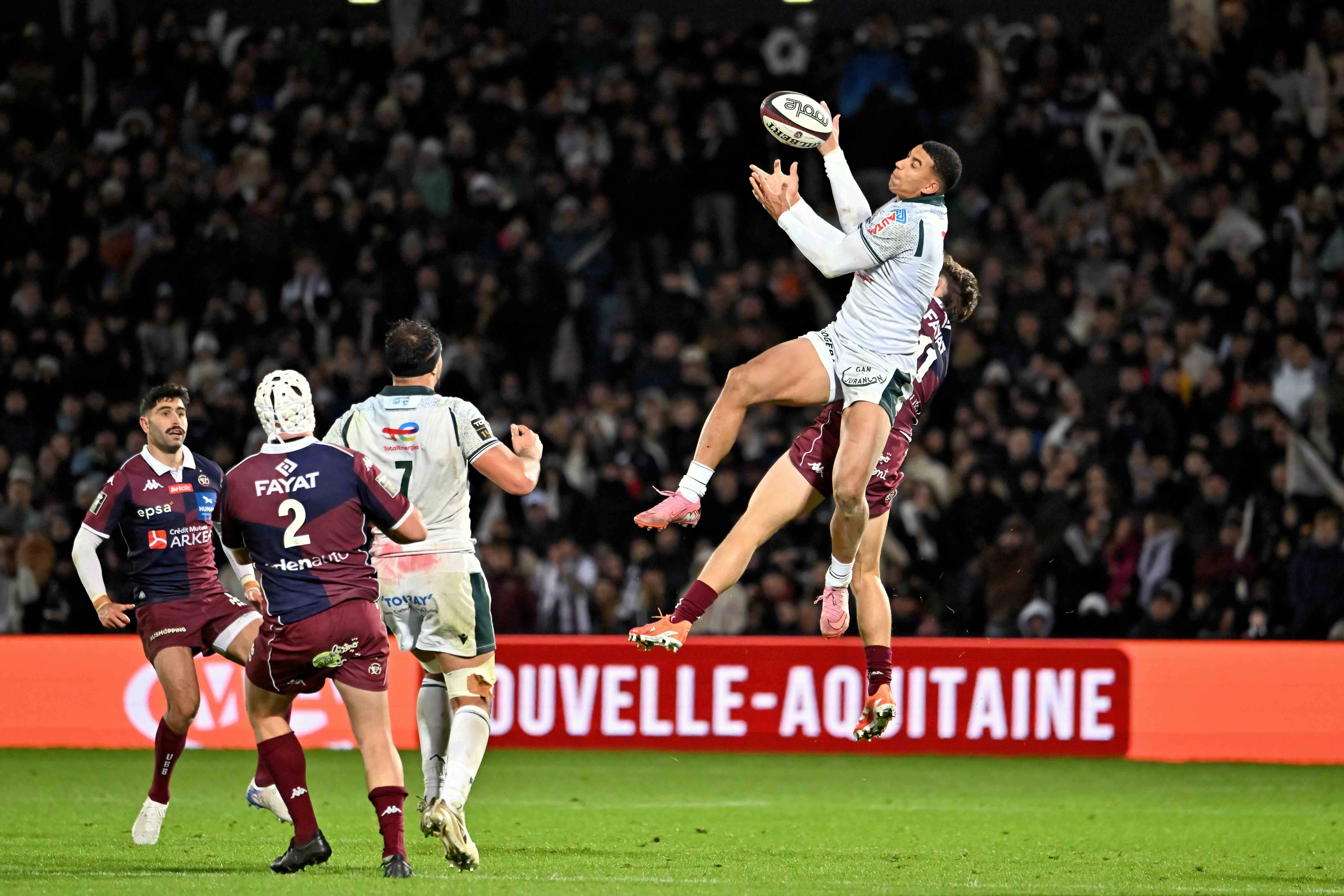
McNamara cites the success of Pau, currently second in the Top 14 table and exploiting the aerial brilliance of wide men such as Grandidier, pictured battling for the ball behind Bordeaux’s Xan Mousques
DANIEL VAQUERO/SIPA/SHUTTERSTOCK
“This idea that kicking doesn’t suit the Irish? It certainly suited Ireland when Joe Schmidt was coach,” he says. “We can’t say it suited us then but it doesn’t suit us now.
“The reality was Ireland were largely a contestable-based kicking team, with guys like Conor Murray and Rob Kearney among the best in the world at their roles. They doubled down so much on that philosophy that they picked a full back at 13 in Jared Payne. They had wingers who were brilliant at contesting kicks and generating opportunities off the back of that.
“Basically we were innovative and we were unbelievably good at it — and that’s basically why escorting came in. But that’s coaching. You look at your player profile and you maximise what you have. So, you know, get on with it. This is where it is.”
Some Top 14 sides have adapted quicker than others. McNamara cites the success of Pau, currently second in the table and exploiting the aerial brilliance of wide men such as Aaron Grandidier and Grégoire Arfeuil.
Bordeaux’s kicking stats have not changed but that is not to say their attack coach sees kicking as negative. It is an essential part of his attack. “The goal has always been to be as ‘all-court’ as possible,” he says. “We want to score from set-piece strikes, from turnovers, from counterattack. When we kick, it’s for a purpose — to relieve pressure, to transfer pressure. It often provides an opportunity to play in unstructured situations and that suits us.
“Basically, every team kicks on average around 25-30 times a game, though England have probably taken it to an extreme. But there’s a couple of misconceptions about its value and that’s because there’s so much data available. AI models are now being run that can interpret huge amounts of data in a very short space of time, but that data doesn’t always come with context. It also needs to be applied to the profile of your team.”
McNamara’s one gripe is with the way the breakdown is currently being refereed. In their attempt to allow an equal contest for possession, he says officials are showing too much latitude to jackalers, poachers and spoilers.
He is echoing the words of Leo Cullen, who implied last week that possession can be almost a liability, and of Prendergast, who described the breakdown as “a shit-show”.
It is a topic that’s expected to generate debate when World Rugby host their annual Shape of the Game conference in London in February.
“We’re seeing more and more toxic traits around those defensive breakdowns and that’s the area most in need of attention,” McNamara says. “It’s like there’s been a sliding scale of acceptability.
“The essence of the game is having a fair contest for possession and that’s why I agree with policing escort runners. It’s what’s happening after the aerial contest, at those breakdowns where it’s a free-for-all. If that was refereed strongly and the offside lines are refereed strongly, you’d have a far better game. It’s not about reintroducing escorts. It’s about reffing to the laws of the game.”
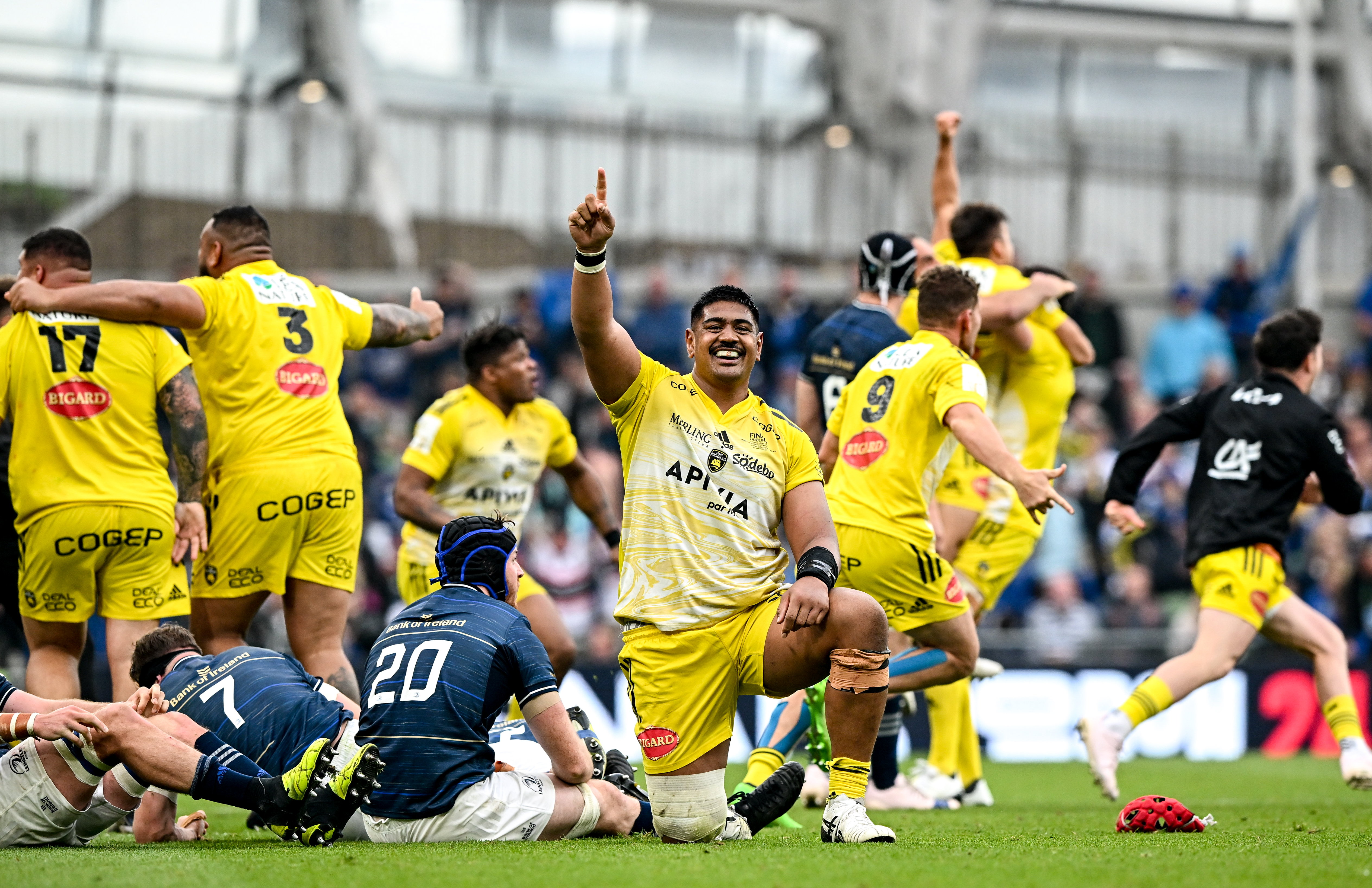
La Rochelle fought back to beat Leinster in the 2023 Champions Cup final, to Skelton’s delight
SPORTSFILE
This is not as straightforward as it sounds, however, given that there are different refereeing styles in the URC, Prem and Top 14, and even different URC protocols. All of which makes it confusing when the three leagues come together in Europe.
Still, certain games will be unmissable. The return of Ronan O’Gara to the Aviva Stadium never fails to exercise Leinster fans, many of whom will have seen his unfavourable depiction of them in Brendan Fanning’s book Touching Distance as “knob jockeys in their Brown Thomas gear.”
To be fair to the La Rochelle coach, he only meant those Leinster fans who were mocking him when his team went 17 points down early in the 2023 final. O’Gara describes their subsequent fightback as “poetry with a bit of muscle thrown in” but La Rochelle are a different team these days. Muscle-men like Will Skelton, Uini Atonio and Jonathan Danty are either injured or just past their best, while the enormously influential Tawera Kerr-Barlow has steered Stade Francais to third in the Top 14.
Currently in a rebuilding phase, La Rochelle lie tenth following a 60-14 trouncing in Toulouse described by O’Gara as “the biggest defeat of my coaching career”. It will be fascinating to see how he approaches the Champions Cup, where he already has five points from the victory over Leicester. Common sense dictates that he rotates selection for Dublin but this is Europe and O’Gara does not always operate on common sense.
We will have a better idea after this evening’s Top 14 clash at home to third-placed Toulon, who just happen to be Munster’s hosts next Sunday. Munster will travel with a degree of optimism after their bonus point victory at Stade Mayol this time two years ago, but Toulon were zero from two going into that game whereas currently, they are level with Munster on five points and head coach Pierre Mignoni has said that Europe is a priority.
So bring it on. Even in its diminished state, the Champions Cup can have restorative, energising effects, and our rugby batteries are in need of a January jump-start.