
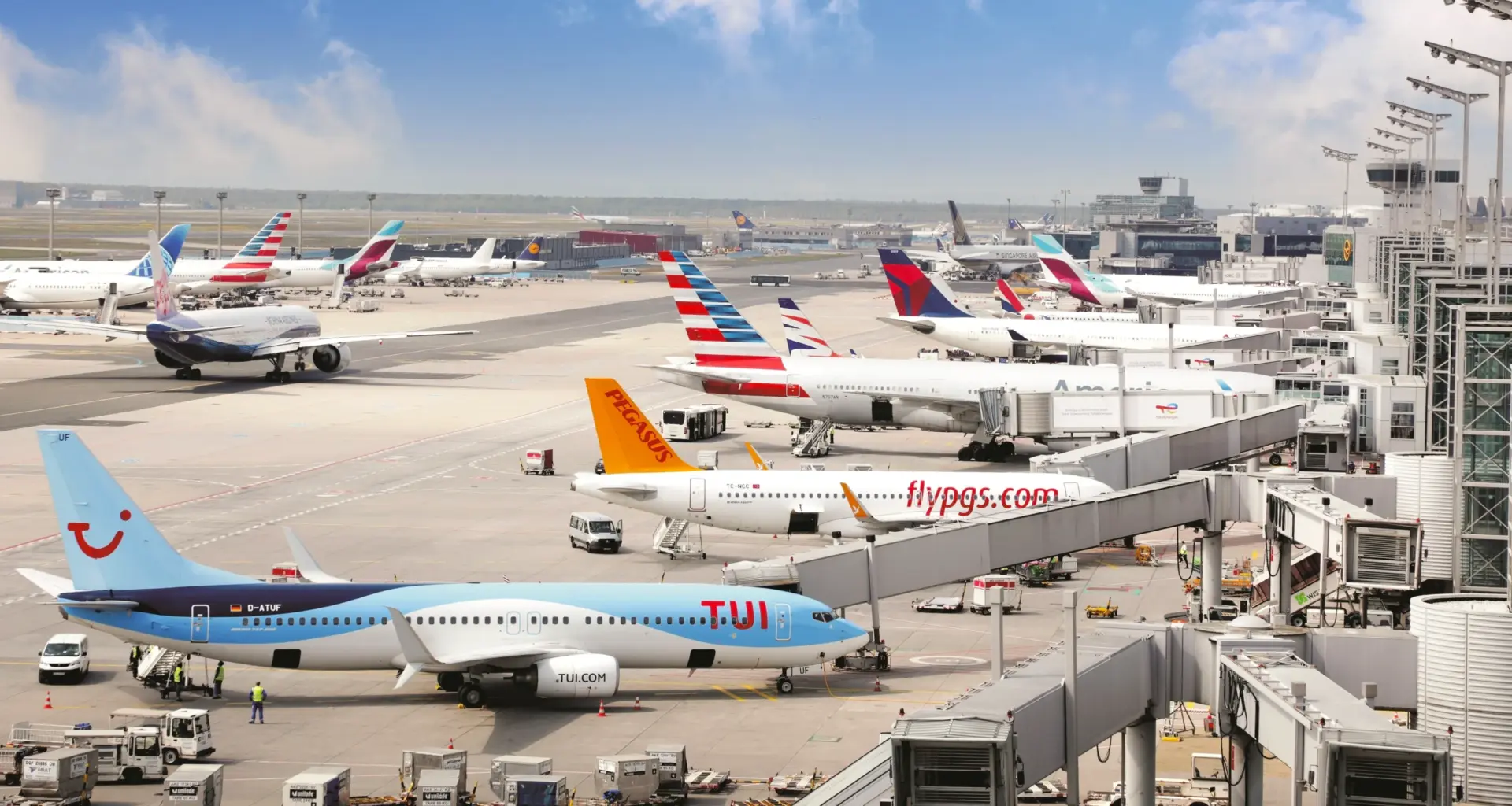
In recent years, the commercial aviation industry has witnessed significant growth, fueled by advances in aircraft technology, operational efficiency, and passenger demand.
Modern airlines are now able to maintain extensive fleets that balance fuel efficiency, capacity, and global connectivity. These fleets are not only numbers on a roster—they reflect an airline’s strategy, market reach, and ability to adapt to evolving travel trends.
As of December 2025, the airlines with the largest fleets include a mix of U.S., Chinese, European, and Middle Eastern carriers, reflecting the global spread of air travel.
Largest Airlines by Fleet Size
In this article, we are going to provide an up-to-date snapshot of these carriers’ fleets (as reported by Aerospace Global News), from single-aisle workhorses to the most advanced widebody jets.
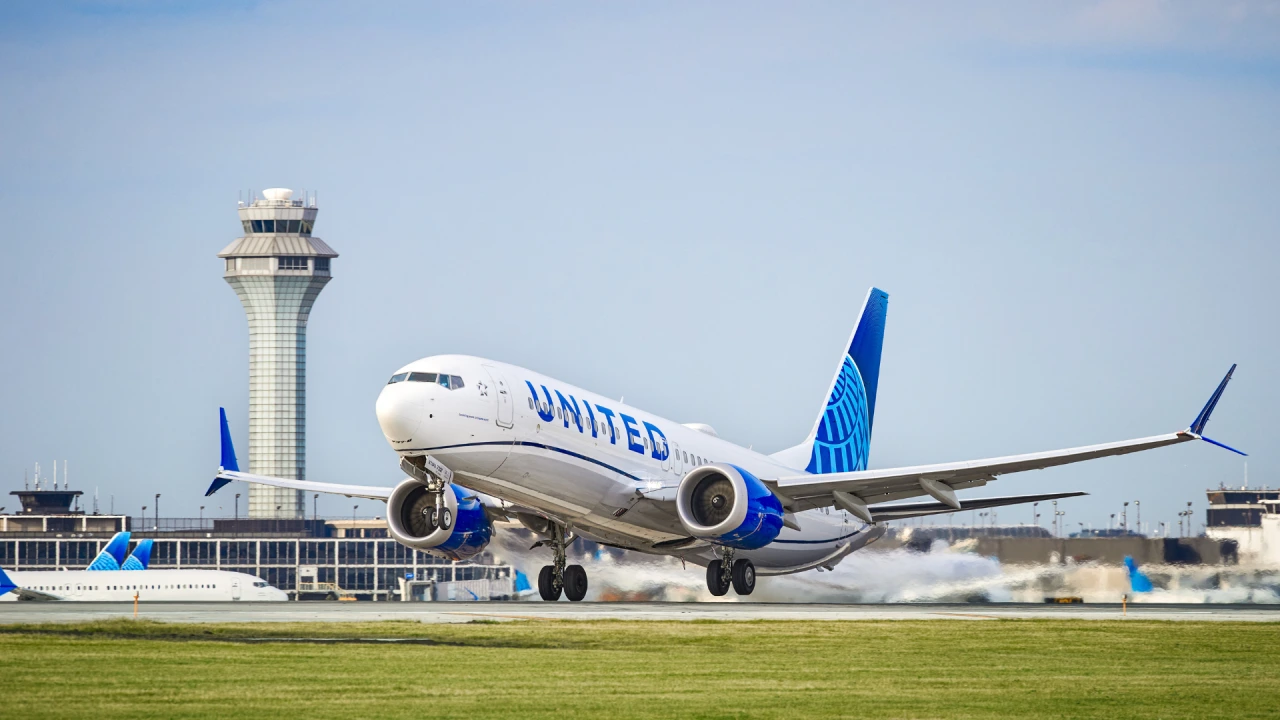 Photo: United Airlines CEO Scott Kirby’s LinkedIn Page
1. United Airlines
Topping the list is United Airlines (UA), which operates the world’s largest mainline fleet, with 1,058 aircraft. Headquartered in Chicago, United connects more than 370 destinations worldwide, a network unmatched by any other airline.
United’s narrowbody fleet primarily consists of Boeing 737 family jets and Airbus A320/A321 aircraft, alongside a few Boeing 757s. The widebody fleet, meanwhile, is exclusively Boeing, featuring the 767, 777, and 787 Dreamliner.
United’s fleet strategy emphasizes both domestic efficiency and long-haul flexibility. The airline’s latest delivery, a Boeing 737 MAX 9 in December 2025, highlights a continued investment in fuel-efficient aircraft to reduce operating costs and environmental impact.
Beyond numbers, United’s fleet diversity allows for a range of route structures. Narrowbodies dominate domestic and regional services, while widebodies support transcontinental and international flights, including routes to Asia, Europe, and South America.
With this fleet composition, United balances operational reliability with passenger comfort.
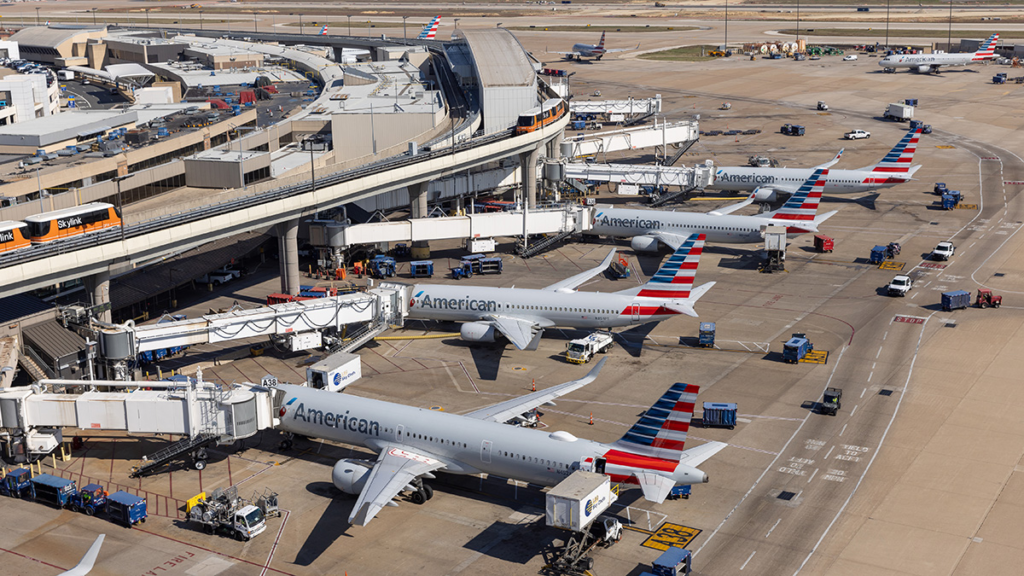 American Airlines Dallas Hub. Photo: American Airlines
2. American Airlines
Closely following is American Airlines (AA), with 1,013 aircraft in its mainline fleet. Headquartered in Fort Worth, Texas, American serves nearly 350 destinations worldwide.
The narrowbody fleet is a mix of Airbus A320/A321 family jets and Boeing 737 aircraft, while the widebody fleet is entirely Boeing. This includes 47 Boeing 777-200s, 20 777-300ERs, 37 787-8s, and 33 787-9 Dreamliners.
Such a lineup ensures American can operate both high-frequency domestic routes and long-haul international flights efficiently.
American’s recent delivery of a Boeing 737 MAX 8 in December 2025 reinforces its strategy of modernizing the narrowbody fleet.
By prioritizing fuel efficiency and operational standardization, American is able to maintain competitive economics across its domestic and international network, which remains critical in a challenging global aviation market.
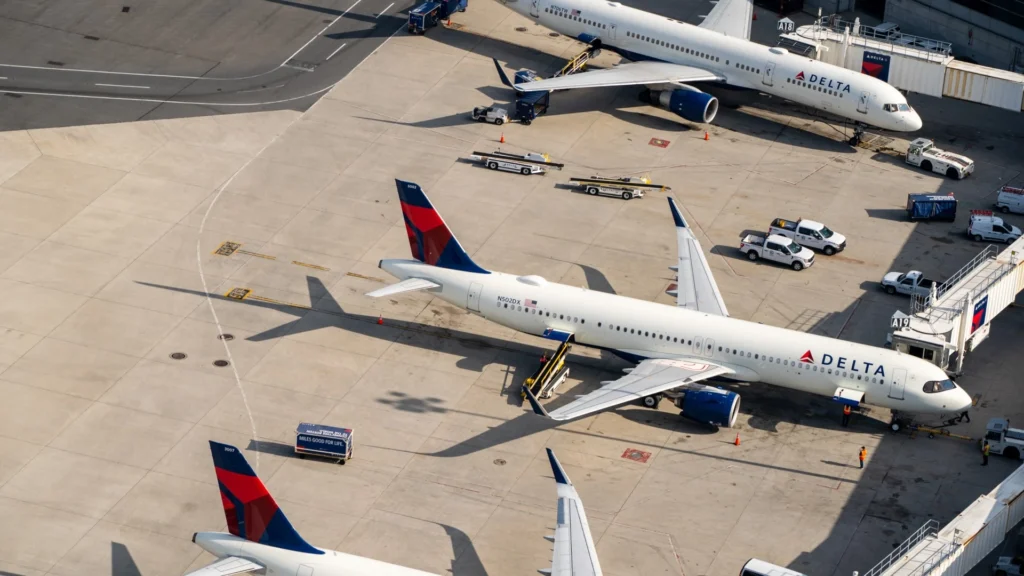 Photo: Delta Air Lines
3. Delta Air Lines
Delta Air Lines (DL), headquartered in Atlanta, ranks third with a fleet of 989 aircraft. Delta is the world’s largest airline by revenue and operates over 5,500 daily flights, covering nearly 325 destinations across 52 countries.
Delta’s fleet strategy diverges slightly from its U.S. peers: while its narrowbody fleet includes Airbus A220s, A320 family jets, Boeing 717s, 737s, and 757s, the widebody fleet is Airbus-only, comprising 81 A330s and 40 A350-900s.
The airline recently received an Airbus A321neo in December 2025, reflecting a continuous push toward fuel efficiency and passenger comfort on short- and medium-haul routes.
The Airbus widebody focus allows Delta to streamline training, maintenance, and operations for long-haul flights.
The A350-900, for example, provides extended range and superior fuel economy on high-capacity routes, demonstrating Delta’s strategic fleet alignment with passenger demand and environmental goals.
 Photo: ur-1988 | Credits to Creator
4. Southwest Airlines
Southwest Airlines (WN) holds the fourth spot globally and is the fourth-largest U.S. airline by passenger volume. Operating 810 Boeing 737 family aircraft, the low-cost carrier serves more than 100 destinations, emphasizing short-haul point-to-point connectivity.
Southwest’s fleet consists primarily of 737-700s, 737-800s, and MAX 8 aircraft. The airline’s outstanding orders for over 500 additional 737 MAX jets indicate a long-term strategy to modernize the fleet, maintain fuel efficiency, and support growth without adding fleet complexity.
The single-aircraft type approach allows Southwest to minimize maintenance complexity, optimize crew scheduling, and reduce operational costs—a hallmark of its low-cost business model.
Despite being smaller than the U.S. “big three” in international reach, Southwest dominates domestic leisure and regional travel in the United States.
 Photo: By AirportStudio – Own work, CC BY-SA 4.0, https://commons.wikimedia.org/w/index.php?curid=70087050
5. China Southern Airlines
China Southern Airlines (CZ) is the largest airline in China, with 708 aircraft in its fleet. Based in Guangzhou, it operates over 2,000 scheduled flights daily, connecting nearly 200 destinations worldwide.
The airline operates a mix of narrowbody and widebody aircraft, including Airbus A320/A321 family jets, Boeing 737s, COMAC ARJ21, and COMAC C919 for short- and medium-haul services. Its widebody fleet features Airbus A330s and A350s, as well as Boeing 777s and 787 Dreamliners for long-haul flights.
China Southern’s fleet reflects a hybrid strategy: adopting both established Western aircraft for proven reliability and new Chinese-built aircraft for domestic market support. The December 2025 Airbus A321neo delivery signals the airline’s commitment to modern, fuel-efficient aircraft.
 Photo: BriYYZ | Wikimedia Commons
https://commons.wikimedia.org/wiki/File:China_Eastern_Boeing_777-300ER_B-2005_(24367194719).jpg
6. China Eastern Airlines
China Eastern Airlines (MU), headquartered in Shanghai, operates the country’s second-largest fleet of 679 aircraft. Serving more than 225 destinations worldwide, the airline is a key member of the SkyTeam alliance.
Its 576 single-aisle jets and 103 widebody aircraft include a combination of Airbus, Boeing, and COMAC jets.
The airline received a Boeing 787-9 Dreamliner in December 2025, enhancing its long-haul capabilities. Like China Southern, China Eastern balances global reliability with domestic fleet innovation, leveraging both legacy and emerging aircraft models.
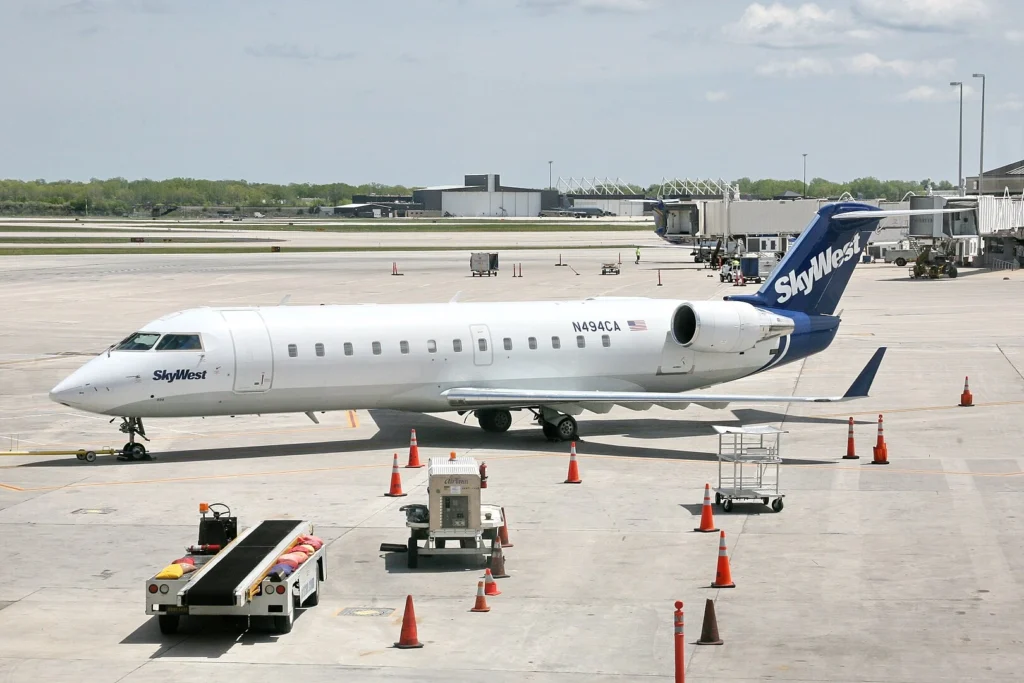 Photo: By Cliff from Arlington, Virginia, USA – SkyWest Airlines, CC BY 2.0, https://commons.wikimedia.org/w/index.php?curid=29576111
7. SkyWest Airlines
SkyWest Airlines (OO), a regional carrier in the United States, operates a fleet of 600 narrowbody aircraft, including Bombardier CRJs and Embraer ERJ regional jets. SkyWest services over 250 destinations for its partner airlines, including United, American, Delta, and Alaska Airlines.
Approximately one-sixth of the fleet is parked, primarily older CRJ200s and some ERJ-175s, due to regional pilot shortages and the high cost of operating smaller jets.
SkyWest’s focus on operating newer, more efficient aircraft allows it to maintain profitability while supporting the broader networks of its partners. It’s December 2025 Embraer ERJ-175 delivery underlines this fleet renewal strategy.
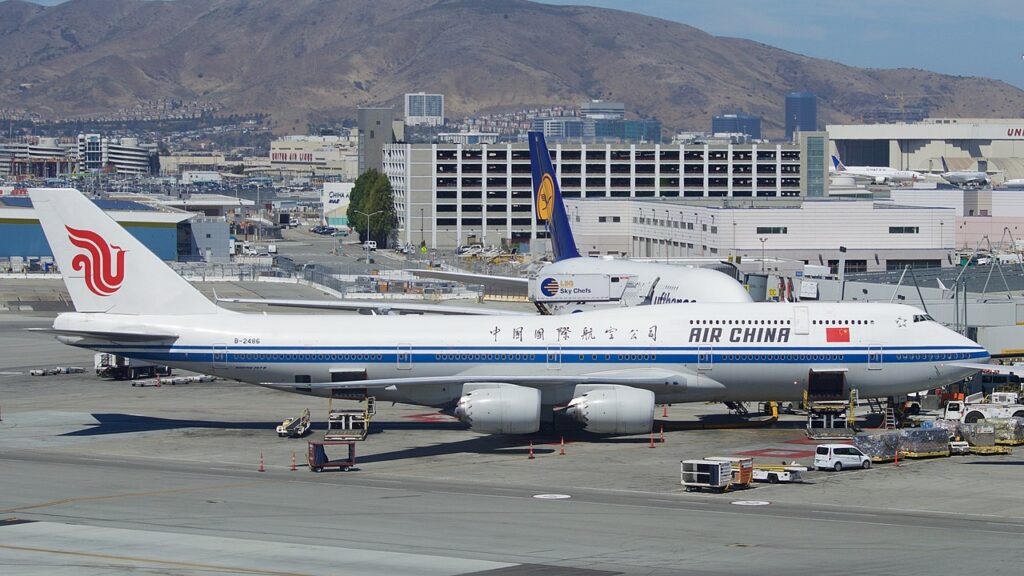 Photo: By Bill Abbott – Air China Boeing 747-8 B2486 DSC_0359, CC BY-SA 2.0, https://commons.wikimedia.org/w/index.php?curid=75078425
8. Air China
China’s flag carrier, Air China (AC), operates 531 aircraft, connecting 215 destinations worldwide. Its narrowbody fleet includes Airbus A320/A321 family jets, Boeing 737s, COMAC ARJ21, and COMAC C919 aircraft.
The widebody fleet supports long-haul operations with Airbus A330s, A350s, and Boeing 747, 777, and 787 Dreamliners.
Air China’s December 2025 COMAC C919 delivery represents the integration of domestically built aircraft into a major global carrier’s fleet, marking a significant milestone in Chinese aviation and fleet diversification.
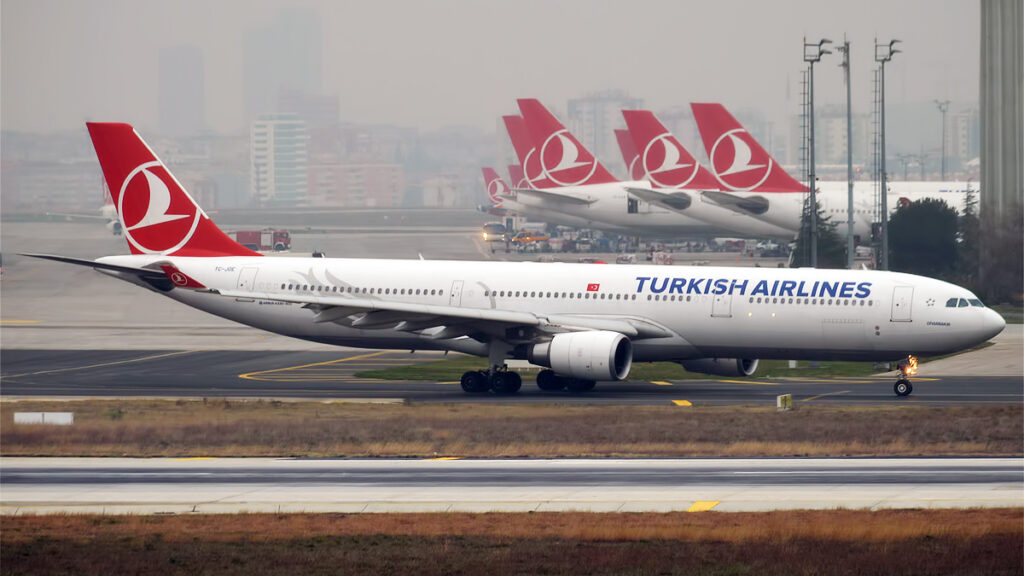 Photo: By Anna Zvereva from Tallinn, Estonia – Turkish Airlines, TC-JOE, Airbus A330-303, CC BY-SA 2.0, https://commons.wikimedia.org/w/index.php?curid=115995460
9. Turkish Airlines
Turkish Airlines (TK) operates 399 aircraft and connects more countries than any other airline worldwide, serving nearly 350 destinations in 131 countries.
Short-haul flights are operated with a mix of Airbus A320/A321 family jets and Boeing 737 aircraft. Long-haul services rely on Airbus A330s, A350s, and Boeing 777 and 787 aircraft.
The airline’s diverse fleet supports operations across multiple continents, enabling it to maintain high levels of connectivity and flexibility in scheduling. Turkish Airlines’ December 2025 Airbus A350-900 delivery underscores its focus on fleet modernization for fuel efficiency and passenger comfort.
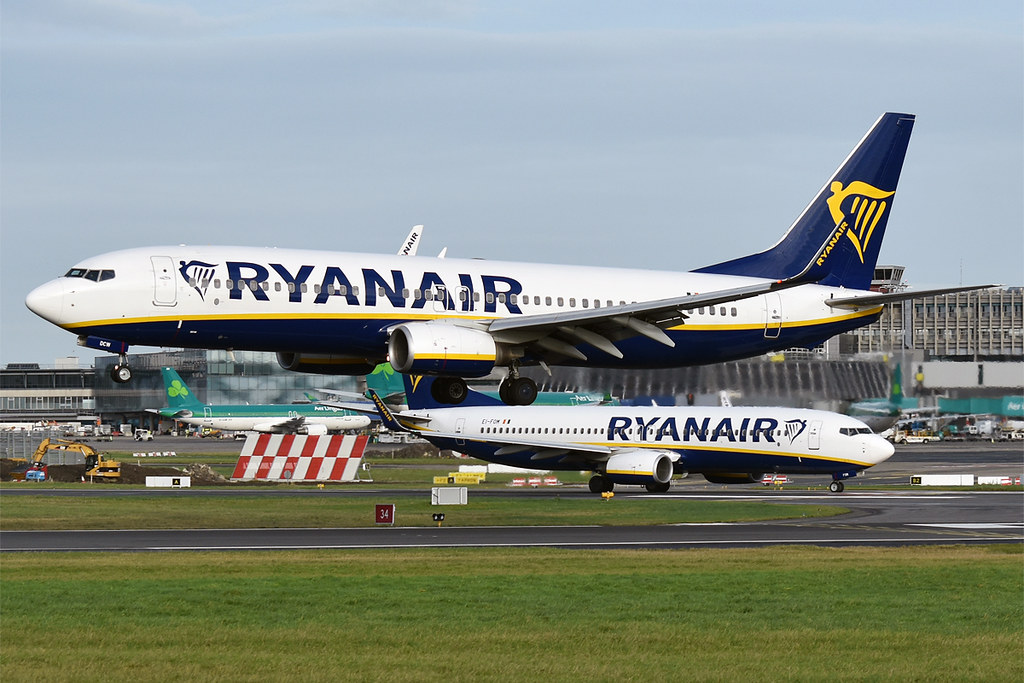 Photo: Ryanair, EI-DCW, Boeing 737-8AS | Anna Zvereva | Flickr
10. Ryanair
Rounding out the top ten is Ryanair (FR), Europe’s largest airline in terms of passengers, fleet size, and flights. Operating 349 Boeing 737 aircraft, the Irish carrier flies to 235 destinations across Europe.
Ryanair’s fleet includes 205 737-800s and 141 737 MAX 8 aircraft. The all-Boeing fleet strategy allows for streamlined operations, low maintenance costs, and simplified crew training, which is integral to Ryanair’s ultra-low-cost business model.
The November 2025 delivery of a 737 MAX 8 continues Ryanair’s focus on modernizing the fleet to reduce fuel consumption and operating costs.
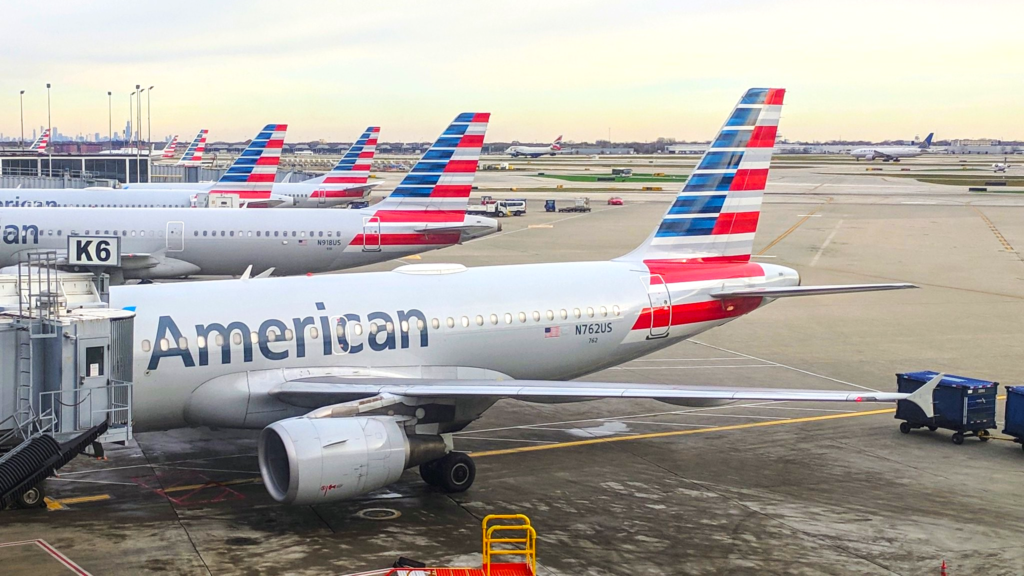 Photo: James Cridland | Flickr
Fleet Trends and Observations
Several trends are apparent when examining the world’s largest airline fleets:
Single-aisle dominance in short-haul operations: U.S. carriers, Chinese airlines, and Ryanair rely heavily on narrowbody aircraft such as the Boeing 737 and Airbus A320 family for domestic and regional services. These aircraft provide cost-effective, high-frequency connectivity.
Widebody modernization for long-haul efficiency: Carriers are replacing older widebody aircraft with fuel-efficient models like the Boeing 787 Dreamliner, Airbus A350, and COMAC C919 for long-haul operations. Modern widebodies offer increased range, lower operating costs, and improved passenger comfort.
Fleet diversity reflects strategic priorities: Airlines like Delta, China Southern, and Turkish Airlines operate mixed fleets that balance domestic reliability with long-haul performance. Meanwhile, low-cost carriers like Ryanair and Southwest benefit from single-type fleets for operational simplicity.
Integration of domestic aircraft: Chinese carriers are increasingly integrating COMAC-built aircraft into their fleets, signaling a growing domestic manufacturing capability and long-term strategy for cost reduction and fleet independence.
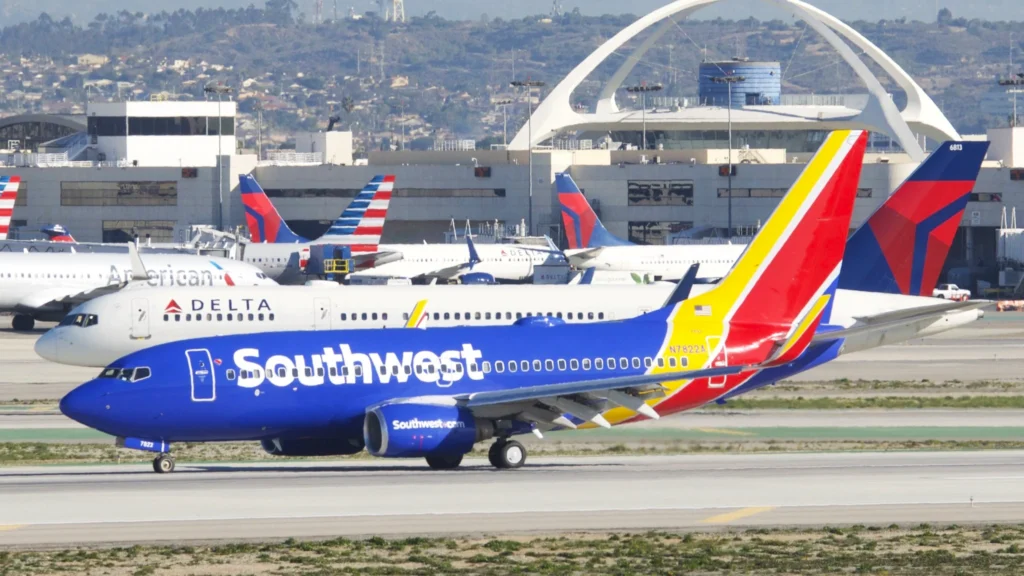 Photo: Aero Icarus | Flickr
Bottom Line
The airlines with the largest fleets in 2026 illustrate the complexity and scale of global aviation. The U.S. “big three”—United, American, and Delta—dominate in fleet size and network reach, while Chinese carriers such as China Southern, China Eastern, and Air China leverage fleet diversity for both domestic and international operations.
Regional carriers like SkyWest, alongside European and Middle Eastern airlines like Ryanair and Turkish Airlines, demonstrate the importance of fleet strategy tailored to market positioning, passenger demand, and operational efficiency.
As aircraft technology advances, airlines continue to modernize their fleets, balancing narrowbody efficiency with widebody performance.
Looking forward, fleet size will remain a crucial metric of global airline competitiveness, offering insights into an airline’s operational strength, network strategy, and ability to meet evolving passenger expectations.
Stay tuned with us. Further, follow us on social media for the latest updates.
Join us on Telegram Group for the Latest Aviation Updates. Subsequently, follow us on Google News