
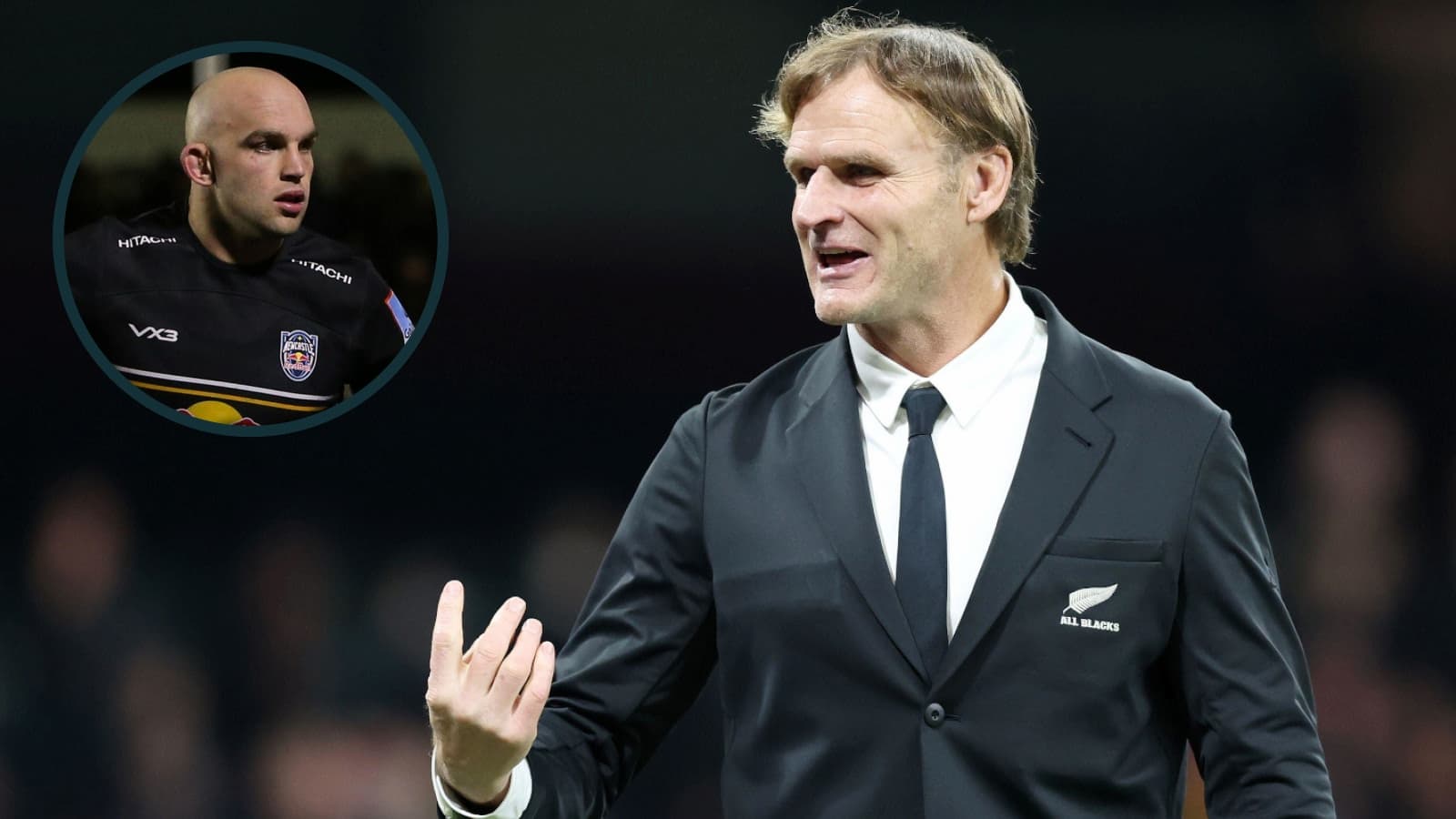
This week we will mostly be concerning ourselves with playing identities of the All Blacks and Springboks and the Newcastle revolution…
It’s in the DNA
Murray Mexted often has plenty that is critical to say, not least when the All Blacks are showing signs of not being completely globally dominant.
But the latest take on how New Zealand is managing squad development compared to the current global benchmark team was interesting for one particular section: “You’ve got to manoeuvre within your own environment. Now the environment in South Africa and the requirements of creating a team environment in South Africa are totally different to what we’re doing in New Zealand… We have different worlds. There’s a different way of achieving what Rassie has achieved… It’s a totally different thing when you’ve got more players playing overseas than you have in your own country; that’s what South Africa’s got. They have a totally different system and a totally different way of selecting a team. He’s growing players overseas and at home. The most important thing for New Zealand is to retain the level of the NPC and Super Rugby.”
Coaches in charge of national teams, not least those who, like Scott Robertson, have taken charge at the end of eras, often feel a need/opportunity (already a philosophical difference) to impress new identities and playing cultures on the squad. When reading the quotes above, Loose Pass was reminded instantly of the travails of former Springbok coach Carel du Plessis in 1996 and 1997, when he sought – in no small part inspired by New Zealand – to shift the Springboks away from the reliance on power and play a more skilful game. The problem, or one of them, was that the shift came as a replacement rather than an embellishment, yet was carried out with many of the same personnel which had already tasted global domination using the power game. It simply didn’t fit many of the players’ innate aptitudes, nor did it suit the blueprint of the national rugby culture.
Mexted’s point was that Robertson seems to be copying South Africa this time, by using the bench in ways not always geared to what is happening on the pitch at the time, while also trying to get game time for players who perhaps are not yet actually at the level required, which has led to a dilution of New Zealand’s traditional strength of being, in team constitution, a compact and tight unit. Not that Robertson’s predecessors were short of using rotation at times to build a squad with depth, but as with Rassie’s current Springboks, there was little doubt what the large portion of the All Blacks’ first-choice XV was.
That does not feel the same with the All Blacks at the moment, which is the source of what Mexted is getting at. While Robertson is duty-bound to develop a squad with depth, and while that can only be achieved by giving players game time, doing so at the expense of the continuity of the first-choice XV contradicts a significant part of the New Zealand rugby DNA, of the historically prevailing culture. And it is weighing on the national team.
But in there was perhaps a more significant lament which is nothing to do with Robertson, but plenty to do with New Zealand’s rugby culture: namely that maintaining the quality of the NPC and Super Rugby is paramount to a good All Blacks team. How can that be achieved? More All Blacks released to the NPC more often is unlikely, and while the current egalitarian structure has many benefits, it’s not yet hitting the required notes in terms of intensity. Super Rugby may never be the same again.
Robertson will always be first in line for the critics if the All Blacks are below par. But the structural weaknesses in the New Zealand scene caused by South Africa’s departure from Super Rugby have struck at New Zealand hard. They are yet to be repaired and they are at least as responsible for the All Black struggles as Robertson’s squad rotations.
Do Red Bulls still charge if nobody is watching?
Later, perhaps, than expected, but Newcastle are beginning to flex those financial muscles. That a glut of new signings, not to mention a bigger glut of possible new signings – have been announced in the past couple of weeks was to be expected sometime, but the first win of the season, coupled with the struggles of Gloucester and Harlequins, has totally changed the complexion of the Prem.
Perhaps more will now take notice. Aside from the excellent and dominant performance (until the final 15 minutes anyway), the game was noticeable for an almost blanket lack of media coverage – this publication included.
Resources are short everywhere. Newcastle is a devil of a place to get to and from late on a cold Friday in holiday season. And unfortunately, it is not as though this game was a relegation eight-pointer. But the bottom of the Prem has just got a lot more interesting, and not before time. A shame that the threat of relegation is not making it even more so.
Want more from Planet Rugby? Add us as a preferred source on Google to your favourites list for world-class coverage you can trust.
READ MORE: Newcastle sign giant Chiefs lock as Red Bulls spending continues