
2026 brings a full, layered cycle for Australian women’s football. From a major continental tournament on home soil to global youth championships and decisive domestic moments, the year spans every level of the game.
Across national teams, leagues, and development competitions, these moments are not isolated events. They shape selection, influence momentum, and quietly define what comes next as Australia builds for the next decade.
Youth tournaments feed senior ambition. Domestic seasons set standards. Continental competitions test progress against the best in the region.
Taken together, 2026 isn’t about one headline moment. It’s about continuity, opportunity, and the steady evolution of the women’s game in Australia, played out across a year that touches every part of the football ecosystem.
AFC Women’s Asian Cup | 1–21 March 2026
The AFC Women’s Asian Cup returns to Australia for the first time since 2006 carrying both history and consequence.
As the oldest women’s continental championship in the world, the tournament has long been a marker of Asia’s evolving football identity. In 2026 the 21st edition arrives with renewed relevance, hosted across Perth, Sydney and the Gold Coast, and drawing 12 nations into a tightly contested, three-week campaign.
For Australia, this edition is about more than home advantage. Beyond continental silverware, six nations will qualify for the FIFA Women’s World Cup Brazil 2027, making every group match and knockout moment a step closer to the next global cycle.
For the Matildas, it’s an opportunity to assert continuity after a transformative period for the national team, and to do so in front of domestic crowds that now expect presence and performance.
 NOV 28: Match action in the International friendly match between Matildas and New Zealand at Polytech Stadium (Photos: Damian Briggs/Football Australia)
AFC Women’s Champions League (Knockout Phase) | March–May 2026
The Women’s Champions League reaches the pointy end as the knockout rounds begin. Group stages offer rhythm and recovery; elimination football offers none. From March through May, Asia’s leading clubs compete knowing that margin, discipline, and adaptability decide seasons.
Australia’s representative, Melbourne City, once again enters the latter stages after a flawless group campaign, reinforcing the club’s standing within the continental game.
Beyond the pursuit of a title, the stakes extend further. The finalists will qualify for the FIFA Women’s Club World Cup in 2028, linking domestic dominance to global opportunity. This phase of the competition is a measuring stick not only for clubs, but for the competitive maturity of leagues across the region.

AFC U20 Women’s Asian Cup | 1–18 April 2026
The U20 Women’s Asian Cup sits at the crucial intersection between development and result. Hosted by Thailand, the tournament brings together Asia’s leading youth national teams in a format that demands composure. For Australia’s Young Matildas, it’s a new cyle that looks to build on the one that produced a bronze finish in 2024 and now carries the expectation of progression.
The four semi-finalists will qualify for the FIFA U-20 Women’s World Cup in Poland. At this level, the margins are narrow and the lessons lasting. Performances here often foreshadow senior careers, making this tournament as much about future leadership as immediate success.

A-League Women’s Finals Series | 24 April – 17 May 2026
After a testing 22-round regular season, the A-League Women will head into the Final Series that sees six teams remain.
It opens with Elimination Matches involving the bottom four qualifiers, before progressing to two-legged semi-finals against the top two sides and, ultimately, a Grand Final.
It is here that domestic seasons are defined. Finals football in the A-League Women has become a stage where reputations are formed, often shaping national team selection conversations well beyond the season itself.

AFC U17 Women’s Asian Cup | 30 April – 17 May 2026
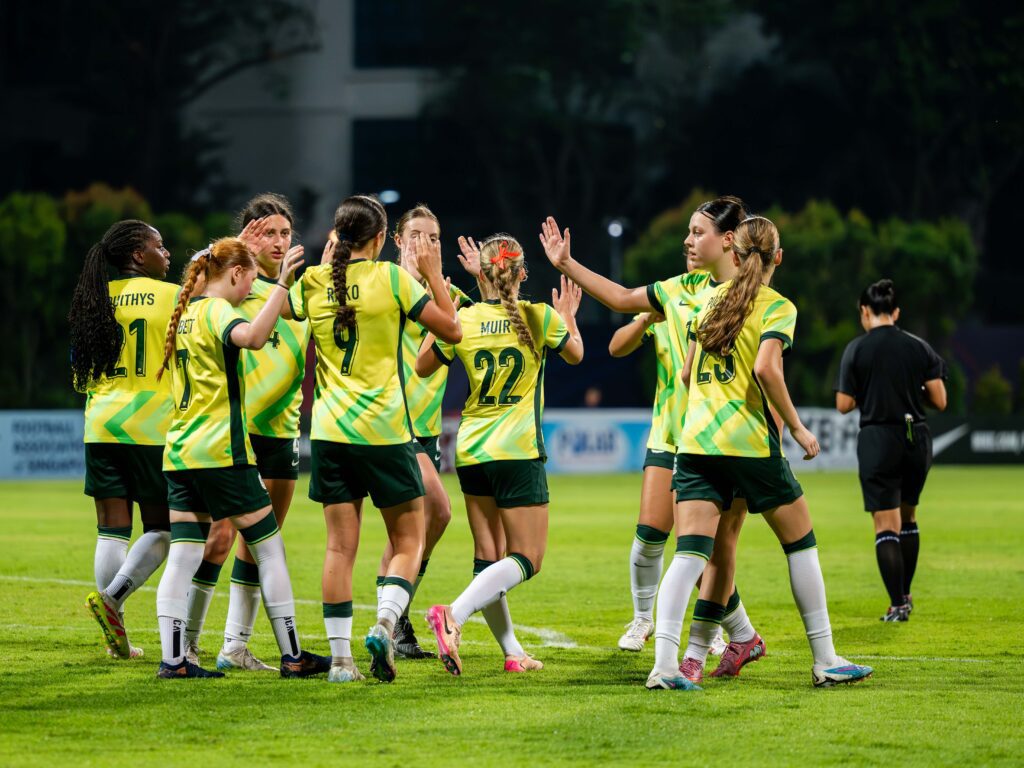
China hosts the AFC U17 Women’s Asian Cup at a time when youth pathways are expanding across the continent. For Australia’s Junior Matildas, the tournament carries historic weight. The objective is clear: become the first Australian women’s U17 side to qualify for a FIFA U-17 Women’s World Cup.
Four qualification places are available, and with them, the opportunity to test emerging players in high-pressure international environments.
At this level, international football is as much about learning to manage expectation as it is about technical execution. For many involved, this will be the first sustained exposure to tournament football beyond domestic borders.
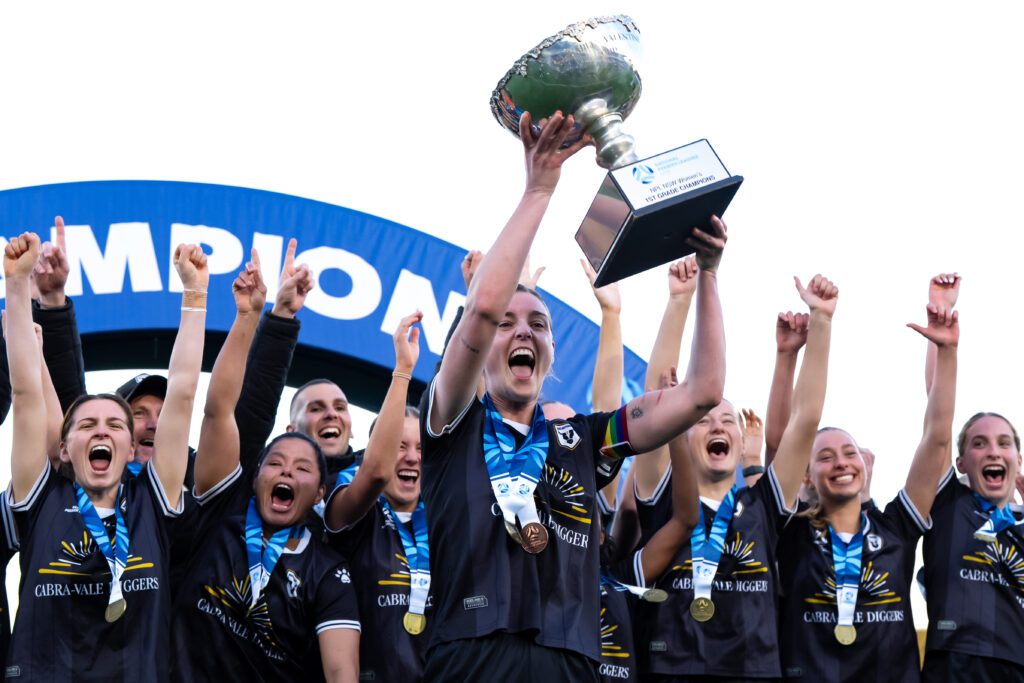
NPL Women’s Season | April – October 2026
Running quietly alongside headline competitions, the National Premier Leagues Women’s season forms the backbone of Australia’s domestic ecosystem. Across states and territories, clubs compete week to week, building local rivalries, developing players, and sustaining the sport at community level.
The NPL is where pathways take shape outside national attention. It’s where future professionals mature, coaches refine philosophies, and football culture embeds itself across regions. The NPL has seen many players graduate from these local fields onto the national and international stage.
While it rarely commands national headlines, its influence is constant, providing depth and continuity to the broader women’s game.
FIFA U-20 Women’s World Cup | 5–27 September 2026
For the first time, Poland will host the FIFA U-20 Women’s World Cup, welcoming the world’s leading youth national teams to a tournament defined by transition. Marta, Sinclair, Morgan, Popp, Putellas, Oshoala, historically this competition has been the launchpad for some of football’s most influential careers, offering an early glimpse of players who will later shape the senior game.
Asia will again have four qualification spots, reflecting the region’s growing strength at this level. For those who earn selection, the World Cup represents a shift from potential to accountability, where consistency across matches and opponents becomes the true test.
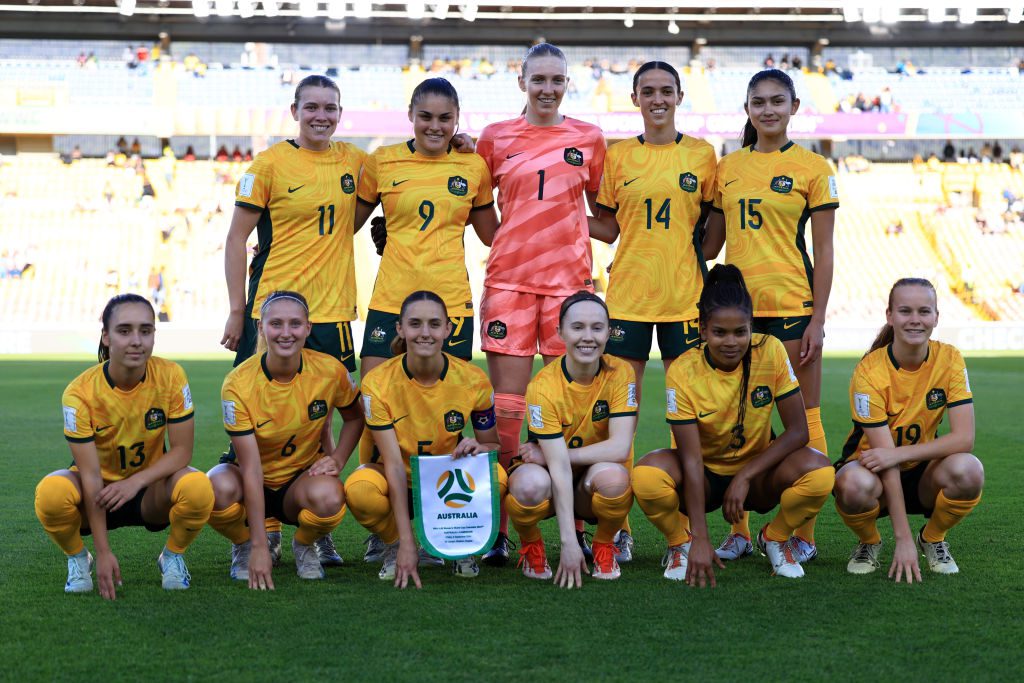
FIFA U-17 Women’s World Cup | October–November 2026
Morocco hosts the FIFA U-17 Women’s World Cup for a second consecutive year, continuing FIFA’s expanded annual model for the tournament. With 24 nations participating, the competition reflects the accelerating global growth of women’s football and the increasing depth of youth development across confederations.
For Asia’s representatives, including any Australian qualifier, the tournament offers a rare chance to compete on a global stage at the earliest international level. It is often a first exposure to the scale and scrutiny of world football, setting the foundation for long-term international careers.

A-League Women’s Season 19 | November 2026
The start of a new A-League Women season brings with it a quiet reset. Squads evolve, roles shift, and ambitions realign as clubs begin another domestic cycle.