
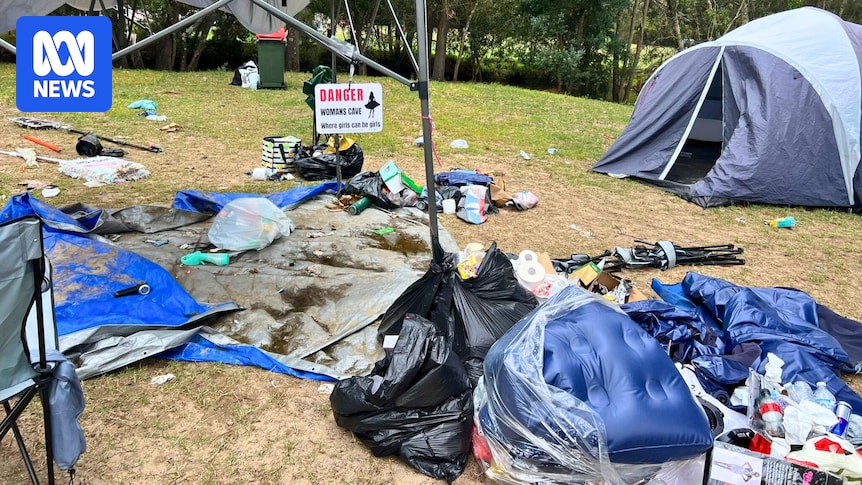
When car trouble left Larissa Stubbings stranded at a music festival more than 1,000 kilometres from home, she had no trouble finding somewhere to sleep for the night.
On New Year’s Day, music fans left the campsite at Victoria’s Beyond The Valley event littered with abandoned tents and camping equipment.

Larissa Stubbings collected abandoned camping gear while she was stranded at Beyond The Valley. (Supplied)
“We were able to gather literally everything we needed; new tents, blow-up mattresses, water and so much unopened food,” Ms Stubbings said.
“It was really surreal, it felt like we were shopping because there was so much left behind.”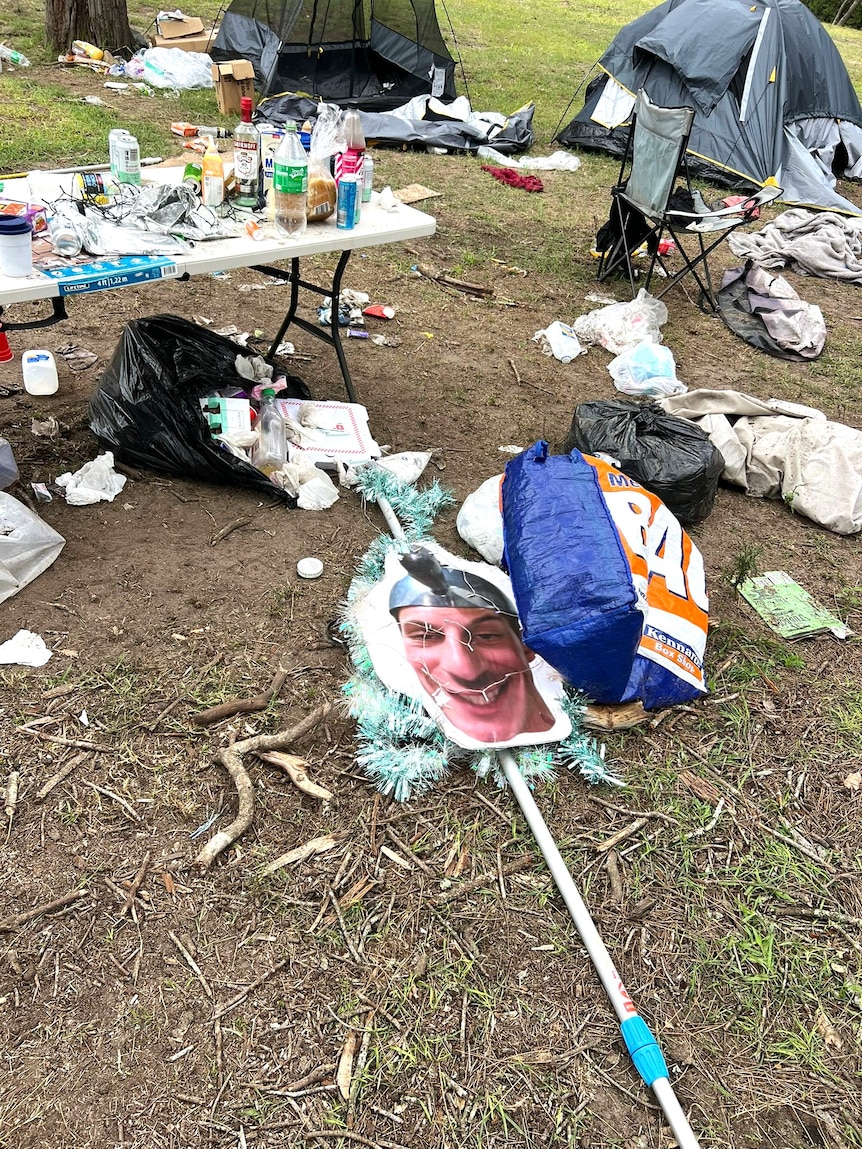
Entire campsites were left behind at New Year’s Eve festivals. (Supplied: Beth Green)
When the 20-year-old shared her experience on social media, the consensus among commenters was that the volume of trash was nothing unusual.
“I was so shocked to see how many people left their belongings, but it was even more shocking that it was normal for everyone online,” she said.
“Everyone is really tired after a multi-day festival, but I didn’t think people were that lazy or careless.”
Potential solutions
Green Music Australia chief executive Berish Bilander said despite festival waste being a long-standing and contentious issue, more work was needed to regulate campsites at music festivals.
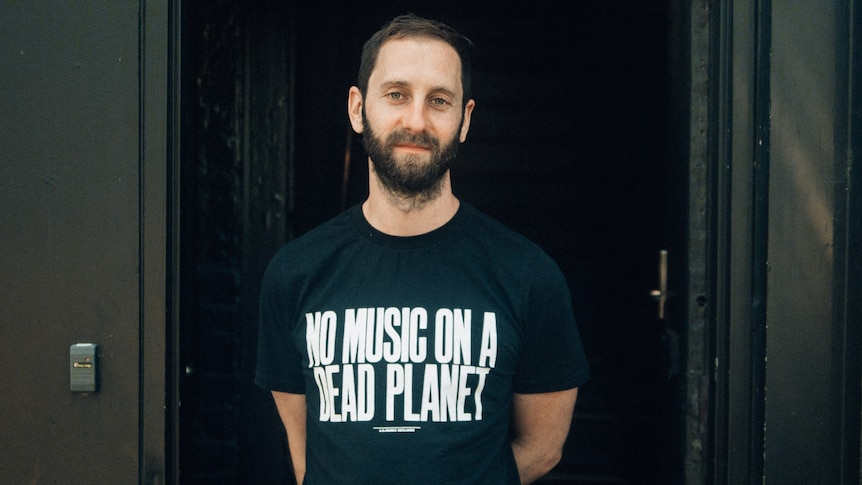
Berish Bilander says festival-goers need to keep each other accountable when it comes to waste. (Supplied)
“More than half of the waste that comes out of these events is from the campsites,” he said.
“Thousands of pieces of very cheap camping gear come through the gates only to end up in the trash a day later.
“An initiative we’ve seen really work is the pre-made tent villages, so patrons don’t have to bring their own camping gear.”
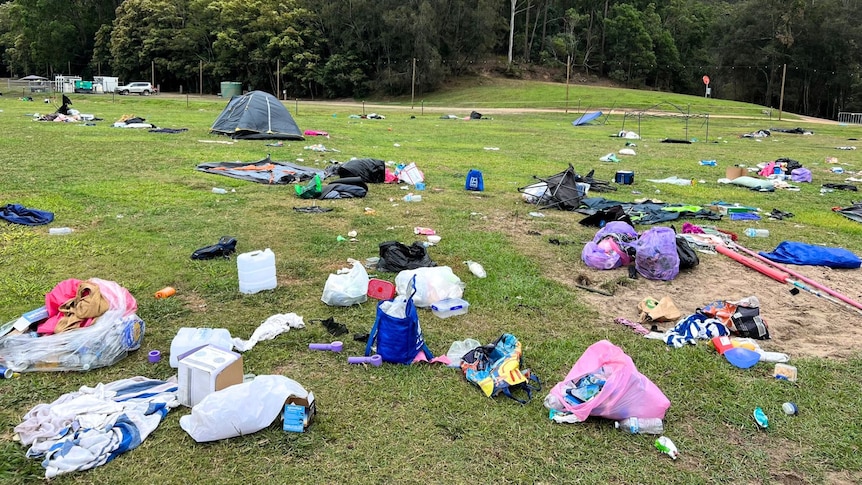
Campsites are responsible for more than half the rubbish accumulated at music festivals. (Supplied: Beth Green)
Mr Bilander said the biggest hurdle was creating a cultural shift among festival-goers.
“It’s all about the ethics of the people at the event; if everyone is holding each other accountable, they’ll leave the place cleaner than they found it,” he said.
“We’ve seen that work when a festival has that energy, and there’s a real commitment to either borrow or not bring low-cost camping gear.”
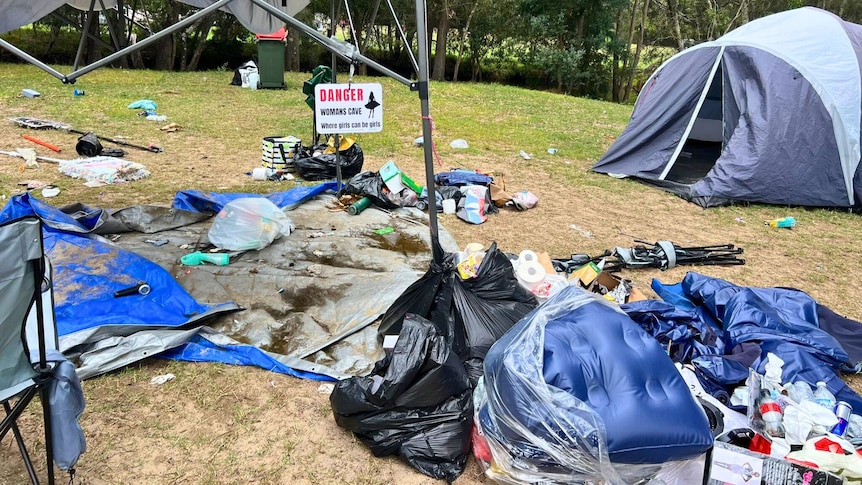
Abandoned camping gear at this year’s Lost Paradise music festival. (Supplied: Beth Green)
‘Cultural shift’ needed
Research by Green Music Australia has found one in every three tents taken to a music festival is left behind.
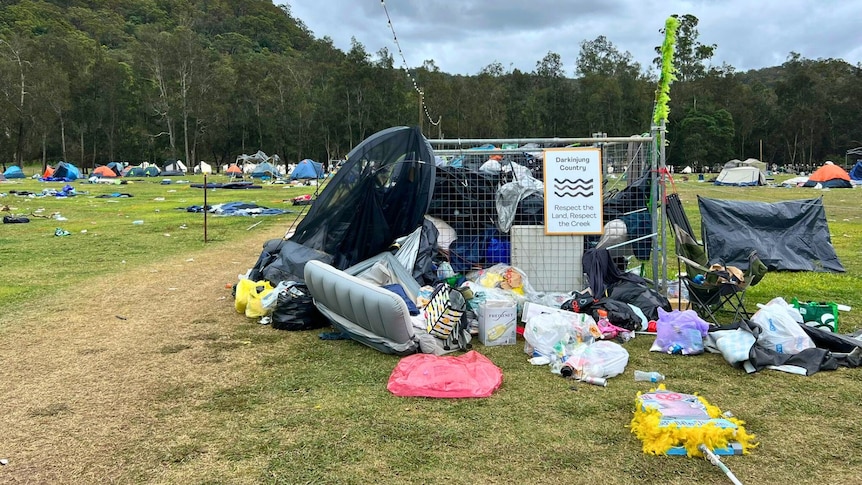
Statistics show that one in three tents entering a music festival will be left behind. (Supplied: Beth Green)
That statistic rings true for Joshua Davies from B-Alternative, who operated at this year’s Lost Paradise event on the NSW Central Coast.
“It really is a growing culture of consumerism, buying something extremely cheap knowing you’ll only use it once,” he said.
“But it’s nothing new — we’ve seen it for decades, but cheap products are easier than ever to obtain.”
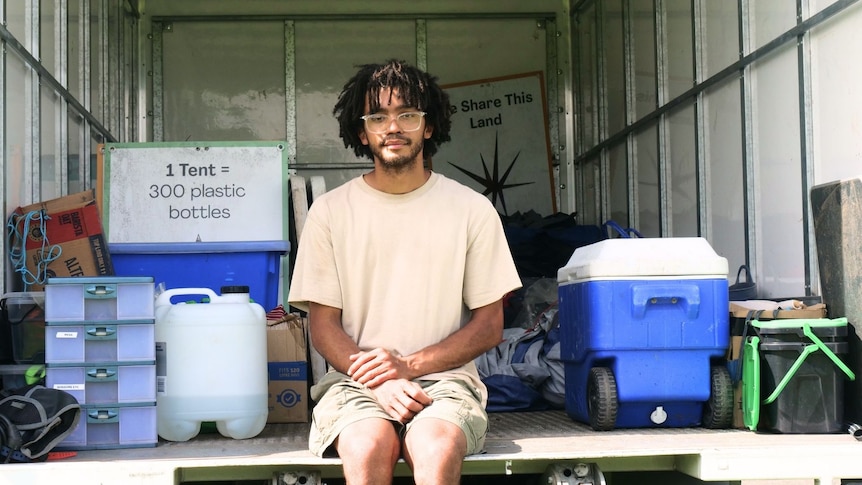
Joshua Davies has been dropping off the forgotten festival camping gear to local rough sleepers and charities. (ABC Central Coast: Shauna Foley)
Social enterprise B-Alternative hosted a repair facility at Lost Paradise, where patrons could have problems with tents and other camping equipment fixed onsite.
Mr Davies said the space helped start conversations with festival-goers about their responsibility to “leave no trace”.
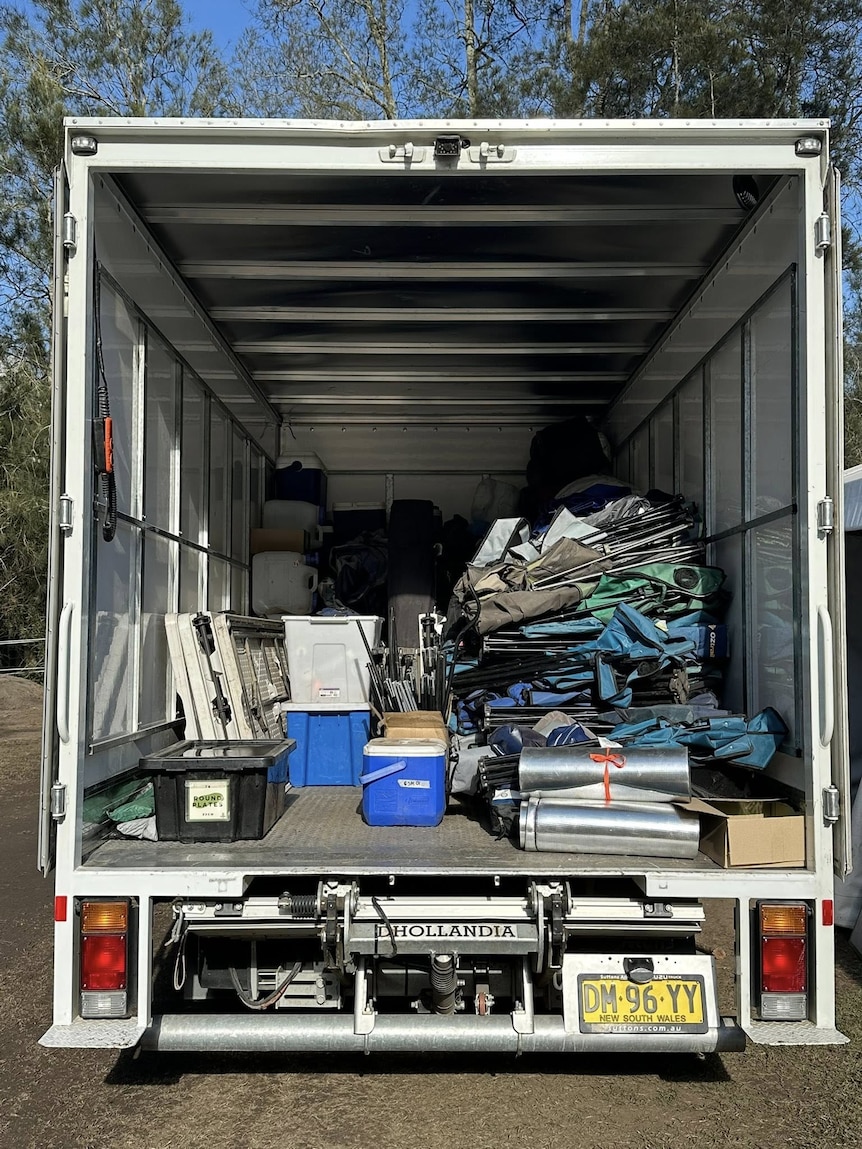
Dozens of discarded tents and other camping gear were donated to local rough sleepers. (Supplied: Joshua Davies)
“It’s a chain reaction,” he said.
“If we can influence one person, they’ll take that mindfulness with them and carry it on.”
After the event, Mr Davies and his team used several removalist trucks to deliver abandoned camping gear to charities, op shops and rough sleepers in the area.
“Until we see that cultural shift, we’ll continue to see all this mountain of perfectly usable camping equipment go into landfill,” he said.
“We were fortunate to have the right stakeholders in place this time to salvage what was left behind, though that’s not always the case.
“But [festival organisers] need to be frank with patrons and show them the aftermath of their fun.”