
Isabella Higgins: Now, if you’re a food lover, chances are you’ve heard of the Michelin Guide. You may have even dined at a Michelin starred restaurant, but not here in Australia. Tanya Dendrinos reports on why Australia is yet to join the Michelin Guide.
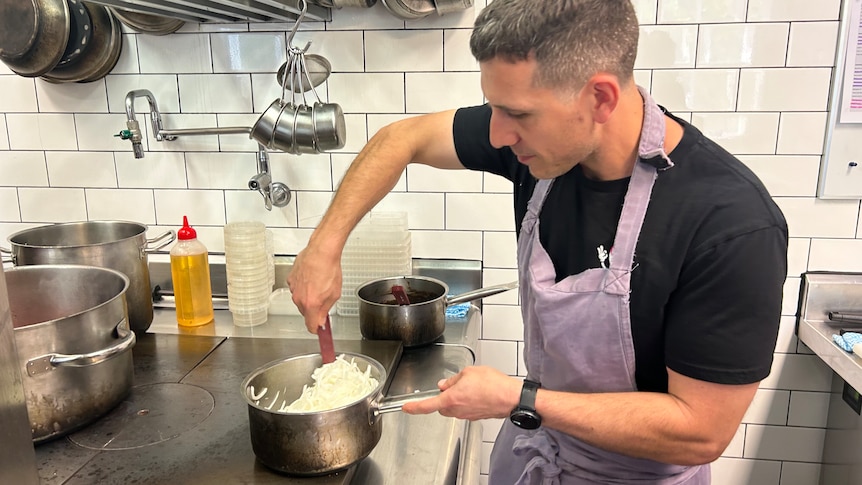
Tanya Dendrinos: Mise en place. It’s the French phrase referring to culinary preparations, and it’s in full swing at Sixpenny in the Sydney suburb of Stanmore. The head chef is Tony Schifilliti.
Tony Schifilliti: So over here, our chef Ronald is starting to caramelise all the beef trimmings, but you can sort of hear the sizzling in the background.
Tanya Dendrinos: Sixpenny is one of the most celebrated restaurants in the country, but when it comes to the global culinary scene, there’s a benchmark it can’t yet seek to meet.
Tony Schifilliti: If you ask any chef or anyone that works in hospitality about the Michelin, I’m sure they could tell you about it and what it is.
Tanya Dendrinos: The Michelin Guide dates back to 1900. Back then, it was a 400-page guidebook given to motorists free of charge. In the decades that followed, Michelin stars were introduced. One star denotes high-quality cooking and worth a stop. Two are for excellent cooking, suggested as being worth a detour, while a coveted three Michelin stars are awarded for exceptional cuisine worth a special journey. So, would it be beneficial for Australian restaurants?
Tony Schifilliti: There are sort of pros and cons to the argument. In my opinion, I feel like it would be nice to have it for a few reasons and I guess one of those reasons would be that it would sort of put Australia on the world map.
Tanya Dendrinos: Tony Schifilliti believes there’d be higher reinvestment into restaurants if Australia was part of the Michelin Guide, resulting in a better dining experience for customers and importantly, help Australian businesses attract and retain talented chefs.
Tony Schifilliti: Chef shortage is a thing. You know, there are chefs out there trying to get the talent is the hard part. So, one, keeping Australian chefs here and also attracting other chefs from internationally to come over to Australia.
Tanya Dendrinos: Tourism Australia says it was first approached to support Michelin as it explored launching the Guide in Australia in 2016, with several discussions taking place since then. But the cost is prohibitive, sitting in the tens of millions of dollars, and state and territory tourism bodies would be required to pitch in alongside any investment from Tourism Australia. In a statement, a Tourism Australia spokesperson said, We welcome any activity that shines a light on Australia’s thriving food and drink scene and will consider opportunities where we can within our existing marketing priorities and budgets.
Richard Robinson: Michelin certainly has an international profile.
Tanya Dendrinos: Richard Robinson is a professor of employment, work and studies at Northumbria University in the UK and was previously based at the University of Queensland. He’s conducted research into food tourism.
Richard Robinson: It’s even a thinner segment of the food tourist market who are primarily interested in just that fine dining or elite eating experience.
Tanya Dendrinos: He describes this category as the passive food tourist.
Richard Robinson: They were the ones that were interested in sitting and dining, as opposed to a lot of other food tourist categories were much more active. They were interested in going to the farm and having the plate to paddock experience and learning about the provenance of food.
Tanya Dendrinos: He says it’s a relevant point to consider in the Michelin discussion and any future cost benefit analysis. Michelin wouldn’t be drawn on whether or not its discussions with representatives from Australia are ongoing, saying the Michelin Guide does not comment on potential expansions until they are finalised and officially announced. Instead, it says its focus is on the upcoming launch of the Michelin Guide New Zealand in mid-2026, marking our first step into Oceania.
Isabella Higgins: Tanya Dendrinos reporting.