
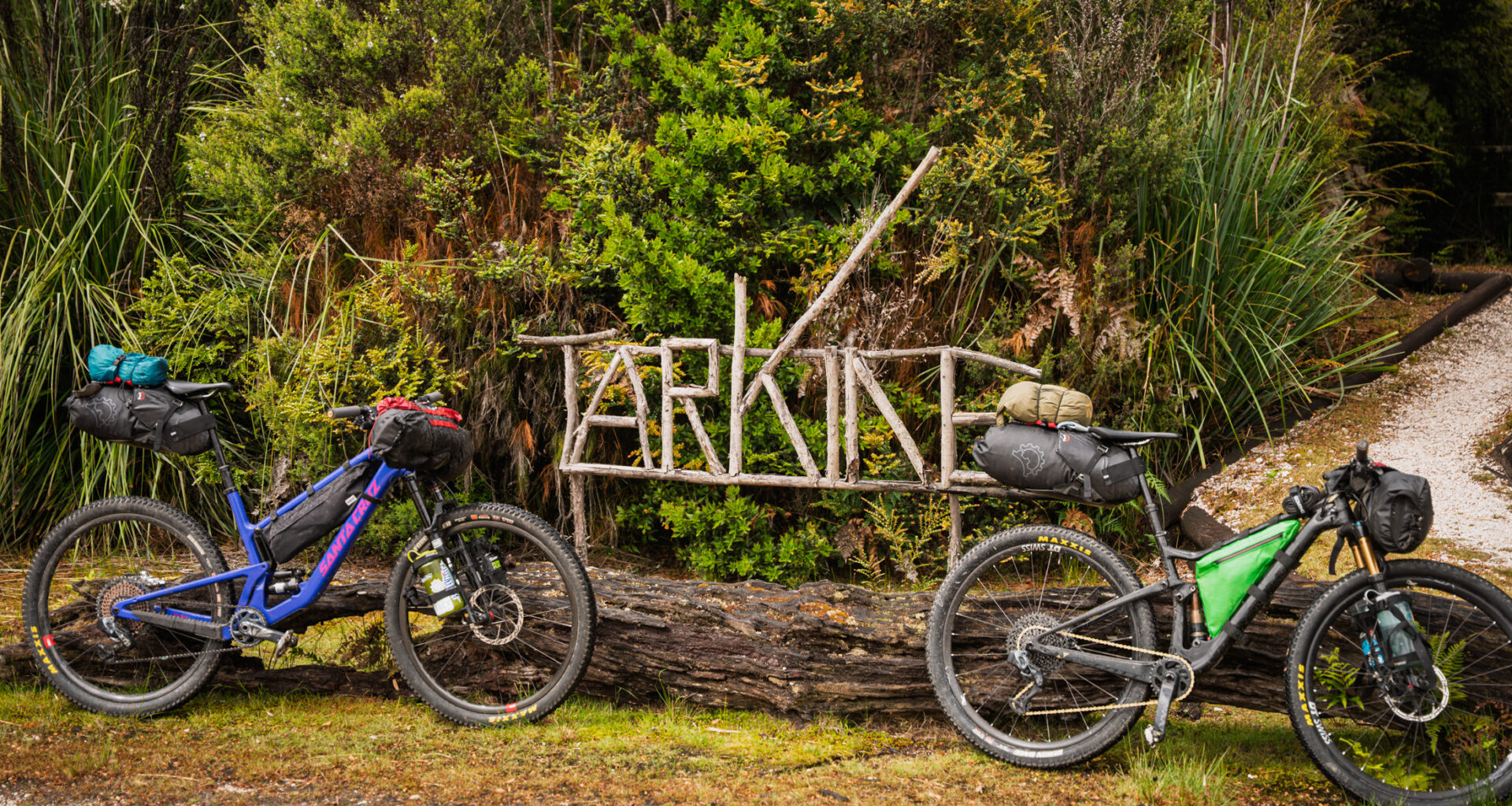
Christmas was a little different for me this year.
No ham, beer, pavlova, pudding, food-coma’s or swims at the beach.
Instead, my partner Tash and I (this was mostly her idea) decided to explore North West Tasmania by bike. We hadn’t yet ventured into the far north corner of the state, and had heard about some epic landscapes and wild coastlines.
What follows here is a visual diary of the trip. A snapshot of what we saw, smelt, endured and enjoyed. I’ll dive into a few elements, but will let the picture do most of the talking.
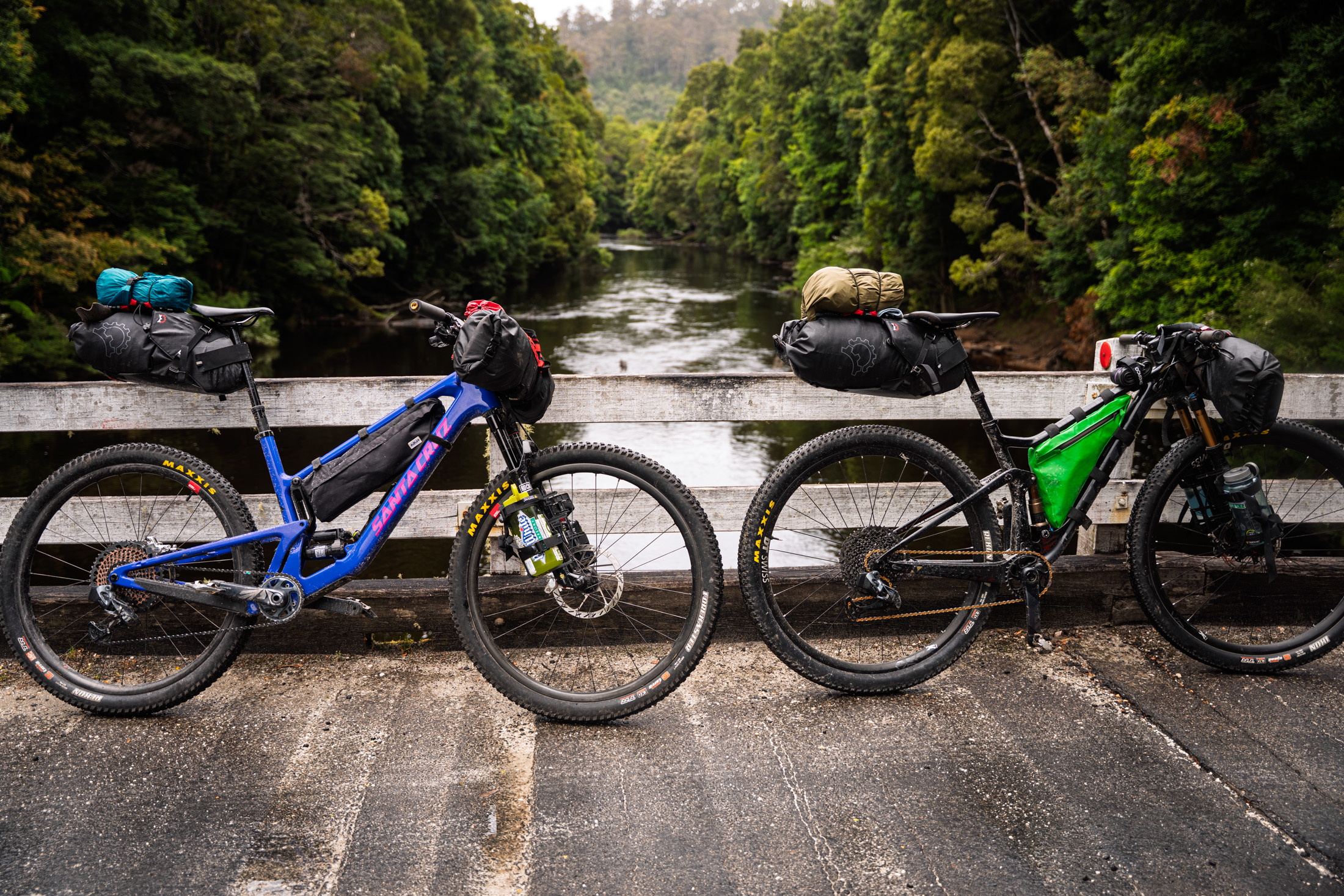 My Santa Cruz Tallboy and Tash’s Scott Spark. Maybe a little over-gunned for the route, but plenty efficient and comfortable.
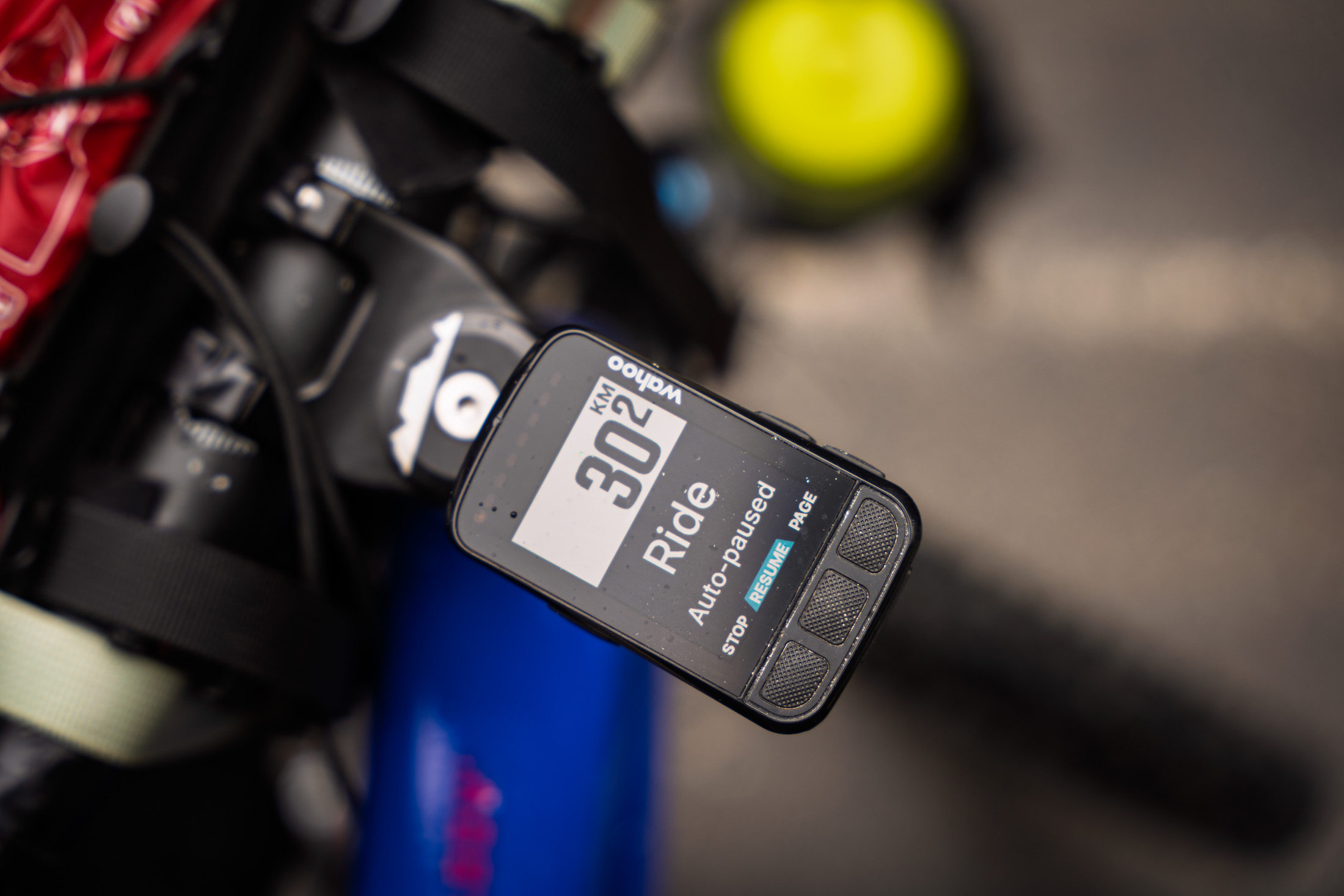 Wahoo Element Bolt navigated us around the whole route, with only one minor detour—my fault, I hit the ‘Route to start’ button, oops.
We planned a route tailored to the North Western aspect of the Tassie Gift, a ~2000km bikepacking race held each year that somewhat circumnavigates the whole state.
Our shortened route was just shy of 400km, and Ride with GPS estimated around 5800m of elevation. Minimal tarmac, maximum gravel/dirt. We predicted it would take six days, starting and finishing in the small town of Waratah. Turns out Ride with GPS may have slightly undercooked the elevation profiles, as our Wahoo Element Bolt tallied closer to 7500m across the entire loop.
Day 1 | Waratah to Savage River | 41km, 853m
Day 2 | Savage River to Donaldson River via Corinna | 51.99km, 1151m
Day 3 | Donaldson River to Couta Rocks | 67.9km, 1166m
Day 4 | Couta Rocks to Arthur River | 105.5km, 1390m
Day 5 | Arthur River to Hellyer Gorge | 78.6km, 1751m
Day 6 | Hellyer Gorge to Waratah | 39.4km, 1151m
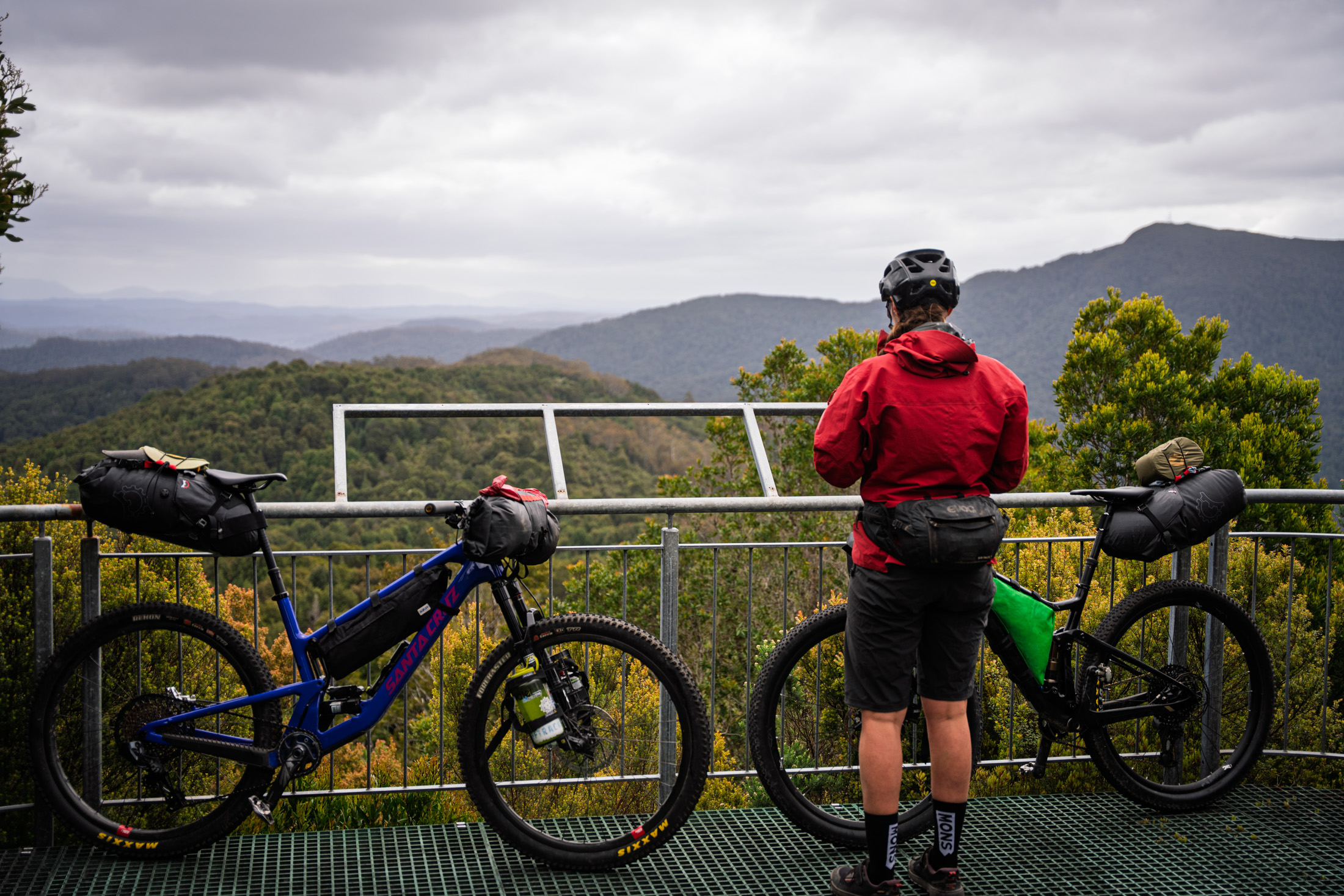 Pit stop/snack break at the top of a hill.
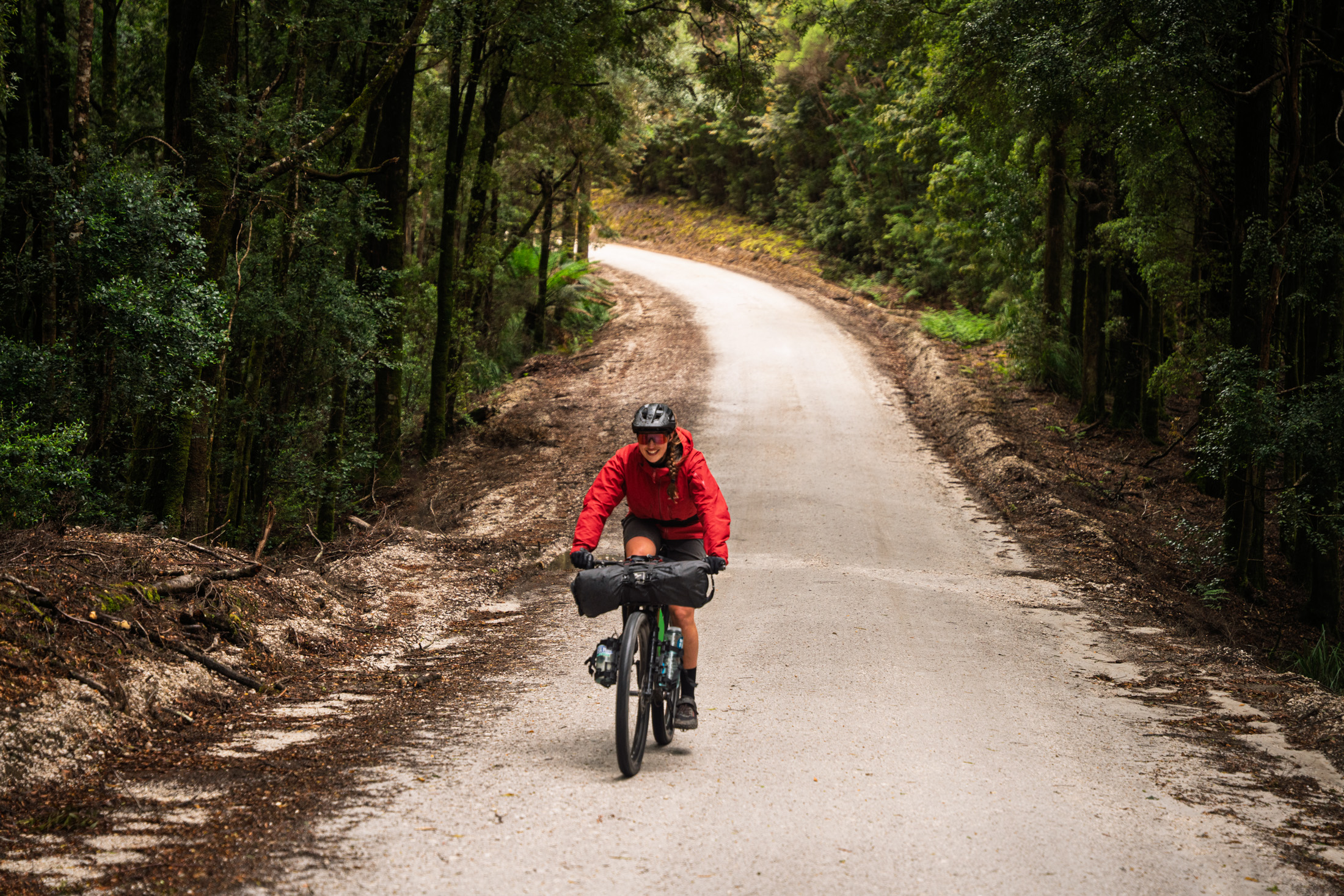 Big smiles for champagne gravel.
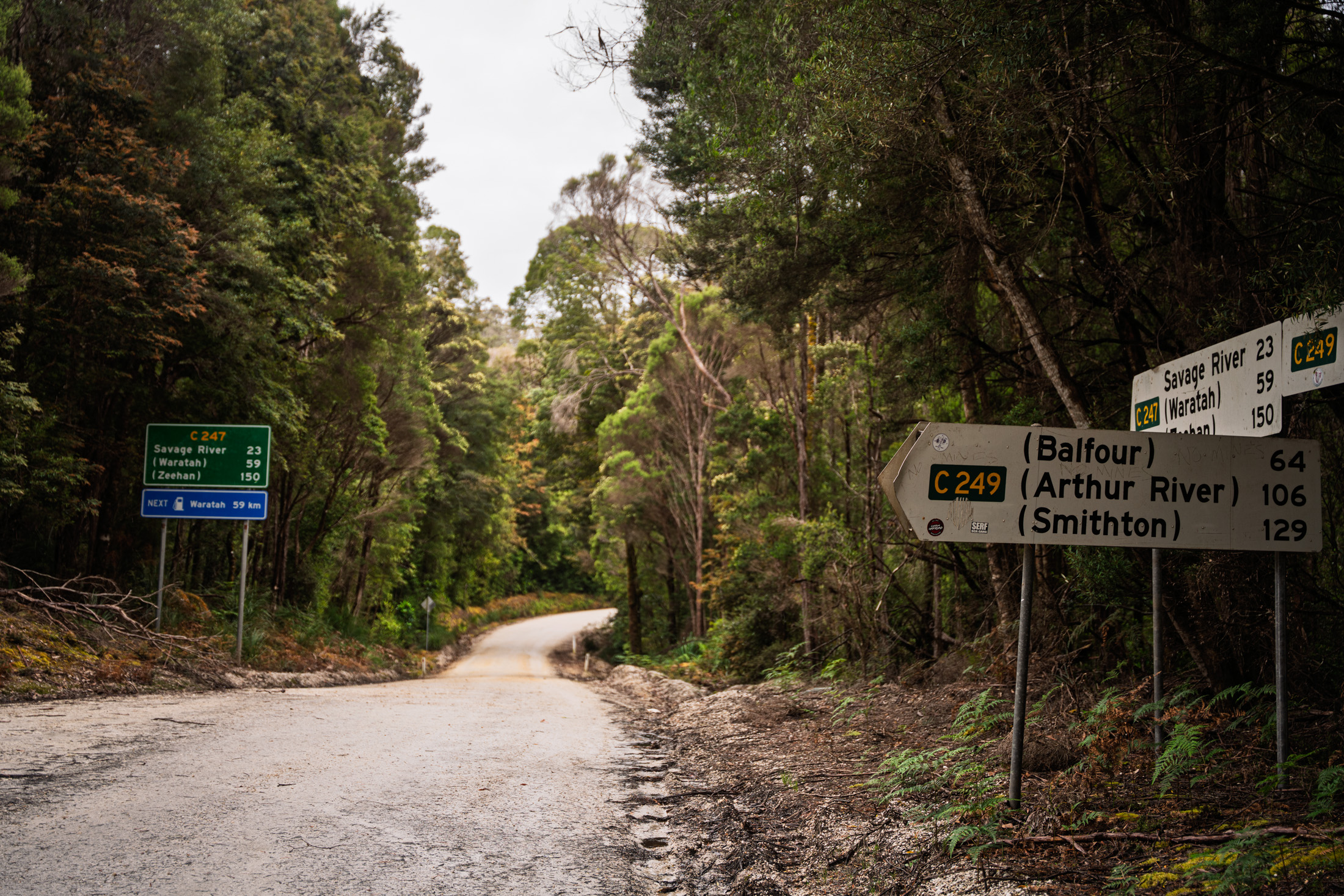 Onwards and upwards to Arthur River—the only real town with one milk bar throughout the whole loop.
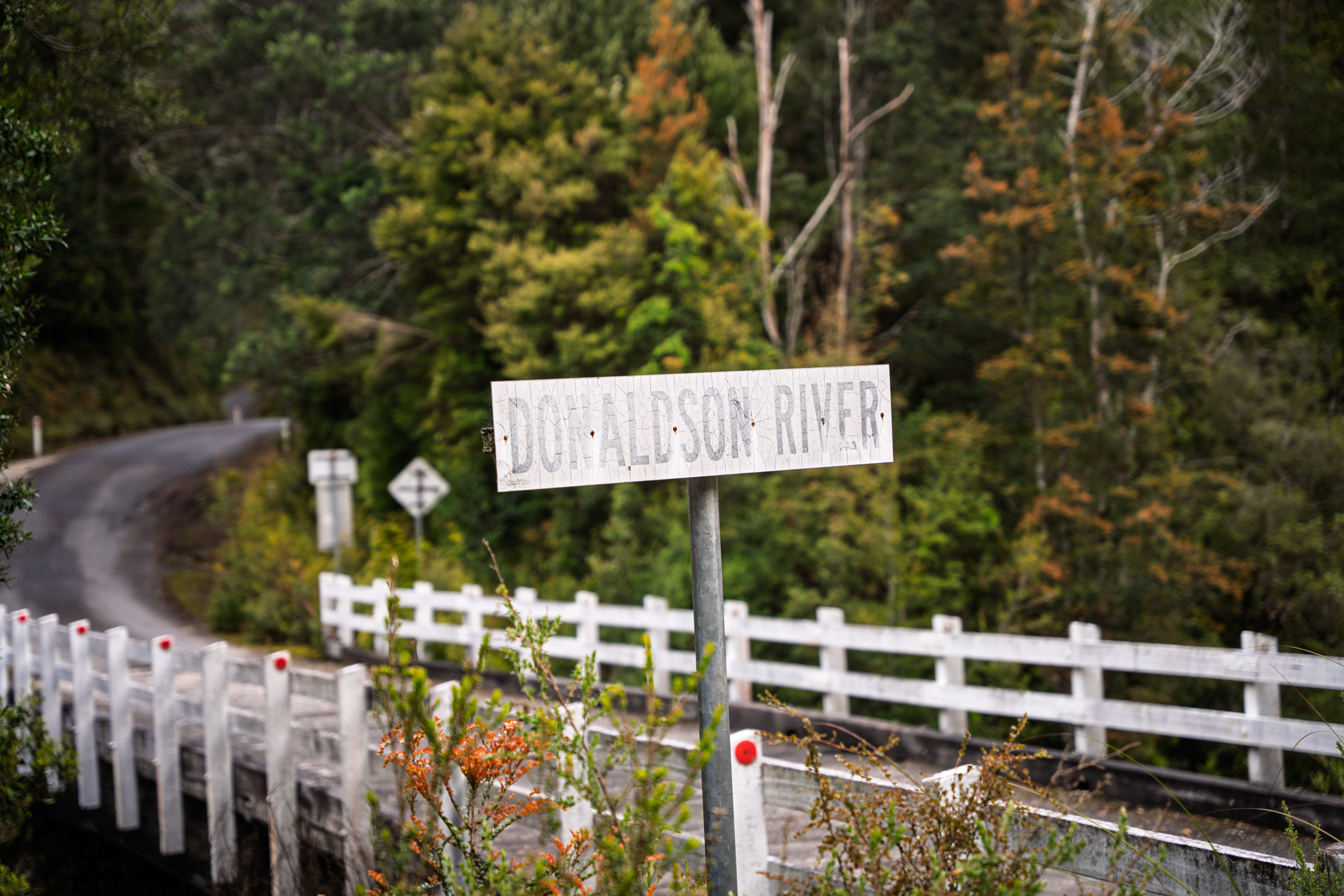 Thanks for the campsite, Donaldson.
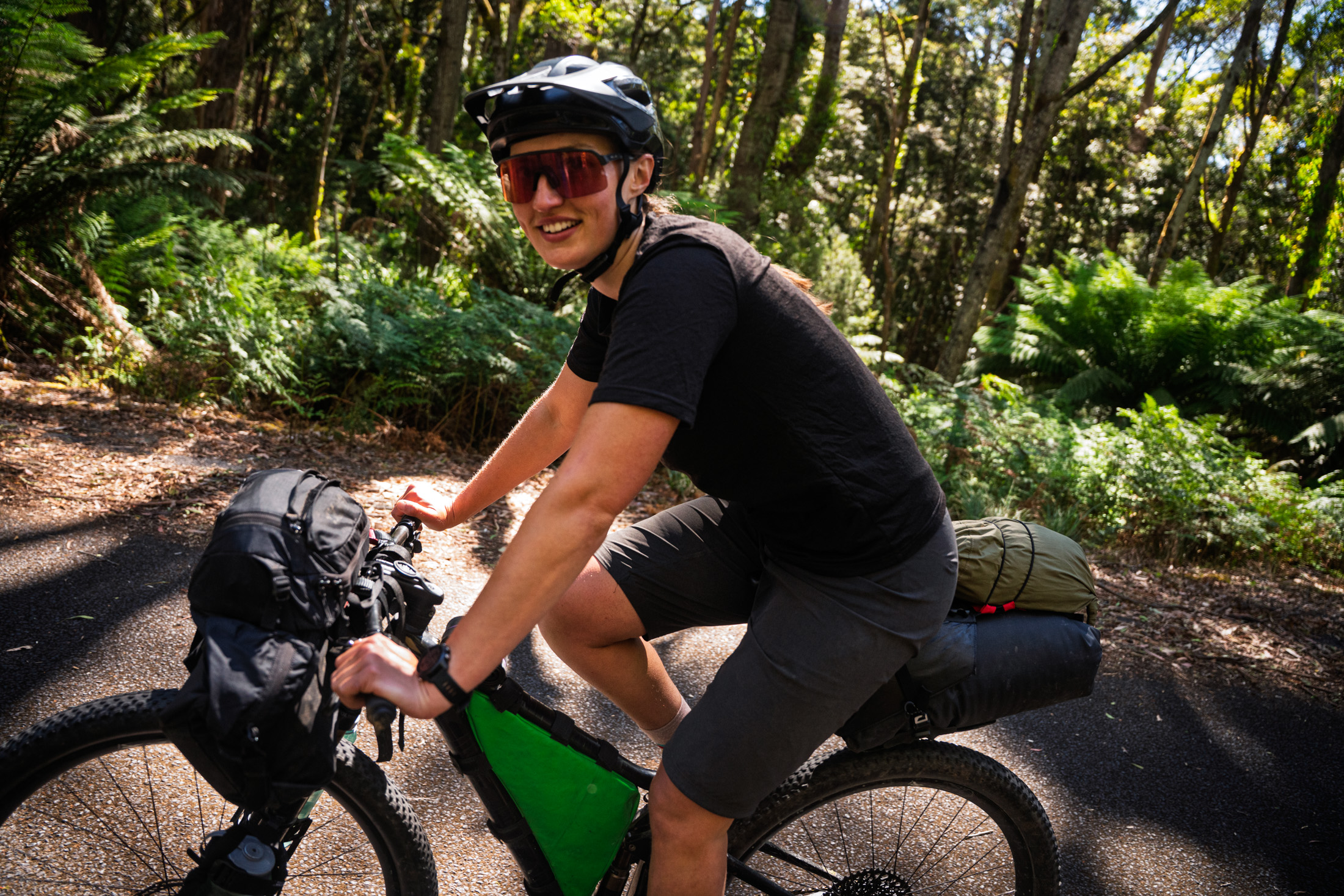 While we tried to avoid tarmac as much as we could throughout the route, we very much appreciate the short stints on the road with little traffic and smooth, fast bitumen.
 The dirt road up the West Coast was very remote and isolated, and some gnarly rain, hail and wind rolled in on Christmas day. The camera stayed in the dry bag at that point, though.
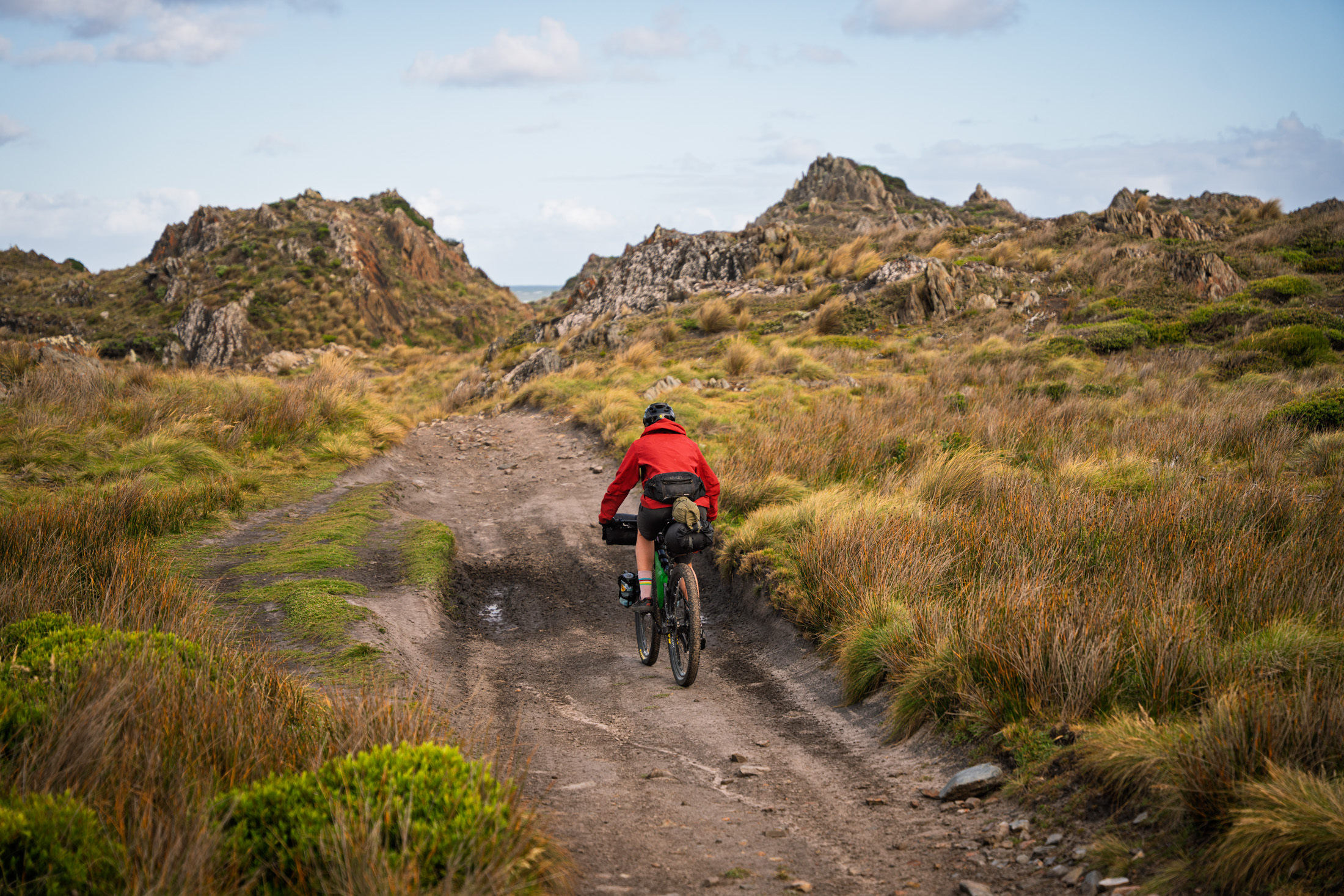 It’s pretty easy to see how this coastline got named Couta Rocks.
There were only two towns that the route passed through, neither of which had any real form of shops to restock on food.
Because of this, we planned to be entirely self-sufficient for the entire trip, with every meal planned and snacks portioned, and an emergency meal packed in case of a delay.
In an attempt to avoid prepackaged dehydrated meals, which are expensive and often bland, we borrowed a dehydrator from a friend, and the kitchen was in full swing for almost 7 days straight. I’d heard dehydrating was a lot of work, but I severely underestimated just how much faff was involved. Worth it? Absolutely.
We cooked up a large batch of Bolognese using Wallaby mince. Wallaby meat is exceptionally lean, readily available, and relatively cheap down here in Tasmania.
Because it’s so lean, it works really well for dehydrating, since fats don’t dehydrate as well. That was dinner for the majority of the trip, and while it doesn’t look like anything gourmet, when you’re multiple days in and miles from civilisation, this was luxury.
Lunch was dehydrated pulled pork, with dehydrated rice, Kewpie mayonnaise, pickled ginger, and dried wasabi peas. Yep, I know dehydrated rice sounds silly, but hear me out.
Pre-cook the rice, dehydrate it, then, when you’re in the middle of nowhere, all you need to do is boil ~500ml of water, drop the rice in, wait 15 minutes, and boom, perfectly cooked rice: minimal faff, minimal cleanup, and it saves precious gas for making coffee.
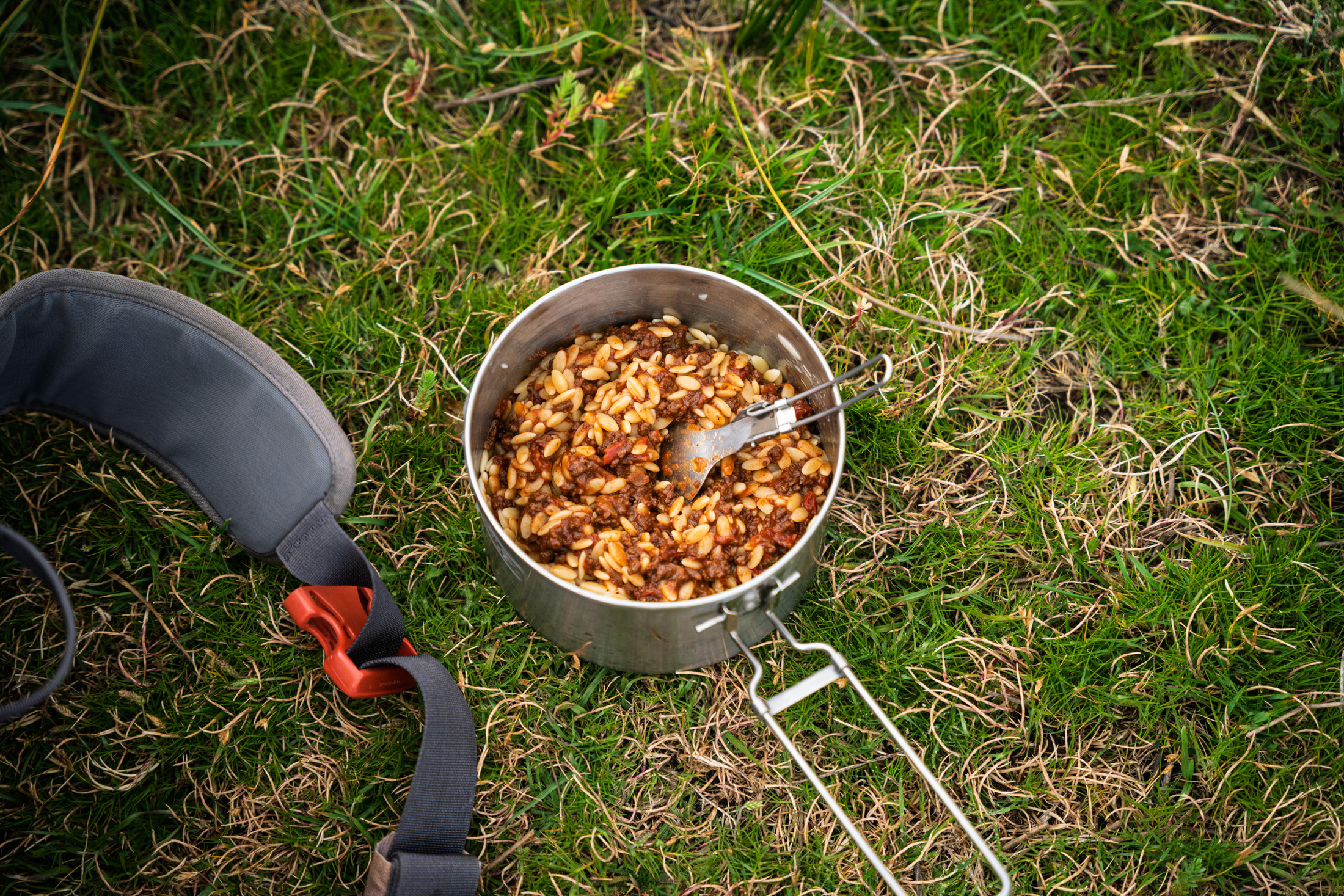 Christmas dinner—bikepacking style.
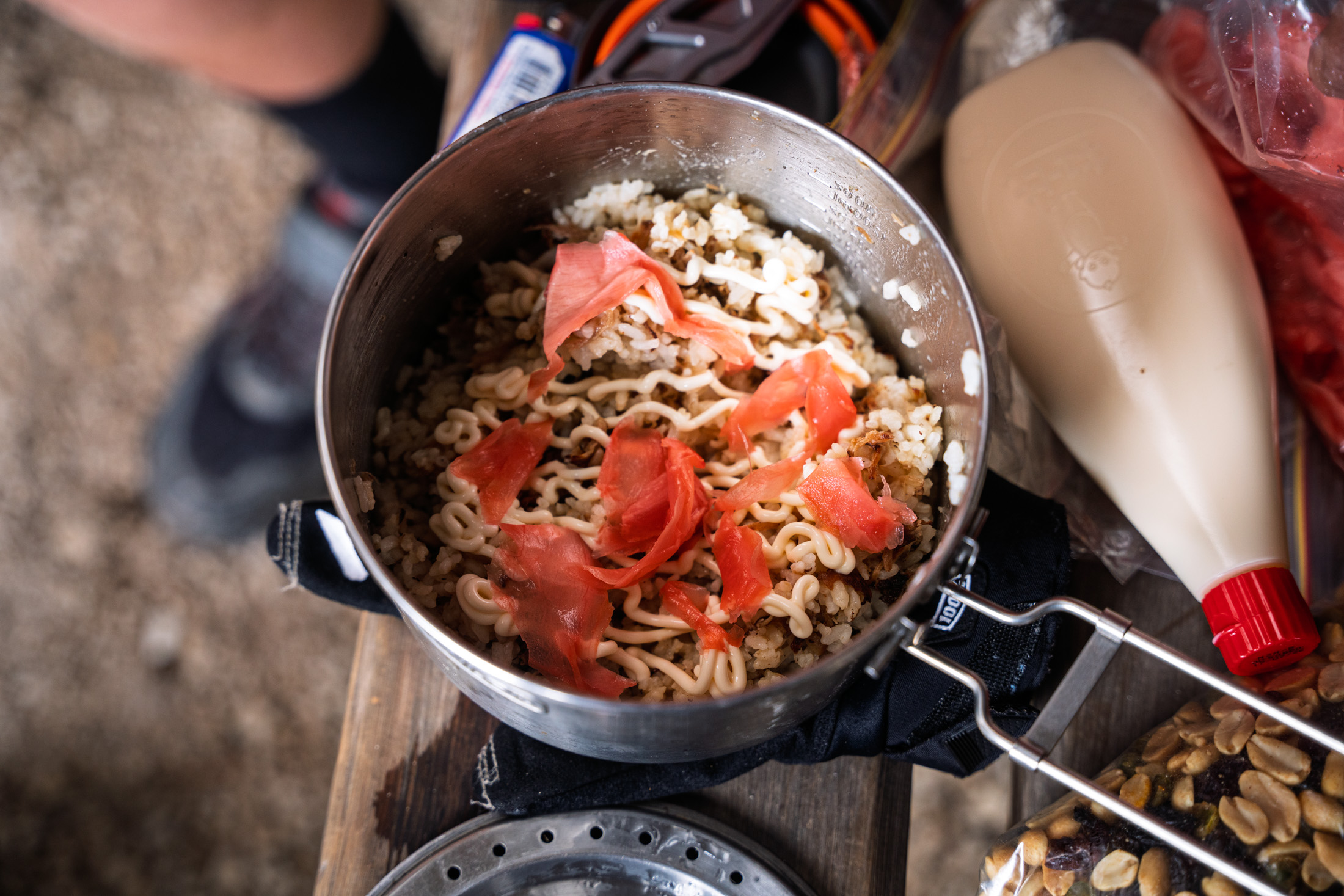 Pulled pork with rice, kewpie mayonnaise and pickled ginger was for lunch each day. Yum!
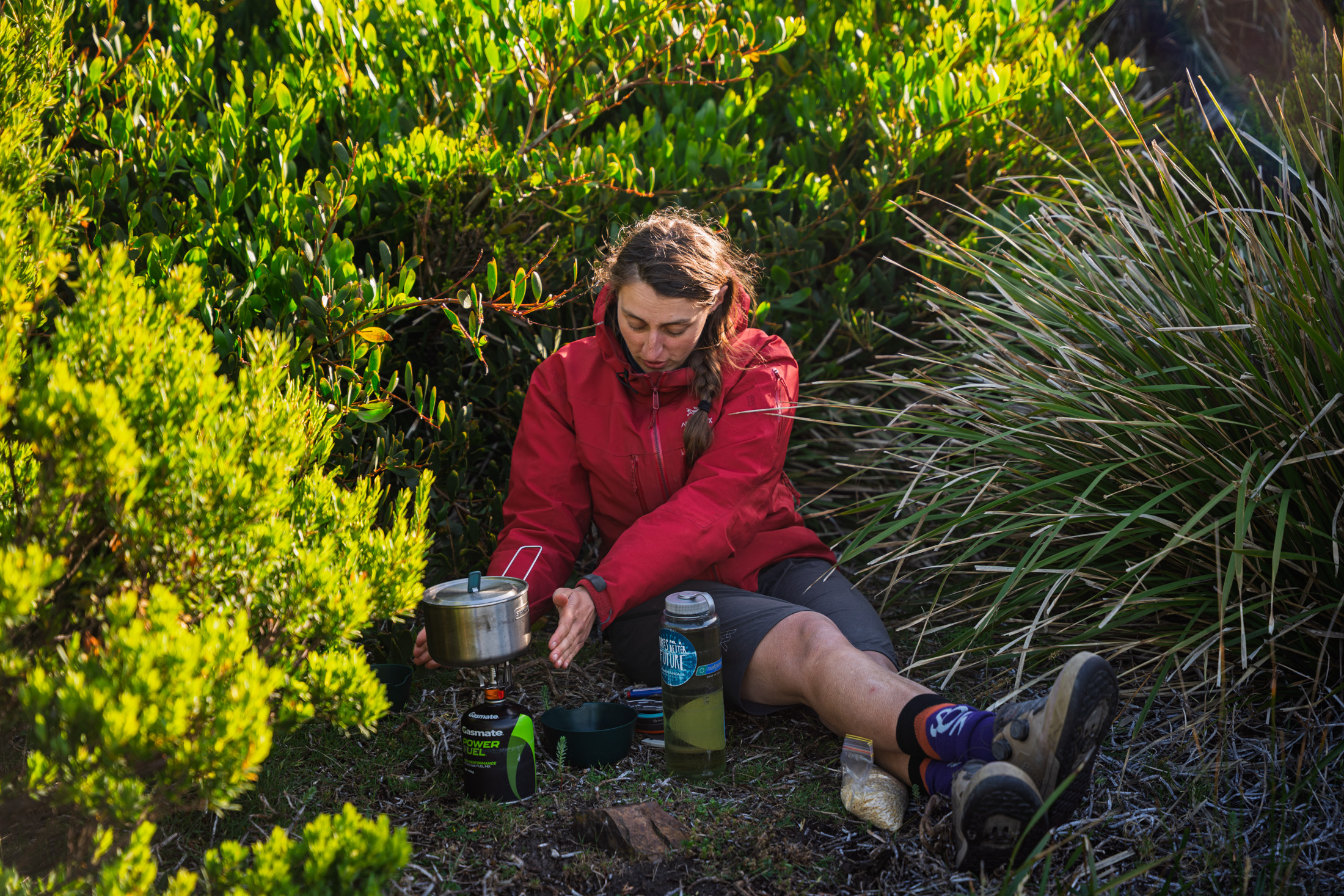 Warm hands for the chef.
As for the scenes, in typical Tasmanian fashion, it delivered in spades.
Rugged wild coastlines with waves that resemble a washing machine, sideways hail on Christmas day, to lush jungle forests with giant ferns, moss-covered trees and creeks that kept us alive, it was the full Tasmanian experience.
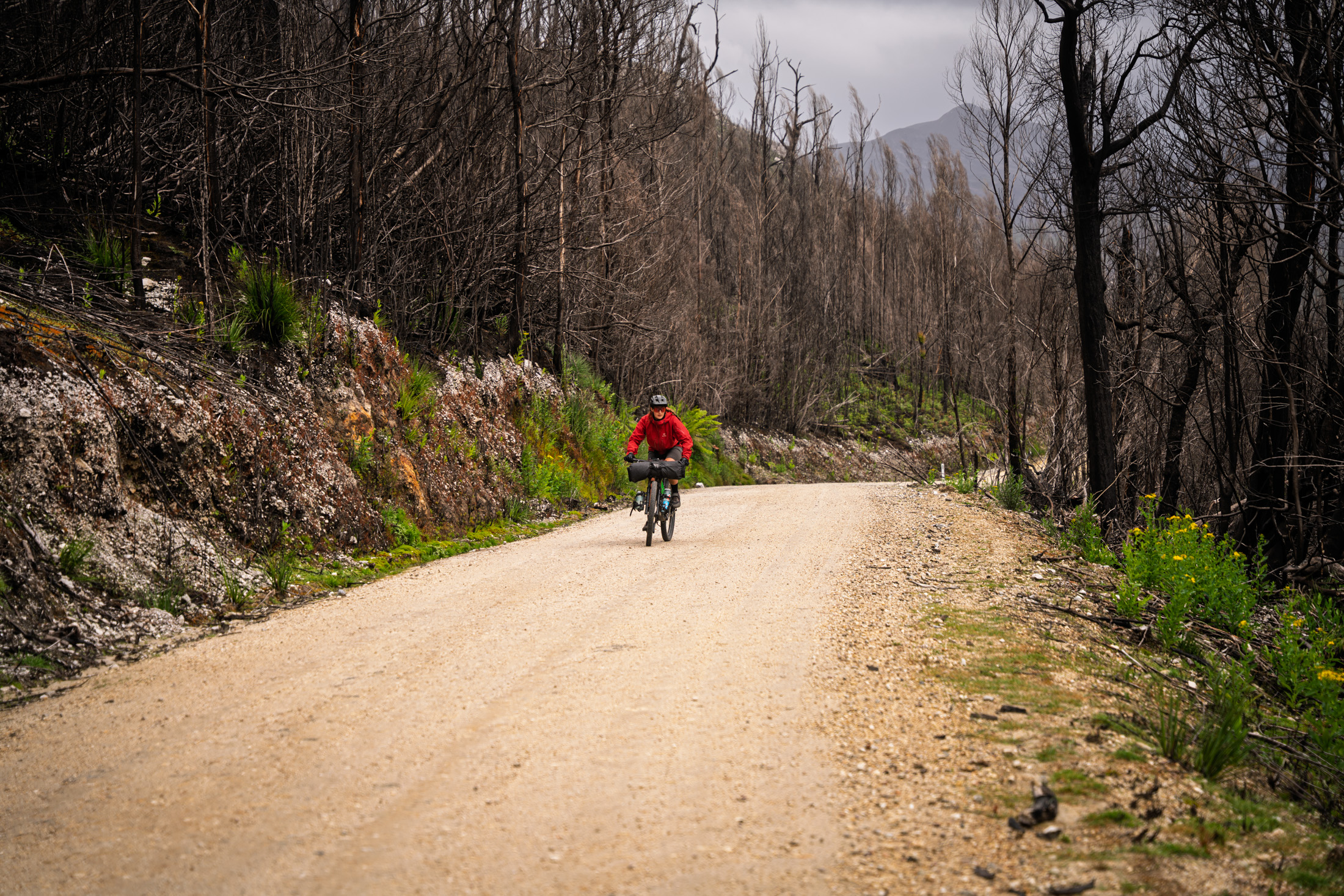
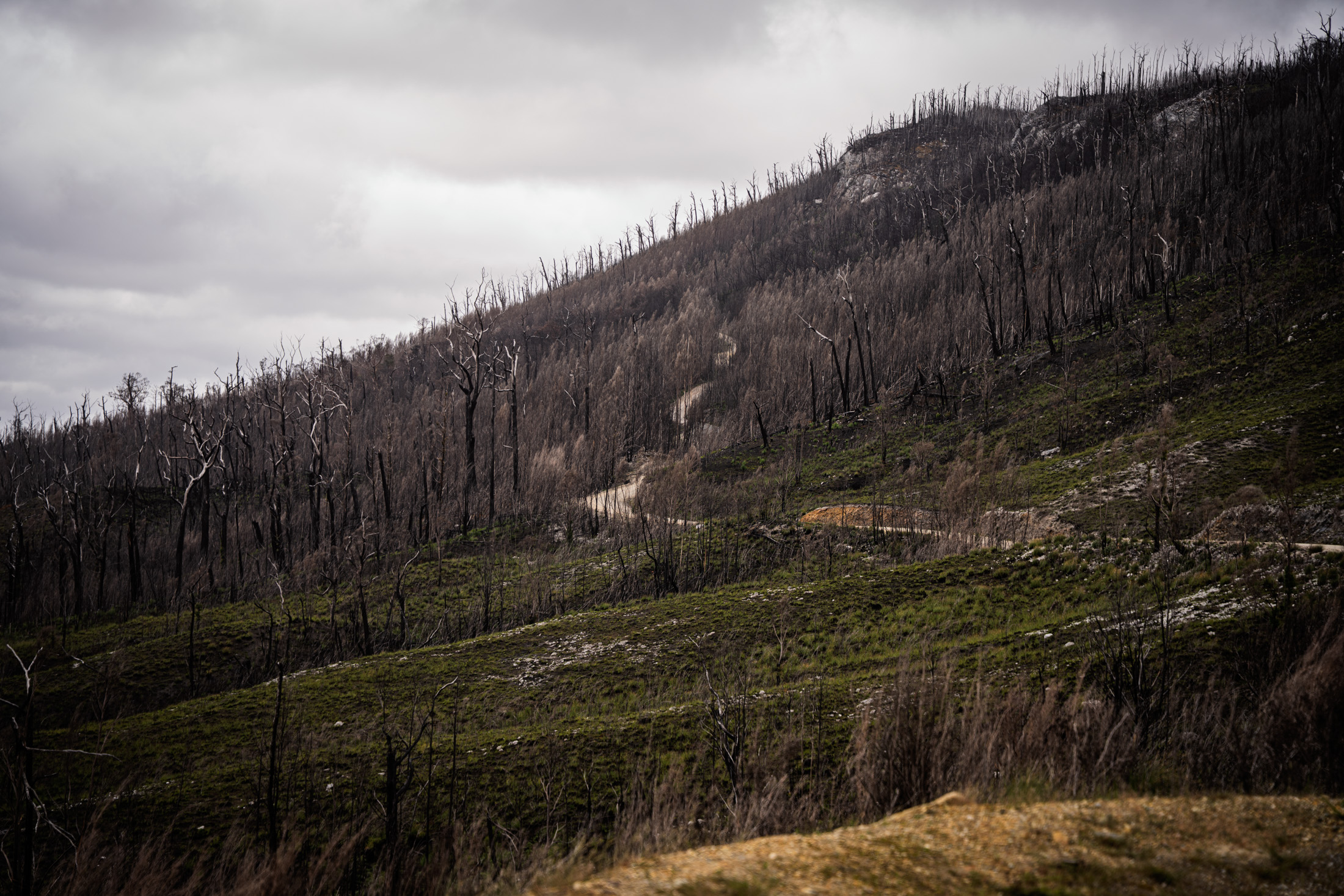 The west coast was smashed by bushfires in early 2025, but it’s really cool to see how the forest bounces back.
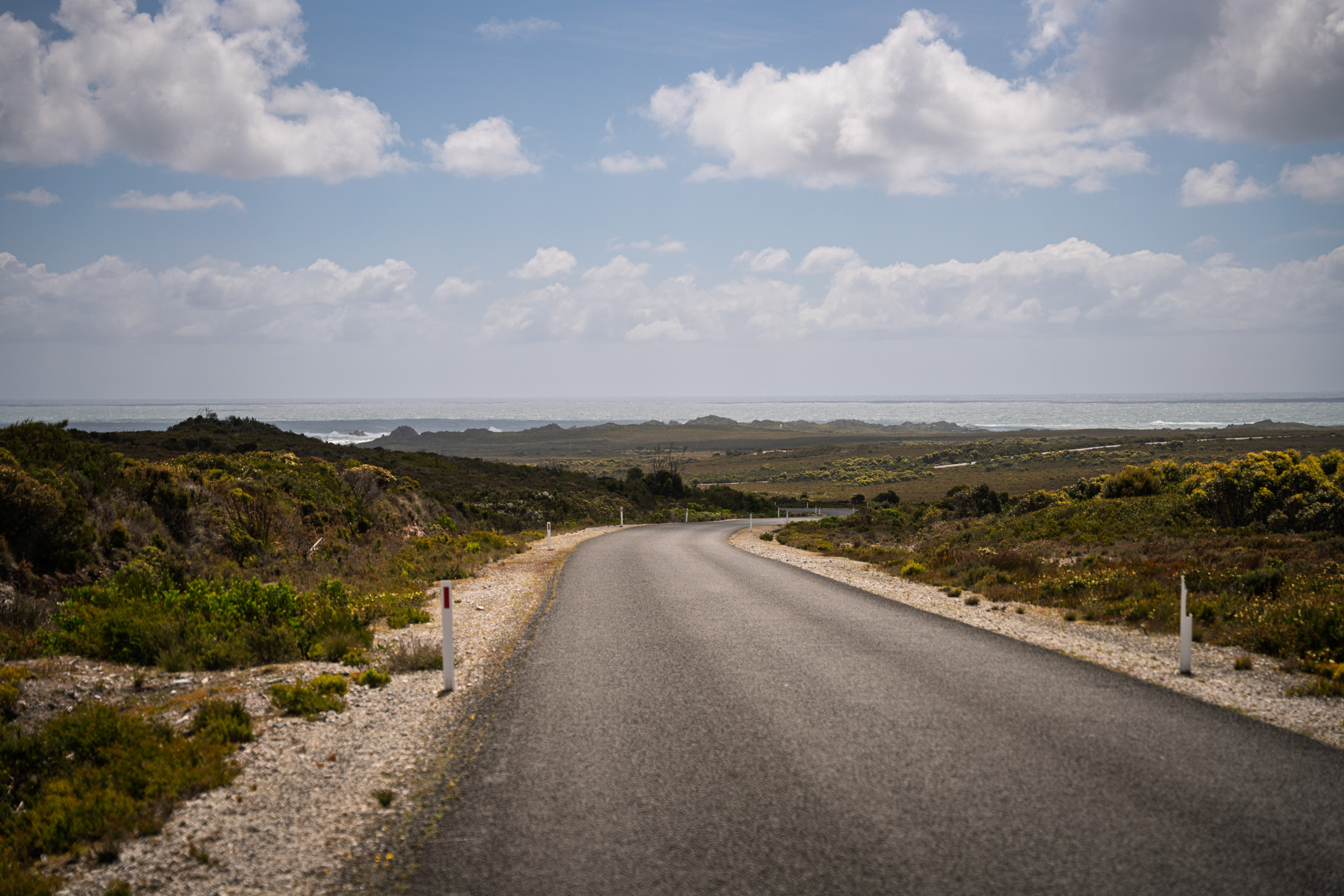 Downhill to the beach, Yeeww!
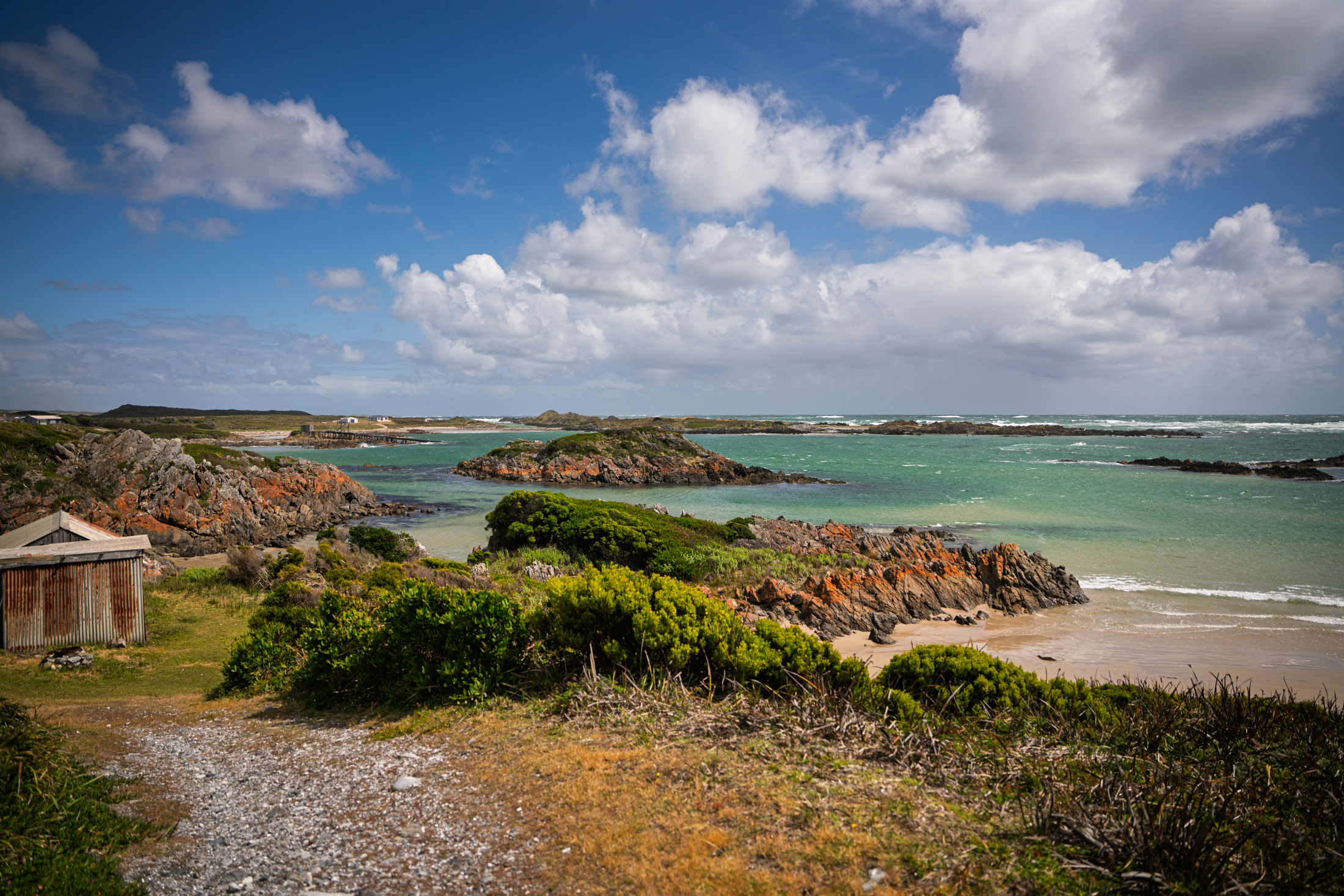 Pictures often don’t show the 60km/h wind that was lashing this coastline at this point in time.
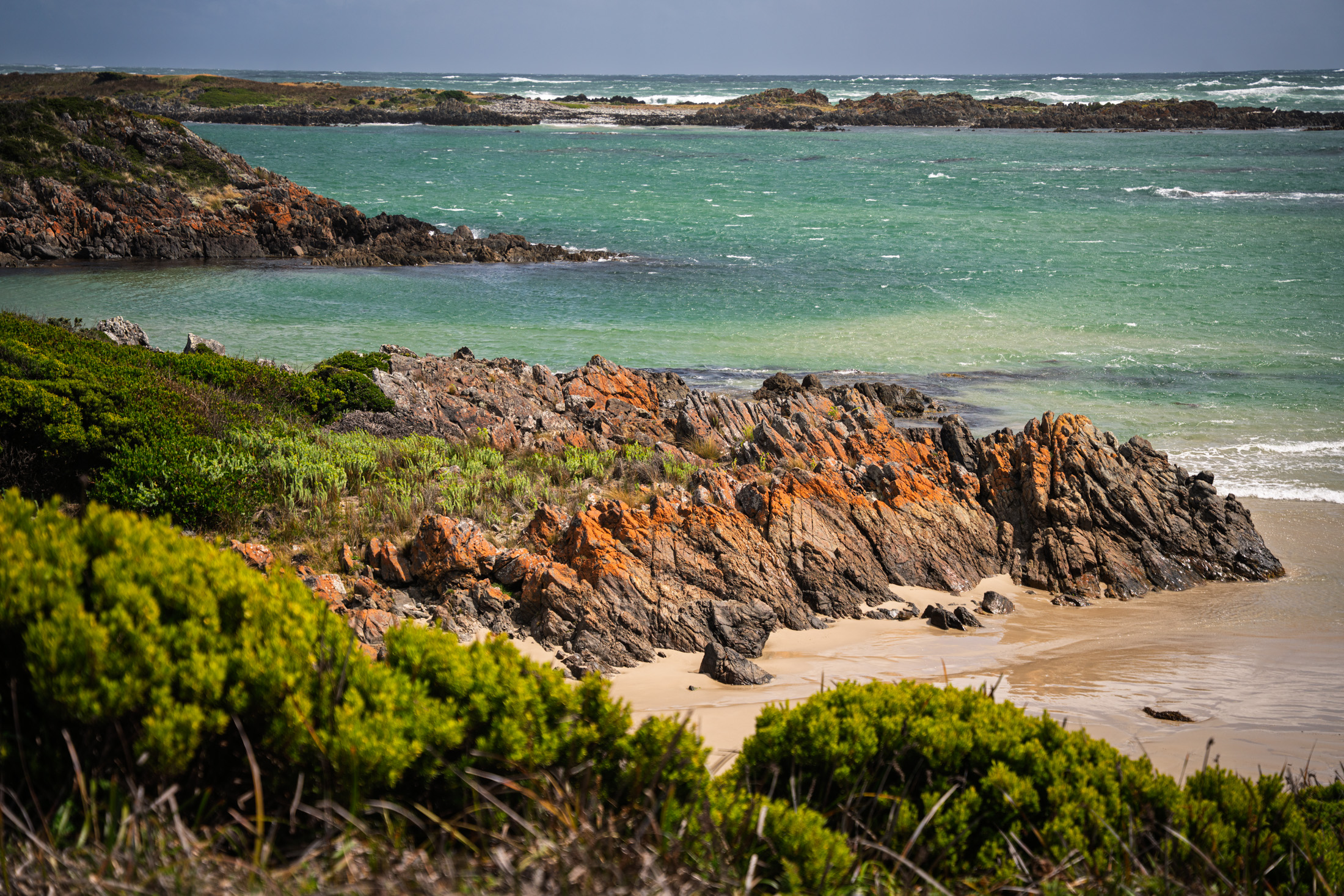 Dreamy.
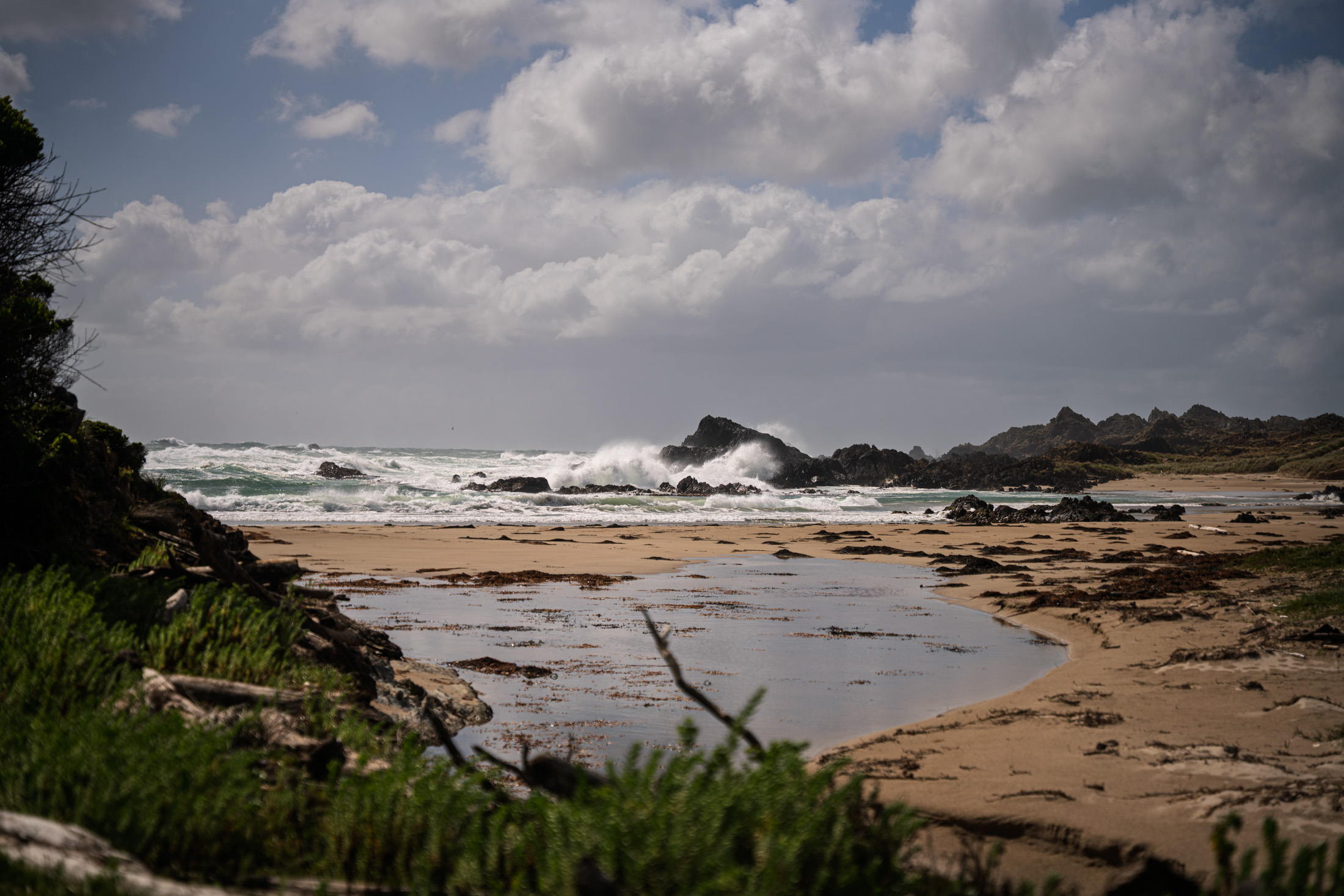 I didn’t dare go near the surf.
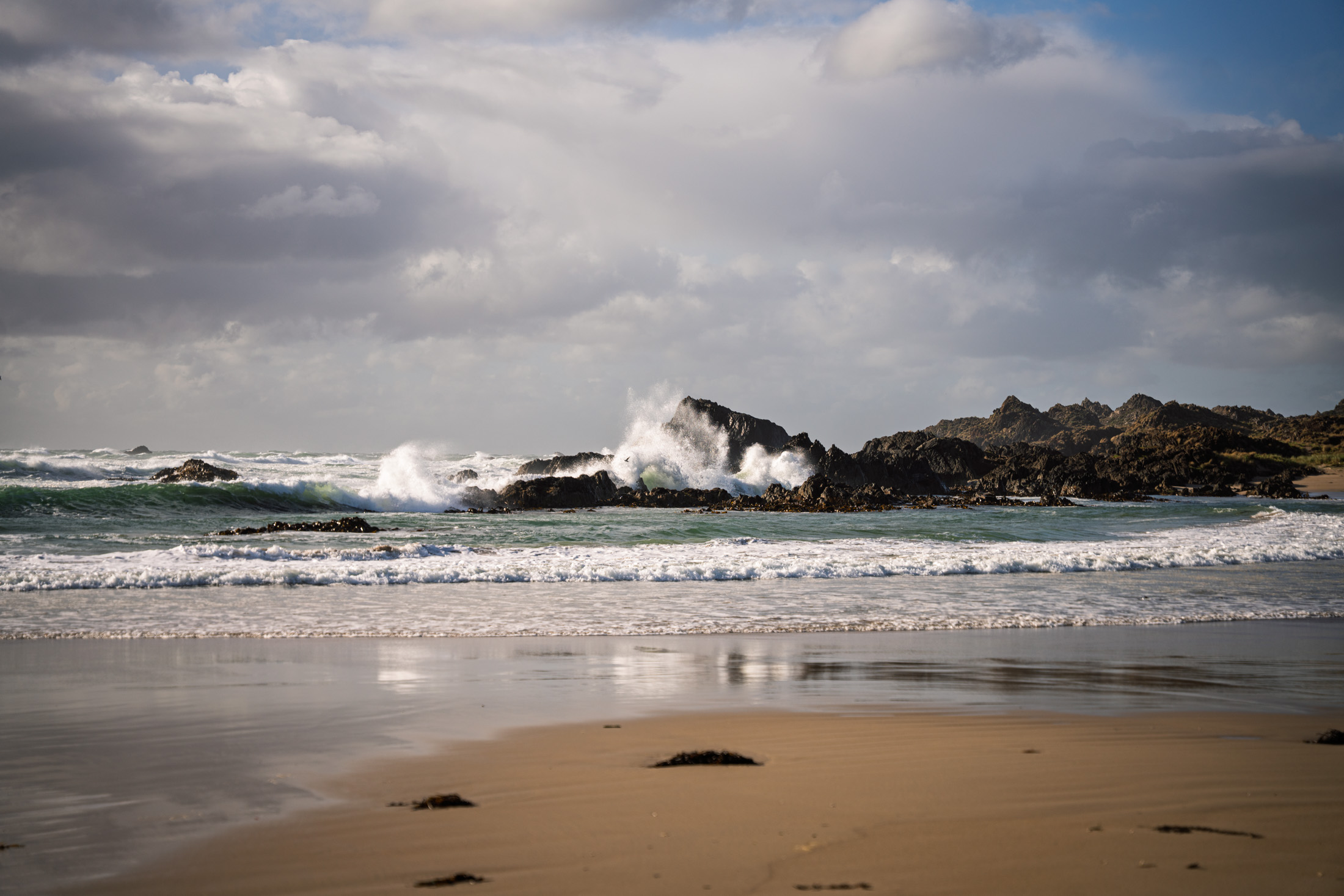 The waves crashed and splashed across the rocks all night—peaceful.
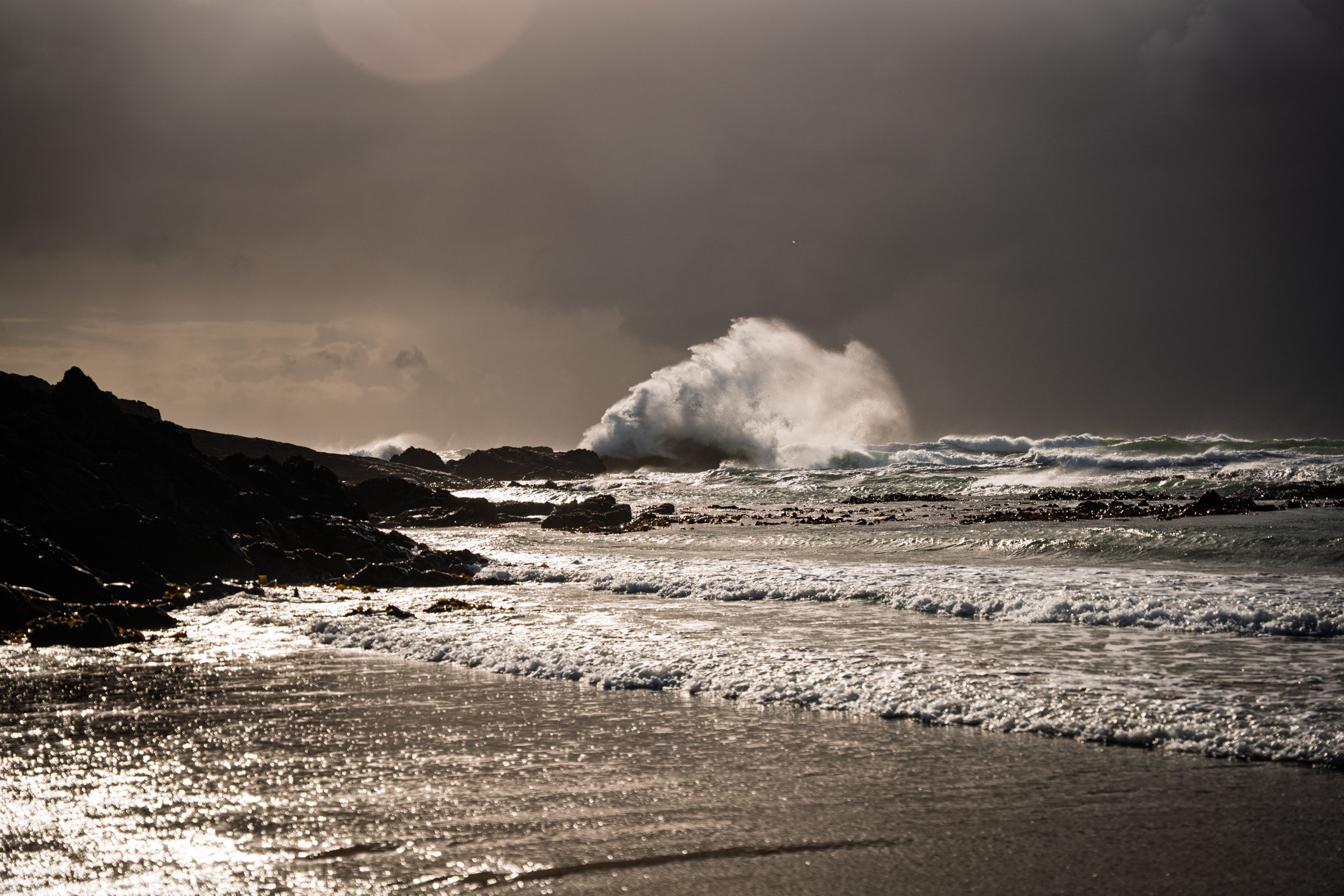 Boom.
Boom.
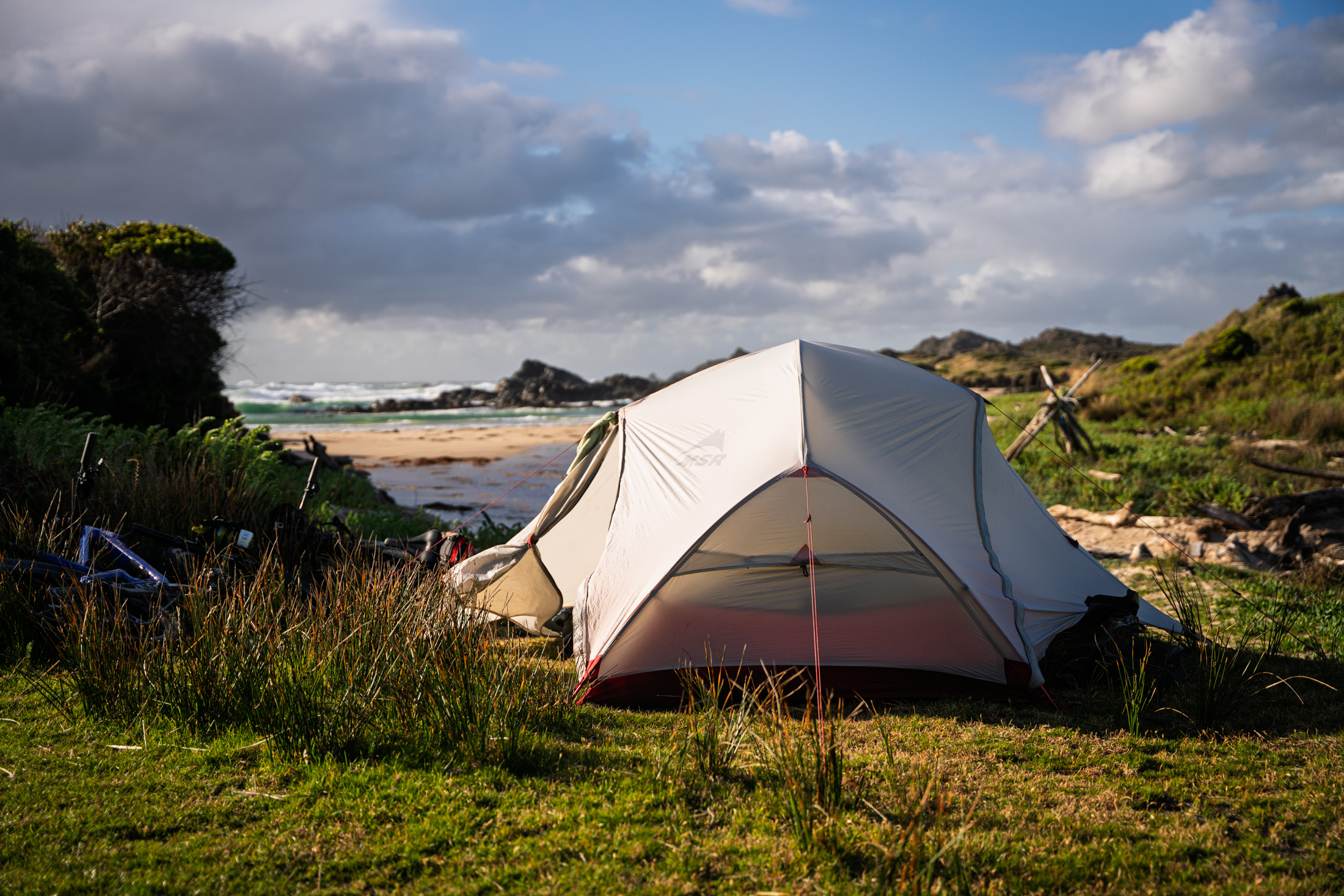 Christmas night camp spot.
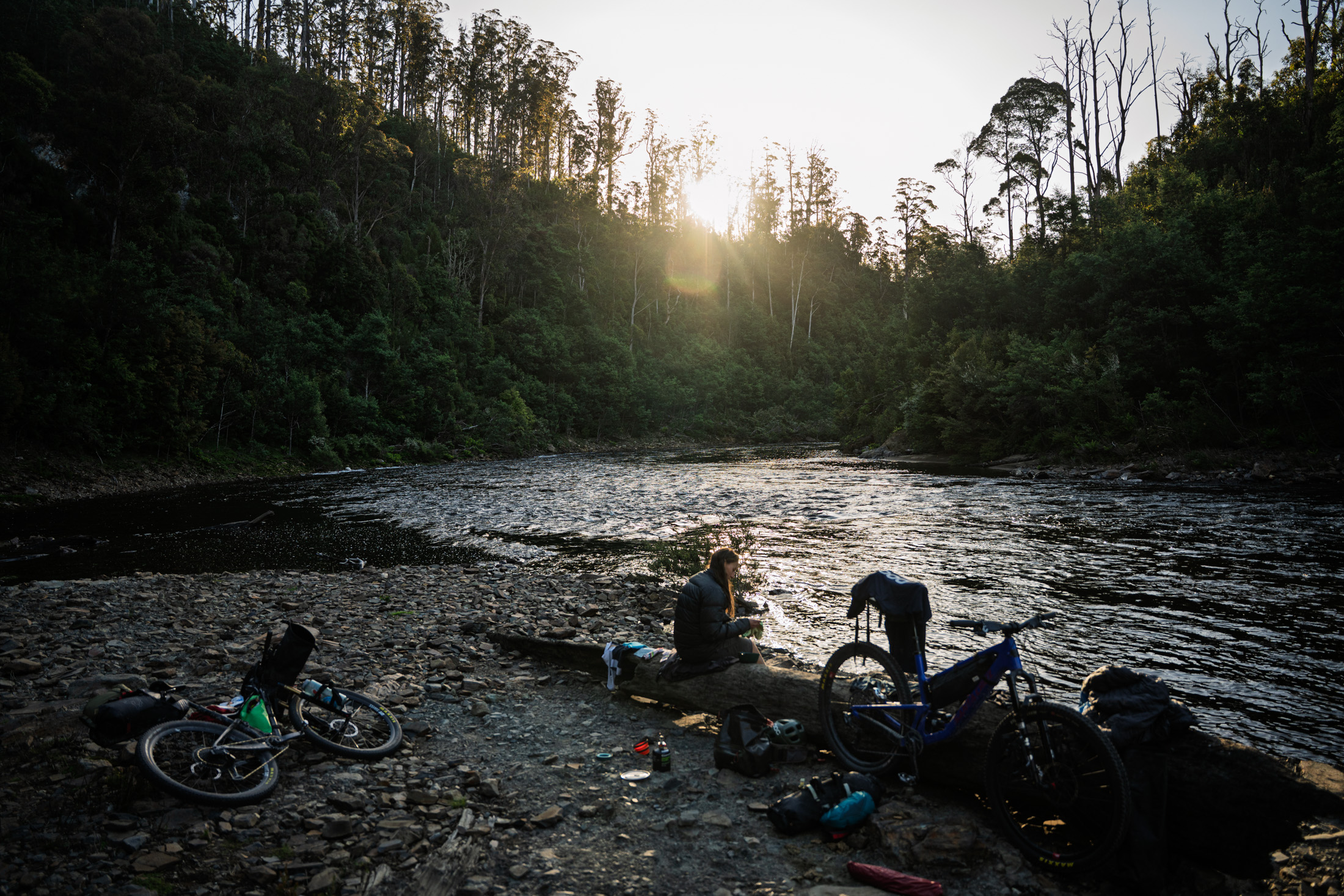 Arthur River (Not the town, the actual river, about 100km east of the coastline) was camp after a huge 105km in the saddle.
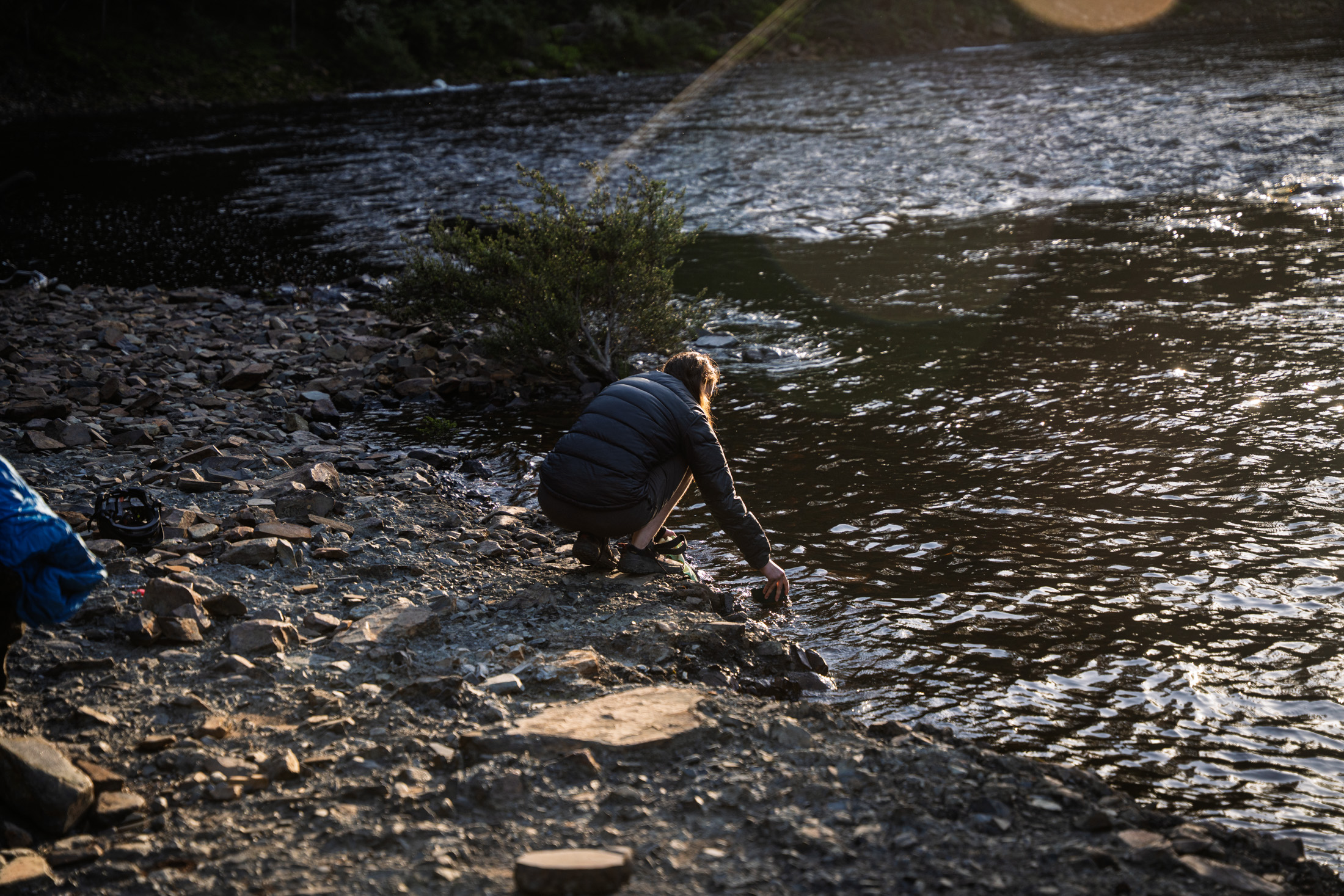 Water was the deciding factor behind where we camped each night. Being close to a river means you don’t have to stress about finding, filtering and carrying water during the day to last through the night and into the next day.
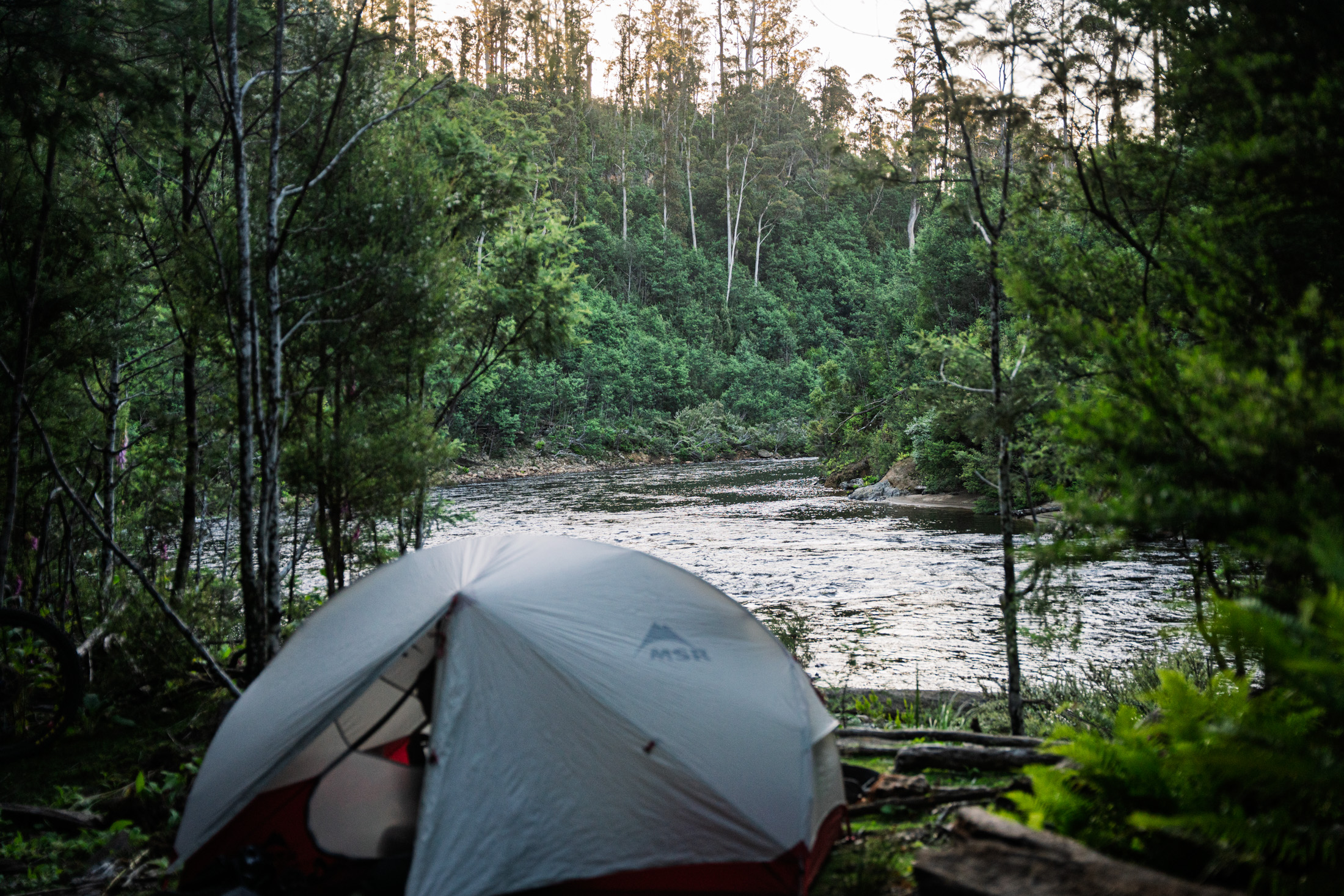 Not bad, ay?
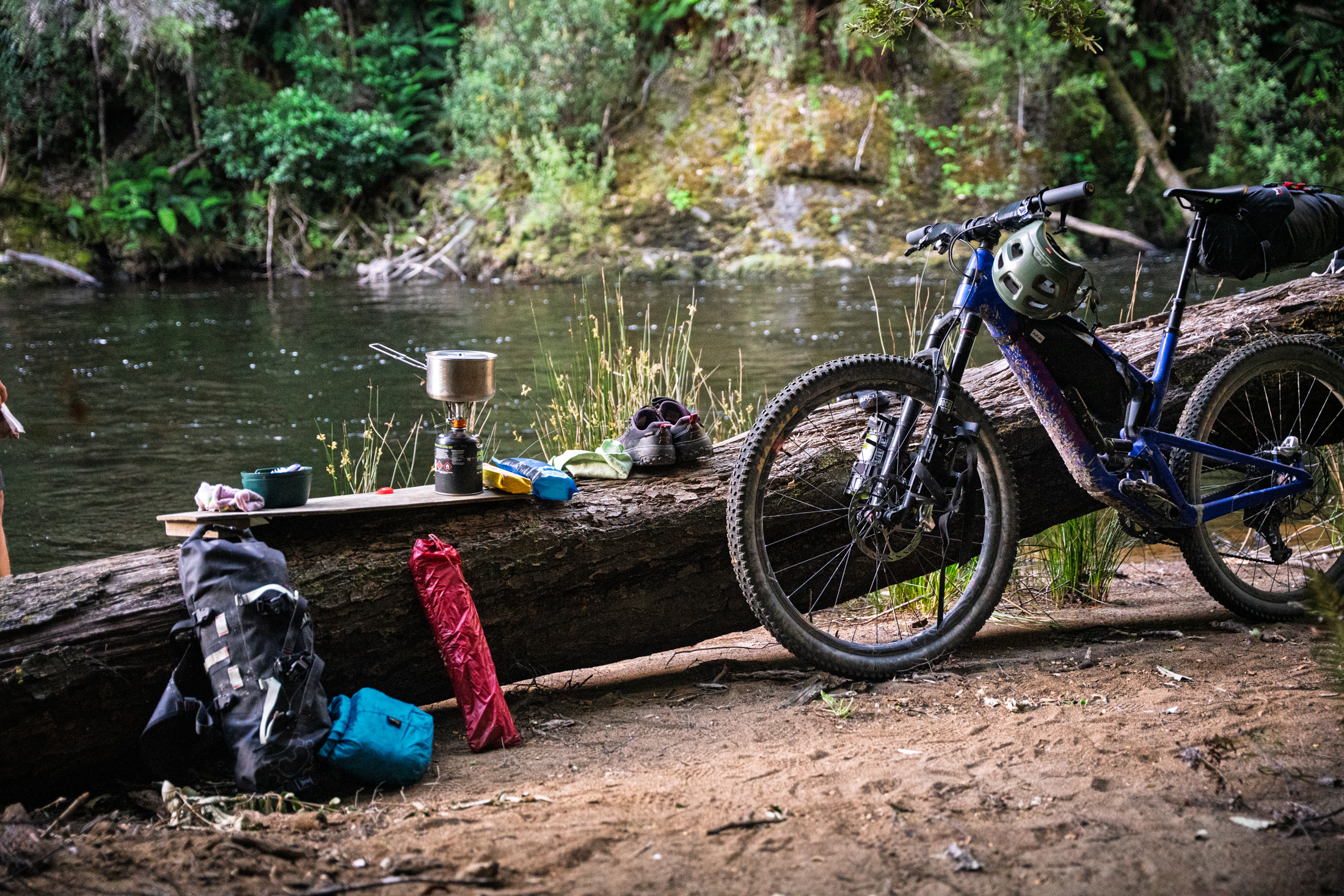 We ran a pretty lean setup with gear, but you’ve got to when you’re carrying it across the state.
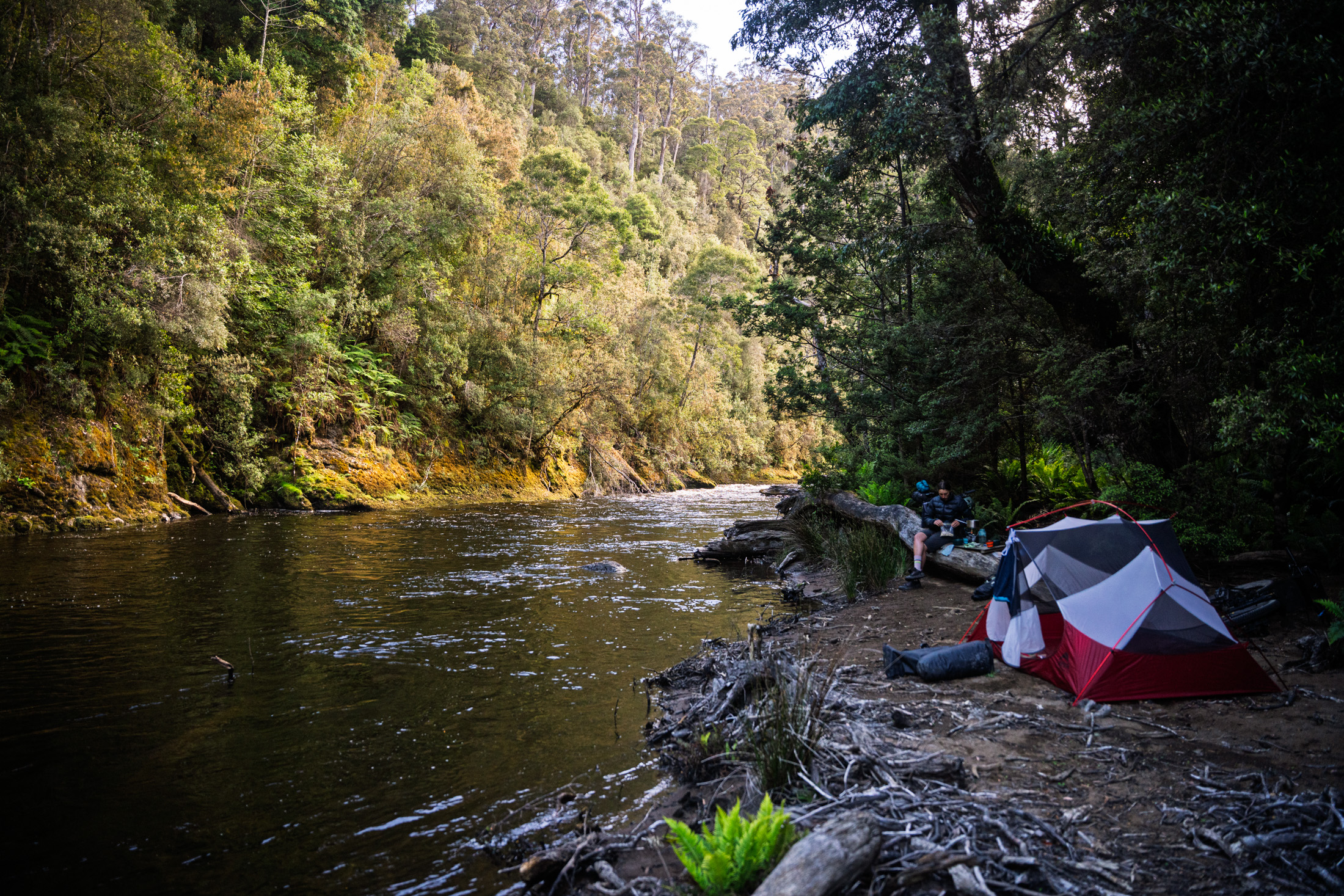 Hellyer Gorge River—Hell Yer!
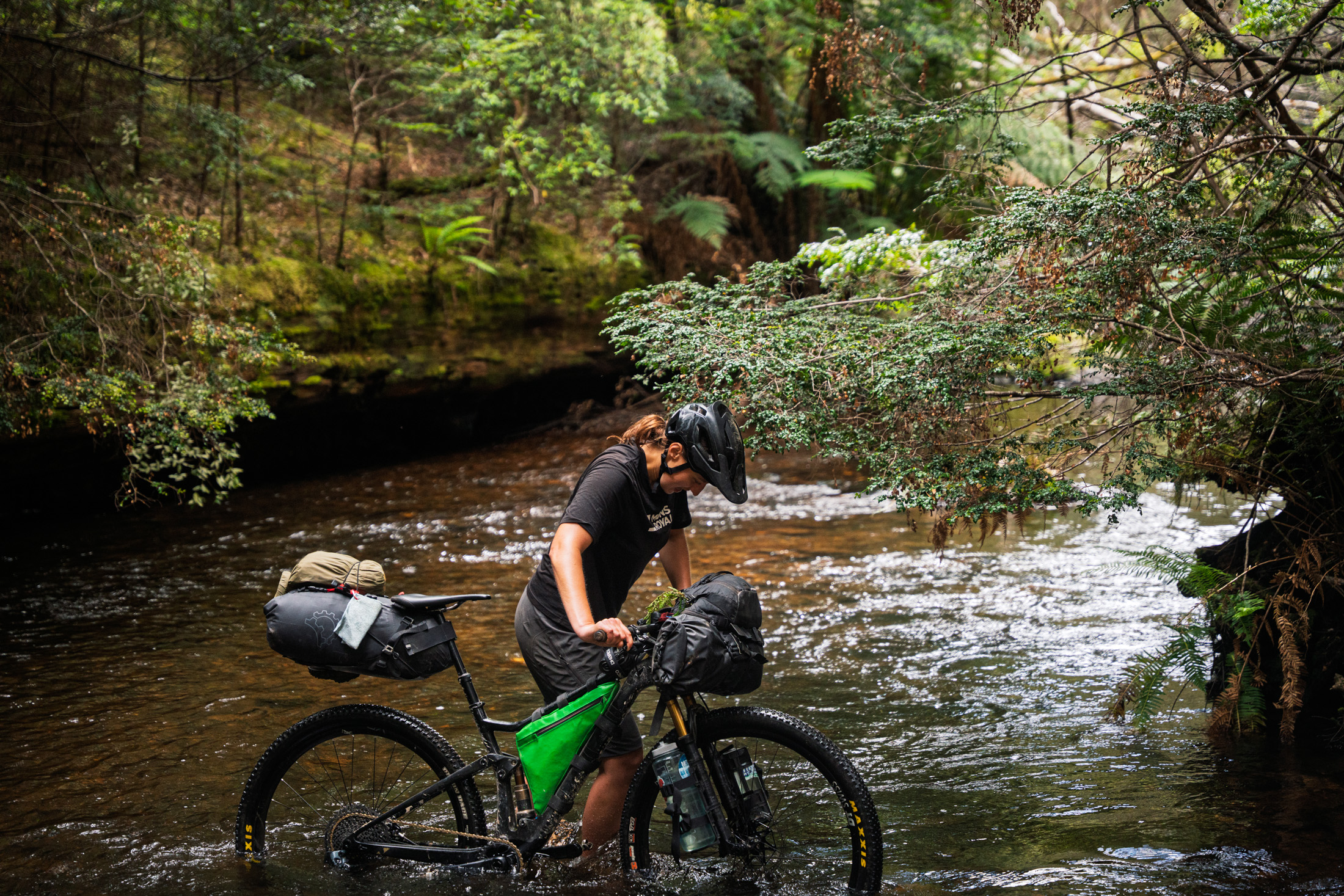 Cold toes.
Bikepacking is a really good way of spotting wildlife. You’re a lot slower and quieter, meaning there’s a much better chance of saying g’day to some furry friends. We spotted:
Pademelons
Wallabys
Wombats
Echidnas
Blue tougne lizards
Black cockatoos
Kookaburras
Snakes
But thankfully, nobody tried to munch into our dry bags and steal our food overnight.
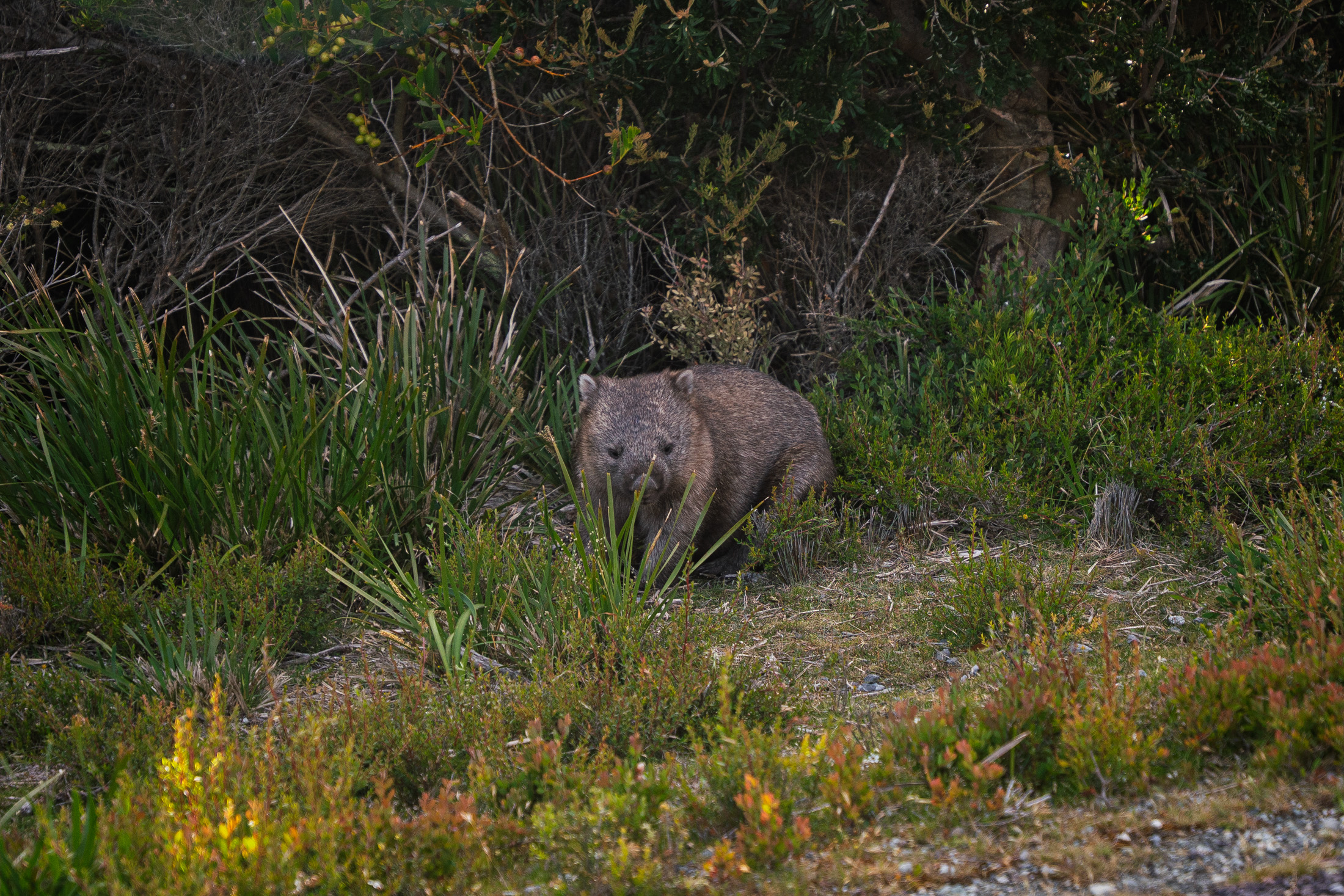 Hey, bud.
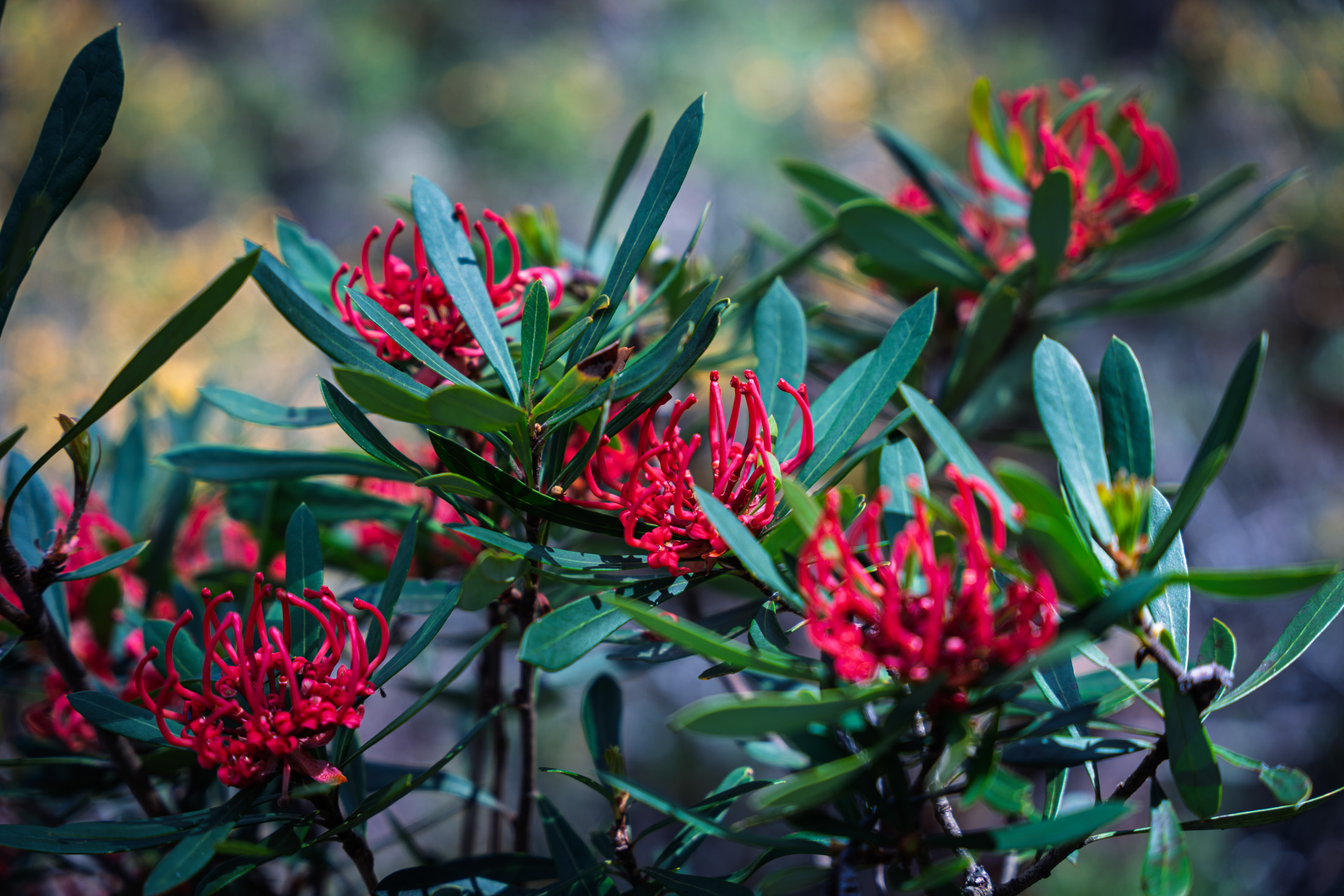 Waratah flowers in full swing this time of year.
Would I recommend this loop? Absolutely. Be very, very, prepared—food, spares, and clothes for every season. The West Coast has very few amenities and very little phone reception; take this very much into consideration when planning and packing. But you’ll be rewarded by seeing some of Tasmania’s finest landscapes and wildlife, and camp in some absolutely gorgeous locations.
Editorial Guidelines
At Flow Mountain Bike, we’re committed to delivering engaging and trustworthy content, from product reviews to destination showcases, news, interviews, and features. While many of the brands and destinations we cover may advertise with us, our editorial team operates independently, ensuring our content is guided by expertise and passion—not commercial influence. Sponsored content is always clearly disclosed, and we remain dedicated to providing honest and unbiased coverage across everything we publish. For more details, see our Transparency Report.