
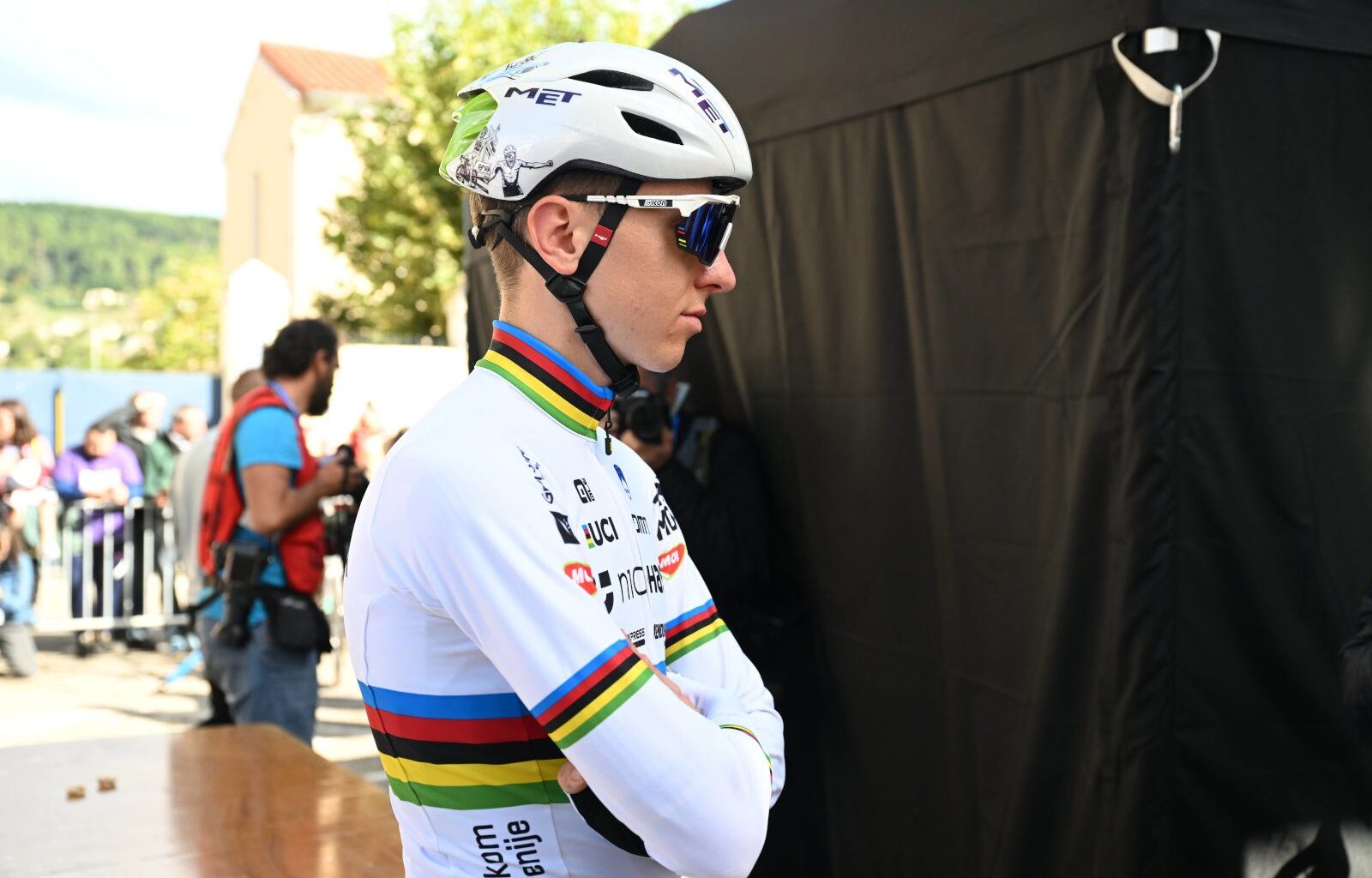
When the dudes are at training camps in Spain, once the riders finish talking, attention inevitably shifts to the architects behind the success. Because, in a way, those coaches are the ones that are using this incredible potential to be champs.
Javier Sola, Tadej Pogačar’s coach, and Jeroen Swart, head of performance at UAE Team Emirates, remain two of the most scrutinized figures in modern cycling. Their work, often described in detail by bici.pro, has helped redefine how elite performance is built. Or something.
Suspicion has largely given way to curiosity. As Sola and Swart emphasize, Pogačar’s dominance is not the product of training plans alone, but of a fully integrated system: on-bike workload, gym sessions, nutrition, race fueling, recovery, technology and equipment. Us cycking fans are inundated with how nutrition and training has changed so dramatically recently…it’s like intervals and eating well weren’t a thang back in the dark era. (They weighed their foods and certainly did intervals, btw.)
Anyway, one key element is strength training. And that’s fair. Not a bad thing for any of us add to our training. (Although recall, the world champ loves to do Zone 2 at 340…so there’s that.)
“Force and conditioning off the bike aren’t an accessory — they’re central,” Sola explained. According to him, Pogačar’s recent progress is tied to improved muscular strength and body composition, with slightly more lean mass and less non-functional weight. That foundation, built over years, supports the Slovenian’s long-range attacks and sustained efforts.
Now, back to Pogi’s incredible breakaways.
Sola rejects the idea that Pogačar’s solo moves are reckless. They are backed by a carefully developed balance between aerobic endurance and muscular force, refined through experience and efficiency gains, especially visible in time trials. The work continues in 2026, with a focus on strength and high intensity, without neglecting the aerobic base.
The big question remains: are there still margins? Sola is clear. “He hasn’t reached his absolute limit yet,” he said, while admitting no one can predict how large that margin is. Swart echoes the concept, stressing optimization rather than revolution. The goal is not more volume, but constant fine-tuning — finding the delicate balance between maximal efforts and recovery.
Nutrition is another decisive thang, apparently. Swart highlighted how modern fueling strategies have transformed performance. Maintaining energy homeostasis during races is critical, and carbohydrate intake has doubled compared to a decade ago. What once seemed extreme is now standard practice.
You can read more about that from a few pros, notably an Italian–we know those folks have strong opinions about food.
Tech completes the picture. Continuous monitoring of physiological data, combined with carefully chosen equipment, allows UAE to push boundaries while managing risk. As Swart summed it up, it’s no longer just about producing watts, but about making every part of the system work together.
As bici.pro reports, Pogačar’s evolution reflects a broader truth: today’s cycling is performance science in motion — and his story suggests the experiment is far from finished.
Anyway, 2026 is here. And racing is about to begin at the Tour Down Under. LFG!