
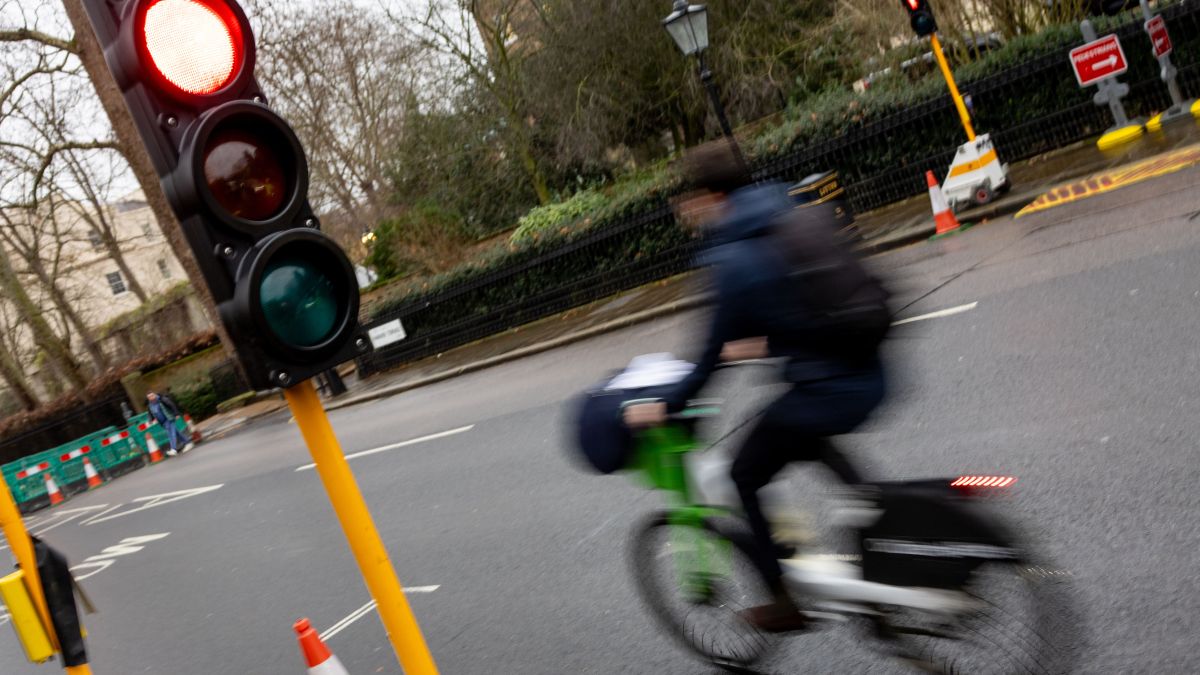
As a barely-there January sun rises over Regent’s Park, one group of Londoners are already well into their morning. The Outer Circle at Regent’s Park, a relatively quiet loop slightly more than four kilometres long, has become a favoured spot for time-chasing, Lycra-clad cyclists, many of them members of pre-work peloton groups out to circuit the park.
That may soon change. The Royal Parks, the charity that manages the roadway, is set to install three sets of traffic lights designed to slow cyclists on their morning rides.
There have been two highly publicised incidents in recent years. In June 2022, Hilda Griffiths, an 81-year-old pedestrian walking her dog, was killed by a recreational cyclist who had been travelling at 25mph on a 20mph road, although the speed limit does not apply to cyclists. The cyclist was not prosecuted and an inquest heard from a witness that Griffiths had not looked out before stepping onto the tarmac.

Hilda Griffiths, 81, was killed by a cyclist when crossing the road with her dog
Another dog walker was injured in May 2024.
The Royal Parks, which manages seven other open spaces in London as well as Regent’s Park, introduced a code of conduct for cyclists last April that featured instructions for them to “respect all park visitors” and “control their speed”.
• Giles Coren: Bikes turned park into a circle of hell — steal away
Darren Share, director of parks, said it was “vital” that Regent’s Park was “safe and welcoming for everyone”. He added: “The installation of new, signalised pedestrian crossings on the Outer Circle is an important step in improving safety and helping people move around the park with greater confidence.
“By encouraging road users to slow down, respect speed limits and be considerate of others, alongside making practical improvements like these crossings, we hope to foster a culture of mutual respect and create a safer, more enjoyable experience for all visitors.”
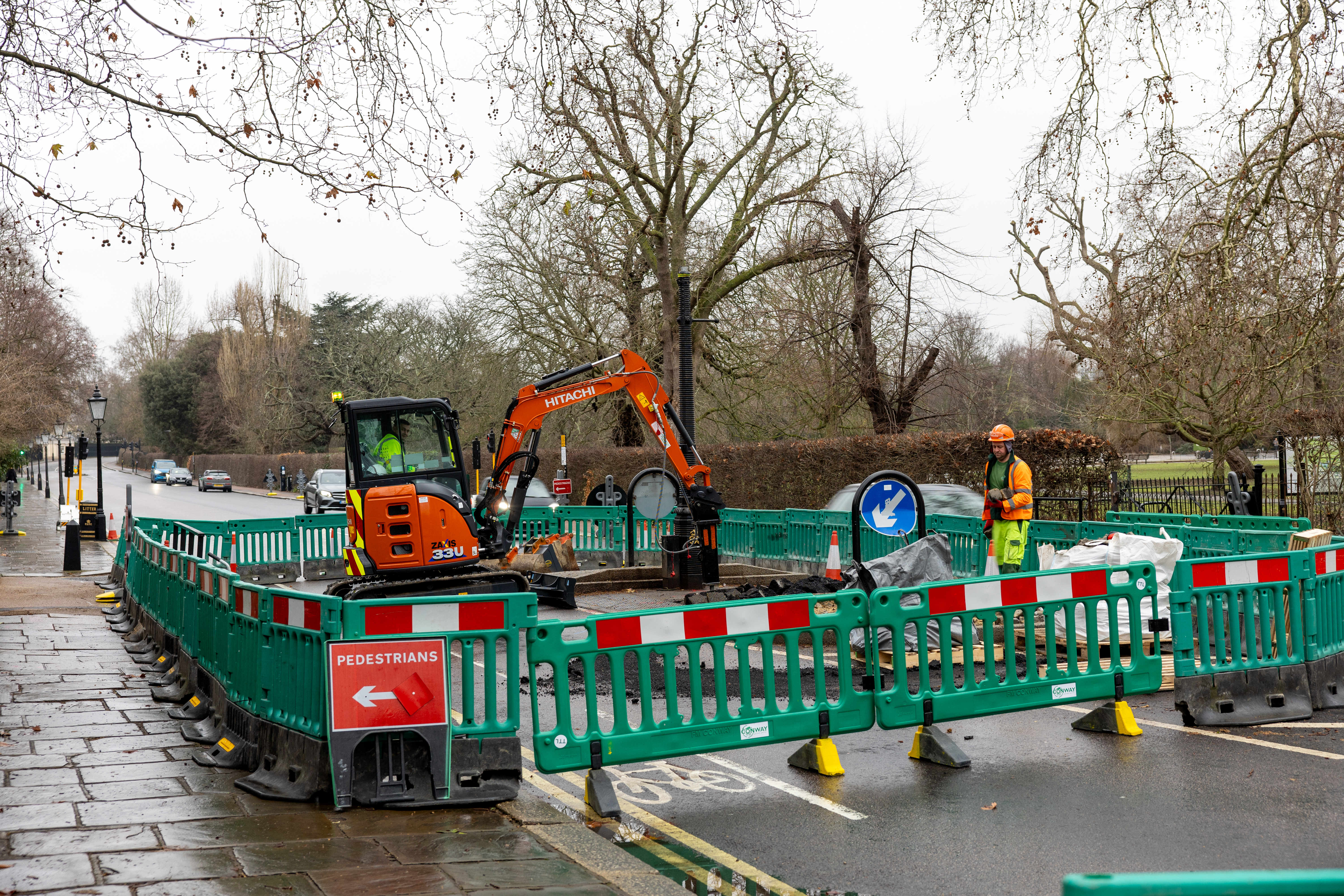
Construction work begins on the pedestrian crossings
TOBY SHEPHEARD FOR THE TIMES
Not everyone is convinced the new signals will work. Chris Vissle, who commutes on his bike, told The Times he did not “think it would make any difference” to recreational cyclists.
• London council starts handing out speeding fines to cyclists
However, one of those cyclists, who spoke to The Times while stopped at a red light, offered a different view. Will Bayliss has been using the Outer Circle for three years. He said: “I think what you get here is predominantly people who cycle for sport [and] who tend to be the best behaved — no headphones, wearing helmets and so on. Among proper [sport] cyclists there’s a lot of communication, a lot of etiquette.”
Most peloton groups pass messages back when approaching a red light and signal to each other when they might be approaching a car or a slower cyclist, events The Times witnessed on several occasions.
• Robert Crampton: Extreme weather alert: watch out for Wim Hofs on wheels!
“I’d argue that most of those people riding responsibly, albeit sometimes fast, are less of a problem than the people just cruising around oblivious,” Bayliss said.
In the course of 30 minutes at one set of traffic lights, The Times witnessed only two sport cyclists jump the lights, with the vast majority stopping. Cyclists on rental hire bikes or more obviously commuting were much more likely to jump on red, and were also often cycling without helmets.
Cyclists who are caught jumping the Outer Circle’s new traffic lights will be hit with £50 on-the-spot fines. Imposing that fine is a different matter altogether; The Times did not see any sign of enforcement personnel during the morning, nor were a series of speeding motorists troubled.
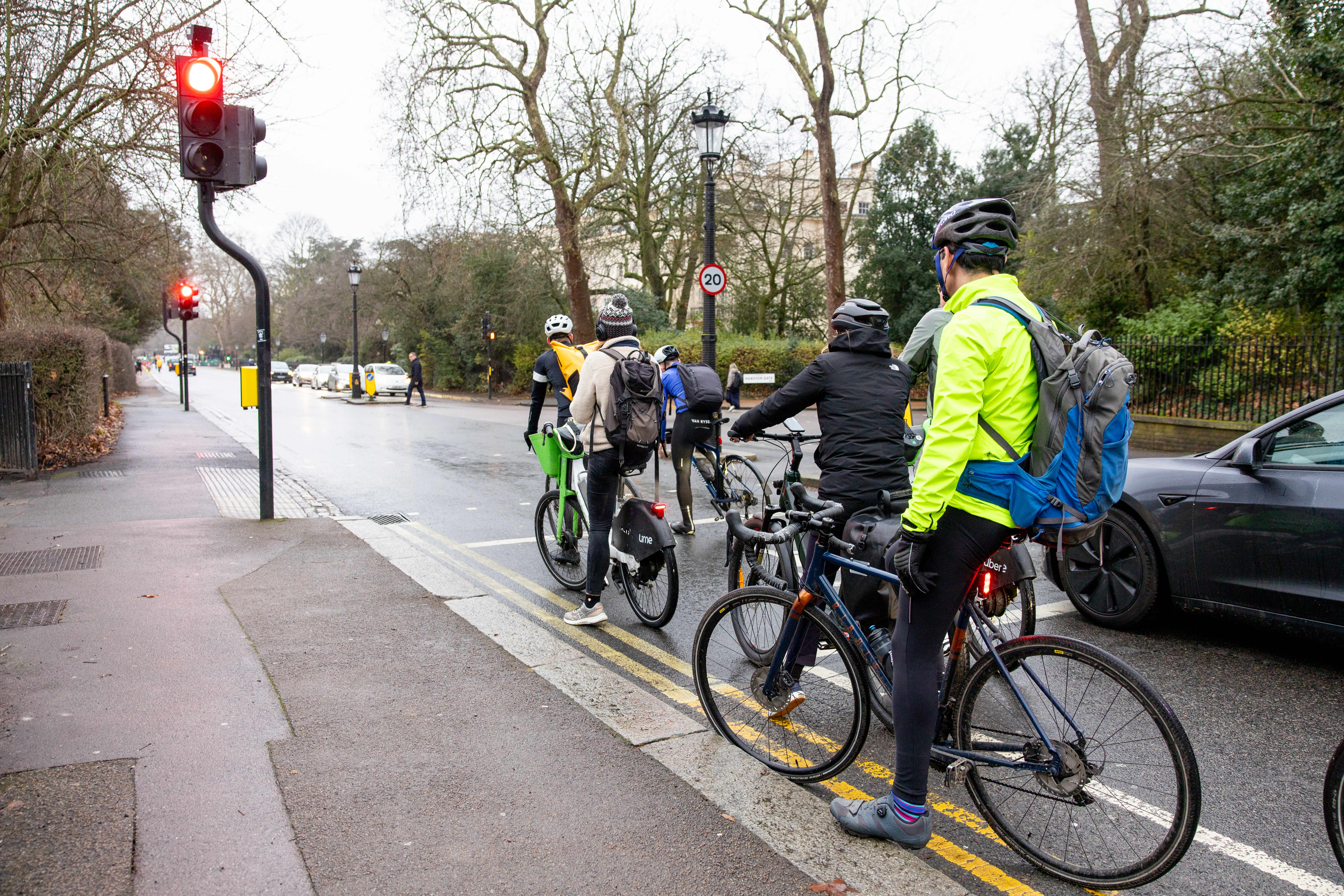
Cyclists wait for the go signal in Regents Park. Three new sets of traffic lights are planned for the Outer Circle
TOBY SHEPHEARD FOR THE TIMES
Perhaps the most likely scenario is that cyclists will continue to self-police. During the traffic light vigil, the most dramatic incident occurred when one lights-jumper was barracked by a fellow cyclist: “Open your eyes, you idiot!”