
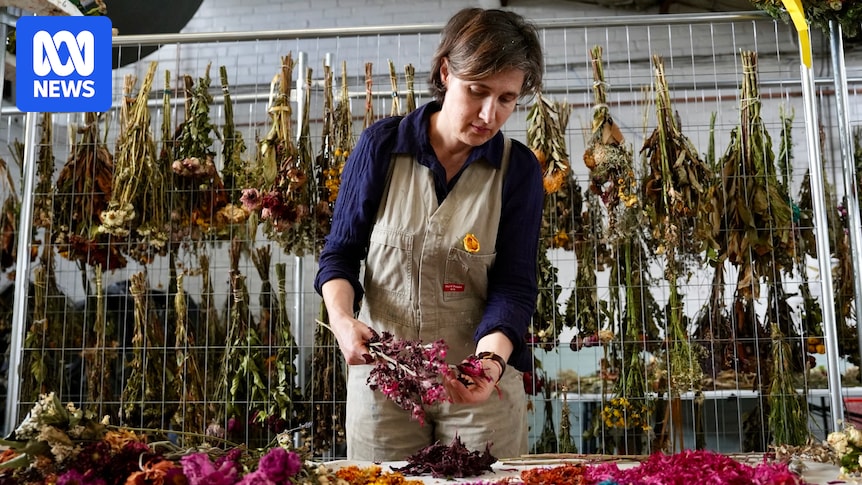
For Shannon Biederman, documenting the history of the Holocaust has always been personal, but after the Bondi Beach terrorist attack, her efforts to preserve a sea of floral tributes are fuelled by even more determination.
When it was confirmed Waverley Council would de-install the temporary memorial set up for the 15 victims killed during the December 14 massacre, the Sydney Jewish Museum whirred into action.
“It was a crisis of trying to figure out how we could preserve as many of these tributes as possible,” Ms Biederman, who is a senior curator at the museum, said.
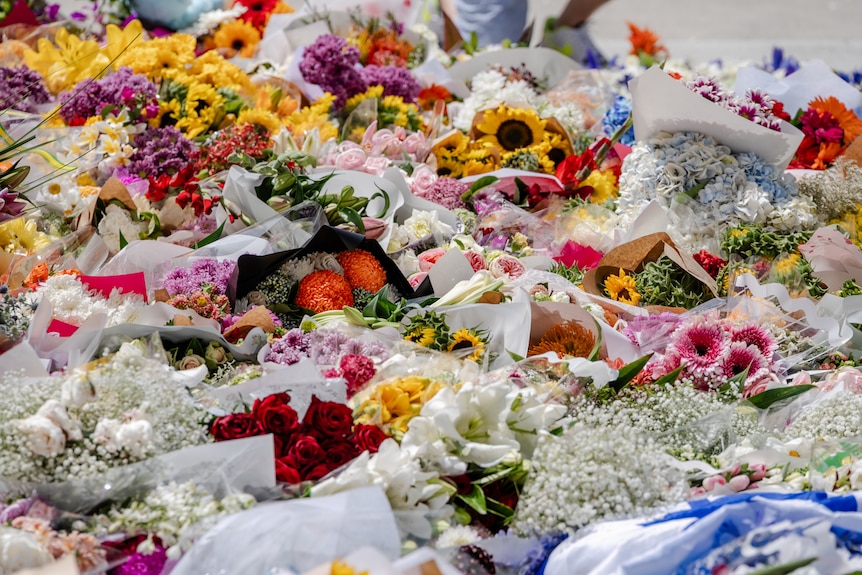
A team of volunteers came together to make something incredible happen with the masses of flowers. (ABC News: Liam Patrick)
After countless phone calls to organise trucks, road routes, flower drying solutions and storage units that would accept perishable items like flowers — all before the rush of Christmas — a team of volunteers came together to make something incredible happen.
There were tonnes of flowers, handpainted stones, teddies, cards and victims’ belongings, such as a pair of 10-year-old Matilda’s shoes left by her family.
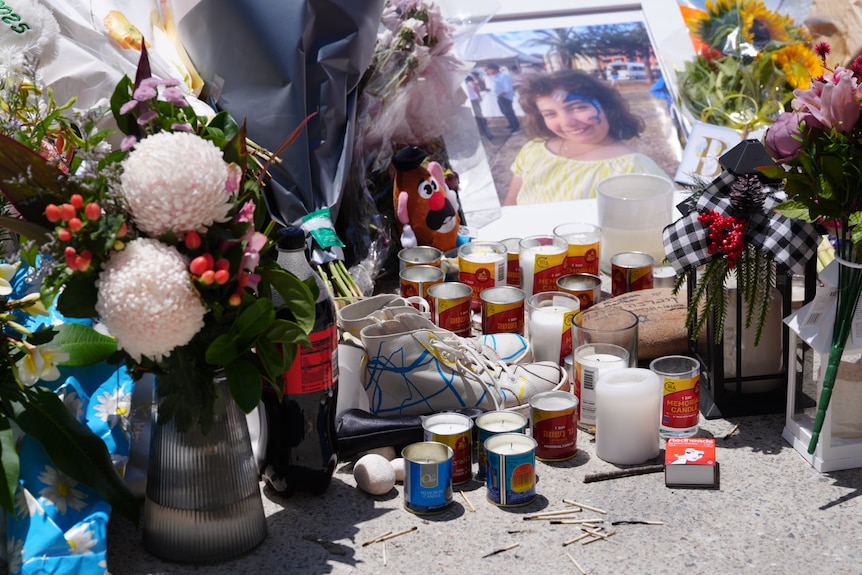
Parts of the temporary memorial included tributes to 10-year-old victim Matilda. (ABC News: Jack Fisher)
As Ms Biederman and the team worked to pack these items into storage for a future commemorative artwork, the skies opened up.
“It felt appropriate,” she said of the rain.
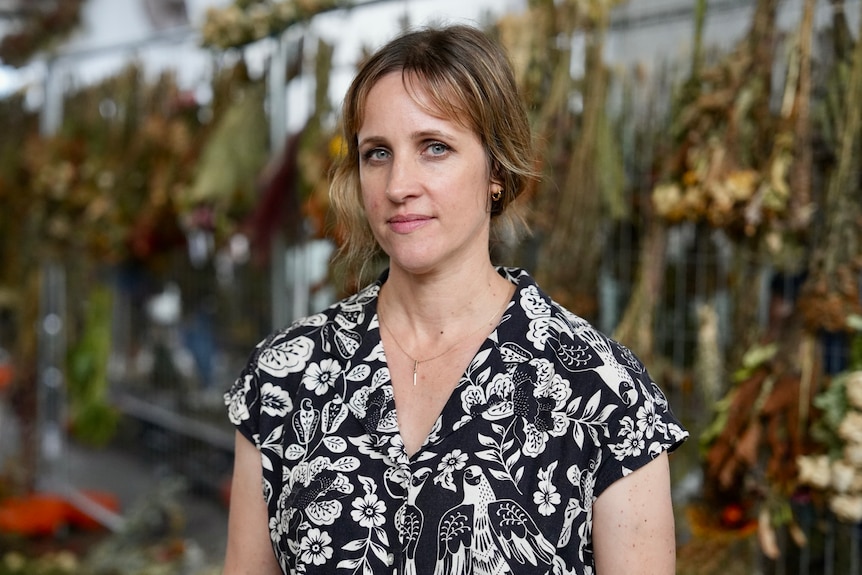
Shannon Biederman’s career has seen her preserve Jewish history. (ABC News: Monish Nand)
On December 14, Ms Biederman had planned to attend the Chanukah by the Sea event.
“I had tickets to go. I take my kids every year to the celebration. We were planning on going and at the last minute changed our mind,” she said.
“I have a 10-year-old. Matilda was 10. It’s hard.”
As someone who has worked with Holocaust survivors on their testimonies for more than 20 years, learning to compartmentalise has been key for Ms Biederman.
“It’s a necessity you have to do sometimes, otherwise nothing would get done.”
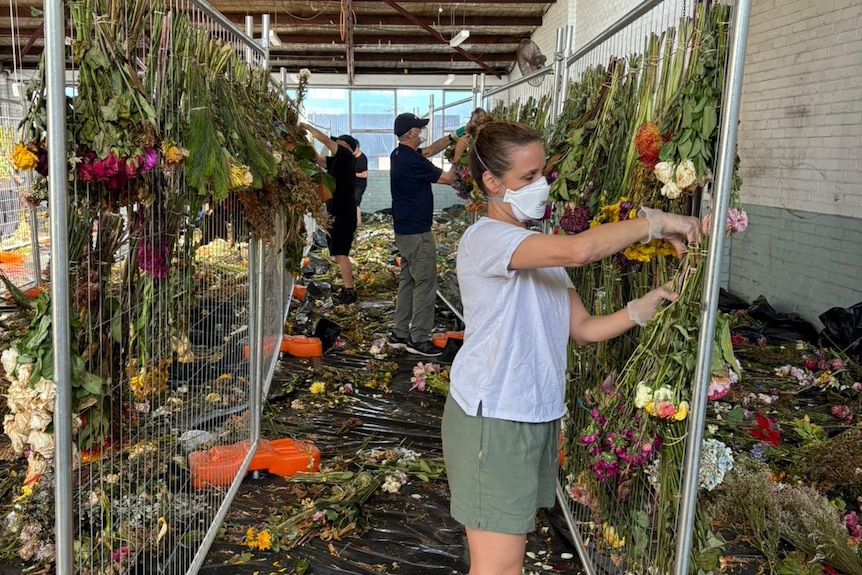
Curators and volunteers worked together to sort through the thousands of flowers. (Supplied: Sydney Jewish Museum)
One petal at a time
Each of the tributes left at the memorial site represented the love and support the Jewish community so desperately needed.
On Christmas Eve, volunteers and curators came together at a rented storage facility in Sydney to comb through the thousands upon thousands of flowers and hang them on fencing to help with the drying process.
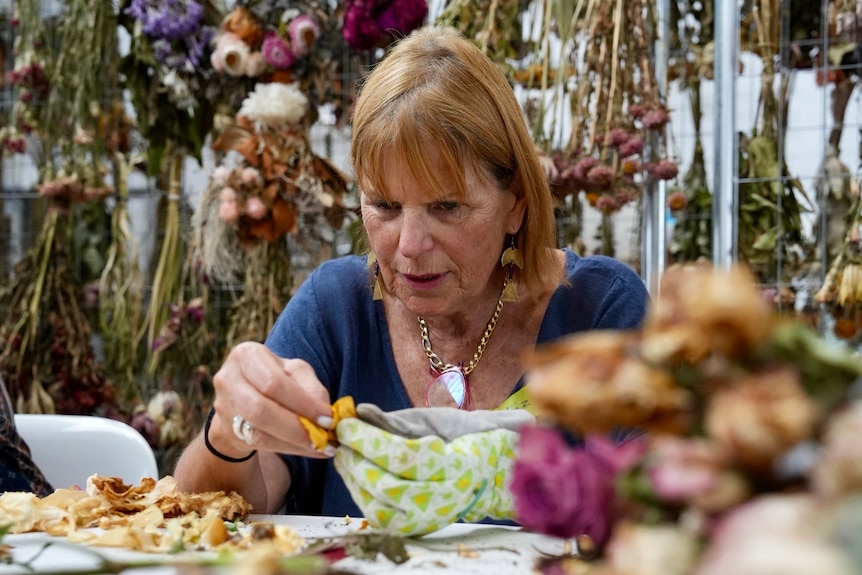
The preservation process for the flowers continues. (ABC News: Monish Nand)
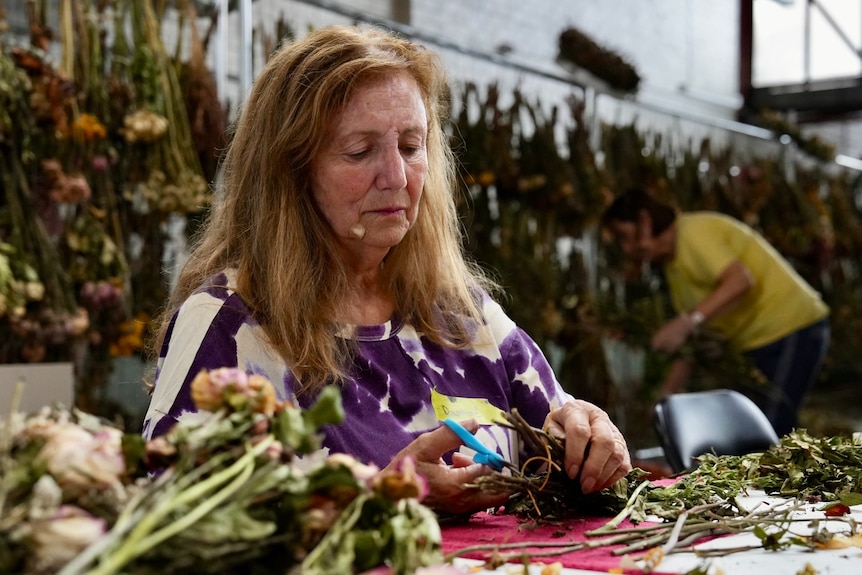
Even the decaying and rotten flowers will be kept to be used as compost material. (ABC News: Monish Nand)
Someone who was keen to preserve as much as possible was Nina Sanadze, who was already working on another exhibition with the Sydney Jewish Museum at the time of the attack.
The Jewish artist from Melbourne has been commissioned to produce a permanent artwork at the museum to commemorate what occurred at Bondi Beach.
“Dried petals are being ironed, flowers being pressed species by species, colour by colour,” she said.
“Some fresh flowers they’ve been enclosed in silicone … It’s an enormous task.”
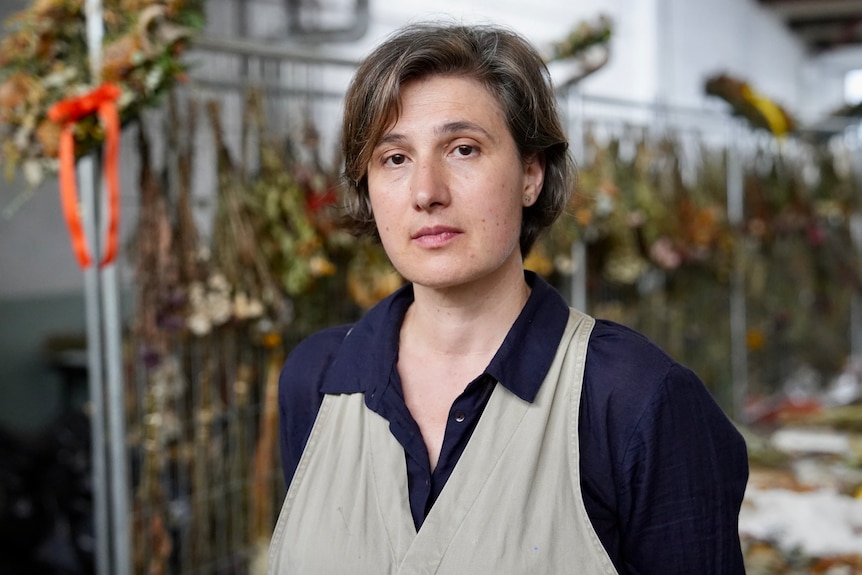
Nina Sanadze is channelling her community’s grief through art. (ABC News: Monish Nand)
Ms Sanadze said they would then turn the rotted and decayed parts of the flowers into compost material to be used to make seating in the museum.
“I’m not going to make one artwork with the flowers, it’s going to be many, many things,” she said.
“These flowers are so strong in telling the story of grief.”
Today, the preservation process for the flowers continues.
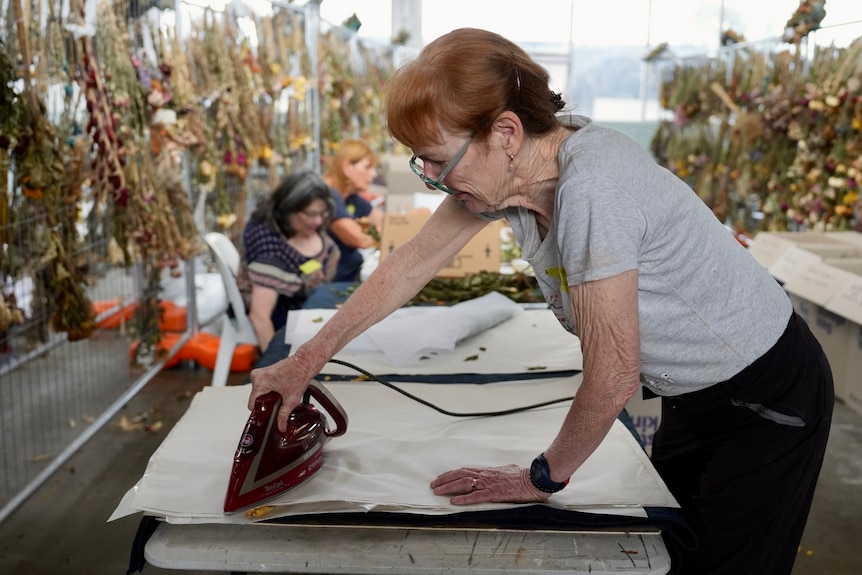
Hours have been spent ironing and pressing the individual petals. (ABC News: Monish Nand)
A ‘unity story’ told through tributes
Through art, these expressions of love are not going to be forgotten.
There is an impact though on those involved in the memorialisation process.
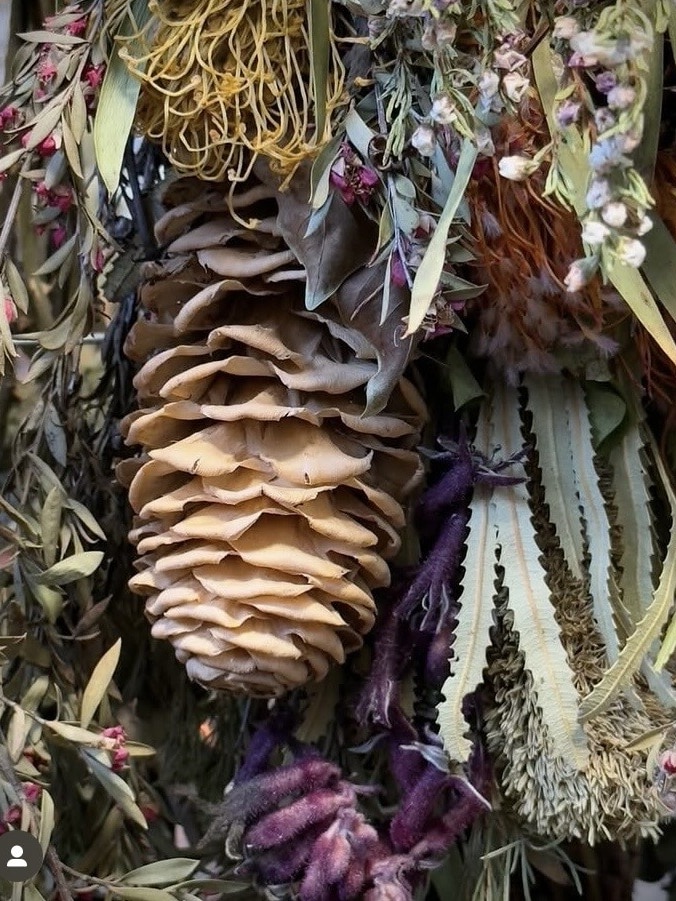
Some of the flowers up close, hanging for drying. (Supplied: Sydney Jewish Museum/Anne Zahalka)
“It’s really difficult work, but I just bury myself in work overtime,” Ms Sanadze said.
Her wellbeing has been boosted by creating art and receiving the support of her community, who bring “light”.
“Art is a way of repairing the world — turning these flowers which are in different stages of decay and drying into evidence and messages of love and hope.”
With today marking the one-month anniversary of the attack, Ms Biederman believes the grief is “coming next”.
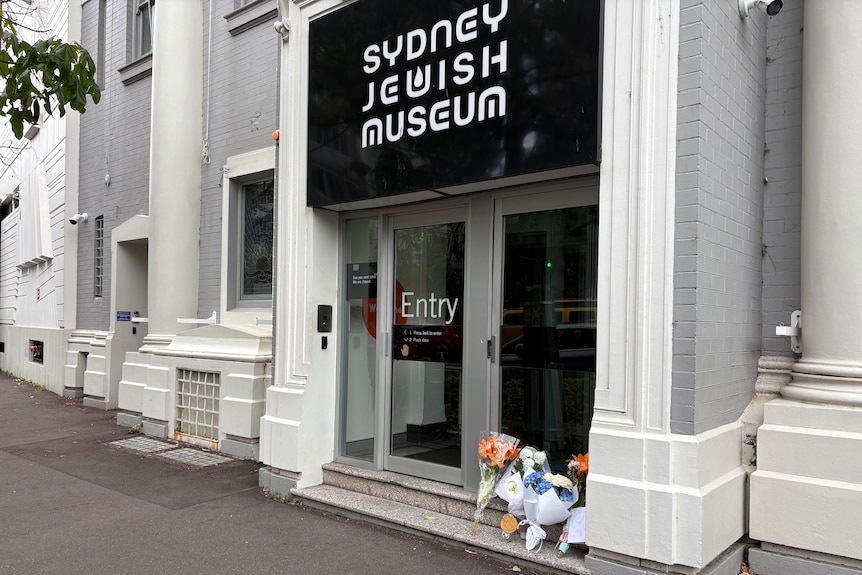
The Sydney Jewish Museum in Darlinghurst is currently closed for redevelopment. (ABC News: Millie Roberts)
“In the first couple of days we were all in shock … the de-installation of the memorial was a really difficult process. No one was ready for it to come down,” she said.
“The flowers are one thing, but on the day I started reading the messages and I had to stop. It was just too upsetting.”
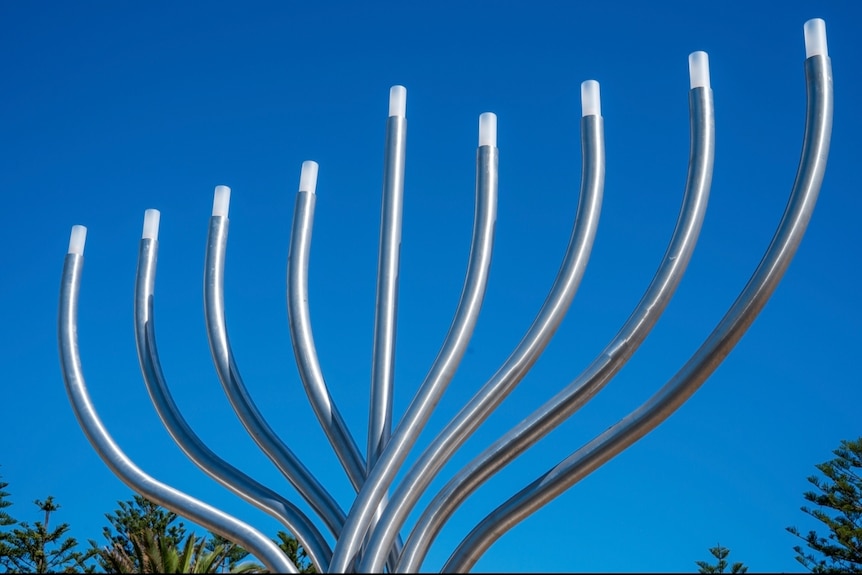
The Jewish community have been deeply impacted by the horrific events of December 14. (ABC News: Abubakr Sajid)
Ms Biederman also knew Rabbi Eli Schlanger, who was killed in the attack, describing him as “the most beautiful person”.
“The Jewish community is really hurting. It hasn’t just been since Bondi,” she said.
While currently closed for redevelopment and expansion, the Sydney Jewish Museum is expected to reopen with its exhibitions in late 2026.
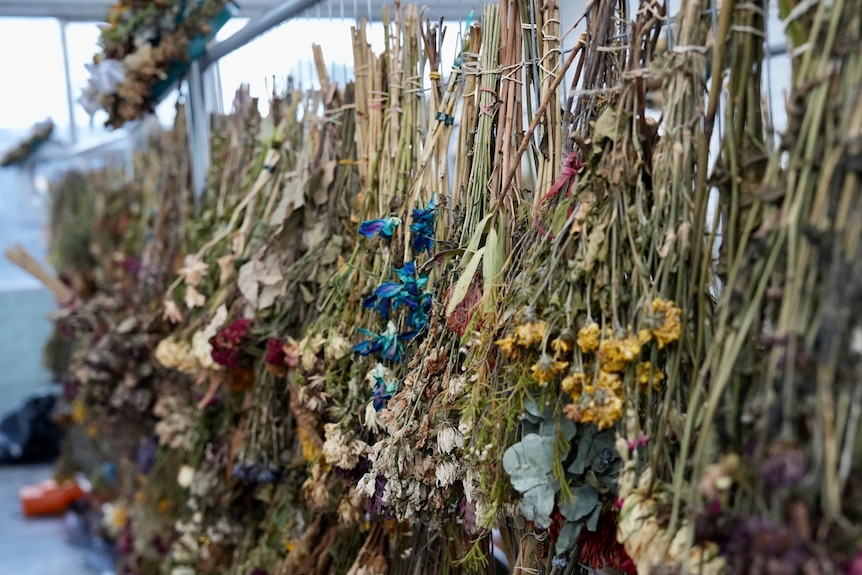
Each flower is a token of love and support, Ms Biederman says. (ABC News: Monish Nand)
Although the exact plan for the commemorative artwork at the museum is still being designed, the curators and artist behind it hope the space will ultimately bring comfort and education.
“There is a positive unity story that can be told through these tributes,” Ms Biederman said.
“Each one is a token of love and support.”