
NEED TO KNOW
The northern lights could remain visible at high latitudes overnight from Jan. 13 into the early hours of Jan. 14Aurora activity is being fueled by fast solar winds streaming from a coronal hole on the sunWhile geomagnetic conditions have eased since the intense storms earlier this month, space weather remains unsettled
The northern lights aren’t done just yet!
Auroras may continue to glow across far northern skies tonight, as our planet remains under the influence of fast-moving solar winds streaming from a coronal hole on the sun.
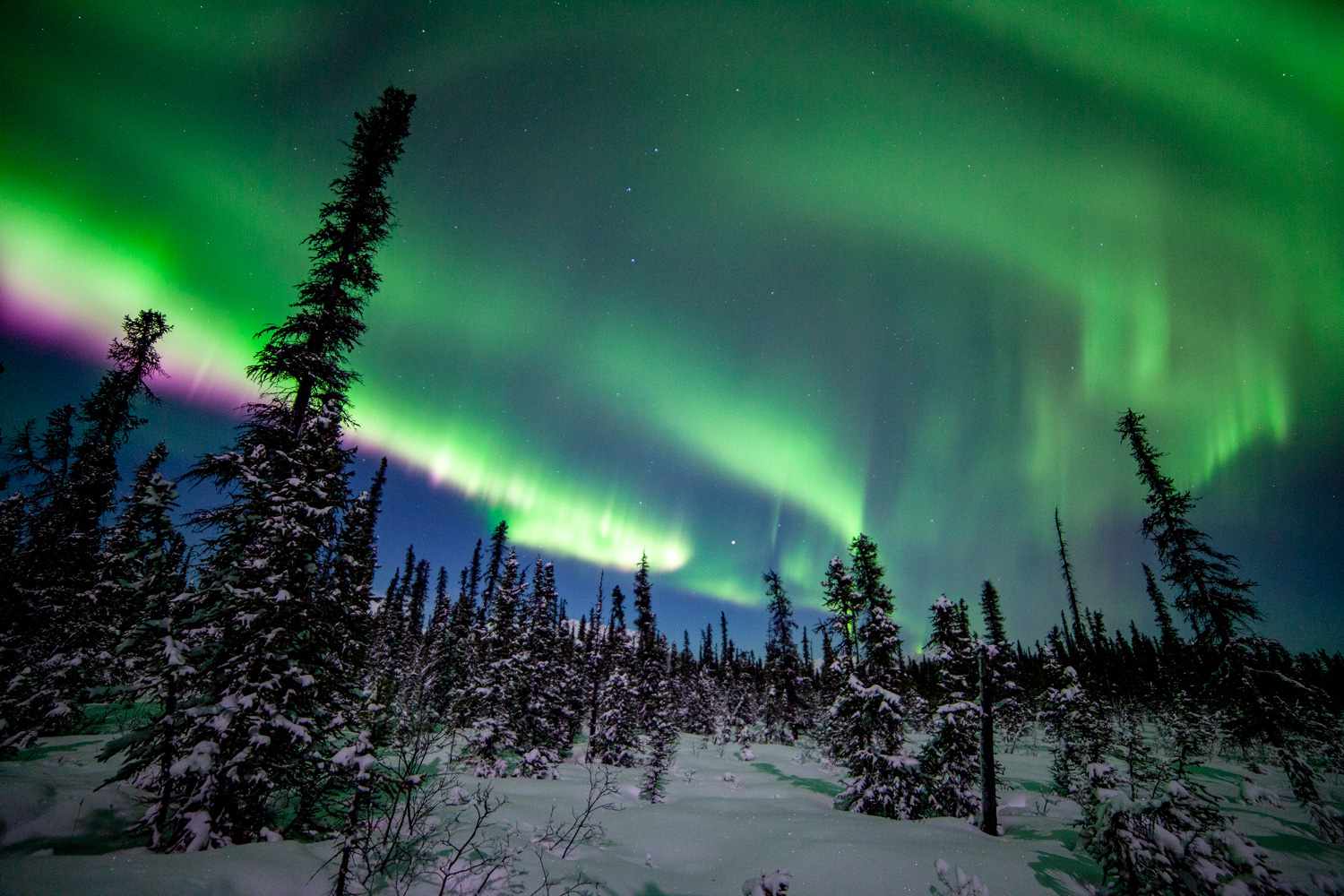
The northern lights (aurora borealis) are caused by geomagnetic storms, which occur when charged particles from the sun collide with gases in Earth’s atmosphere, creating brilliant waves of light in the sky.
Although geomagnetic activity has dissipated compared to the intense solar storms earlier in the month, space weather is still unsettled enough to keep aurora chances alive, especially at higher latitudes.
According to NOAA’s Space Weather Prediction Center and the U.K. Met Office, elevated solar wind speeds remain the dominant driver behind current conditions.
These winds could occasionally trigger minor (G1-level) geomagnetic storm activity, though displays are expected to be weaker and more sporadic than those seen over the weekend.
Here’s everything you need to know about this stellar event.
When will the northern lights be visible?
Aurora borealis displaying vibrant lights over a mountain landscape at night.
Getty
Aurora activity is most likely overnight from late this evening, Jan. 13, through the early morning hours of Jan. 14, when skies are darkest and geomagnetic conditions can briefly intensify.
The U.K. Met Office notes that unsettled space weather could persist through Wednesday, Jan. 14, due to renewed influence from the eastern edge of the coronal hole.
Where will the northern lights be visible?
Northern Lights.
Getty
Aurora visibility is expected across high-latitude regions and northern-tier U.S states, including Alaska and Northern Canada. But if you’re further south, chances are low unless geomagnetic activity unexpectedly strengthens.
Auroras are unpredictable, so it’s best to check real-time aurora alerts and forecasts for more information.
How to watch the northern lights?
Auroras in Fairbanks, Alaska.
Getty
To capture the magic of the northern lights, the key is to head far from city lights and pollution, with a clear, unobstructed view of the northern horizon. It’s important to be patient and give your eyes time to adjust to the darkness (for at least half an hour).
How to photograph the northern lights?
Is there any sort of proof that the northern lights actually happened… unless you take a photo of them yourself?
Not to worry, you’re in luck as most smartphones have a high-tech capability that allows you to capture the breathtaking phenomenon on camera. All you have to do is hit the “Night Mode” settings. Then, simply aim your lens at the sky and snap away!