
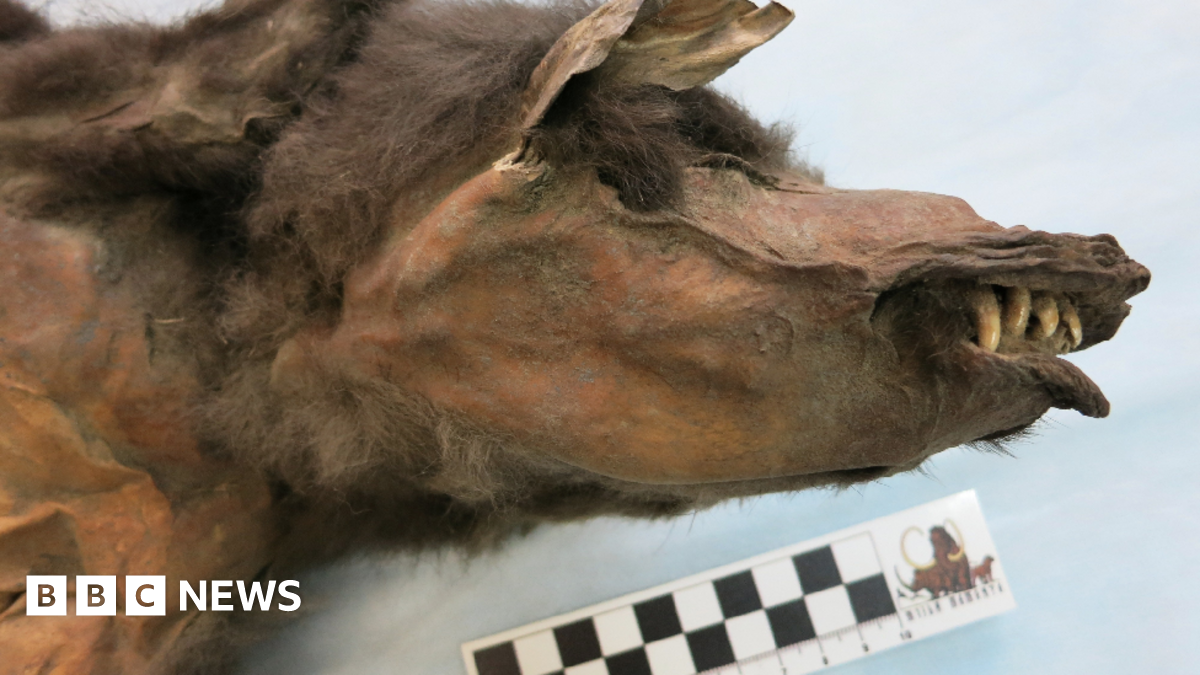
The genetic material came from a fragment of preserved tissue found during the autopsy of the wolf, which lived around 14,400 years ago.
DNA testing later confirmed the tissue belonged to a woolly rhinoceros – one of the youngest specimens of the species ever identified – and the sample initially caused confusion in the laboratory.
Dr David Stanton, a researcher at Cardiff University’s School of Biosciences, said: “It was a very unusual specimen to work on in the lab.
“It was initially identified as a piece of cave line tissue, so it was quite a surprise when the genetic analysis showed that it was actually a woolly rhinoceros.”
He added it was then researchers realised “how unique the specimen was”.
“The date estimate, very close to when woolly rhinos went extinct, made it incredibly valuable for understanding how and why so many species went extinct at the time.”