
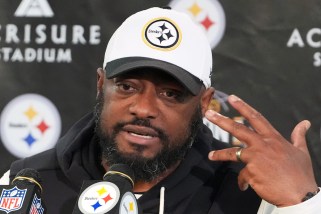
In hindsight, you could see the resignation on Mike Tomlin’s face.
In the Monday night press conference that followed the Pittsburgh Steelers’ lopsided playoff loss to the Houston Texans, Tomlin’s eyes looked almost misty as he talked about his team’s missed opportunities and its failure to advance in the playoffs for the sixth time since 2016. Unlike he’s done in the past — and unlike quarterback Aaron Rodgers did minutes later — Tomlin didn’t recoil or abruptly leave the room when reporters pressed him about his future.
In his 19 seasons as head coach of the Steelers, Tomlin never registered a losing season.
“I’m not even in that mindset as I sit here tonight. I’m more in the mindset of what transpired in the stadium,” he said.
Advertisement
It didn’t take long for him to get there. Tomlin officially resigned Tuesday afternoon, ending his storied tenure leading one of the NFL’s most decorated teams. Not only did he coach the Steelers to two Super Bowl appearances, but he also became the youngest coach — and the second of only two Black coaches — to win a Super Bowl in 2009. But in his 19 seasons as head coach of the Steelers, Tomlin never registered a losing season. That’s the most consecutive nonlosing seasons to start an NFL coach’s career. Remarkably, Tomlin had never lost a Monday Night Football game at home until this week’s game against the Texans — which was 7-6 Texans entering the 4th quarter — spun out of control and the Texans won 30-6.
“After much thought and reflection, I have decided to step down as head coach of the Pittsburgh Steelers,” Tomlin said in a statement Tuesday. “This organization has been a huge part of my life for many years, and it has been an absolute honor to lead this team. I am deeply grateful to Art Rooney II and the late Ambassador [Dan] Rooney for their trust and support.”
Tomlin’s 19 seasons at the helm of the Steelers helped prove what shouldn’t have needed proving: Black coaches are fully capable of leading their teams to winning seasons and Super Bowl titles. He helped validate the wisdom of the Rooney Rule, named for former Steelers owner Dan Rooney — the father of current owner Art Rooney II — which requires NFL teams to interview non-white candidates when they have vacant head-coaching or executive positions.
But even as Tomlin was consistently racking up wins for the Steelers, NFL teams, according to a bombshell lawsuit filed in 2022, were conspiring against Black coaching candidates and making a mockery of the Rooney Rule. In a league where the Institute for Diversity and Ethics in Sport says about 53% of the players are Black, after Tomlin’s resignation and the firings of the Atlanta Falcons’ Raheem Morris and the Miami Dolphins’ Mike McDaniels, there are only three Black head coaches.
Advertisement
Brian Flores, currently a defensive coordinator for the Minnesota Vikings, initiated that class action lawsuit against the NFL almost four years ago, and his case has heated up over the past few months. In August, a federal appeals court ruled his case could proceed to a jury trial, invalidating the NFL’s argument that Flores had to submit to arbitration, with NFL commissioner Roger Goodell as the arbitrator. And just last week, the NFL and three teams Flores interviewed with — the Denver Broncos, Houston Texans and New York Giants — asked the U.S. Supreme Court to not let Flores’ case go to a jury but to keep it in arbitration.
Tomlin, for what it’s worth, did Flores a solid after he filed his lawsuit.
Tomlin, for what it’s worth, did Flores a solid after he filed his lawsuit. Flores couldn’t find an NFL job and, as Tomlin tells the story, Flores reached out to him for advice. Tomlin instead hired him as a Steelers defensive special assistant, with Rooney’s blessing.
Flores moved on to his current role with the Vikings after a year but has reportedly never given up on getting a second chance at being an NFL head coach. But the lawsuit remains a barrier, with many NFL teams unwilling to consider putting someone with an active lawsuit against the league and several of its teams in their top slot.
Assuming Flores is interested in the open Steelers position, one of the pressing questions now is if the Rooney family, which has a history of supporting Black advancement in the sport, would hire him. The NFL might secretly want that to happen. If Flores’ case does end up before a jury, then Flores — whose lawsuit revealed text messages that he counts as evidence of teams colluding against him — will have an opportunity to air the league’s dirty laundry in public.
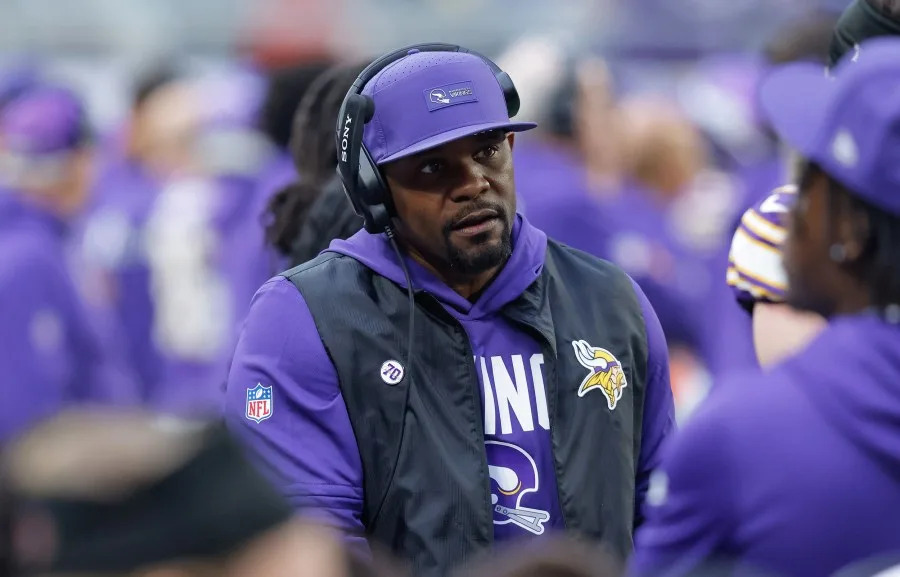
Minnesota Vikings defensive coordinator Brian Flores on Jan. 4, 2026, in Minneapolis, MN. Bailey Hillesheim / Icon Sportswire via Getty Images
Flores succeeding Tomlin as head coach of the team synonymous with the league’s most important diversity initiative is a narrative the league might love to lean into.
Advertisement
But even if Flores was hired by the Steelers, it would still be true that Black coaches have a harder time getting hired in the NFL and are not given as much time to win as their white counterparts are.
Despite some fans calling for his job during his playoff losing streak, Tomlin was remarkable for coaching almost two decades without having a losing season. But a Black coach shouldn’t have to be that good to get or keep an NFL coaching job. Tomlin’s obvious legacy is winning, but let’s hope his legacy comes to include Black coaches who don’t win as much keeping a job on the sidelines.
The post What Mike Tomlin leaving the Steelers might mean for the NFL appeared first on MS NOW.
This article was originally published on ms.now