
 MAE Museum by CRA-Carlo Ratti Associati and Italo Rota. Image © Giuseppe Miotto – Marco Cappelletti Studio
Share
Or
https://www.archdaily.com/1037803/cra-carlo-ratti-associati-and-italo-rota-transform-mae-carbon-fiber-archive-into-an-interactive-museum-in-italy
A new museum dedicated to the science of carbon fiber opened in Fiorenzuola d’Arda, Italy, on December 17, 2025. The project dates back to 2021 and was designed by CRA–Carlo Ratti Associati in collaboration with the late Italian architect Italo Rota. Commissioned by MAE, a manufacturer of equipment for carbon fiber production, the project transforms one of the world’s largest archives on carbon fiber into a dynamic museum, uniting research with archival preservation and turning the archive into a space for interactive exploration. The project is described by its designers as a “living museum,” a place to read, inquire, and connect ideas.
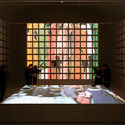
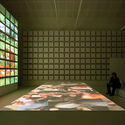
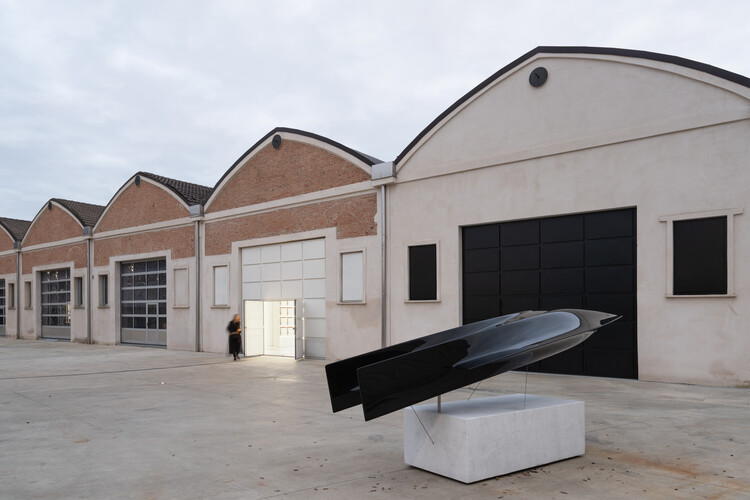 MAE Museum by CRA-Carlo Ratti Associati and Italo Rota. Image © Giuseppe Miotto – Marco Cappelletti Studio
Over the past decades, carbon fiber has found applications in jet engines, supercars, bicycles, aircraft, and medical devices, among many other products. In architecture, the material has been considered one of the most promising composites for the future of building due to its exceptional strength and lightweight properties, enabling thinner structural members, larger openings, and more complex geometries. To foster a deeper understanding of the material, the MAE Museum invites visitors to uncover how an everyday polymer, acrylic fiber, similar to that used in clothing, has gained importance across such a wide range of applications.
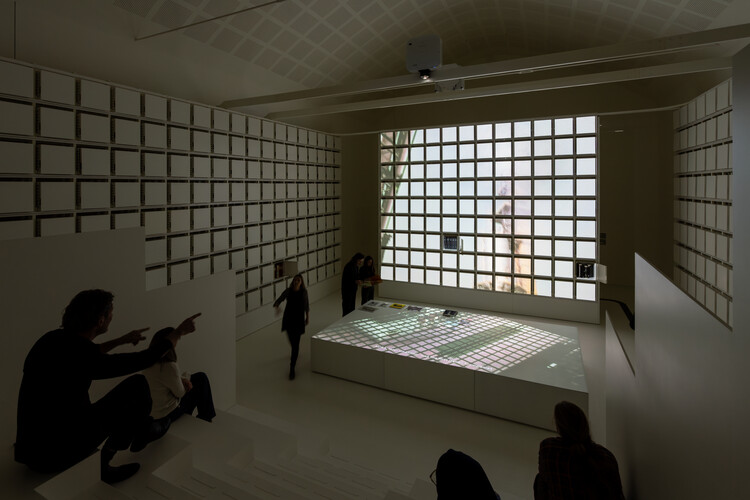 MAE Museum by CRA-Carlo Ratti Associati and Italo Rota. Image © Giuseppe Miotto – Marco Cappelletti Studio
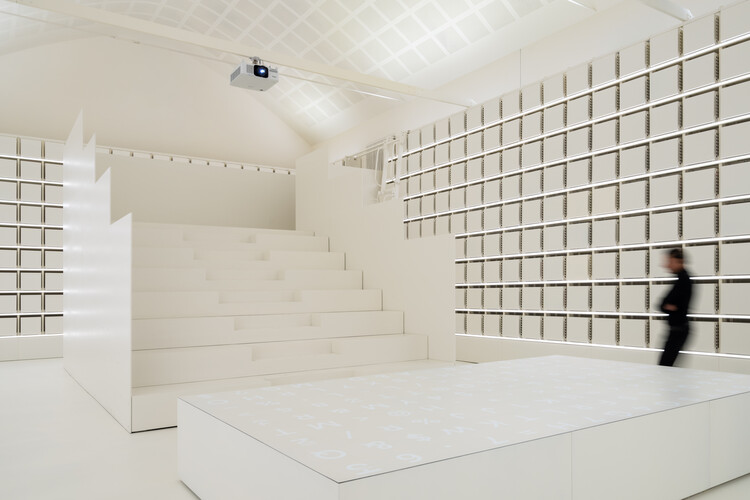 MAE Museum by CRA-Carlo Ratti Associati and Italo Rota. Image © Giuseppe Miotto – Marco Cappelletti Studio
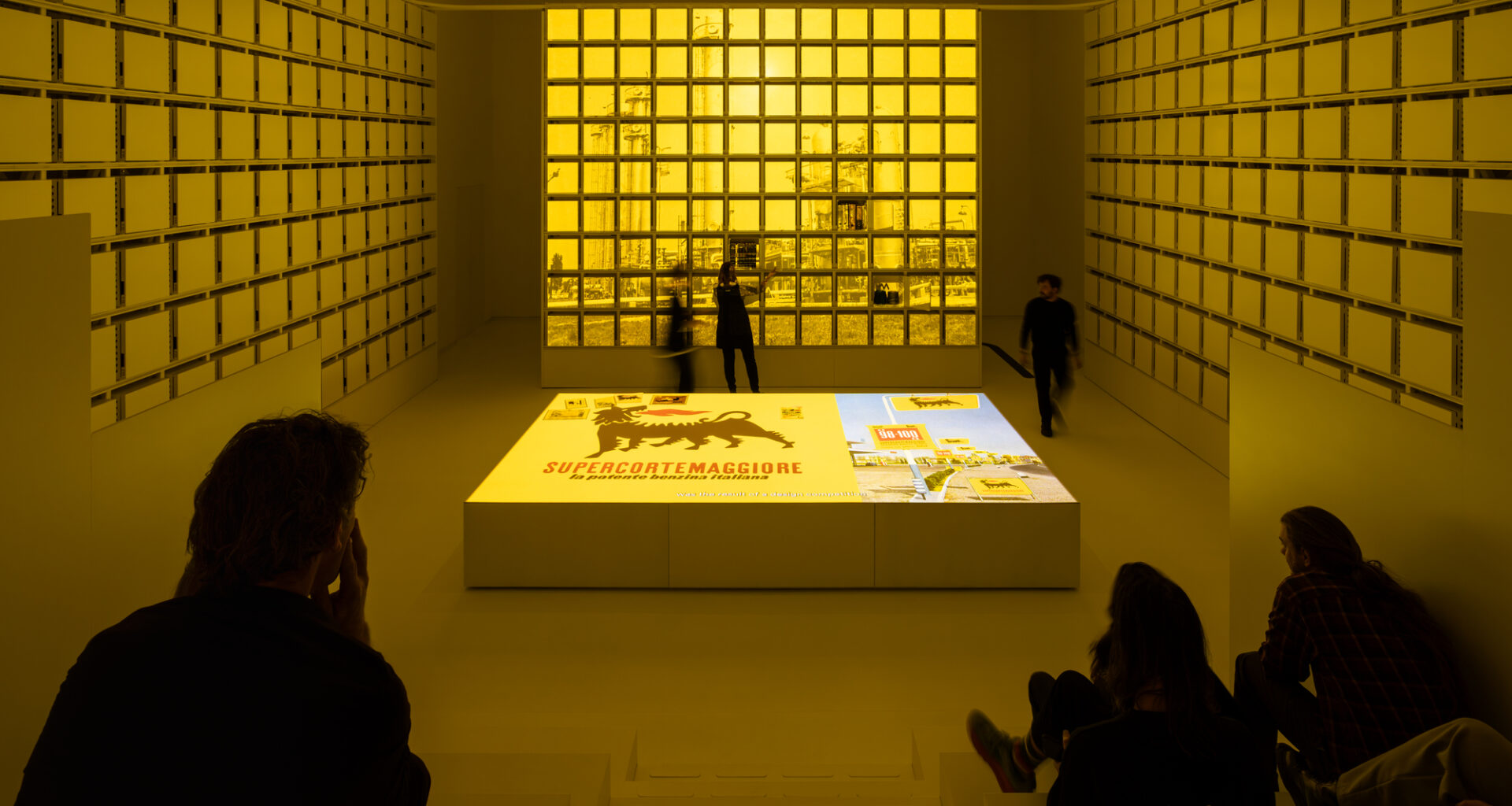
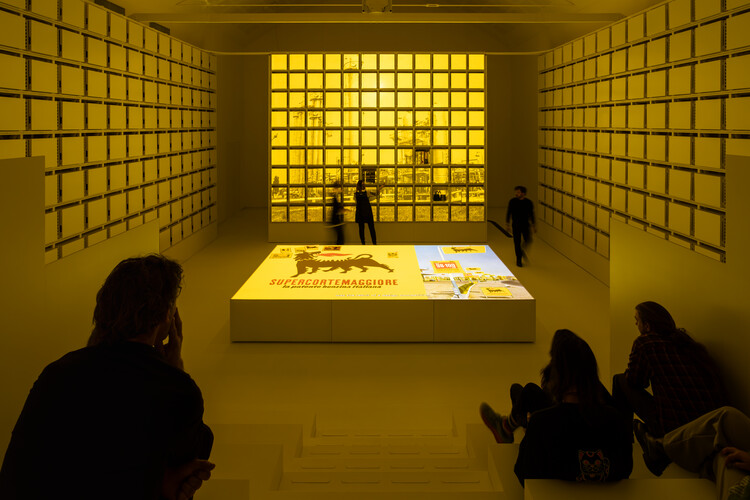
The visit begins in MAE’s archive, home to valuable intellectual property related to the production of acrylic fiber. This fiber is the precursor to carbon fiber: when carefully heated and oxidized, its carbon atoms align into an ultra-strong lattice, giving the material its remarkable strength-to-weight ratio. The archive is conceived as a landscape of boxes forming an interactive three-dimensional matrix, enhanced by digital overlays that allow visitors and researchers to explore the company’s repository of industrial innovation and intellectual property.
Related Article Lighter and Stronger, Composites Are Changing How We Build
The experience continues through a “Carbonization Tunnel,” where heat and light retrace the transformation of acrylic fiber into carbon fiber. Here, the architecture is designed to translate the carbonization process, pressure, compression, and release, into a multisensory experience. Real-time data from MAE’s test facility connects the museum to ongoing research, reinforcing the concept of a living laboratory. An immersive space contains a full-scale mock-up of a production plant that comes alive through augmented reality projections from above. The final gallery presents interactive artifacts and prototypes showcasing current and future applications of carbon fiber, from next-generation vehicles to wind turbines and aerospace components.
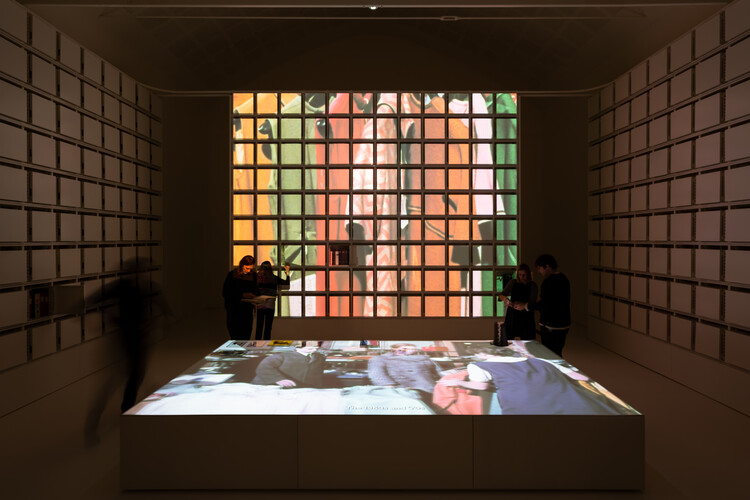 MAE Museum by CRA-Carlo Ratti Associati and Italo Rota. Image © Giuseppe Miotto – Marco Cappelletti Studio
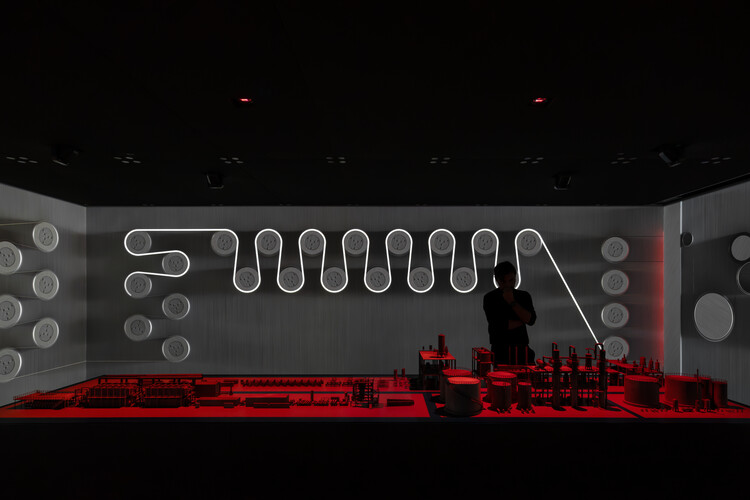 MAE Museum by CRA-Carlo Ratti Associati and Italo Rota. Image © Giuseppe Miotto – Marco Cappelletti Studio
The museum’s internal structures, fixtures, and furniture are also based on innovative digital fabrication processes developed by Maestro Technologies. The company is developing new software that bridges design and construction, positioning the museum as both a showcase and a testing ground for this approach. The immersive multimedia environment, conceived and developed by Studio Michbold, combines video, sound, and spatial lighting to guide visitors through a narrative of industrial evolution and material transformation. Voices range from narrators retracing the oil fields of Emilia-Romagna to engineers such as Marco Rovellini, who describe the carbonization process. Through a custom projection system, scenography, and narrative choreography, scientific processes are translated into an audiovisual experience.
“Archives often rest in silence, yet they contain a quiet power. We loved the idea of transforming a secret archive into a living museum, a place where past knowledge can be explored and ignite new paths of future innovation.” — Architect Carlo Ratti
Other recent museum and exhibition announcements include “Built Environment: An Alternative Guide to Japan,” currently on view in Montréal, Canada, and the announcement of a touring exhibition on Isamu Noguchi’s design work by the High Museum of Art in Atlanta, United States. In cultural venues, The Egg, the modernist performing arts center in Albany, New York, recently reopened following a six-month restoration; SANAA’s Taichung Art Museum officially opened on December 13, 2025, with the inaugural exhibition “A Call of All Beings: See You Tomorrow, Same Time, Same Place;” and Renzo Piano Building Workshop broke ground on the KYKLOS Cultural Center in Piraeus, Greece.