
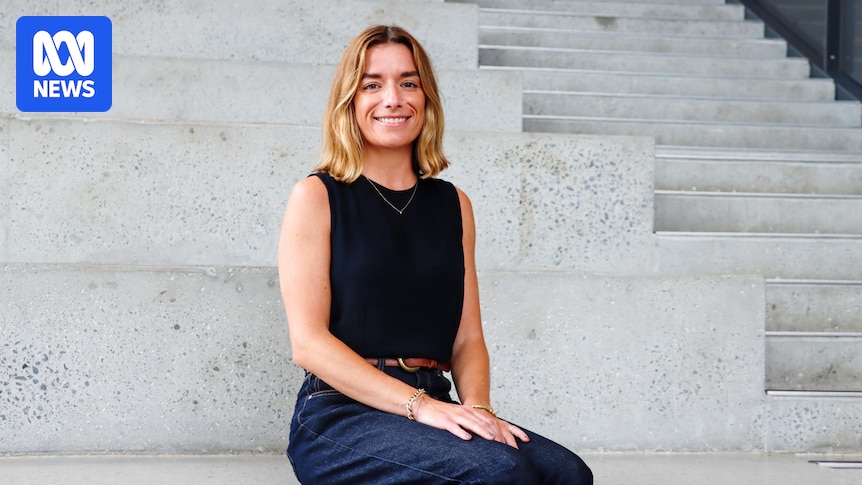
After trying different treatments for a severe depressive episode, Alexis Hutcheon felt like she was “constantly failing”.
At times, she struggled to leave her house.
“When you think back, it seems like a really short time — a year — just trying different treatments, but when you’re seriously depressed, I’m sure lots of people would agree with me, it feels like forever,” she said.
The now 35-year-old was prescribed standard antidepressants, but despite trying them for more than a year, they did not help.
“It feels like you’re constantly failing, that you’ll never get better because I guess these are the standard treatments being advertised — [and] they’re not working for you,” Ms Hutcheon said.
“So it’s very easy to blame yourself … but in reality it may just be that the approach taken is not the right fit for you.”
Commonly prescribed antidepressants are failing to help a significant number of people. (Unsplash: Yuris Alhumaydy)
New research has found common antidepressants are failing to help a significant number of people with atypical depression.
In one of the largest studies of its kind, researchers from the University of Sydney’s Brain and Mind Centre examined nearly 15,000 Australians with depression and found around 20 per cent did not respond well to standard antidepressants.
The study, published in the journal Biological Psychiatry, found 3,000 people had an “atypical” subtype of depression more common among women, where symptoms — like weight gain and oversleeping — are different from usual experiences.
The study found this group were less likely to benefit from antidepressants known as SSRIs (Selective Serotonin Reuptake Inhibitors) and SNRIs (Serotonin-Norepinephrine Reuptake Inhibitors), which affect neurotransmitters like serotonin in the brain.
The group was also at a higher risk of side effects from those antidepressants, like weight gain and drowsiness.

Ian Hickie says Australian clinical guidelines largely ignore atypical depression. (Supplied)
Ian Hickie, the report’s senior clinical lead, said Australian clinical guidelines currently recommended SSRIs as a first-line treatment for depression.
“Atypical depression, despite the amount of research evidence there is and the extent to which our own research adds to that, is largely ignored in most of those clinical guidelines,” Professor Hickie said.
“Why it really matters is twofold. Not only do they not respond well to the commonly recommended treatments, they’re more likely to have side effects.”
‘Night owls’ more likely to have atypical depression
Antidepressant use is growing in Australia, with various forms dispensed to about 3.7 million people in 2023-24, according to the Australian Institute of Health and Welfare.
SSRIs — like sertraline and escitalopram — are the most commonly prescribed antidepressant class in Australia.
But the report’s lead author, Mirim Shin, said the research sent a clear message — antidepressants should not be the only line of defence for everyone.

Mirim Shin says medical professionals need more education on atypical depression. (Supplied)
“Depression is not a single illness, it’s heterogeneous, so we need to carefully monitor individual symptoms and other health conditions and then we need to provide the precision medicine which is linked to their individual symptoms,” she said.
“We need to educate GPs and clinicians to recognise that depression can be in many forms.”
By studying the genetics of participants, the new research found people with atypical depression were also more likely to be the “night owl” type, meaning they went to bed late and slept longer during the day, reducing their exposure to sunlight.
They also had a higher genetic risk for other conditions such as ADHD and bipolar disorder, as well as metabolic and inflammatory dysfunctions, which could lead to diabetes or high blood pressure.
Dr Shin said as a result, people with atypical depression might need alternative treatments that targeted physical symptoms.
For those with irregular sleep-wake cycles, that might include chronotherapy, which aims to restore proper circadian rhythm through bright light therapy or the use of melatonin supplements.
University of Melbourne head of psychiatry Chris Davey, who was not involved in the study, said the researchers had made a strong link between being a “night owl” and having a poorer response to antidepressants.
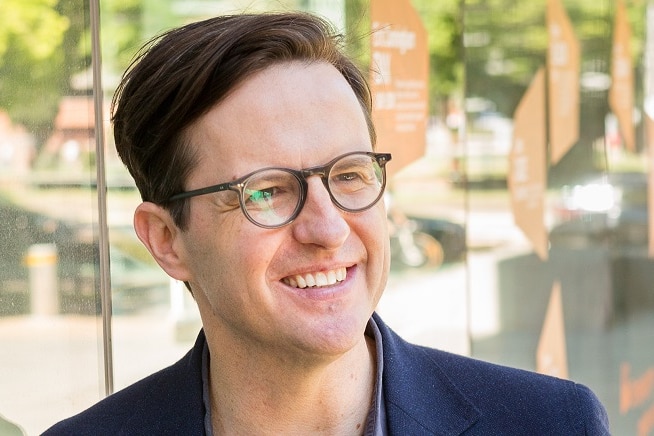
Chris Davey says the next step should include clinical trials. (Supplied)
“We tend to provide the same treatments for [atypical depression] but this is further argument to suggest that maybe this group should be considered differently,” he said.
Professor Davey said the next step would be to conduct clinical trials to test whether chronotype therapies were more helpful than antidepressants for people with atypical depression.
But for now, he said, antidepressants should not be ruled out for atypical depression.
“[The finding] isn’t significant enough that you would say, ‘Well you shouldn’t even try antidepressants’. To me, it more means you should move on quickly and try different things if it’s not working.”
Professor Davey said the study also raised the question of whether other antidepressants could be more useful for people with atypical depression, like agomelatine, which works by mimicking melatonin — the hormone that regulates the sleep-wake cycle. But he noted more evidence was needed.
However, Professor Davey said antidepressants should never be the only treatment, and even people with “typical” depression sometimes did not respond to them.
“Sleep, exercise, diet and alcohol consumption are really important factors and psychotherapy is really useful … but too often people are only getting medication.”
Professor Hickie said people should talk to their doctor if they believed they were not improving on antidepressants, especially if they had been taking them for more than eight weeks.
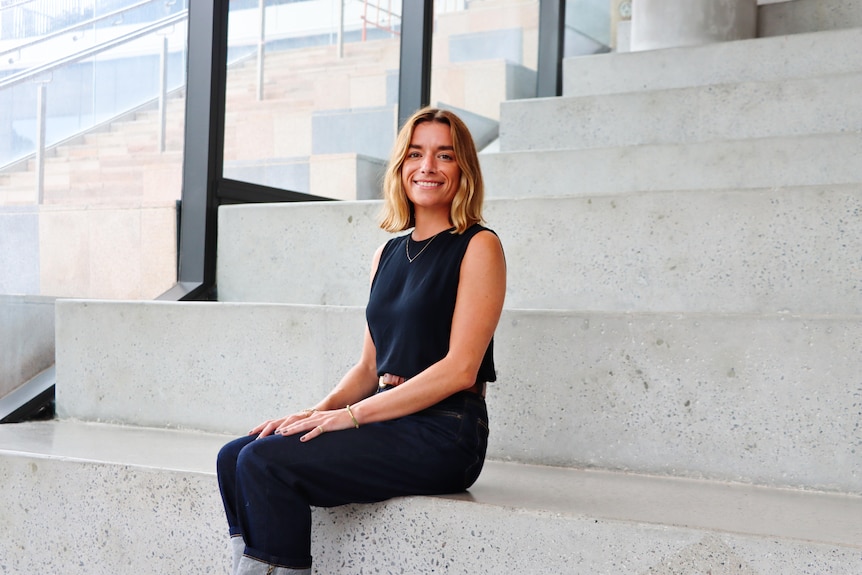
Alexis Hutcheon hopes the research will lead to more personalised care for patients. (Supplied)
Ms Hutcheon ultimately found a combination of treatments that worked for her. She now draws on her own experience while working as a youth mental health researcher at the Brain and Mind Centre.
She hopes the study will be considered by health practitioners when treating people with depression.
“I think what this research really highlights is that depression isn’t one single experience and it doesn’t look the same for everybody,” Ms Hutcheon said.
“I think diagnosing and treating depression often relies on broad categories and standard pathways, but not everyone fits neatly into those boxes.
“So I think this research sort of shifts that thinking away from a one-size-fits-all model and towards more personalised care.”