
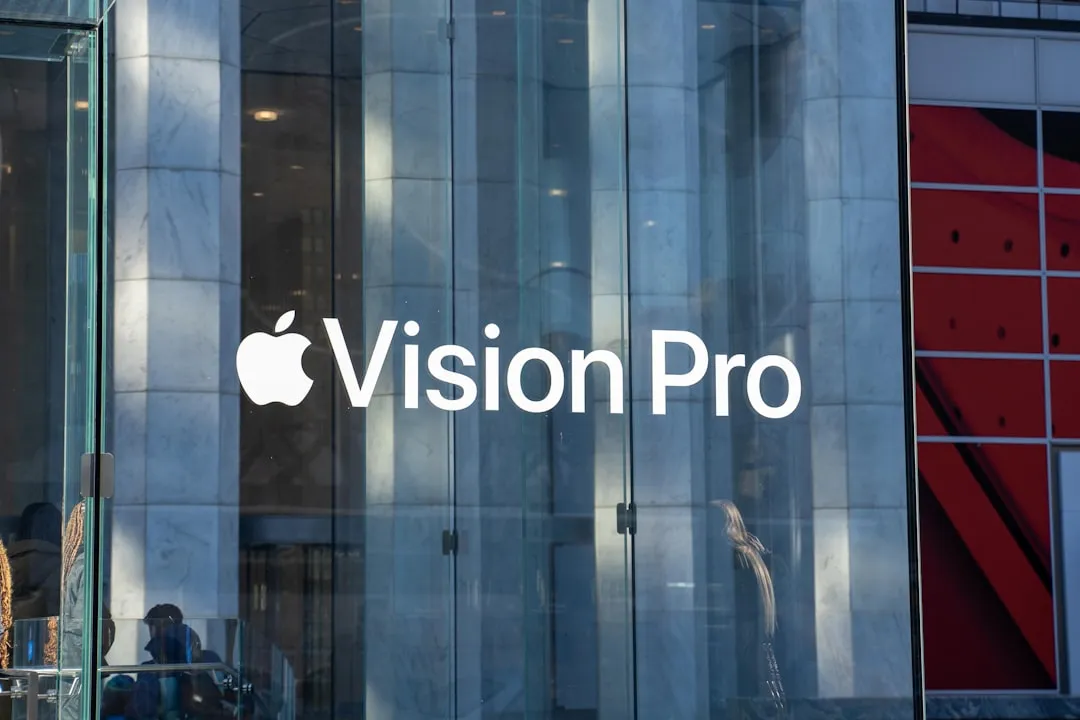
The Apple Vision Pro’s journey toward precision input represents a pivotal shift in spatial computing. After initially championing a pure hands-free experience, Apple is now embracing accessories that deliver the precision their gesture-based system simply can’t match. The introduction of third-party controllers and rumored Apple Pencil compatibility signals that the company recognizes different tasks require different tools—a pragmatic evolution that could unlock the Vision Pro’s true creative and professional potential.
Why precision input matters for spatial computing
Here’s the thing about the Vision Pro’s eye-and-hand tracking system: it’s genuinely revolutionary for basic tasks, but it hits a wall when you need real precision. Sure, you can accomplish basic productivity tasks including editing documents and collaborating through various applications for several hours without eye strain, but try doing detailed illustration work or precise 3D modeling with just gestures, and you’ll quickly understand why Apple’s original controller-free vision needed refinement.
Third-party solutions are already demonstrating what’s possible when you add precision tools to the mix. Logitech’s Muse stylus, which costs $130, delivers pressure sensitivity and haptic feedback that mimics traditional pen-on-paper interaction. What makes the Muse particularly compelling is its dual-mode functionality—it works both in mid-air for 3D spatial creation and on physical surfaces for detailed 2D work, bridging that gap between digital creativity and the tactile experience we’re used to with traditional tools.
Sony’s PlayStation VR2 controllers add another dimension entirely. These controllers offer high-performance motion tracking, finger touch detection, and vibration feedback, creating possibilities for gaming and interactive experiences that pure gesture control simply cannot achieve. The fact that Apple officially supports these accessories through visionOS 26 shows they’ve moved beyond grudging acceptance of external tools to actively embracing the multi-input future of spatial computing.
What’s particularly telling is Apple’s internal development work. Reports suggest the company has internally tested a future Apple Pencil with Vision Pro, indicating they’re developing their own precision solution rather than relying solely on third-party partnerships. This suggests Apple sees stylus integration not as a compromise to their original vision, but as a natural evolution that expands what spatial computing can accomplish.
The creative potential of stylus integration
An Apple Pencil designed for the Vision Pro could transform the headset from an impressive productivity tool into a comprehensive creative workstation. The current Apple Pencil Pro already includes sophisticated features like gyroscope sensors, squeeze detection, and haptic feedback—capabilities that would translate beautifully to spatial environments where artists could sketch in genuine three-dimensional space with pressure-sensitive feedback and natural hand movements.
Consider the workflow possibilities this creates. Architects could sketch initial concepts on their desk using familiar 2D techniques, then seamlessly transition to manipulating and refining those designs in full 3D space around them. The combination of tactile surface work and immersive spatial visualization could revolutionize design workflows in ways that neither traditional tools nor pure gesture control could achieve independently.
Current third-party solutions are already proving this potential. The Logitech Muse enables precise input for collaboration apps like Spatial Analogue, demonstrating real demand for tools that go beyond gesture-only interaction. But more importantly, developers are actively building applications that take advantage of these precision capabilities, creating an ecosystem ready for even more sophisticated input methods.
The infrastructure Apple has built supports this expansion perfectly. VisionOS 26 includes comprehensive spatial accessory support, with tracking accomplished through a combination of the Vision Pro’s cameras and the accessory’s internal sensors. This foundation could accommodate an official Apple stylus with minimal additional development work—the technical groundwork is already in place for Apple to deliver their own refined solution that integrates seamlessly with their spatial computing ecosystem.
Bottom line: we’re looking at the potential for entirely new creative workflows that blend the precision of traditional tools with immersive spatial possibilities. That’s not just an incremental improvement—it’s the foundation for a new category of creative applications.
Gaming and entertainment transformation
The addition of controller support opens entirely new content categories for the Vision Pro, and this represents a strategic shift toward platform diversification rather than just feature expansion. While traditional Xbox and PlayStation controllers currently work only with Apple Arcade titles, spatial controllers like the PlayStation VR2 Sense controllers enable completely different types of interactive experiences.
These controllers bring capabilities that gesture-only interaction fundamentally cannot match: precise motion tracking, tactile button feedback, and haptic vibration that creates truly immersive gameplay. Games like Pickle Pro by Resolution Games demonstrate how spatial tracking creates engaging sports simulations, but this is just scratching the surface of what becomes possible when you combine spatial awareness with traditional gaming input methods.
An Apple Pencil-style controller could enable entirely unique gameplay categories. Think precision drawing challenges where accuracy matters, 3D modeling puzzles that require fine motor control, or educational applications that blend learning with spatial manipulation. The combination of spatial awareness and precise tip control would create interaction paradigms that literally don’t exist in traditional gaming—it’s a completely new category of interactive entertainment.
The strategic implications extend beyond just having more control options. Apple has actively reached out to developers to encourage more game development, with controller support as a key incentive. This suggests Apple recognizes that content variety is crucial for platform growth, especially when Vision Pro usage rates are below their initial expectations and they need compelling reasons for users to engage regularly with the platform.
Technical implementation and ecosystem integration
The technical foundation for Apple Pencil support demonstrates Apple’s systematic approach to expanding Vision Pro capabilities. The device’s tracking system combines multiple cameras with spatial accessory sensors to provide accurate positioning, and this infrastructure already supports the advanced features an Apple Pencil would require—pressure sensitivity, spatial positioning, and haptic feedback integration.
What makes this implementation pathway particularly elegant is how it builds on existing frameworks. Developers can connect controllers using the Game Controller framework and track them through RealityKit or ARKit, meaning the software architecture already exists to support sophisticated input devices. An Apple Pencil would simply be another spatial accessory using proven technical foundations.
The ecosystem integration would likely follow Apple’s typical seamless approach. Just as the current Apple Pencil automatically pairs and charges with iPads, a Vision Pro-compatible stylus would probably feature similar convenience. Find My support, already available in the Apple Pencil Pro, would be particularly valuable for a device used in spatial computing environments where you might set it down anywhere in your physical space.
Power management presents an interesting engineering challenge. The Vision Pro already requires external power for extended use, with approximately two and a half hours of general use before needing a recharge. An Apple Pencil would need to complement rather than compete with the headset’s power requirements, likely through highly efficient sensors and extended battery life that exceeds current Apple Pencil models.
The beauty of Apple’s technical approach here is that they’re building on proven technologies rather than starting from scratch. The complexity is manageable because the foundation exists—it’s about refinement and integration rather than fundamental innovation.
Market implications and competitive positioning
The potential addition of Apple Pencil support reflects broader market realities that Apple can no longer ignore. The Vision Pro has sold approximately 370,000 units in its first three quarters, with usage patterns below Apple’s expectations. This performance gap suggests that the original hands-free vision, while technologically impressive, isn’t sufficient to drive sustained user engagement or justify the premium price point for most potential customers.
The competitive landscape reinforces this need for expanded input options. The Meta Quest 3, priced significantly lower than the Vision Pro, includes physical controllers as standard equipment, making Apple’s gesture-only approach seem limiting rather than revolutionary. Apple’s embrace of third-party controllers represents a strategic acknowledgment that pure gesture control isn’t sufficient for all use cases—a significant shift from their original positioning that gesture interaction would make physical controllers obsolete.
Professional markets represent the most immediate opportunity for stylus integration to drive adoption. Enterprise users need precise tools for CAD work, design collaboration, and detailed data visualization. The current limitations in app availability—with major platforms like Netflix and YouTube still absent nearly two years after launch—highlight how expanded functionality could help justify the Vision Pro’s premium positioning by addressing real productivity needs rather than just offering novel experiences.
Apple’s strategy of supporting both first-party and third-party accessories creates a more robust ecosystem while maintaining their premium brand positioning. By offering an official Apple Pencil alongside specialized controllers like the PlayStation VR2 Sense controllers, they can address diverse user needs without compromising their design philosophy. This flexibility demonstrates Apple’s willingness to adapt their original vision based on real-world usage patterns—a pragmatic evolution that could be exactly what the Vision Pro needs to move from early adopter curiosity to mainstream productivity tool.
Where spatial computing goes from here
The evolution toward controller support represents the maturation of Apple’s spatial computing vision into something more versatile and practical. Rather than abandoning their hands-free philosophy, Apple is expanding it to include precision tools when needed—acknowledging that different tasks require different input methods. This approach could accelerate Vision Pro adoption across professional and creative markets by making the platform genuinely useful for detailed work rather than just impressive for demonstrations.
Future developments will likely focus on seamless transitions between input methods. Users might start tasks with gesture control for navigation, switch to a stylus for detailed creative work, then return to hands-free interaction for review and collaboration, as the current multi-accessory support in visionOS 26 already enables. This kind of workflow flexibility could make the Vision Pro appealing to a much broader range of users than the current gesture-only approach allows.
The success of third-party accessories like the Logitech Muse at $130 demonstrates genuine market demand for precision input in spatial computing environments. Apple’s eventual introduction of their own stylus solution seems inevitable given their history of perfecting product categories they initially approach through third-party partnerships—first allowing others to validate the market, then delivering their own refined solution that sets new standards.
The broader implications extend beyond individual devices to the future of human-computer interaction. As spatial computing becomes more mainstream, the combination of gesture control, eye tracking, and precision instruments could establish new standards for how we work, create, and play in digital environments. The Vision Pro, enhanced with stylus capabilities, could lead this transformation from experimental technology to essential productivity tool.
What’s most exciting is that we’re witnessing the birth of interaction paradigms that have never existed before. The combination of spatial awareness, eye tracking, gesture control, and precision input creates possibilities for creative and productive workflows that couldn’t exist in traditional computing. That’s not just iterative improvement—that’s the foundation for a fundamentally different relationship between humans and digital technology, where the physical and digital worlds blend seamlessly through natural, intuitive interactions.