
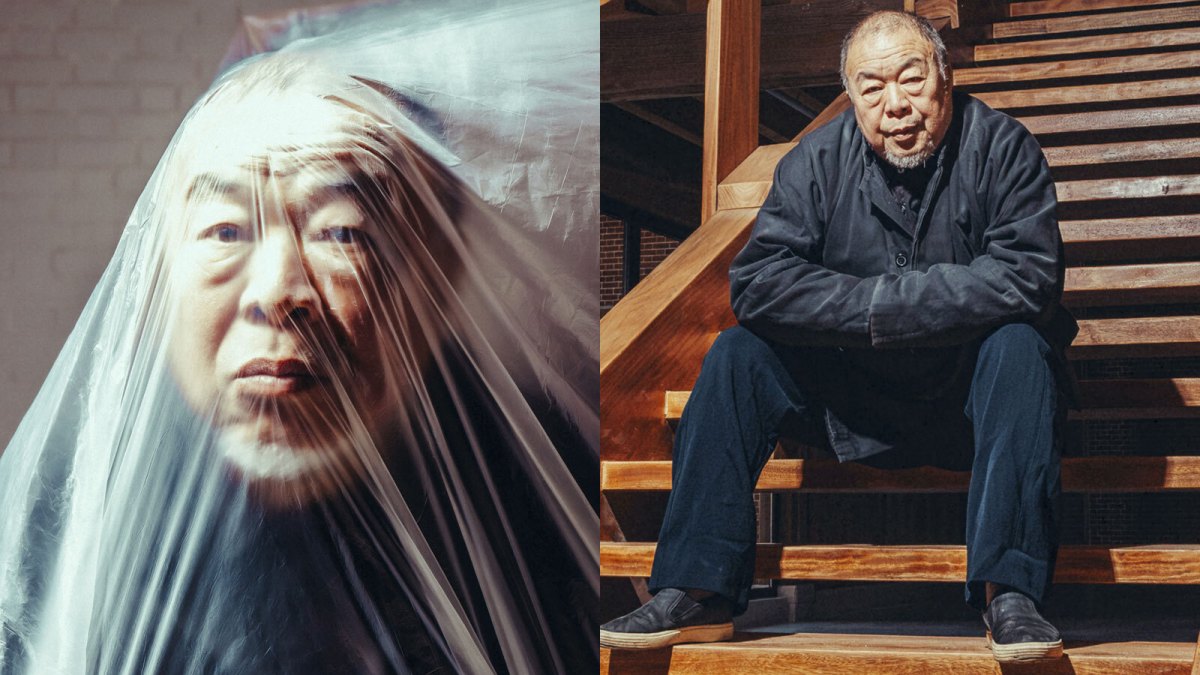
The last time I met Ai Weiwei was in 2010 at his studio in the semi-rural outskirts of Beijing. The assistant who let me in wore a T-shirt bearing the artist’s brain scan, showing two blood clots caused by a police beating in Sichuan. Outside Ai’s home, surveillance cameras monitored his movements and visitors. Inside, the atmosphere was embattled and electrifying. Phones were assumed tapped, Ai’s blog had been taken down, yet still he tweeted defiant wind-ups of a merciless regime.
“Lately, his activism has taken on a new recklessness,” I wrote then, “as if goading the state to react.” And a few months later it did. Ai was detained on trumped-up charges and interrogated for 81 days, then spent the next four years under effective house arrest.
The man who meets me at his gated estate in the Portuguese countryside is 68 now, but seems calmer and healthier and has shed his Buddha-like bulk. “You know when a tree is in autumn, when the leaves come down,” he says, “it looks slimmer.” Ai moved here during lockdown, buying the holiday home of a wealthy lawyer, complete with a tennis court and pool he never uses. “I am old now,” he says, “I need sunshine.” Portugal provides it 300 days a year, unlike Berlin, where he lived for five years after leaving China and still has a studio, or Cambridge, where his 16-year-old son Ai Lao is at school.
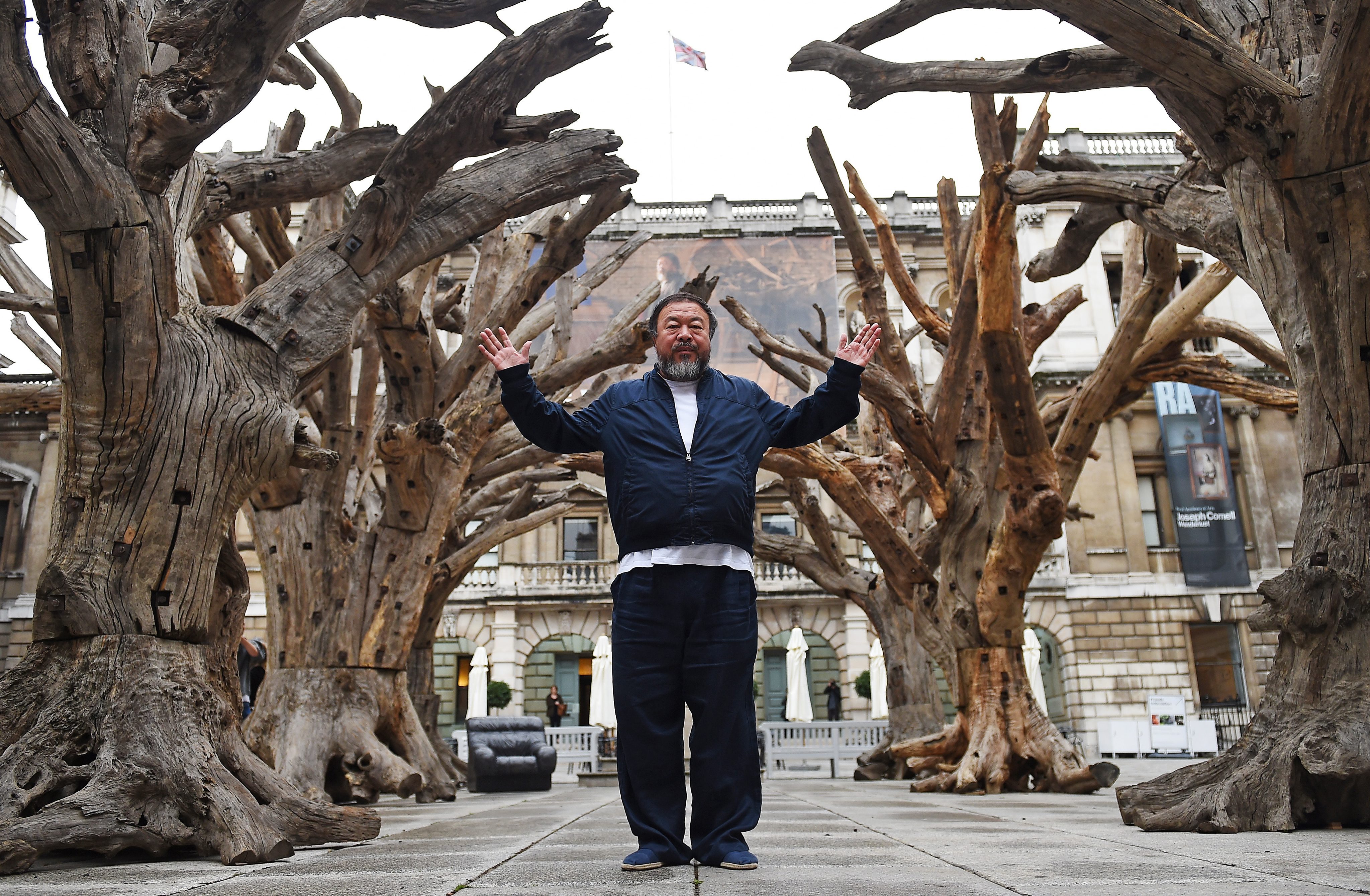
Ai with his Tree sculptures, part of an exhibition at the Royal Academy of Arts in London in 2015
EPA
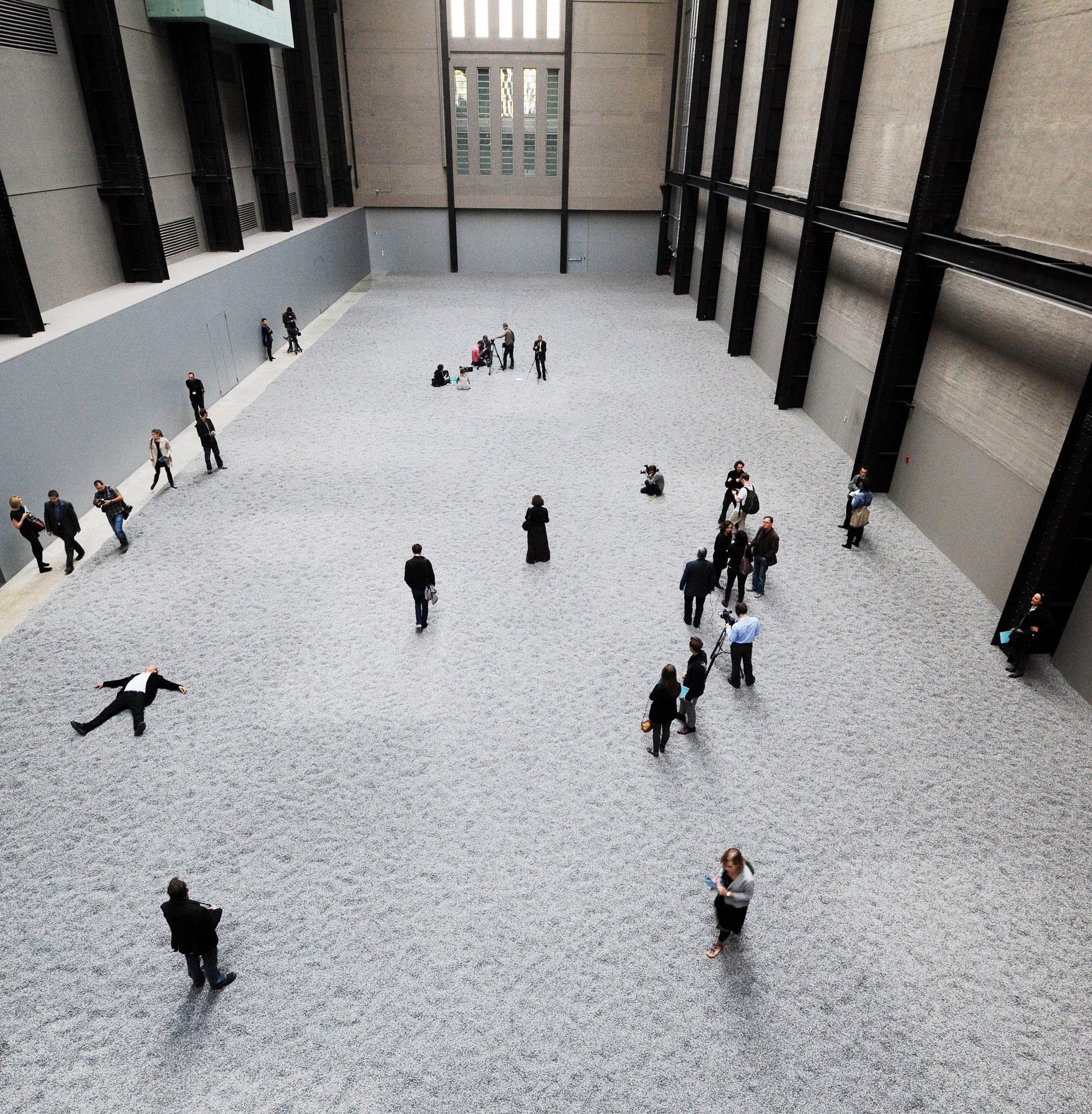
When we last met, a cargo of 100 million ceramic sunflower seeds was on its way through the South China Sea to fill Tate Modern’s turbine hall where it would make Ai Weiwei’s global reputation. Now he is established as the world’s foremost dissident artist, a creator of objects which provoke thought while being beautiful, playful and exquisitely made. Today he wants to show me his latest work, so we wend down a gravel track at a stately pace, accompanied by his Chinese assistants and two huge but gentle Alentejo mastiffs whose names, he tells me, “mean female dog and male dog, but are quite rude words in Chinese”.
We reach a brick structure as vast as an aircraft hangar, just finished except for the front door, which is en route from China (as is, I later discover, the one to the lavatory). The outside does not prepare you for the miraculous interior: marble floors, 100 wooden pillars of whole pine trunks and vaulted ceilings of interlocking beams. At its heart is a temple courtyard, where rainwater will cascade into 200-year-old bowls. Upstairs is a mezzanine level with seating, the polished cabinets so smooth they feel oddly plastic: “the wood used by Chinese kings”.
All trace of him has been erased
Here, an hour from Lisbon, Ai has recreated the studio he built in Shanghai, which the Chinese government spitefully tore down the moment it was finished. Except this is not a studio, a warehouse or a gallery. Ai is aghast when I say he could hold great parties here. He hates fleeting social encounters and crowds, even his own openings. So what is it for? “I just built it so I have somewhere I can walk around alone and think. It’s peaceful… And flat,” he adds, “so I don’t trip up, which is important when you are old.” Ai Weiwei, like generations of rich landowners before him, has built a folly.
• How China wages vast campaign against dissidents beyond its borders
I’m here to discuss a slim treatise called Ai Weiwei on Censorship. It describes his treatment by the Chinese government, which has erased all trace of him from the public sphere, and that of his father, the romantic poet Ai Qing, a communist and one-time friend of Mao who was nonetheless exiled as a rightist during the Cultural Revolution. Now Ai says China’s censorship extends beyond its borders, the government pressuring art foundations and galleries to withdraw his work. He claims his Zodiac Heads were removed from an exhibition in Mexico City at the request of the Chinese embassy there.
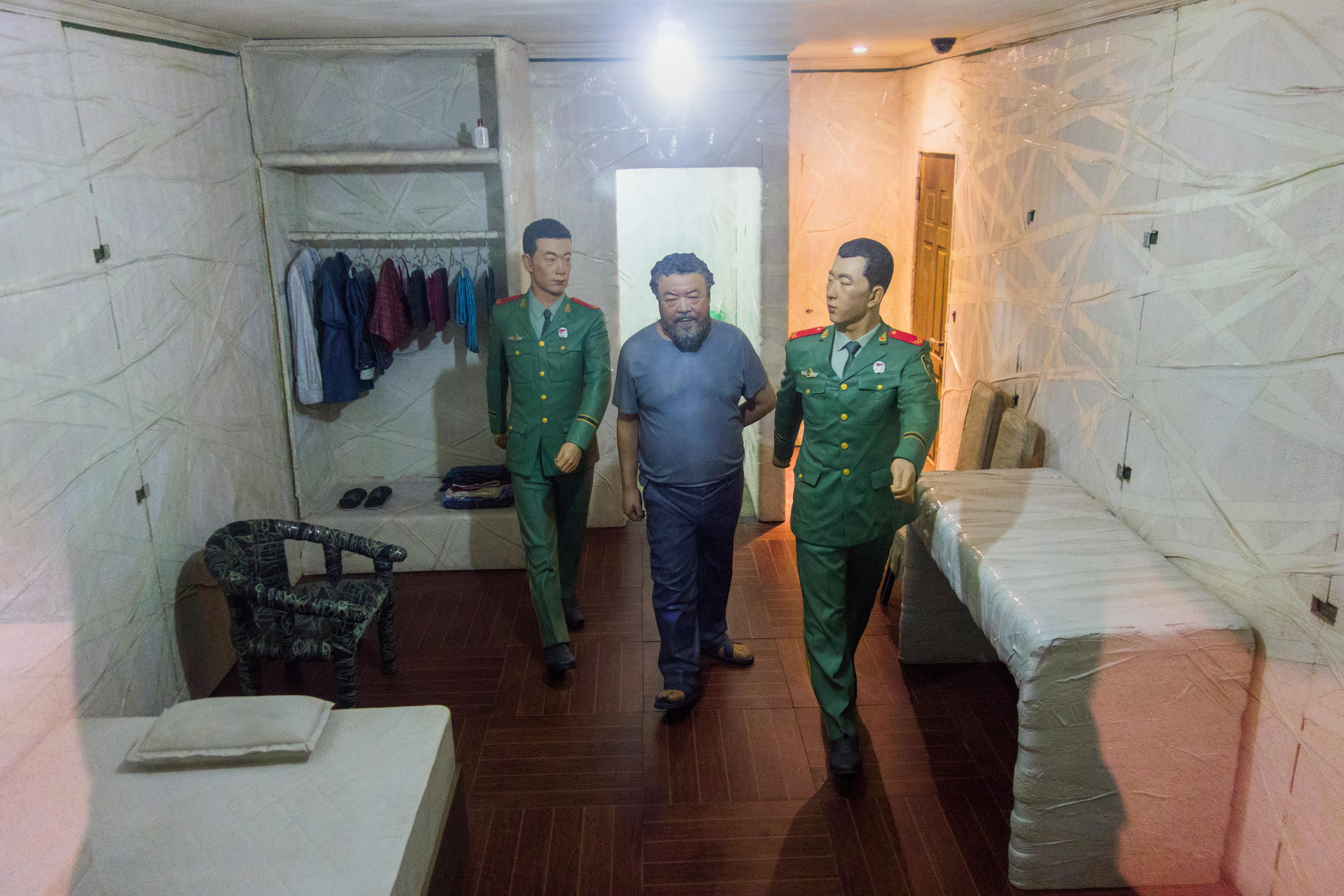
A scale model of Ai in prison, part of an artwork entitled SACRED
ALAMY
So I am keen to ask how he thinks Britain, and the West generally, should address the growing influence of China. Is it a “hostile state” trying to wield power via assaults on academic freedom and endemic spying? Should we worry Sir Keir Starmer has relinquished the Chagos Islands to Beijing-friendly Mauritius and is likely to approve a Chinese mega-embassy passing over sensitive cables leading to the City of London?
But Ai is not a politician. He is an artist known for mischief and to my surprise rallies to his homeland’s defence. “China is never a hostile power,” he says. “Not militarily. If you look at history, England has invaded China three times.” He describes the first and second opium wars, over self-sufficient China’s refusal to buy British goods, then the 1900 Boxer uprising, where eight nations put down an anti-foreigner Chinese rebellion that brought down the Qing dynasty and opened up China to the West.
Now, Ai argues, the situation is reversed. “The world has two problems. One is created by capitalism, the other is a new world order where the Bric nations, like India or even Russia, think, ‘We’re tired of being slaves.’ Everything you enjoy is from China.” He waggles his iPhone. “But if China makes one penny, the West will make $1. So you enjoyed 40 years of globalisation and the money China accumulated rises up like water. Their level is getting high. And the West is only realising it too late.” He chuckles. “History is a rollercoaster. Now you’ve passed your peak — enjoy going down. In 200 years, you will go up again.”
• Read more art reviews, guides and interviews
Does he think westerners are softer? “Much, much! And getting weaker and weaker. We say in China it’s hard for three generations of a family to be wealthy. Because the third, they don’t even know what money means. It’s automatically in their accounts. So people become … a designer.” He laughs. “China became strong because people work hard with no holidays. Not just eight hours, but ten, twelve hours. That’s how they bring their children to your British schools, Cambridge and Oxford.” The West, he says, cannot take tuition fees from China and then moan when it tries to restrict academic freedom or complain about Chinese spying “because you’ve become the underdog. You cannot compete with China, so you blame it.”
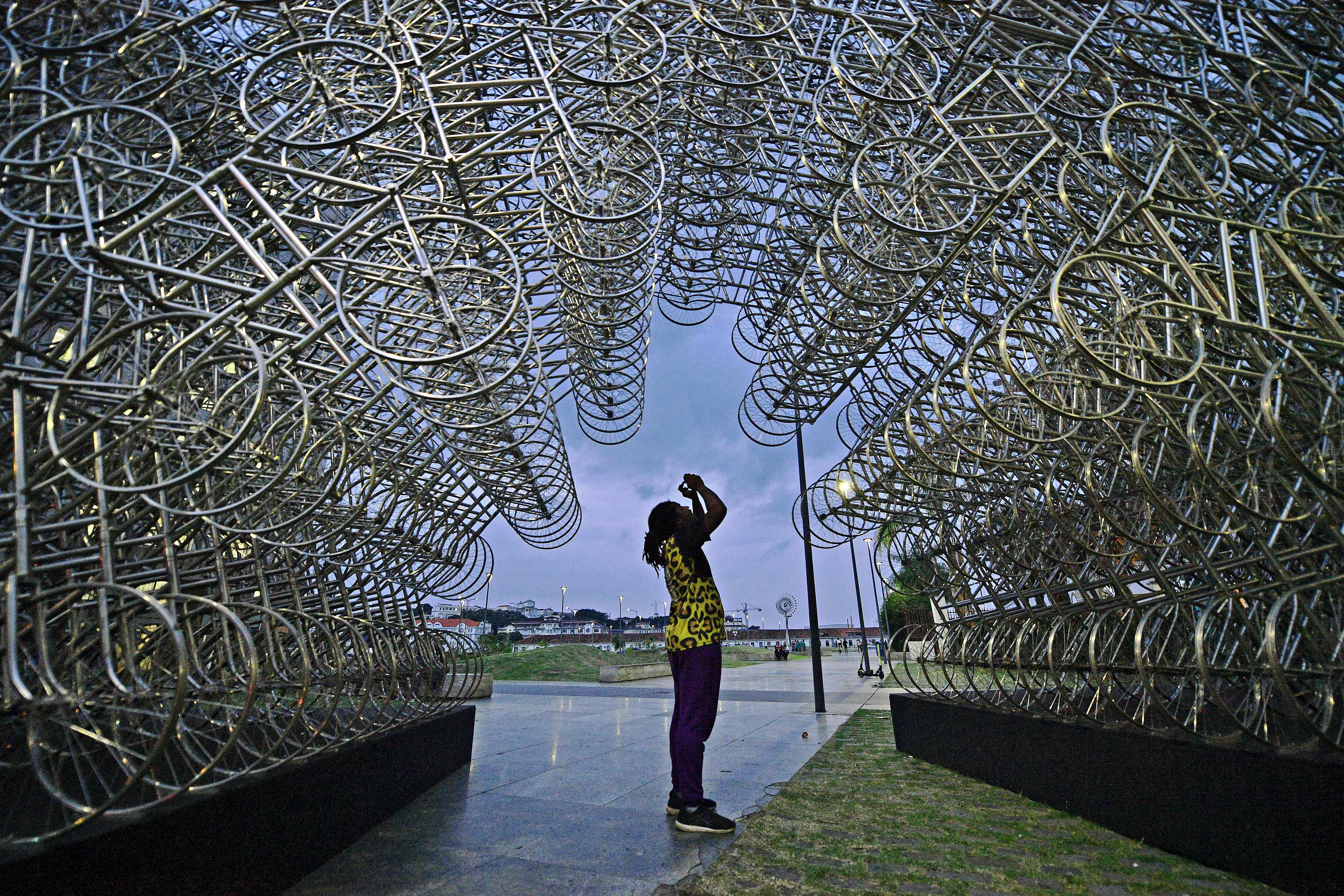
Ai’s Forever Cycles installation in Rio de Janeiro, 2019. It was made using more than 1,000 stainless steel bicycles
GETTY IMAGES
I ask if he cares Taiwan may soon be invaded. He replies it is territorially part of China, adding, “I don’t think that Taiwan has that much freedom. It’s just a little puppet of the western establishment.” Likewise, although he supports the release of Hong Kong protesters such as Jimmy Lai, he doesn’t believe, as a British colony, it was ever a democracy.
‘Censorship is strong in the West too’
China, as Ai knows, is an autocratic surveillance state that imprisons without trial and has the world’s highest execution rate. Yet in his book he writes, “At its core, censorship functions in fundamentally the same way under authoritarian regimes and in so-called free societies.” Does he really think censorship is no better in the West? It is not just in China, he says, where your iPhone is listening to you. “The media in the West also has strong, strong censorship. CNN or the BBC, it doesn’t matter. In China, the power is state power. But here it can be huge companies, business, even cultural institutions.”
His book describes how a social media post in November 2023 resulted in the cancellation of his exhibitions in London, Paris, Berlin and New York. What Ai doesn’t say is that just a few weeks after Hamas killed 1,200 Israelis, he tweeted in Chinese, “The sense of guilt around the persecution of the Jewish people has been, at times, transferred to offset the Arab world,” and, “Financially, culturally, and in terms of media influence, the Jewish community has had a significant presence in the United States.”
Wasn’t this just sensitivity about a recent atrocity? Ai says breezily that “the situation developed absolutely with my prediction. I just announced it a little earlier.” Where once his Twitter feed railed at the Chinese government, now on X it is solely about Gaza. He sees the conflict as “a modern test for the world to say who is defending human rights, who is defending freedom of speech. There’s nobody. Only the powerless people maybe walk on the street to do little demonstrations, but they are often beaten by the state police. And that evens out the so-called free world and authoritarian state, because they do the same thing.”
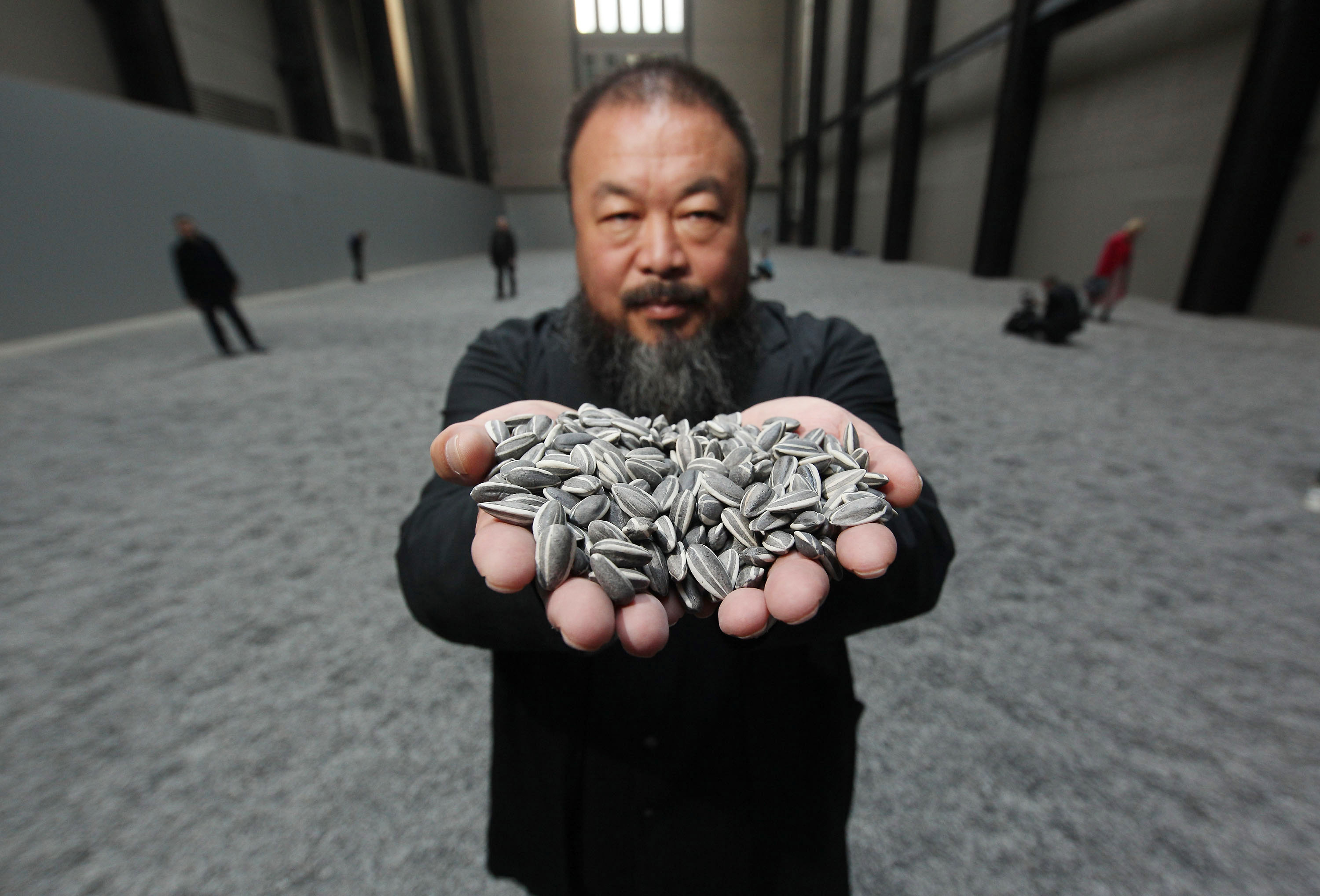
Ai with some of the 100 million ceramic seeds that comprised his Tate Modern installation in 2010, also below
GETTY IMAGES
I balk at his false equivalence. Are western democracies — where he now happily makes art and money without surveillance or censorship — really no better than China? The project that caused the Chinese authorities to fracture his skull, necessitating life-saving brain surgery, was his naming of the 5,000 children killed in poorly constructed schools during the Sichuan earthquake. Such a story would have been blown wide open by a free press.
“What about Julian Assange in your British custody almost 12 years hiding in these embassies?” he says. “Or [Edward] Snowden, still hiding in Russia?” Many believe he’s a Putin asset, I say. At this Ai, unused to being challenged, gets exasperated. “You’re interviewing an artist,” he says. “Now you want to talk about politics?” I’m interested in your opinion. “I hope you can publish it!”
Like all political exiles, Ai clearly has a complex relationship with his homeland. His childhood was spent at the edge of the Gobi desert, an area known as Little Siberia, where his father was forcibly “re-educated” by being made to clean communal latrines. The family lived in a subterranean animal shelter without light, plagued by lice and rats. In his fascinating memoir 1000 Years of Joys and Sorrows, he recalls his father being paraded before a barracking crowd wearing a dunce’s hat, head bowed. Yet even then, Ai Qing never stopped loving his country, writing elegiac patriotic poems. After Mao’s death, the party admitted he’d been wrongly accused. He and his work were rehabilitated.
The key to his art? ‘Little acts of mischief’
Ai Weiwei’s teenage years coincided with an easing of state control, a sense of broadening possibility. But at art school he found his fellow students pretentious and privileged. He writes, “I soon learnt that I did not fit in with the new post-Mao order any more than I had fitted in with the Maoist order that had shaped — or deformed — my childhood.” So, one of the first Chinese permitted to study abroad, he left for New York with just $30. Too cussed to take his exams, he lost his scholarship, and made money by cleaning houses or sketching street portraits. “Not a good place to spend your youth,” he says. “You know, crazy!” Although fascinated by western art, especially Andy Warhol, in 12 years he barely sold a work.
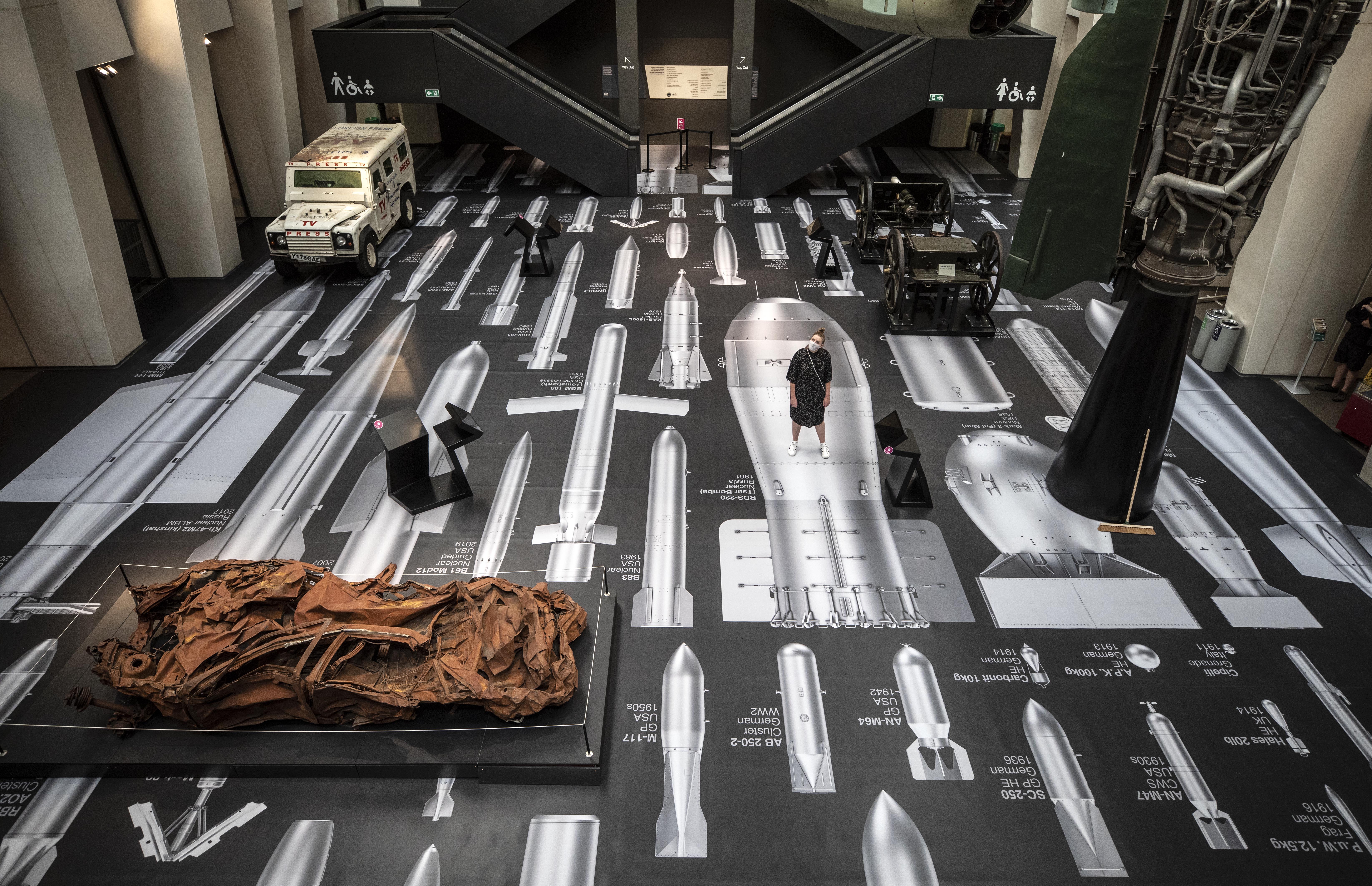
Ai Weiwei’s History of Bombs at the Imperial War Museum, London, 2020
RICHARD POHLE/THE TIMES
Then in 1993, when his father was ailing, he returned to China and, seeing his country with fresh eyes, he found himself as an artist. The following 22 years, until he went into exile, “were my best moment, even if I was being put through many trials”. As Beijing became one gigantic building site, diggers exhumed ancient artefacts which, in a society that erased its own history, had no value. Ai bought mountains of jade, pottery and ancient furniture, trying to figure out how it was made.
The internet was in its infancy and the Chinese authorities did not yet understand its subversive power. Ai’s art was borne of “little acts of mischief”, like painting the Coca-Cola logo on a 2,000-year-old urn or photographing himself giving the finger at Tiananmen Square. “They have weapons; they have military and police,” he says. “But the only thing they don’t know how to deal with is humour.”
Although untrained, he set up an architectural practice, FAKE, designing calm, simple buildings in contrast to the bling towers replacing old Beijing. He was invited to help design what became the Bird’s Nest stadium for the 2008 Olympic Games, but his growing disgust with the government meant he never visited it.
The Sichuan earthquake enraged him because the government refused to release — or even collect — the dead children’s names. So he and volunteers went door to door to record them. Then he used children’s backpacks to write in Chinese characters on the outside of the Haus der Kunst museum in Munich a mother’s words: “She lived happily in this world for seven years.”
Ai’s work often presents small, identical objects en masse — the backpacks, sunflower seeds, his recent works made with Lego — with curiously moving results. It is hard not to think of nameless, indistinguishable Chinese workers, either under Mao or toiling in soulless iPhone factories now.
We sit in Ai’s folly at a beautiful Chinese table where an assistant brings green tea. Above us is a camouflage net, but if you look carefully the dark patches are images of cats. Playful, clever Ai. He made it for an exhibition in Ukraine, which he has visited three times during the war. Yet he rarely puts his work on his studio walls. To him, the process of making art is what matters, not the end product: “You know, you eat something, you digest, then later you go to toilet. You just flush it away — into a gallery!”
This process, he says, is how humans figure out meaning. Yet artificial intelligence can deliver a “perfect” end result in seconds. “That kind of technology will collapse the learning process, the wondering who we are. If we know everything, we become nobody.”
‘On my tombstone it will say, “I’m such a failure” ’
Ai cuts a solitary figure. He socialises only with close friends and split up with his wife long ago, a few years after his son, “a gift from the universe”, was conceived with the film-maker Wang Fen. Does he mind being alone? “It takes us a long time to really understand and appreciate the meaning of being alone,” he says gnomically. “But it’s not easy, right?” He wonders if the age of “free love, free dating” is better than arranged marriages like that of his parents, who weren’t in love when they married but “became as one, like two trees growing together”.
Becoming a father changed his perception. “It’s like, before you build yourself in a solid cube. Then once you have a child, there’s a window open. Then you can look through the window and say, ‘Oh my God, there’s a huge field over there.’ ” He recently went with Ai Lao on a fishing trip to the Lake District. Just this morning he says his son texted to say he’d seen a photograph of his father taken when his mother was pregnant. “I was young but much fatter. And my son said, ‘It makes me happy to see you’re much skinnier in Portugal. You’re healthy, I’m glad.’ I was deeply touched by that.”
Ai Lao says he doesn’t want his father’s money, which will be a substantial fortune. I ask Ai if he feels guilty he is so rich and he makes me repeat the question while he films it. Then he says his whole life’s work is worth less than one recently sold Klimt or what a Silicon Valley magnate makes in a week. “On my tombstone it will say, ‘I’m such a failure,’ ” he says. He doesn’t care what will happen to his work after his death. “I can give to an institution or I can burn it. I don’t care about money.”
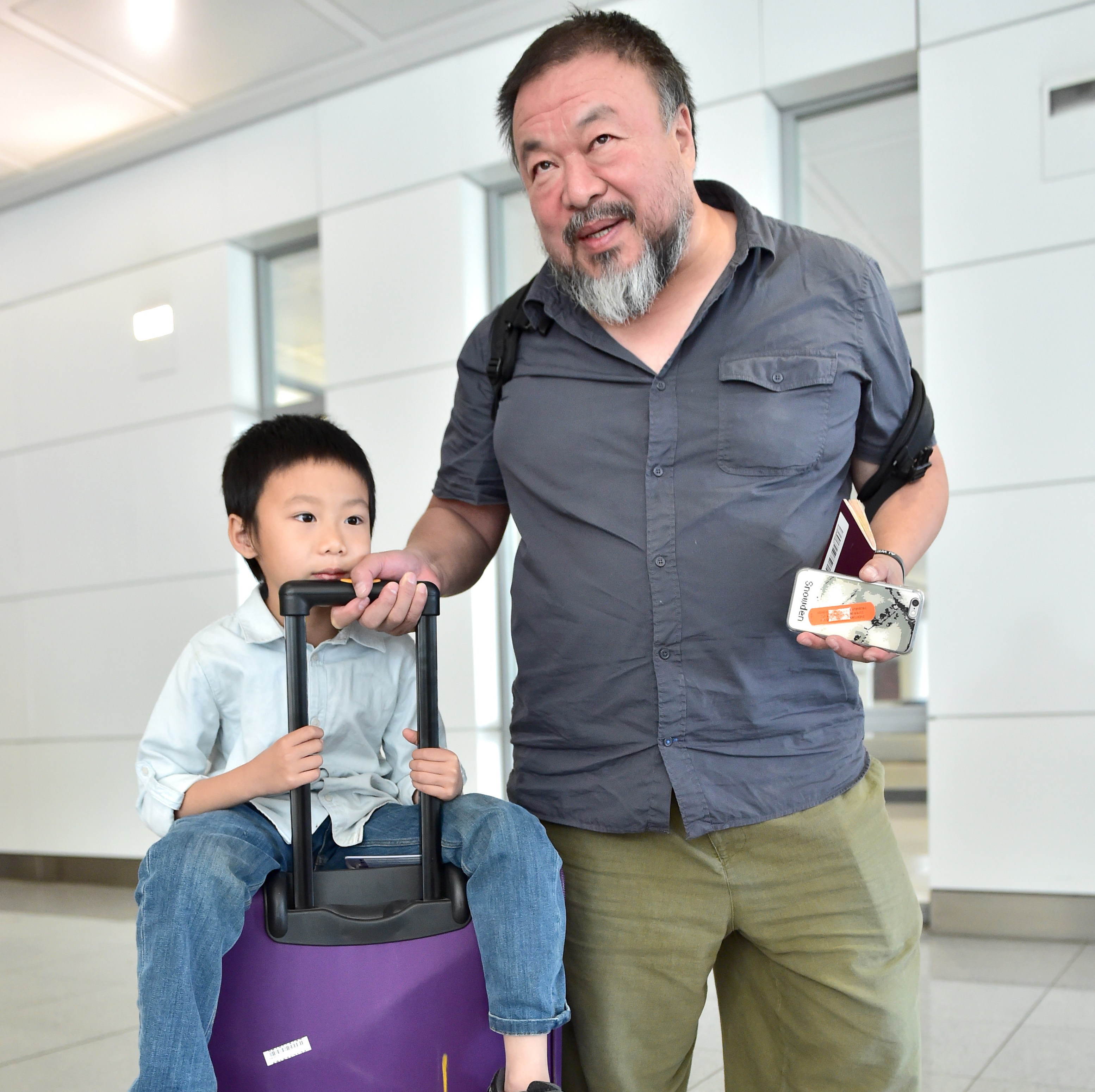
With his son, Ai Lao, at Munich airport, 2015
PETER KNEFFEL/DPA
Ai grew up with nothing, in a system without private property, which has steeled him to be an artist nomad. He says he doesn’t miss China, where his mother still lives, when there are so many places — “Russia, India, Africa” — he has never been. He claims writing his memoir got China out of his system, but it is clearly deep in his bones. He has used Portugal’s noted ceramic industry to make installations, but says nothing beats Chinese porcelain. Even the padded jacket he wears, which he designed, was made in China. As are a newly arrived row of exquisite hardwood cabinets he shows me. Each has a circular hole through which you see the different phases of the moon.
Age has made him reflect on the parallels between his life and his father’s: both were dissidents and exiles. But Ai Qing was ultimately forgiven. Speaking of Chinese cultural aggression in the West, Ai says, “China is just trying to cope with the situation. And very often, it’s a little bit clumsy. If I gave advice to them, maybe it would be better. But of course they don’t like me.” I wonder if Ai Weiwei secretly longs for redemption too.
Ai Weiwei will be interviewed by Stephen Sackur on January 31 at an event hosted by the How To Academy in central London (howtoacademy.com). Ai Weiwei on Censorship (Thames & Hudson, £12) is published on January 29. To order, go to timesbookshop.co.uk or call 020 3176 2935