
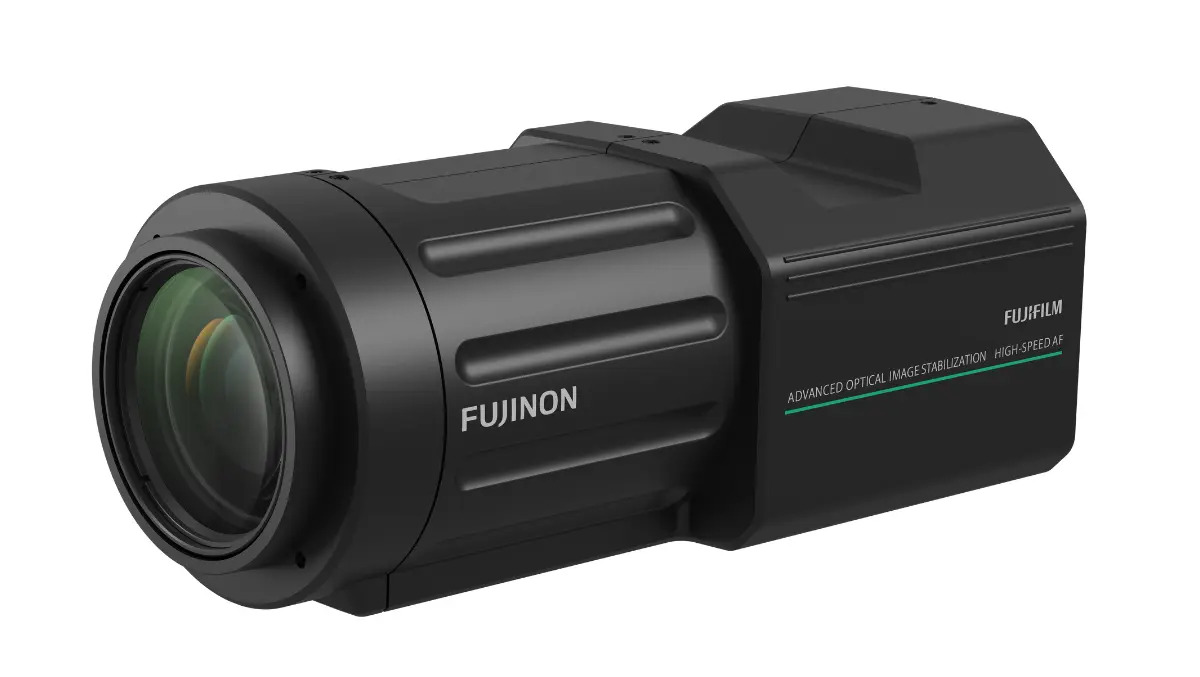
Fujifilm Australia has announced the Fujifilm SX400, a lens-integrated long-range camera that joins the company’s SX Series lineup and targets surveillance and remote inspection use cases.
The company said the SX400 will go on sale from early February 2026. It positioned the model as a smaller option in a range that also includes the Fujifilm SX800 and Fujifilm SX1600.
Long-range cameras have become common across border monitoring, transport infrastructure and large-area sites such as ports and airports. Fujifilm also pointed to growing interest in remote infrastructure inspection, citing labour shortages and ageing facilities.
Series positioning
Fujifilm introduced the SX Series in 2019. The current line-up includes the SX800, which the company said offers a 40x zoom with coverage from 20mm to 800mm, and the SX1600, which covers 40mm to 1600mm.
Fujifilm said the SX400 extends the series with a 32x optical zoom in a lens-integrated unit. It listed the focal length range as 12.5mm to 400mm.
The SX400 measures 302mm in length and weighs 3.9kg, according to the company. Fujifilm described the body as compact and lightweight compared with other long-range systems used for fixed surveillance.
Low-light lens
Fujifilm said the SX400 includes a newly developed F2.8 lens. The company described it as the brightest lens in the SX Series.
It said the lens maintains F2.8 brightness from 12.5mm to 200mm focal lengths. The company also said the design targets low-light imaging and reduces noise when sensitivity increases.
Fujifilm said the SX400 uses a 1/1.8-inch effective image size. It described this as the sensor area used to record visual images.
Stabilisation and focus
Fujifilm said the camera uses a stabilisation system that combines optical image stabilisation and electronic image stabilisation. It said the system addresses blur caused by vibration and wind during long-distance shooting.
The company said the stabilisation mechanism uses a “ceramic ball roller system”. It also said the unit includes gyro sensors that detect small vibrations.
Fujifilm also highlighted autofocus performance. It said the SX400 uses a rear-focus mechanism and combines on-sensor phase-detection autofocus with contrast autofocus, reaching focus in as little as 0.1 second.
Image processing
Fujifilm said the SX400 includes heat-haze and fog-reduction functions. It said the processing reduces distortions linked to airborne particles, temperature differences and haze.
The company said the system works with a built-in visible light cut filter. It said the combination improves imaging in foggy or hazy conditions.
Deployment options
Fujifilm said long-range cameras often sit in fixed installations for monitoring borders and ports or for infrastructure inspection. It said the SX400 also suits mobile deployments on vehicles and ships, plus temporary installations at construction sites and event venues.
It also listed disaster sites and crime scenes as environments where fixed installations may prove impractical.
Fujifilm said the integrated design reduces setup work compared with systems that pair separate lenses and cameras. It said the SX400 removes the need for adjustments such as optical axis alignment, flange-back calibration and colour fringing correction.
The company also said it consolidated power and control systems at the rear of the camera. It said this reduces cable connection complexity during installation.
Optics heritage
Fujifilm said the SX400 uses optical technologies refined through the design of 4K and 8K broadcast lenses and cinema camera lenses. It also said it uses image processing adopted from its GFX and X Series digital cameras.
“Fujifilm remains committed to developing innovative products that meet evolving customer and market needs, utilising proprietary optical technologies and advanced image processing adopted from the GFX and X Series digital cameras.”
Fujifilm said the SX400 will arrive from early February 2026.