
In our first article in this series looking at the design of the new generation of Formula 1 car for 2026 we looked at some of the decisions taken to make these cars more nimble, with their weight and dimensions adjusted to help with that task.
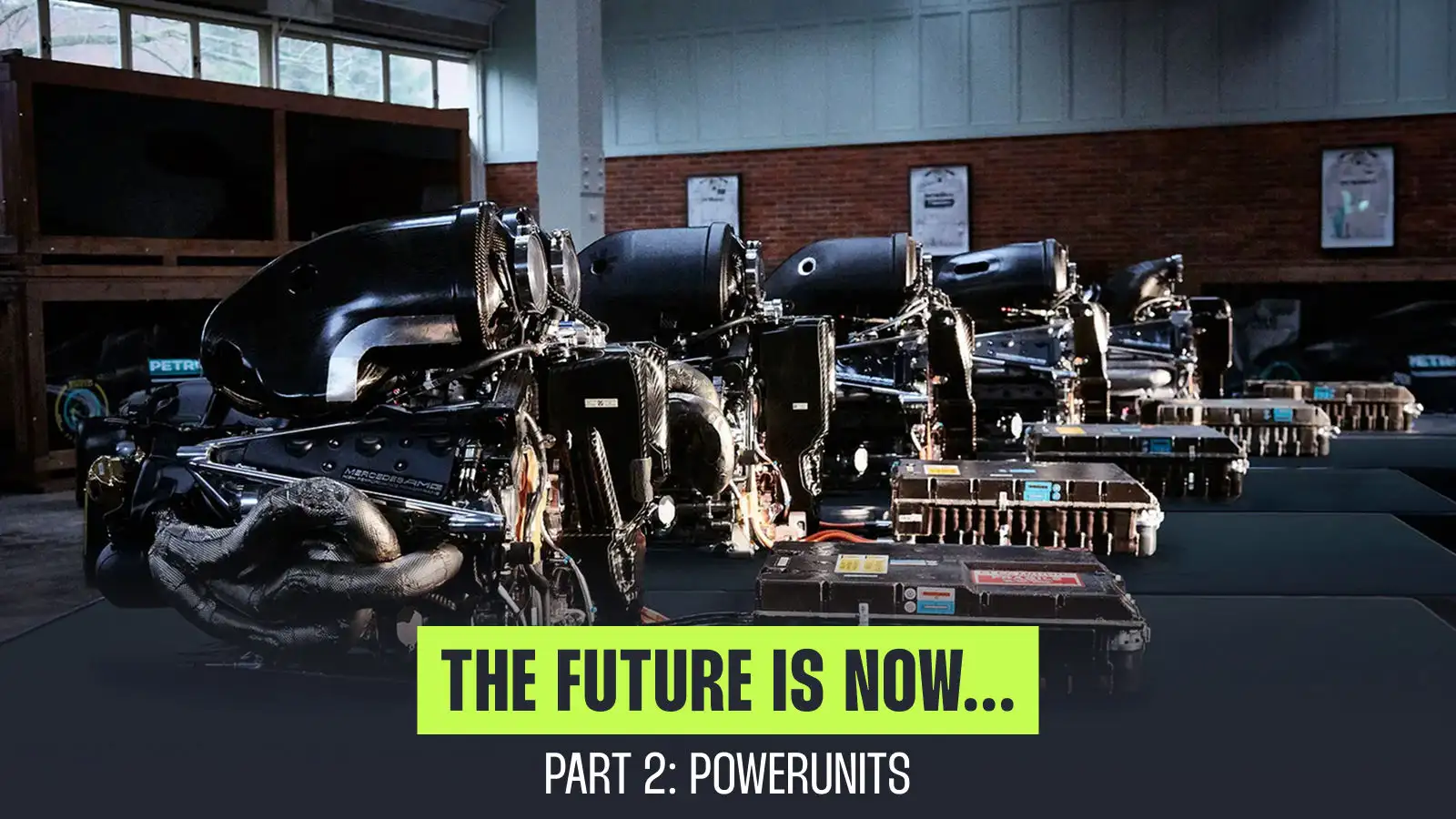
Next up, let’s discuss how the powerunit has changed compared with the previous generation of turbo hybrid powerunits.
Power up, or power down?
Want more PlanetF1.com coverage? Add us as a preferred source on Google to your favourites list for news you can trust.
At the centre of the new powerunit still lies a 1.6 litre turbocharged V6 engine but the MGU-H that was previously aligned with the turbo has been discarded. The removal of this motor generator unit has resulted in more reliance being placed on the MGU-K to supply the necessary electrical output, creating a closer to 50/50 split between the ICE and electrical power.
The MGU-K can now provide up to 350kW, which is equivalent to 470bhp in 2026, a massive increase when compared with its predecessor, which provided up to 120kW (around 160bhp).
The amount of electrical energy that can be recovered and deployed has increased as a consequence, with the drivers able to recover up to 9MJ per lap, which when we consider the first KERS unit deployed 60kW from the 600kJ available, it’s clear to see how far the technology has come since F1 first introduced it in 2009.
More on F1 explainers
How much does it cost to race in F1? The incredible price young drivers pay
F1 2026: Confirmed teams and power unit suppliers for F1’s huge regulation changes
Boost vs Overtake
Formula 1 can often be an intimidating environment given the complicated lexicon that grows around the technology and so the sport is making an effort with this new generation of cars to simplify the language being used. As a consequence, when it comes to the deployment of electrical energy, you’ll hear it be talked about in two ways: boost and overtake.
Boost refers to the energy being deployed by the MGU-K throughout the course of a lap, with the quantity of boost set by the driver, which will not only allow them to use it strategically around the course of a lap to improve lap and race time, they can also tune it to their demands in the heat of the battle for attack or defence.
Boost tapers in its delivery as speed builds by regulation, with the amount of energy being deployed above 290kph reaching zero at 345kph.
However, that’s where ‘overtake’ comes into play, as drivers who are less than a second behind their rival will be able to use full energy deployment until 337kph, where it then tapers down to zero at 355kph, with the driver able to deploy an additional 0.5Mj of energy during the lap in designated zones.
The most interesting aspect of this approach to creating an overtaking mechanism is that it is strategic and will require the drivers and teams to manage their energy strategy alongside track position. Afterall, if you’ve ‘spent’ additional energy overtaking a rival, you’ll now have to take time to recover that energy.
This is the sort of double edge sword that was missing from the implementation of DRS, where there was no downside to an overtake.
Fuel change
Formula 1 has been taking steps in recent years to reach its target of ‘net zero’ by 2030, with the fuel used by the teams one such ingredient in that recipe. And, in order to drive things forward, the new powerunit will use fully sustainable fuels, from sources like non-food biomass, carbon capture and municipal waste, all of which must meet strict and independently certified sustainability standards.
This will pose a challenge for both the engine manufacturers and their fuel and lubricant partners, with a potential edge to be gained by those who produce a more effective product.
In the next article in this series we’ll take a closer look at the new active aerodynamic solution that Formula One will utilise to help reduce the drag generated by this generation of cars.
Want to be the first to know exclusive information from the F1 paddock? Join our broadcast channel on WhatsApp to get the scoop on the latest developments from our team of accredited journalists. You can also subscribe to the PlanetF1 YouTube channel for exclusive features, hear from our paddock journalists with stories from the heart of Formula 1 and much more!
Read Next: F1 2026 uncovered: Next-gen cars, new tyres, and design decisions