
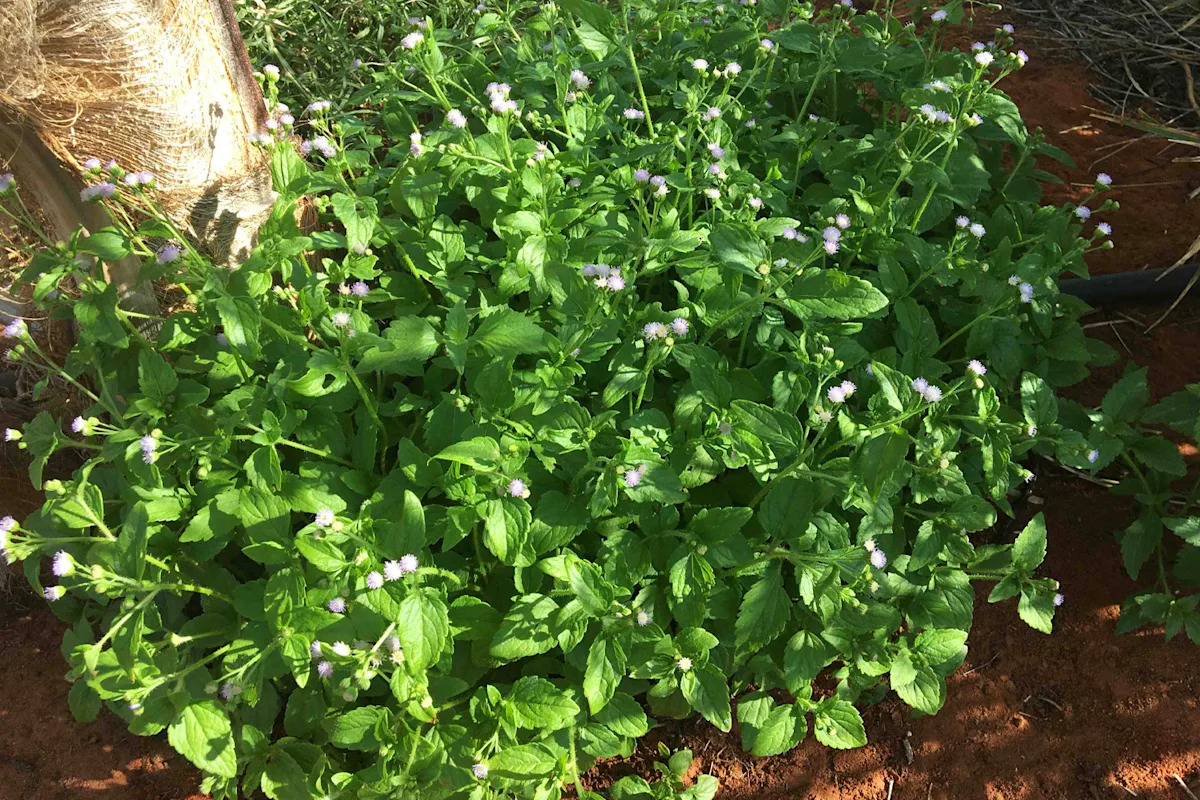
Australians are being warned to keep an eye out this wet season for a fast-spreading invasive weed that authorities say could quietly cause serious damage if it gets a foothold.
In the Kimberley region of Western Australia, the arrival of heavy rains has heightened concerns about praxelis (Praxelis clematidea), an invasive weed native to South America that produces thousands of tiny, wind-borne seeds.
The Department of Primary Industries and Regional Development (DPIRD) warned this week that the wet season has created ideal conditions for the weed to germinate and spread, increasing the risk it could move beyond known infestation sites.
How can praxelis spread?
If left unchecked, praxelis has the potential to invade crops, grasslands and conservation areas, threatening both agricultural production and native ecosystems, the Invasive Species Council’s Dr Carol Booth said.
“Praxelis was first detected in Australia, in North Queensland, about 30 years ago. Unfortunately, it was identified as a weed too late to eliminate it, and it has become widespread and prolific in North Queensland,” she told Yahoo News Australia.
“But it’s not too late in the Kimberley — which is why it’s important for people there to know what to look out for.
“With its seeds able to spread by wind and water or attached to feathers, fur or machinery, stopping its spread is going to need great vigilance.”
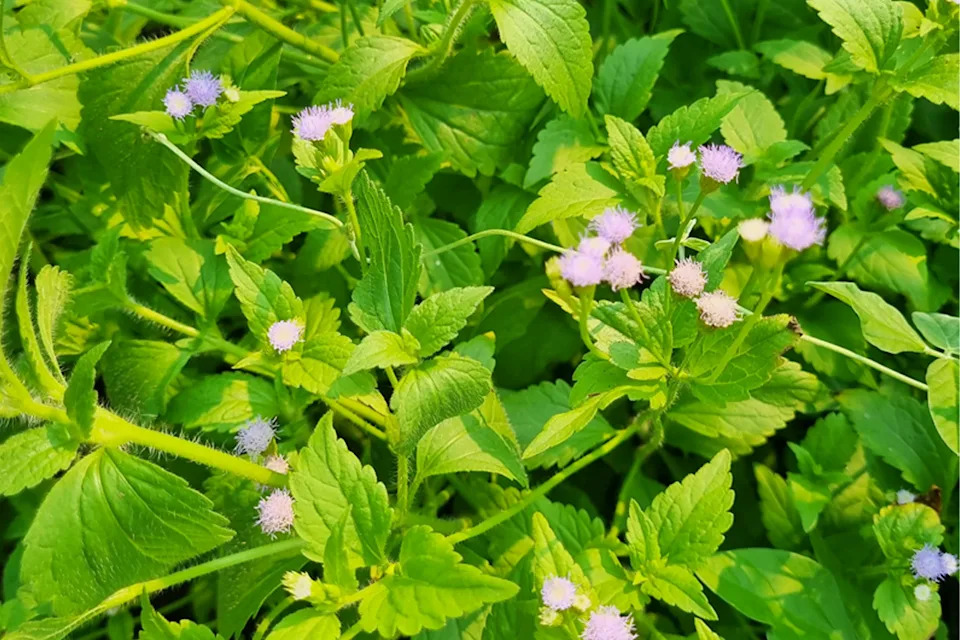
Praxelis was first detected in Australia, in North Queensland, 30 years ago. Source: WA government.
Dr Booth said the weed has the potential to “seriously degrade” the Kimberley and other parts of northern Australia.
“It can take over streambanks and woodlands as well as farms and roadsides. Because it germinates and reproduces quickly, it can become rampant after fires,” she warned.
Praxelis can be identified by its clusters of purple-blue or lilac flowers, coarse hairy stems, and sticky green leaves that release a strong odour when crushed.
Risk increased after rain
DPIRD regional biosecurity co-ordinator Simon Marwick urged residents to immediately check their gardens.
“The weed produces thousands of tiny seeds, which are easily spread by the wind, and seedlings will be germinating after recent rains,” he said.
“We also ask that residents don’t share lawn mowers, slashers, or mulch to help reduce the risk of spreading the weed,” Marwick said.
“While good progress has been made to prevent praxelis from becoming properly established in the Kimberley, we need landholders’ help to eradicate it.”
The declared weed is currently under an eradication program at 12 Mile on the outskirts of Broome, with smaller outbreaks also detected on the northern edge of Kununurra.
The alert comes amid growing concern about Australia’s vulnerability to invasive species, from prickly pear and lantana to gamba grass and fire-promoting buffel grass, which have already transformed landscapes across the country.
With fewer natural competitors and vast open environments, invasive plants can spread rapidly once established, making early detection and rapid response one of the country’s most effective defences.
Suspected praxelis sightings can be reported via the MyPestGuide Reporter app, by contacting a local DPIRD office, or through the Pest and Disease Information Service on (08) 9368 3080 or padis@dpird.wa.gov.au.
Love Australia’s weird and wonderful environment? 🐊🦘😳 Get our new newsletter showcasing the week’s best stories.
