
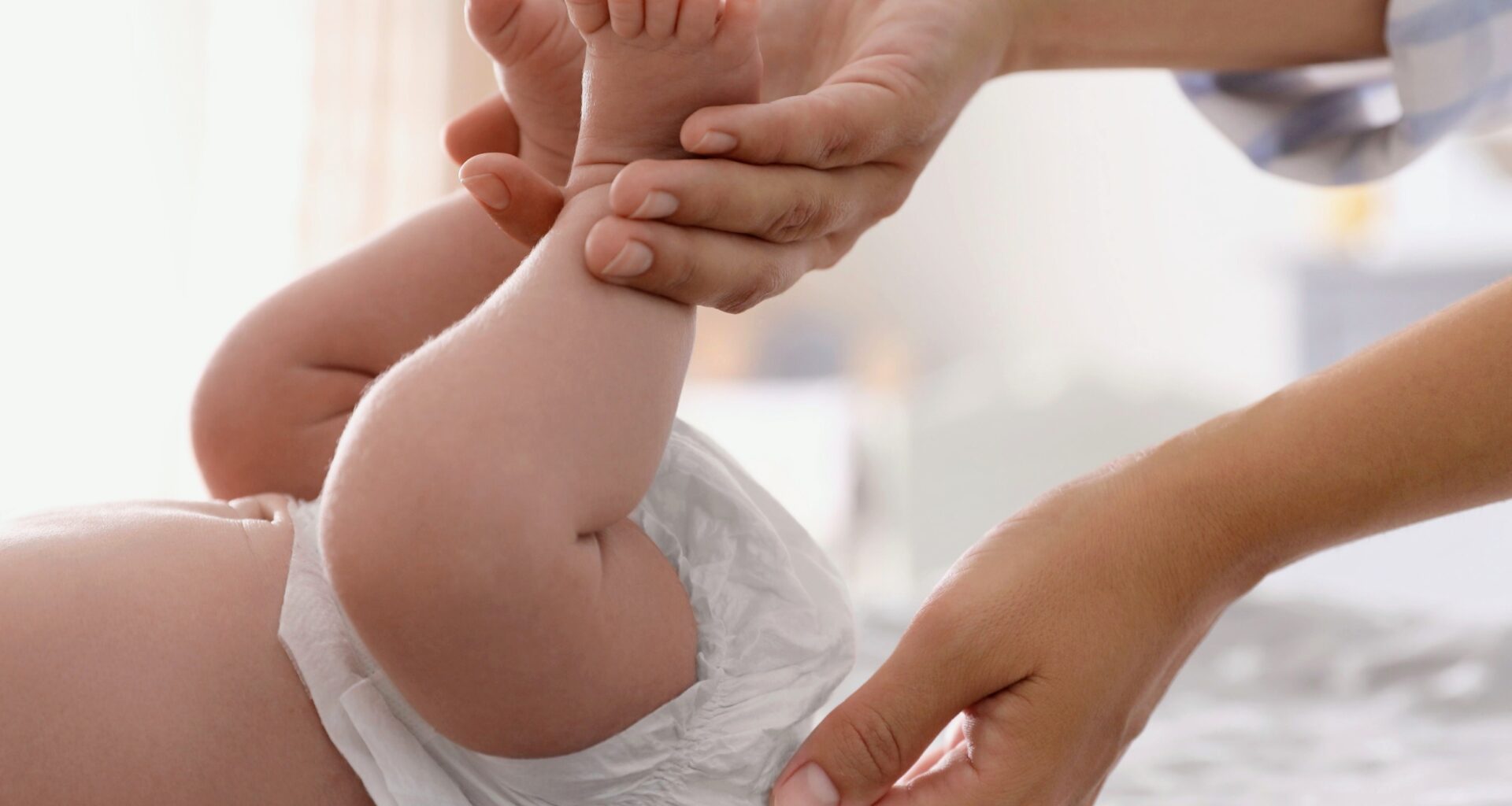
Changing a diaper, wiping up vomit, or cleaning up after a stomach bug doesn’t just feel unpleasant. For many people, it triggers an immediate, automatic urge to get away from the situation.
New research suggests that when exposure becomes constant and unavoidable, the brain can dial that response down. And once it does, the change can stick.

The new study was led by neuroscientists at the University of Bristol. They used parenthood as a real-life test of what happens when people repeatedly face bodily waste over months and years.
The results point to a clear pattern: parents show a much weaker disgust response than non-parents, and the effect isn’t limited to baby-related mess.
Disgust has a purpose
Disgust isn’t just squeamishness. It’s a protective system. It pushes us away from things that might carry disease, like spoiled food or bodily fluids. That’s why the reaction can feel so physical and immediate.
“Disgust is a basic human emotion that helps protect us from harm. Most people recognize it as the strong ‘yuck’ feeling we get when we smell gone-off food, see something dirty, or think about bodily fluids,” said study co-author Edwin Dalmaijer, a cognitive neuroscientist at Bristol.
“This reaction is not just about being picky, it evolved to keep us away from things that might make us sick.”
Disgust is reduced in parents
Dalmaijer noted that when we feel disgust, our bodies often respond automatically, for example by feeling nauseous, or wanting to move away quickly.
“While this reaction is powerful in the short term, it has long been debated whether repeated exposure over months or years can truly reduce disgust.”
“Parenthood dramatically increases exposure to these substances, and people do not choose to become, or stop being, parents based on disgust. This makes it an ideal ‘natural experiment’ for studying how disgust changes over time.”
That last point is key. People may choose different jobs, homes, or lifestyles based on what they can tolerate.
Parenthood doesn’t work like that. Once you’re in it, you’re in it. Which makes it a rare chance to study long-term exposure without the usual “self-selection” problem.
What the researchers tested
The team compared parents with non-parents using two kinds of information. First, they used questionnaires, including questions tailored to parenting.
Second, they looked at behavior in the moment, such as whether people turned away or avoided looking at certain images.
They recruited 99 parents and 50 non-parents, and they made the stimuli feel relevant. That included child-related triggers like images of soiled nappies.
The idea was simple: if disgust is strong, you don’t just say you feel it. You act like it. You flinch, you look away, you try not to engage.
As expected, non-parents generally showed a strong avoidance response to images depicting bodily waste. They didn’t want to look, and their behavior made that clear.
Parents were different. But the twist is that not all parents were different in the same way.
The “solids” turning point
The strongest shift appeared once children had started eating solid food. Parents of weaning or weaned children showed little to no behavioral avoidance when looking at soiled nappies.
Even more striking, their reduced disgust response seemed to extend beyond nappies to other kinds of bodily waste as well.
In other words, repeated exposure didn’t just blunt the reaction to your own child’s mess. It seemed to lower the overall sensitivity to that category of “gross” stimuli.
The study frames this as desensitisation. The day-to-day reality of childcare forces repeated contact with things that normally trigger disgust.
Over time, the brain appears to stop reacting as strongly, possibly because reacting strongly all the time would make caring for a child nearly impossible.
This also helps explain a common experience that many parents describe but rarely think of as “brain change.” Early on, a diaper blowout can feel shocking. Later, it can feel like a frustrating inconvenience, but not an emotional emergency.
Why strong disgust may persist
Here’s the part the researchers didn’t fully expect. Parents whose youngest children were still exclusively milk-fed showed disgust avoidance levels similar to non-parents. This was true even if they had older children.
That suggests something more complicated than simple “the more nappies you change, the less you care.” Instead, the timing seems to matter.
The researchers interpret this as a possible adaptive pattern. During the earliest stage of infancy, babies are especially vulnerable to illness.
A stronger disgust response in caregivers could reduce disease risk, because it keeps adults more alert to contamination and hygiene threats at a moment when the child’s immune defenses are still developing.
Later, once the child is older and sturdier, a parent may benefit more from emotional flexibility.
A toddler with a fever, diarrhea, or a runny nose still needs close contact and care. If disgust stayed intense, that care would become harder to provide.
So the shift may be less about “getting used to it” and more about the brain adjusting its priorities as the risks change.
Care work beyond parenting
The study isn’t just about families. The researchers also highlight wider implications for jobs that involve frequent contact with unpleasant substances.
From nursing care and disability support to sanitation, childcare, and elder care, disgust management can be a real barrier.
Some roles struggle with recruitment and retention partly because the daily realities are emotionally difficult, not just physically demanding. If long-term exposure truly can reshape disgust responses, that raises important questions.
Can training mimic some of that desensitisation safely and ethically? Can workplaces support gradual adaptation rather than throwing new staff into the deep end?
And can employers reduce burnout by understanding that disgust is not a personality flaw, but a biological reflex that can be negotiated over time?
This research doesn’t solve those problems, but it offers a clearer mechanism to think with.
A lasting change, not a temporary one
One of the takeaways here is that disgust may be more flexible than we assume, at least under the right conditions. It’s not easy to change in the short term. But the study suggests that long-term, repeated exposure can leave a lasting mark.
“Parents of young children are bombarded with grossness from day one, from dirty nappies to sick and snotty noses. Our findings provide strong evidence that long-term desensitisation to disgust does occur,” Dalmaijer said.
“After the sensitive early months of infancy, continuous exposure to children’s bodily effluvia appears to ‘inoculate’ parents against disgust, reshaping a deeply ingrained emotional response that is otherwise difficult to change.”
“Parenthood doesn’t just change daily routines, it can fundamentally alter how humans experience disgust, with lasting effects that extend beyond childcare itself.”
It’s an oddly comforting idea. Disgust feels like a fixed part of who we are. But this suggests it can be tuned by life experience, especially when care is non-negotiable.
And it reframes something many parents already know in their bones: the gross parts don’t necessarily get easier because the mess gets smaller. They get easier because you change.
The study is published in the Scandinavian Journal of Psychology.
—–
Like what you read? Subscribe to our newsletter for engaging articles, exclusive content, and the latest updates.
Check us out on EarthSnap, a free app brought to you by Eric Ralls and Earth.com.
—–