
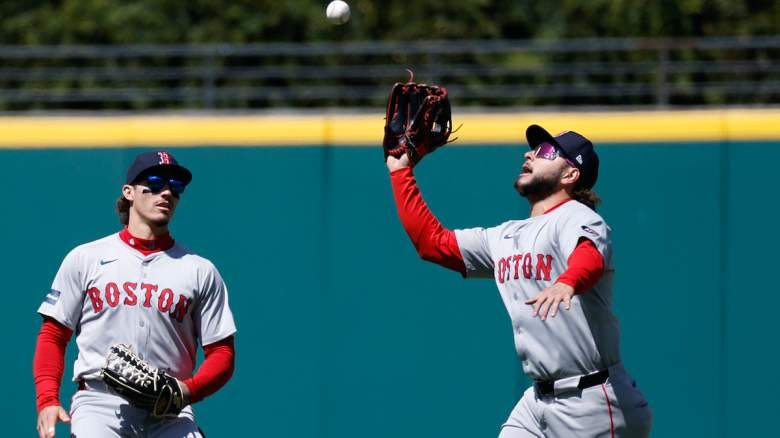
 Red Sox outfielders Jarren Duran (left) and Wilyer Abreu (right). (Getty Images)
It has been genuinely difficult to gauge what Boston Red Sox chief baseball officer Craig Breslow is going to do with his outfield situation, because the problem is no longer theoretical. As things stand, the Red Sox have seven players who all need regular at-bats, not bench cameos or twice-a-week spot starts or even just being part of a platoon:
Roman Anthony
Jarren Duran
Wilyer Abreu
Ceddanne Rafaela
Masataka Yoshida
Kristian Campbell
Triston Casas
That’s not “good depth.” That’s a traffic jam.
Depth implies optionality—players you can rotate, platoon, or stash without consequence. This group doesn’t offer that luxury. Several of these players need daily reps to either continue developing or remain productive, and every workaround introduces a new cost somewhere else on the roster.
The most common response to this situation is some variation of: They’ll figure it out. Rotate guys. Mix and match. But when you look closely at the individual constraints, that solution is far from ideal.
Start with Duran and Abreu. The team has already been explicit that both need more at-bats against left-handed pitching. That isn’t code for “occasional exposure.” It means they’re supposed to be everyday players. Once you commit to that development goal, platooning becomes a nonstarter.
Then there’s Rafaela. He isn’t just a capable center fielder—he’s arguably the best defensive center fielder in the game right now. Every inning he plays anywhere else is, frankly, a misuse of an elite skill. If you believe defense matters—and this front office does—then moving him off center isn’t a neutral decision.
 Ranger Suarez fits the Breslow mold better than you think
Yoshida’s situation is less philosophical and more contractual. Like it or not, the Red Sox aren’t DFA’ing him, and his contract is effectively untradable. More importantly, his value requires rhythm. We’ve seen the same pattern every year: a slow start, then sustained excellence once he finds his timing. That doesn’t happen without regular reps.
Campbell presents a different problem. With the team all but stating outright that Campbell is going to be a full-time outfielder, you can start him in Triple-A, but if he’s the player the organization believes he is, keeping him there too long eventually does more harm than good. Development isn’t linear, but stagnation is real.
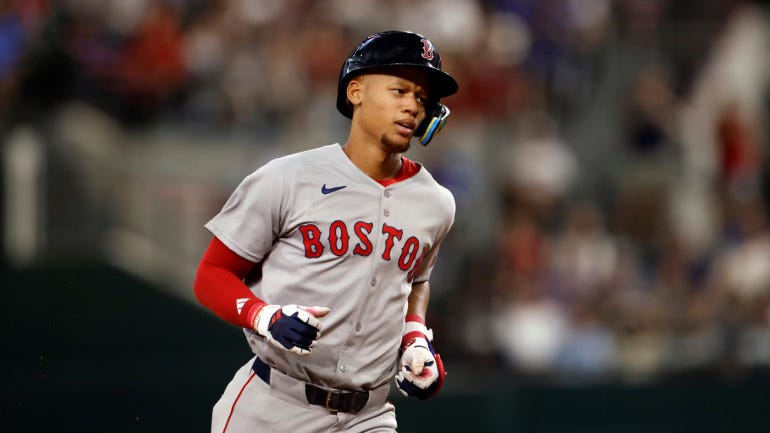 Red Sox infielder Kristian Campbell. (Getty Images)
And then there’s Casas. With the addition of Willson Contreras, it’s easier to ease him into games at Triple-A but Casas will need at-bats at DH to stay in rhythm—especially after another season disrupted by injuries.
Individually, these are not the worst problems to have. Collectively, something has to give.
If there’s a single player who theoretically makes this all workable, it’s Rafaela. His versatility gives Breslow an escape hatch—a way to keep everyone on the roster while avoiding a trade that feels premature or lopsided. Unfortunately, Breslow has been on record saying the team doesn’t want to play Rafaela at second base. That matters. Public statements like that aren’t accidental, and they tend to reflect internal evaluations as much as external messaging.
If Rafaela starts logging significant time at second, it won’t be because the front office suddenly fell in love with the idea. It’ll be because the alternatives became worse. Flexibility stops being a strength once it’s used primarily to paper over roster imbalance. At some point, you have to ask whether maximizing versatility is actually maximizing value—or just delaying an inevitable, harder decision.
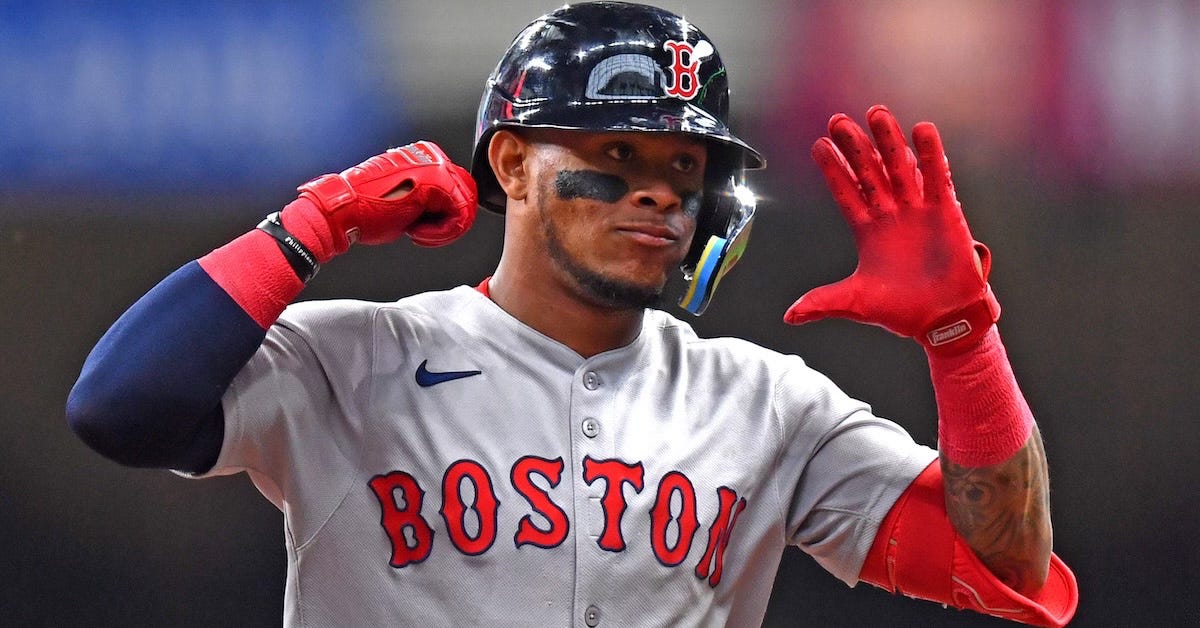 Red Sox Gold Glove winner Ceddanne Rafaela. (Getty Images)
Imagine this from another team’s perspective. You look at the Red Sox roster and see a clear logjam. You see multiple players who need to play every day, not because of ego, but because of development curves, contracts, or performance history. You know that Breslow needs to move someone more than you do.
That leverage doesn’t belong to the Red Sox.
If you’re another front office, the message is simple: You need this more than we do. That allows you to slow-play negotiations, offer discounted returns, or pivot to cheaper alternatives. Even a fair deal becomes harder when urgency is one-sided.
 Red Sox prospect Jeremy Wu-Yelland is looking to take a step forward in 2026
I’ve heard from a few sources that the Red Sox aren’t moving top pitching prospects Connelly Early or Payton Tolle unless the return is truly elite. Think a frontline, controllable starter along the lines of Hunter Greene.
With recent chatter about discussions with Houston about third baseman Isaac Paredes, it feels more likely they’re exploring options involving pitchers like Kyle Harrison, the centerpiece of the return for Rafael Devers, or Brayan Bello. I’ve also heard from sources that the team would readily trade Bello, but that other clubs aren’t especially interested. Reading between the lines, there seem to be concerns—fair or not—about work ethic and long-term projection.
That doesn’t mean those concerns are accurate. It just means they exist.
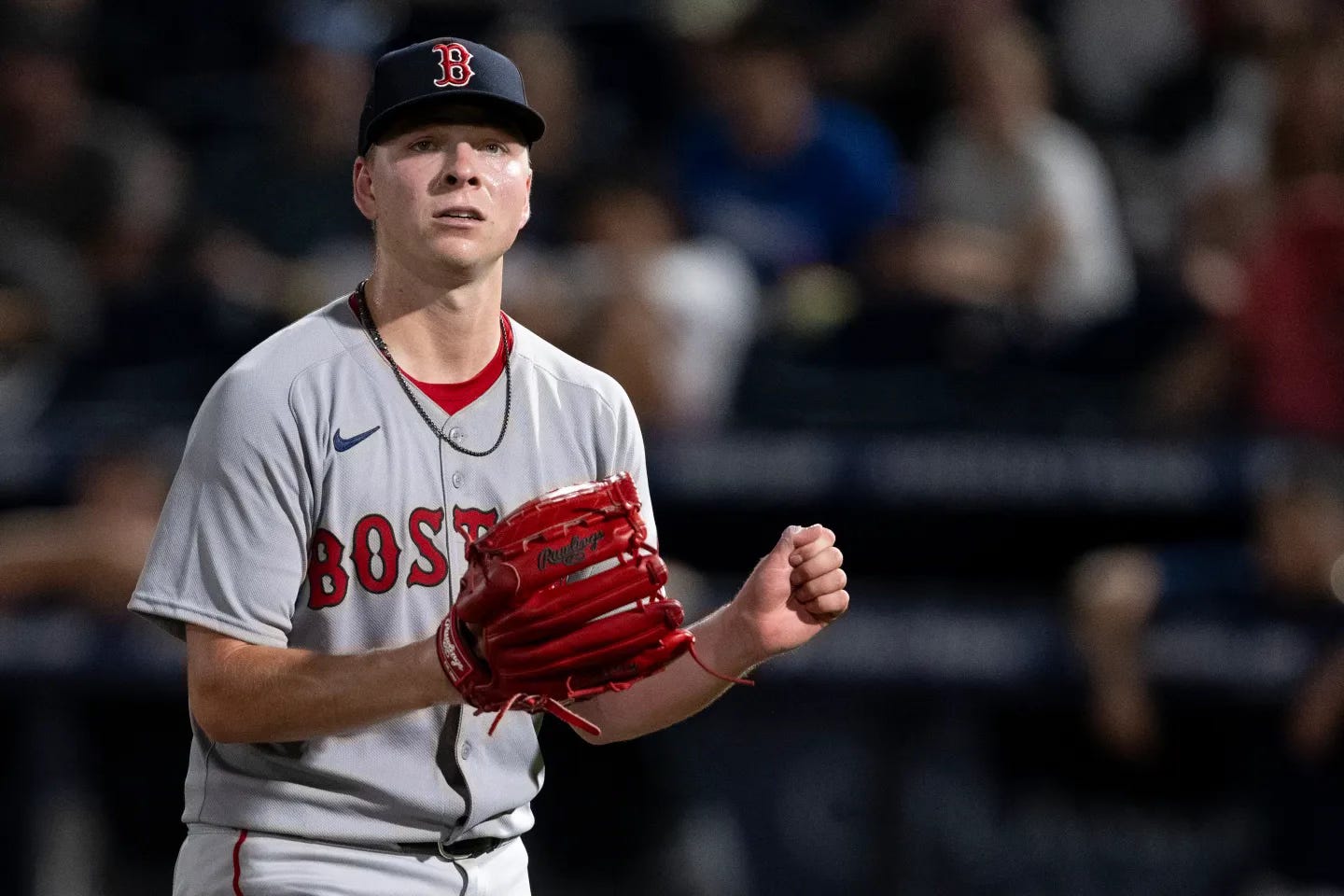 Red Sox left-hander Kyle Harrison could be part of a trade to improve the overall roster ahead of 2026. (Getty Images)
When you strip away sentiment and attachment, the roster imbalance becomes pretty clear. This is a lefty-heavy lineup that strike out a ton and doesn’t hit many home runs. The cleanest fix is turning one left-handed outfielder into a right-handed infielder with some juice in his bat.
And it obviously isn’t Anthony.
Which brings us to Duran.
Duran is uber-talented, controllable, and impactful, perhaps the second-best position player on the team, but his skill set isn’t universally viewed as one that ages gracefully. Speed-driven value, defensive range, and emotional volatility can scare teams, even when the production is real. Around the league, he’s seen as something of a loose cannon—valuable, but not always predictable.
Logistically, though, he makes sense. He has real trade value. He addresses a surplus. And he could bring back the type of player the lineup actually needs. I’ve never been a huge Paredes guy. But fit matters, and he checks boxes the Red Sox currently don’t. This isn’t about winning a trade on paper. It’s about making the roster make sense before internal value starts eroding.