
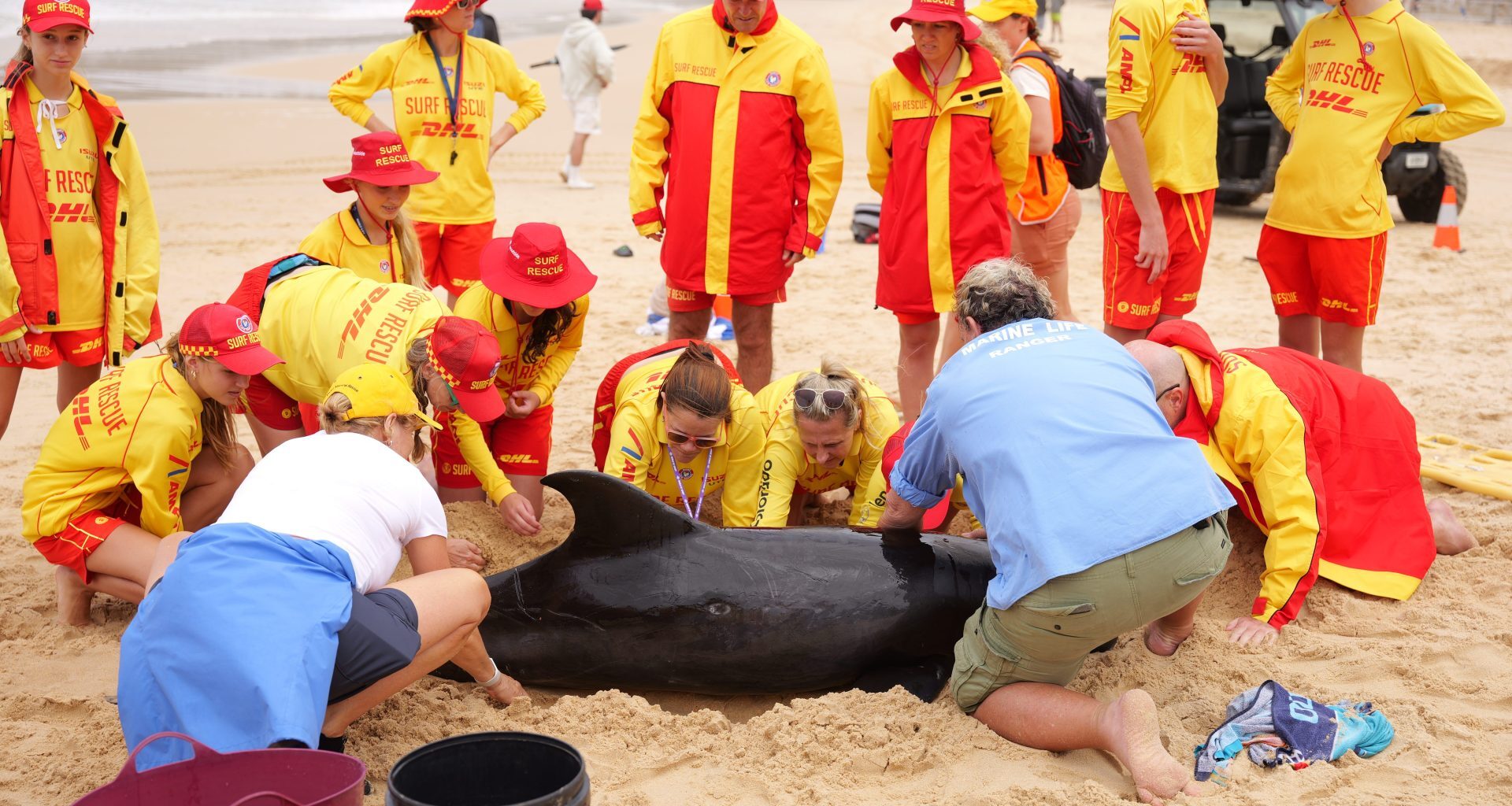
Crowds watched on in angst as lifeguards and marine rescue organisations attempted to rescue a twice-beached pygmy killer whale on Manly Beach this afternoon, 18 January.
At around 12.45 pm, beachgoers discovered the beached dolphin on North Steyne shores; it was bearing the brunt of crashing waves caused by this weekend’s wild weather. In moments, members of the public proceeded to band together to guide the mammal back into the ocean.
Despite these efforts, it became washed-up again shortly after. This time, lifeguards, lifesavers and marine rescue and education organisation ORRCA attended the scene to resume rescue efforts.
Pygmy killer whales are considered naturally rare and elusive even though they are generally widespread around the world. They often prefer warmer waters which may explain its appearance on the Northern Beaches, but they are also known to stray from coasts, and shallow waters, making its beaching unusual.
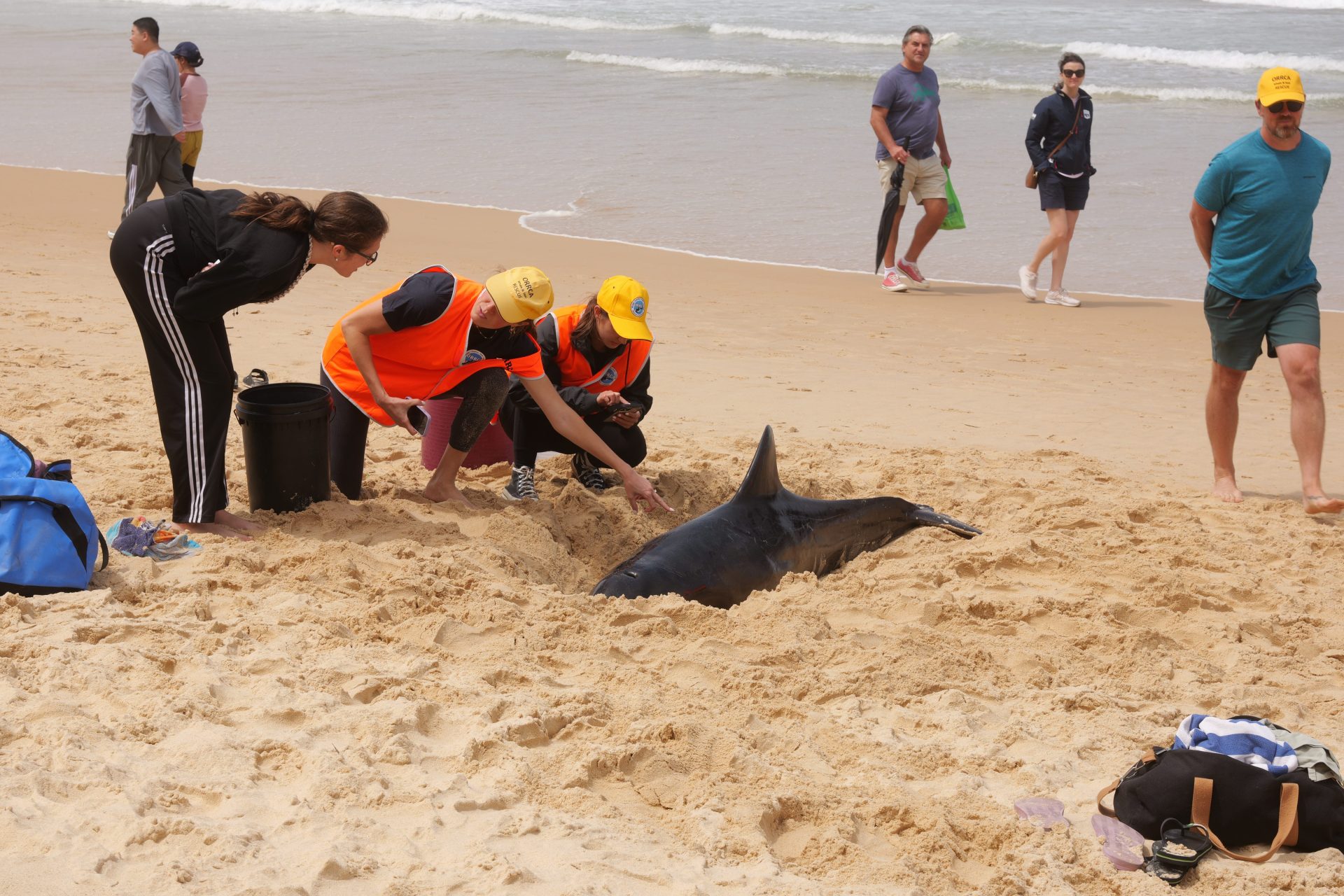 It is currently unknown what caused the pygmy killer whale to become beached. Photo: Jack Kelly
Sharky, a marine enthusiast and founder of Marine Life Rangers, was nearby when the rescue operation took place.
“I went down there, and the lifeguards turned up, and evidently this marine mammal had come in a couple of times… So we moved it up the beach. So the lifeguards and lifesavers came down, and we used a spinal board to move it up to a safe area,” he told Manly Observer on the scene.
“It was still alive, but it died a short time later. It literally had salt water coming out of the blowhole, so it was going to die no matter what.”
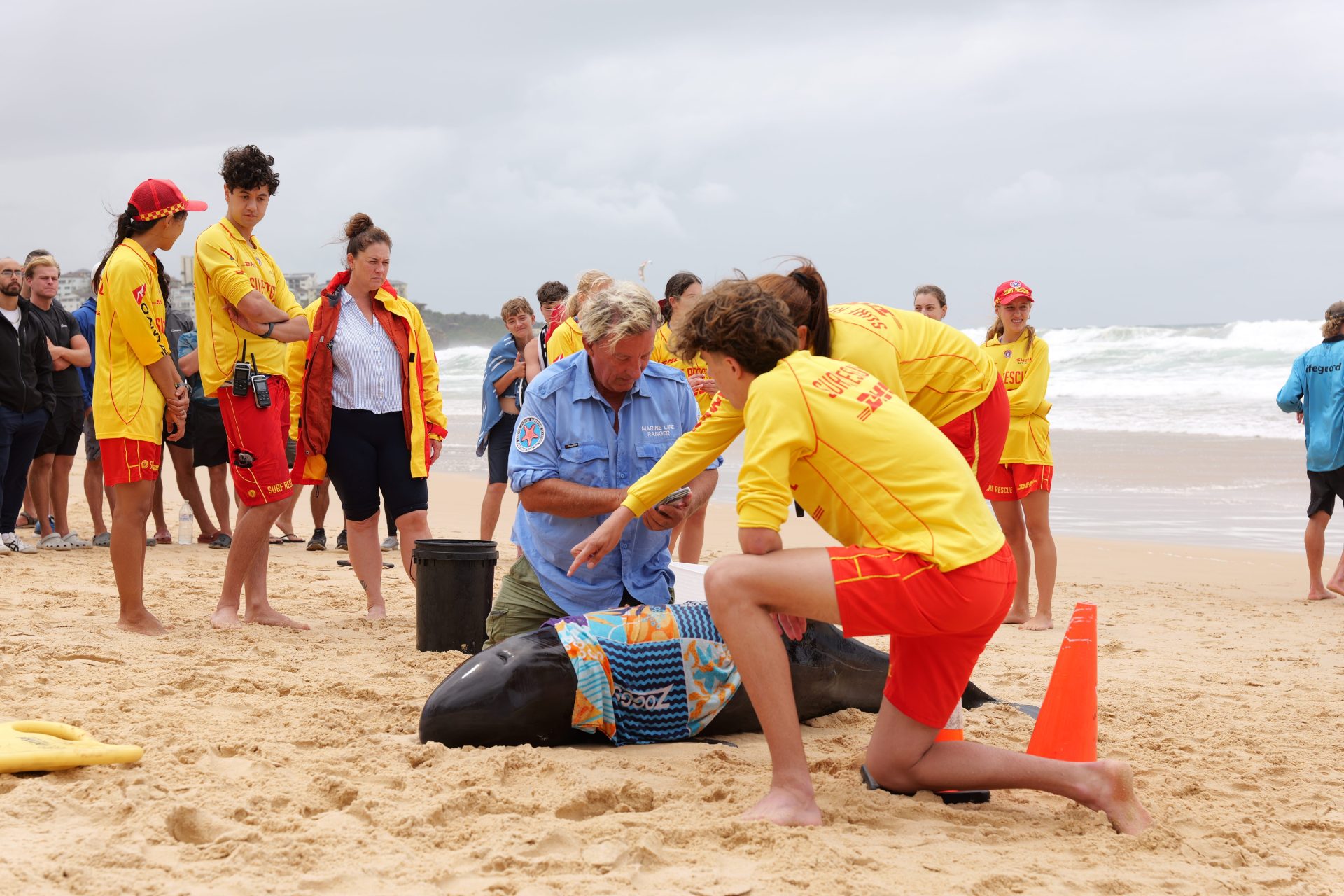 Sharky with lifesavers placing a wet towel on the pygmy killer whale. Photo: Jack Kelly.
Rescuers continuously formed a water cycle, running chains of buckets from the ocean, keeping the dolphin’s skin from drying out before NSW National Parks and Wildlife Service (NPWS) could arrive. Unfortunately, it died during this time.
Initially thought to be a male Melon-Headed Whale, or a Risso’s Dolphin, it was later confirmed as rare type of dolphin called a pygmy killer whale; experts determined this thanks to a tooth count and other data collected by ORRCA Rescue Team members onsite today.
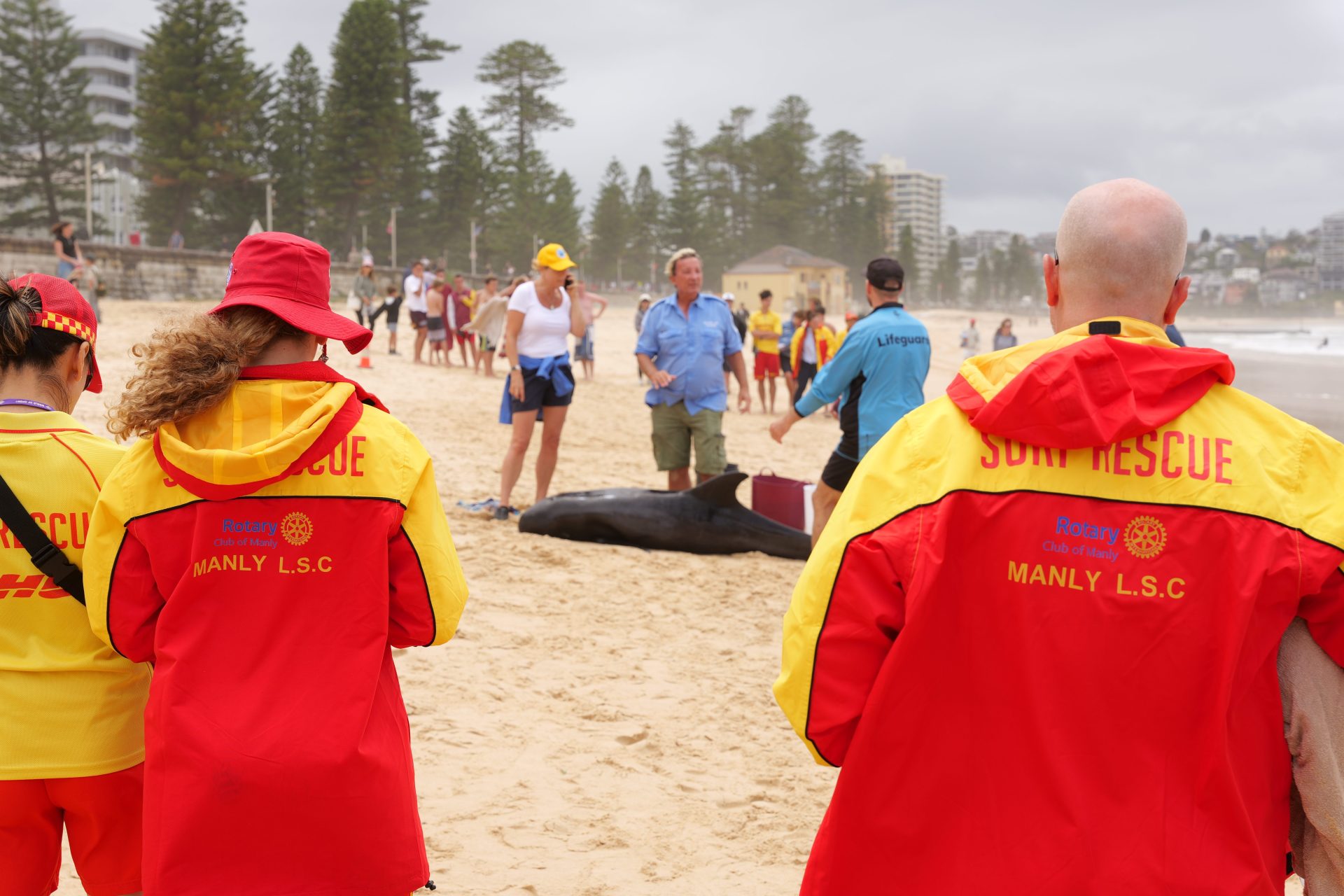 Crowds gathered to witness the fate of the stranded mammal today, January 18. Photo: Jack Kelly
Although the outcome was not what was hoped, ORRCA has sent a heartfelt thank you to the Manly community for their passion and care. Though, they would also like to remind people of the proper protocol if they come across a beached whale, seal or dolphin, to ensure everyone’s safety.
“When you see a dolphin in distress or stranded, don’t try to put it back into the water. It’s a very important thing,” ORRCA volunteer Annet Jansen told us amidst rescue efforts.
“It’s because it’s most likely unwell, and there’s a reason that it actually stranded. So it shouldn’t be going back into the water.”
Annet further shared that moving the animal could cause it injury, particularly its pectoral fins, which are sensitive.
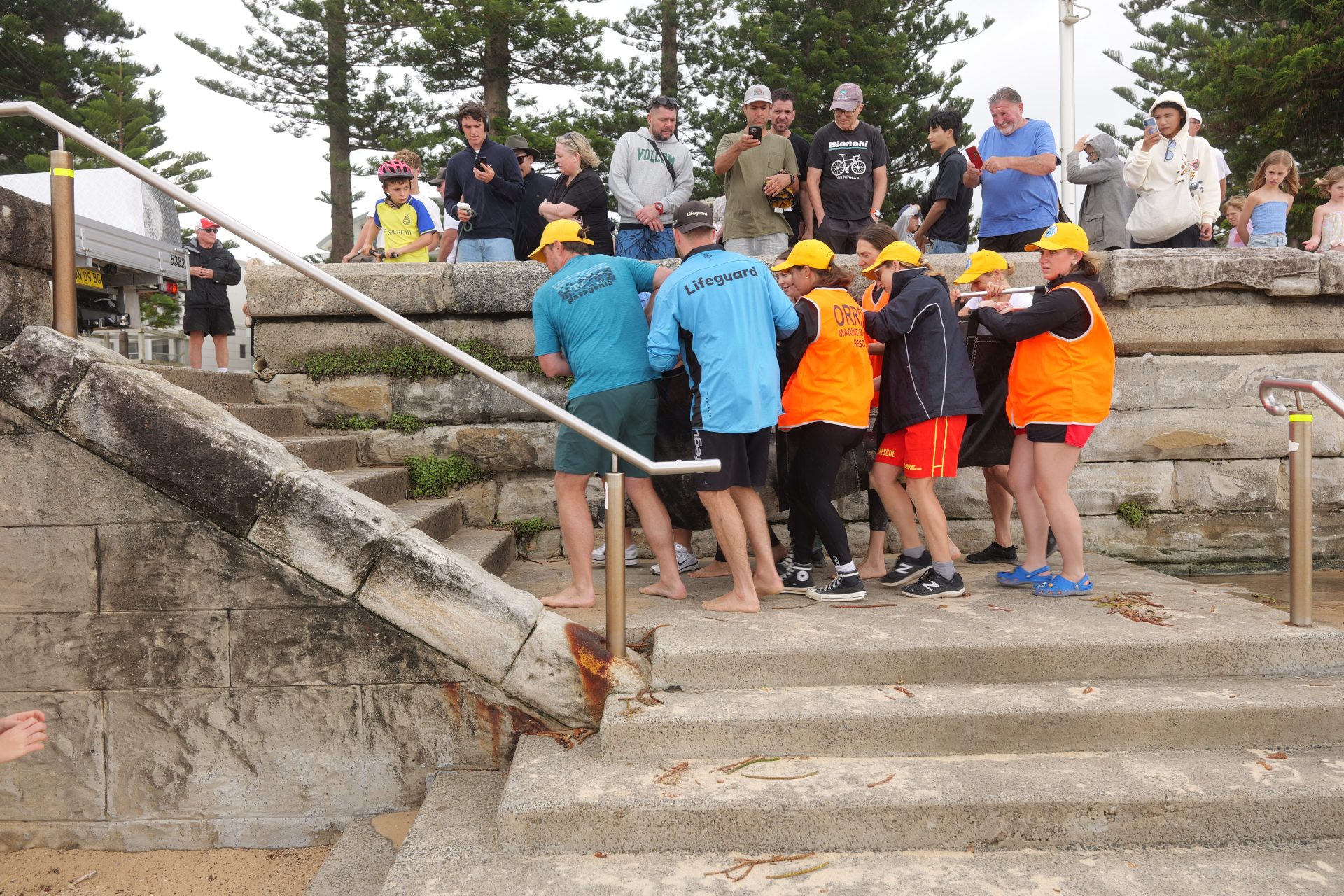 Onlookers gaze as lifeguards, ORCCA and NPWS lifting the dolphin to transport it to Taronga Wildlife Hospital. Photo: Jack Kelly.
This is the second beached dolphin in Manly within a year. Last May, members of the public similarly banded together in an attempt to save a Risso’s Dolphin calf that became beached in front of Manly Life Saving Club. Unfortunately, its condition was too severe, and it was euthanised.
It is unknown whether the beached dolphin from today’s incident was thrust into its predicament due to rough surf conditions or because it was injured or sick – a common consequence of the latter can make them unable to navigate or avoid the shore.
The dolphin was transported to Taronga’s Wildlife Hospital, where a necropsy will be performed in the coming days or weeks to learn more about its condition before it died.
ORRCA: 02 9415 3333
NSW National Parks and Wildlife Service (NPWS): 1300 072 757 (13000 PARKS)