
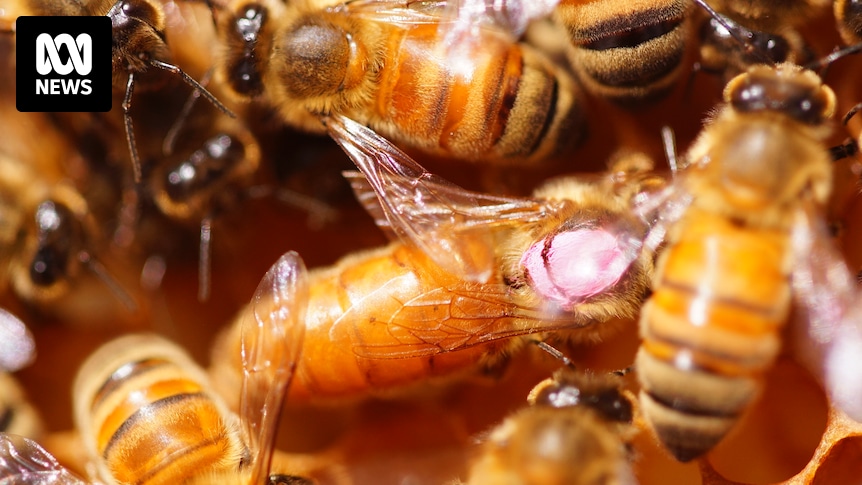
Victorian beekeepers are concerned bushfires that hit the state this month will compound fire damage from last year and restrict access to suitable land and trees.
For the second year in a row, significant bushfires have affected Victorian communities and agriculture.
Last year, 320,434 hectares burned in Victoria and more than 400,000 hectares have been razed this year.
Losses in both areas include trees apiarists use to feed bees through winter.
The combined loss has thrown plans into disarray and sparked concerns about the flow-on effects for commodities supported by bees, such as canola, berries and almonds.
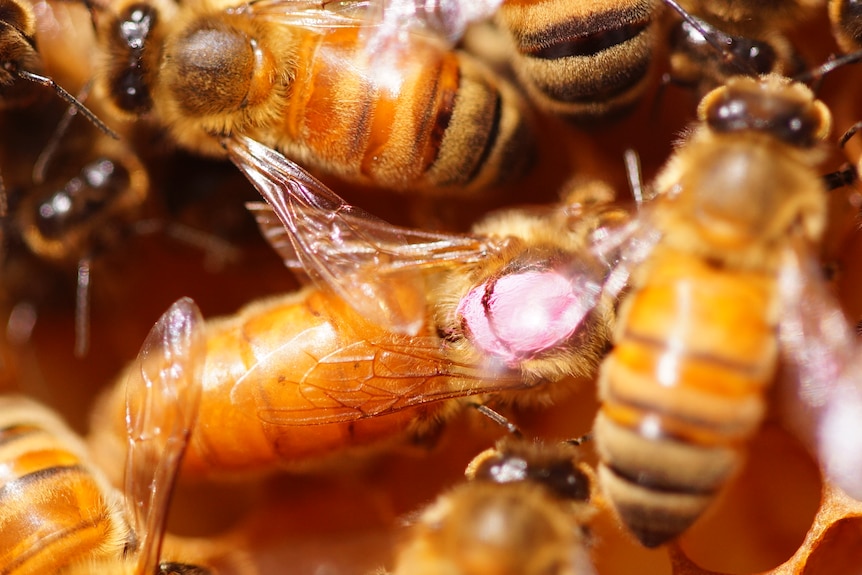
European honey bees are prolific pollinators for many crops. (ABC News: Robert Koenig-Luck)
‘Not sure where they’ll go’
Victorian Apiarists Association (VAA) president Lindsay Callaway said access to nectar and pollen was an immediate concern.
“We had significant loss of resources last year and we’ve been hit again this year,” he said.
“In some cases it can take up to eight years before the bush has recovered enough for us to go back and use those high-quality trees to build strong and healthy hives.”
Mr Callaway said the impacts on beekeepers had repercussions for other industries reliant on pollination.
The farm-gate value of the beekeeping industry is estimated at $363.6 million by Agrifutures, with much of the value coming from the pollination services provided to other high-value crops, including almonds.
More than $700 million worth of almonds were exported to China last year.
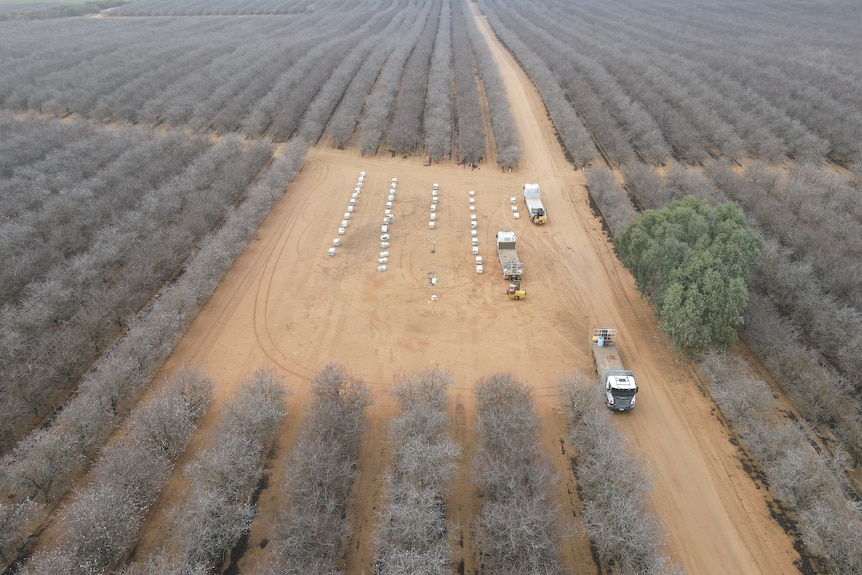
European honey bees provide critical pollination services to the almond industry. (Supplied: Keely McDonald)
Mr Callaway said it took months of planning to ready bees to pollinate certain crops.
“Planning for almonds doesn’t start two weeks before [pollination season]. It starts six to nine months before,” he said.
“We’re thinking about the nutrition that the bees have going into autumn and the trees which meet those requirements, like messmate and red stringybark.
“I was talking to fellow beekeepers across the state who were planning on working trees like red stringy — they’ve lost access to those from the fire, so they’re not sure where they’ll go.”
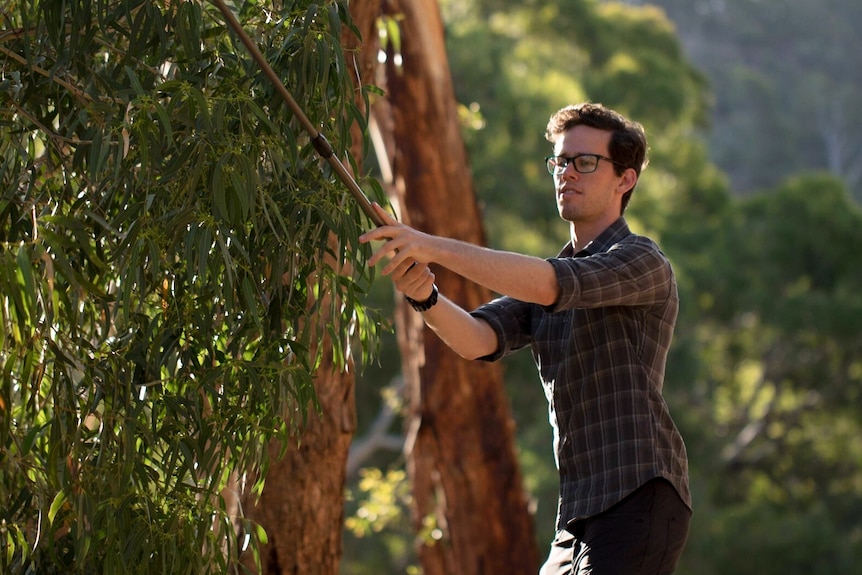
James Dorey says it takes years for bushland to be recover after a fire. (Supplied: James Dorey)
‘An economic question’
University of Wollongong biological sciences lecturer James Dorey said the loss of access to suitable trees was a serious issue.
“Honey bees are an important agricultural species which produce an important product and support other agriculture industries like crops — it is an economic question,” he said.
“For native bees, the question is similar and different.
“Both native and managed bees will be looking for resources in those huge swathes of land which have been burnt.”
A strategy of last resort for apiarists is supplementation or dry feeding, which Mr Callaway said was an option but not a preference.
“Supplementation is definitely an option if we can’t access resources, but we’d prefer to be able to work the trees which provide more than just sugar,” he said.