
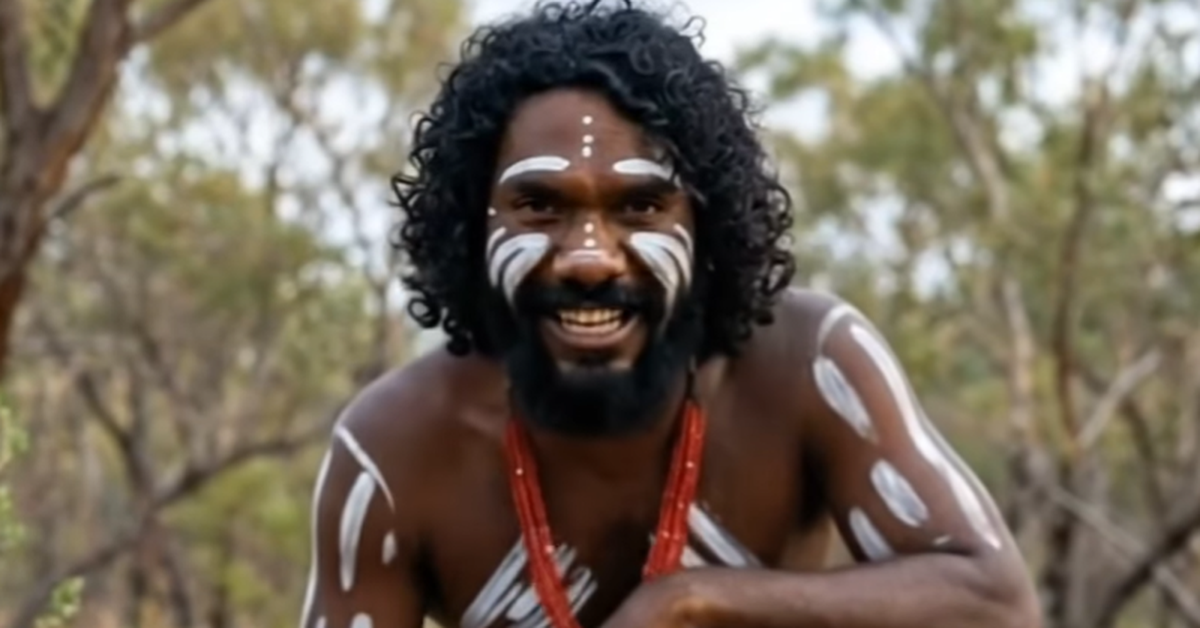
Jarren has been hailed the “Indigenous Steve Irwin”, but the problem is he is not a real person – it is AI.
Bush Legend Official has more than 200,000 followers across Instagram, Facebook and TikTok and posts daily videos of Jarren dressed in khaki clothing or in traditional paint with the red dirt beneath him.
He gets up close with a wide range of animals, from crocodiles and snakes to birds and lizards and tells social media users about native wildlife.
 Jarren, aka Bush Legend Official, is a false depiction of an Indigenous man. (Instagram)
But the account is believed to be run by a content creator based in New Zealand.
“This page uses AI-generated visuals to share wildlife stories for education and awareness,” the account’s description reads.
“The focus is on animals and nature only.”
The account asks users to subscribe by paying $2.99 per month to “spend more time doing this full time, researching, and bringing these Aussie animal stories to life”.
Users have raised issues with the account depicting an Indigenous man and some have labelled it “AI blackface”.
Terri Janke, the director of Indigenous law firm Terri Janke and Company, said the page has caused cultural harm and gone against Indigenous protocols of who can speak for country.
“It’s sort of like using an Indigenous facade or person to tell people about nature and animals and species,” she told 9news.com.au.
 Jarren is sometimes depicted in traditional paint. (Instagram)
“They have sort of taken identity, taken those attributes, like from what a person looks like, how they might talk, how they should paint, their connection to land and country, and used it for their own means.
“How do we as First Nations people have a voice when people think it’s really okay to just make up someone in that respect?”
Bush Heritage Australia’s National Aboriginal and Torres Strait Islander Engagement Manager, Tiahni Adamson, said it was essential to have real First Nations voices at the forefront of wildlife and conservation discussions.
“For decades, the conservation sector has been investing in Indigenous ranger programs and building genuine two‑way knowledge systems,” she said.
 Bush Heritage Australia’s National Aboriginal and Torres Strait Islander Engagement Manager, Tiahni Adamson. (Supplied)
“But we’re still fighting for our voices to be heard and for a meaningful seat at the table where land management and conservation decisions are made.”
Adamson added that any misinformation about native wildlife and land management online can be “incredibly harmful” to how people act and think in real-world scenarios.
“It can make animals seem more dangerous than they are – or not dangerous enough – and that distorts people’s connection to wildlife and the natural world,” she said.
“Getting those stories right really matters.
“That’s why it’s essential that the information being shared is science‑backed, culturally appropriate and shared with the right cultural authority.”
 Indigenous Australian lawyer Terri Janke. (Marco Del Grande)
Janke called for more legal guardrails to prevent deepfakes from being created and urged people to report harmful content online.
“People who are creating this content need to consider things you know, anything from copyright to defamation and here to Indigenous cultural and intellectual property and cultural respect,” she said.
“I think it’s an interesting thing for lawmakers, the policy makers, but it’s also for people to just look more deeply at the content that’s been put to them and look for authenticity.”
9news.com.au has contacted Meta for comment.
We have also attempted to contact the content creator but his social media pages do not accept messages.