
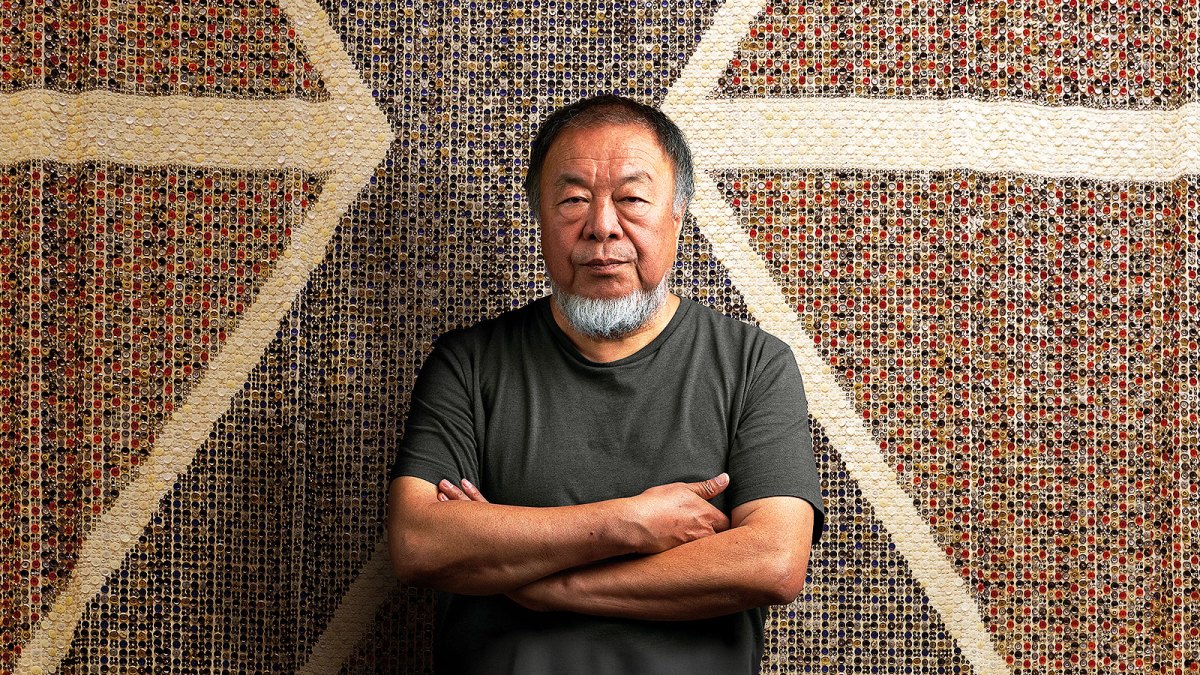
When Ai Weiwei first acquired 30 tonnes of buttons from a defunct factory in south London seven years ago, even the art world could not have perhaps foreseen the clandestine and personal journey they would go on to take.
Now the mystery can finally be revealed. The buttons were surreptitiously shipped to China to be crafted in secrecy by villagers into an enormous artwork that is about to appear in Manchester.
The buttons from a 100-year-old London business forced to close in 2019 have been turned by the Chinese dissident artist into a monumental work, made in the country he has been exiled from.
Comprised of 9,000 different types of button sewn into “netting” to create eight flags with a combined width of 60 metres and height of 38 metres, the artwork is due to take centre stage in this year’s Manchester cultural season.
It is to be joined in the city’s artistic “warehouse” by an equally monumental new Ai artwork containing more than 3.5 million Lego pieces, which at 24m by 9m will be twice the length and height of a double-decker bus.
Ai’s first-ever exhibition in the north of England has gone towards answering the question of why in 2019 the exiled artist had collected the entire 30-tonne stock of A Brown and Co Buttons, which had gone bust after a century of trading in Croydon.
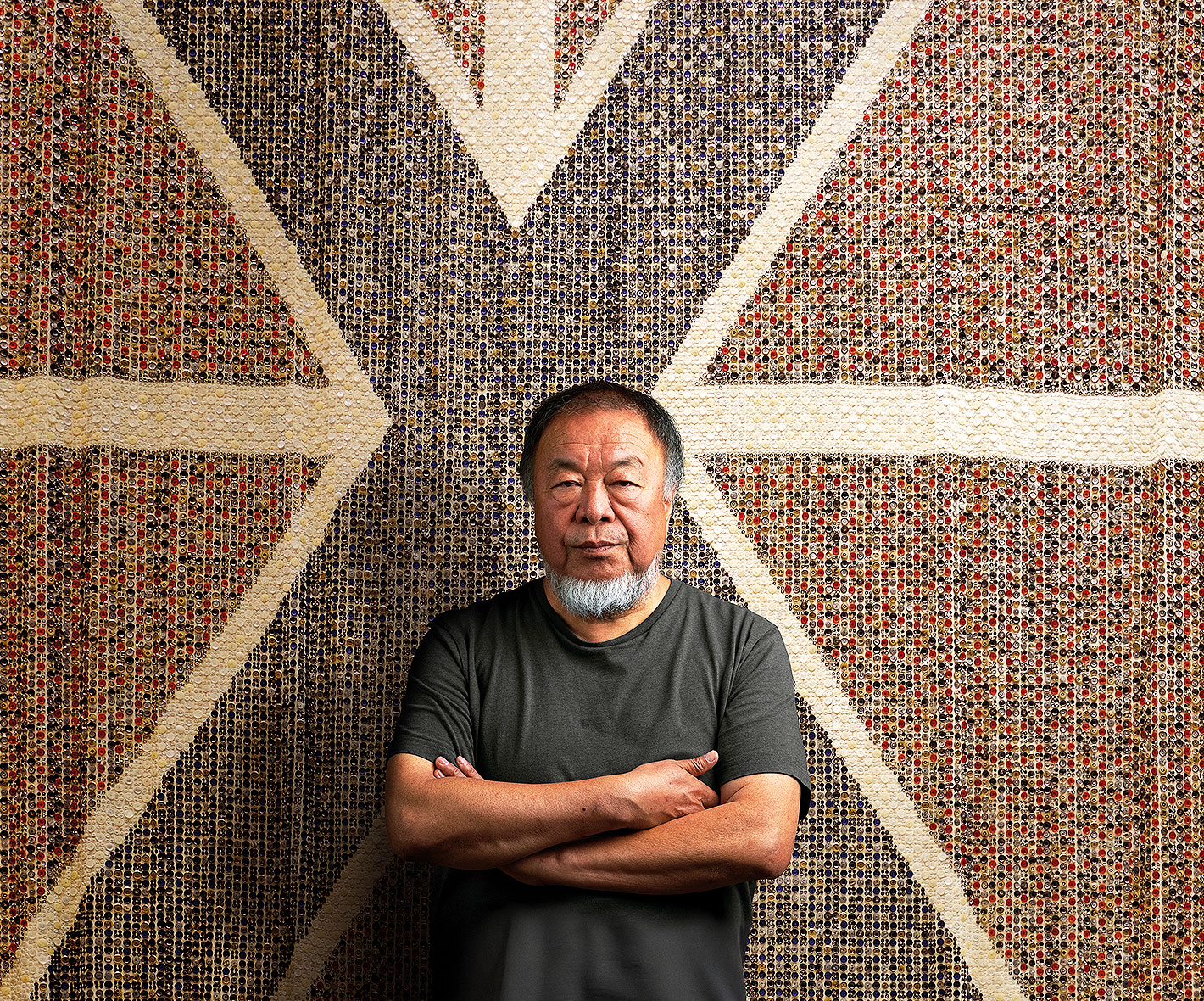
After mulling over them in his Berlin studio for several years, Ai secretly shipped the 30 tonnes of buttons to a village in China’s Shandong province, where he tasked a team of female artisans with adopting their traditional practices to create the new work.
Ai, who was previously imprisoned by the Chinese authorities and has lived in exile in Europe for many years, could only oversee the artwork’s creation by videos sent from China with the huge “button flags” being hung from a crane in the village.
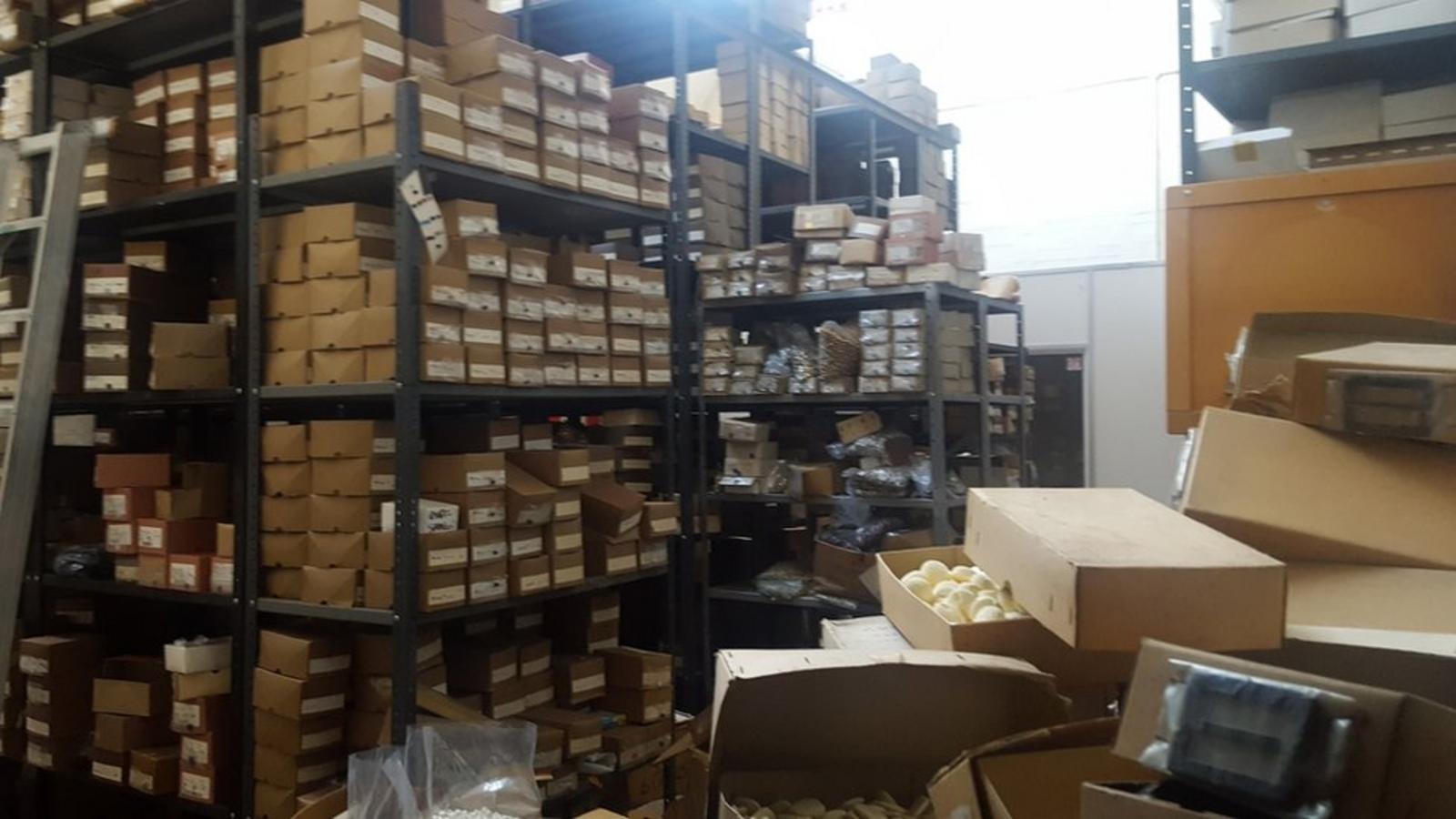
The factory closed after 100 years in business
Low Kee Hong, the creative director of Factory International which is behind the Manchester season, said that the buttons were very “personal” and held extraordinary significance for Ai, who had recounted waiting a month while imprisoned in China to secure approval for a needle and thread when the one on his trousers had fallen off, “and even then armed guards came in and stood watching him”.
After growing up during a life of material scarcity, if a button fell off an item of clothing Ai saw it as a huge loss because finding a replacement was of great difficulty.
Kee Hong said: “For the longest time he [Ai] did not know what to do with the buttons until we had a conversation about making a show in Manchester. He was fully aware of Manchester’s role in the Industrial Revolution and it was a window through which he could start to think what it could be about.”
John McGrath, Factory International’s chief executive, said that the scale of Ai’s ambitions for the exhibition, which opens in July in its Aviva Studios home, recalled the artist’s iconic display of 100 million ceramic sunflower seeds at the Tate Modern 15 years ago.
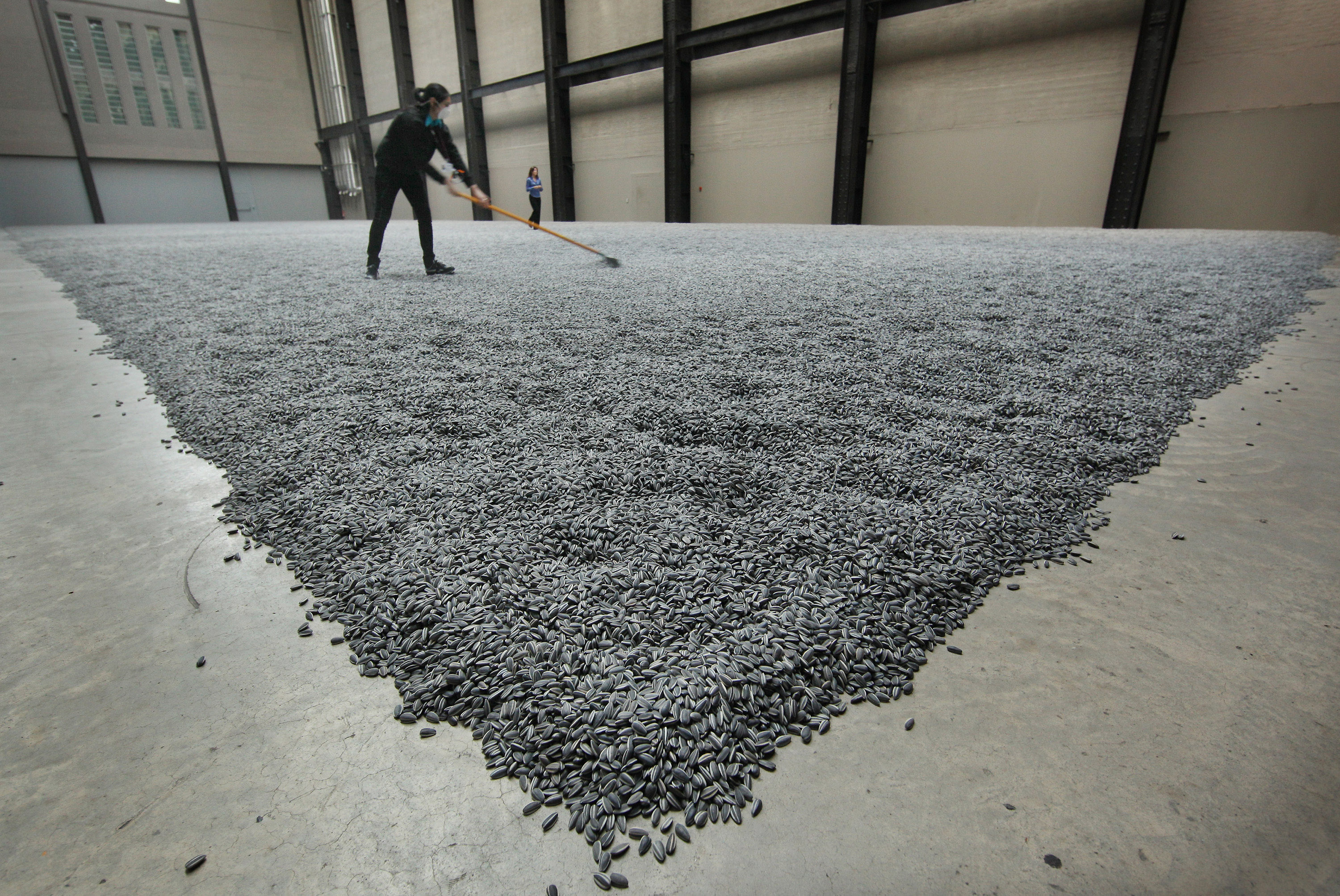
“Sunflower Seeds” at the Tate Modern
PETER MACDIARMID/GETTY IMAGES
He said: “He has taken these very small objects and created something massive and of scale. With this huge reservoir of buttons that he rescued [from south London] he is looking at how the eight nations of the alliance forcibly opened up China and relating that to these small differences in manufacturing and clothing that happened around the same time.”
The work, Eight-Nation Alliance Flag, depicts with thousands of buttons the flags of the members of a multi-national coalition that invaded China during its 1900 Boxer Rebellion against foreign imperialism: Britain, France, Germany, Italy, Japan, Russia, the United States and Austria-Hungary.
As soon as the Chinese artisans had finished the work it was shipped out of China to Manchester, with the artist finally seeing it with the naked eye in March last year.
For his new Lego work, which will be his largest ever when finished, Ai deployed hundreds of students in Manchester to recreate a 2D version of one of his most famous works History of Bombs with “toy bricks”. A 3D iteration of the piece was displayed at IWM London in 2020.
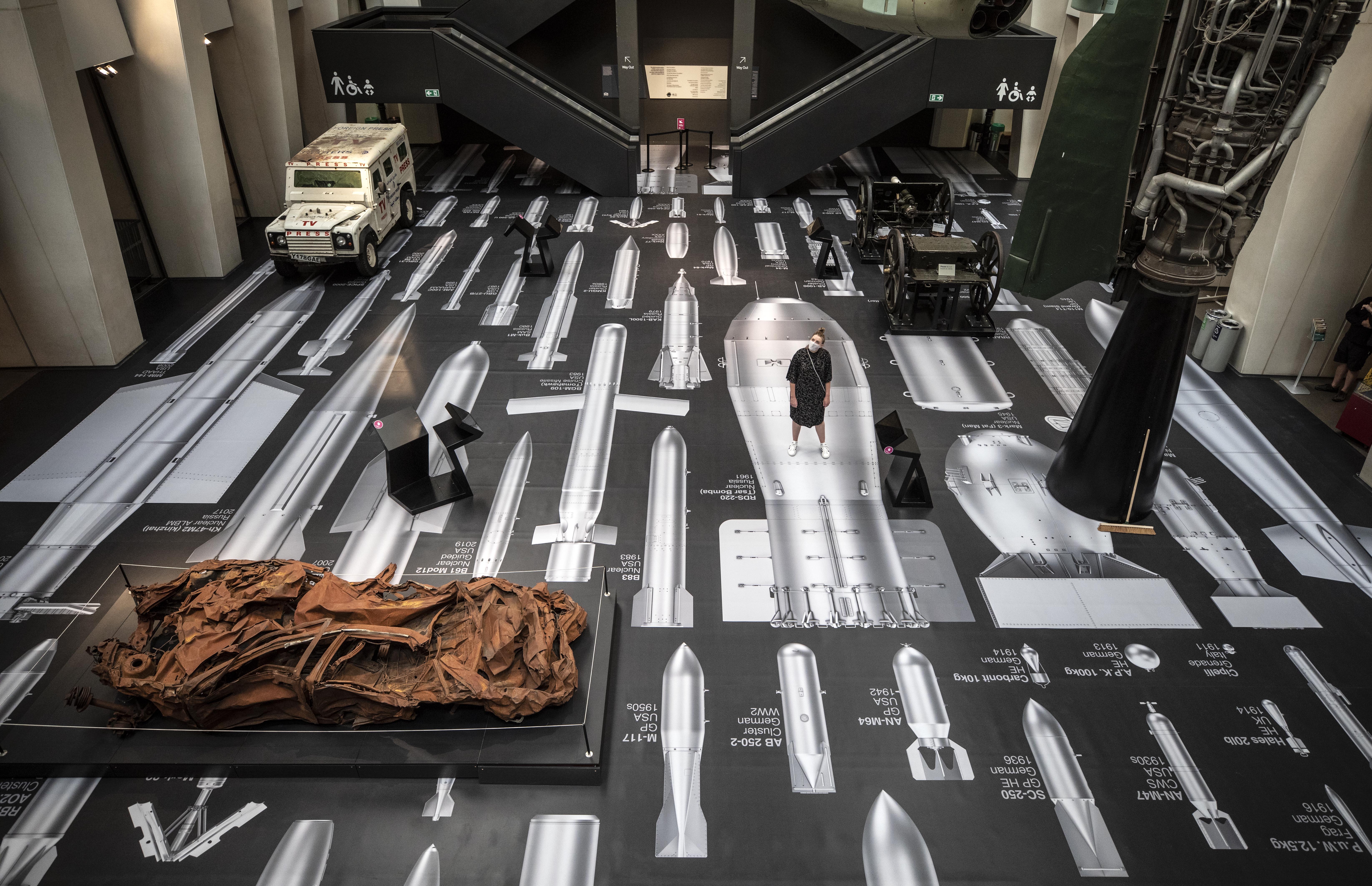
“History of Bombs”
TIMES PHOTOGRAPHER RICHARD POHLE
McGrath said that there had been “assembly lines of volunteers” assembling the bricks within Aviva Studios to make it, adding that the artist was “really interested in the labour that goes in and how that relates to the history of industrialisation both in Manchester and China”.
Ai said he had not been “interested in making very big things just for the sake of it”, but adding that the “wonderful Warehouse space calls for monumental work”.
• Ai Weiwei reveals Lego recreation of Monet’s water lilies at Design Museum
He said: “Visiting the city for this exhibition, the birthplace of the Industrial Revolution, and reflecting on Britain’s global territorial expansion made me realise I had to explore that history and understand how it connects to the forces driving today’s wars and global crises.”
Kee Hong said that the buttons were “part of a personal journey” for the artist, with Ai remembering that when his brother left his childhood home to study, his friends passed him a handful of buttons as a leaving gift.
“They are both practical and remind you of home,” Kee Hong explained.
The exhibition, Ai Weiwei: Button Up! opens on July 2 and is due to run until September