

Updated January 21, 2026 — 3:31pm,first published January 21, 2026 — 10:18am
Save
You have reached your maximum number of saved items.
Remove items from your saved list to add more.
Save this article for later
Add articles to your saved list and come back to them anytime.
Got it
AAA
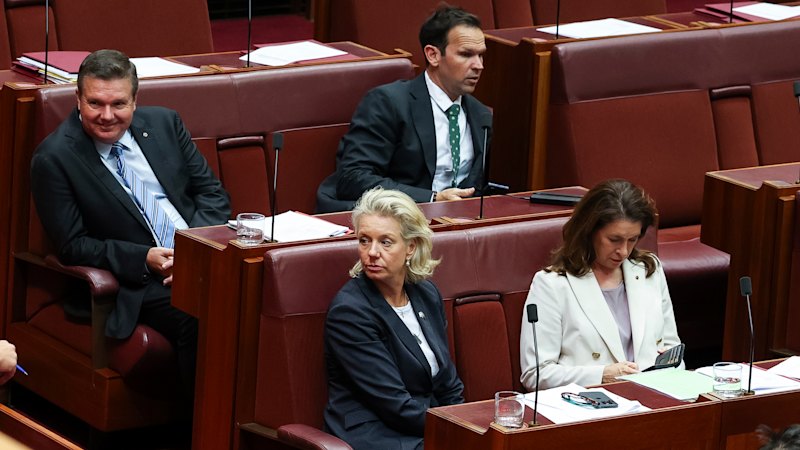
The Nationals are threatening to blow up the Coalition after Opposition Leader Sussan Ley accepted the resignation of three Nationals senators following a controversial decision to break shadow cabinet solidarity on Labor’s hate crimes laws.
Ley on Wednesday accepted the resignation of Nationals frontbenchers Bridget McKenzie, Ross Cadell and Susan McDonald after they voted against Labor’s hate crimes bill late on Tuesday night. This masthead first reported on Wednesday morning that the trio were drafting resignation letters.
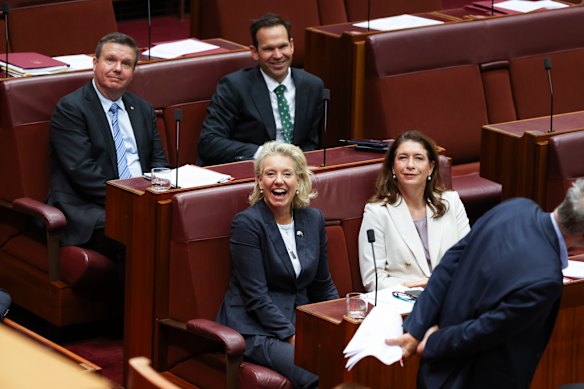 Nationals senators Ross Cadell, Bridget McKenzie, Matt Canavan and Susan McDonald voting against the hate speech bill.Alex Ellinghausen
Their vote came despite the Coalition shadow cabinet agreeing to work with Prime Minister Anthony Albanese on the laws after he dropped the most contentious elements of his post-Bondi legislative package, an anti-vilification law that they thought might have curbed free speech.
The laws ultimately passed with the support of Labor and Liberal senators late on Tuesday night.
“Shadow cabinet solidarity is not optional. It is the foundation of serious opposition and credible government,” Ley said in a statement on Wednesday afternoon.
Related Article
“I made it clear to [Nationals leader] David Littleproud that members of the shadow cabinet could not vote against the shadow cabinet position. The shadow cabinet was unanimous in its endorsement to support this bill subject to several amendments that we did then secure. This has been acknowledged by Nationals’ senators this morning.
“Last night, three Nationals senators were unable to maintain that shadow cabinet solidarity. This is an unfortunate circumstance and one that requires action. I thank David for understanding this.”
Ley received resignation letters earlier in the day, according to Liberal Party sources unable to speak publicly. Ley, her senior MPs, and Nationals leaders held a string of tense meetings across the day on Wednesday as they decided whether to accept the resignations and how to minimise the political fallout.
In those talks, one top Liberal source said, Littleproud suggested he and other Nationals could follow the Senate trio out the door if the Liberals pushed them to quit. If that were to happen, it would have the effect of tearing up the Coalition, as occurred briefly earlier this term. It is not clear if the threat will be actioned.
Nationals frontbencher Anne Webster said of a split on Wednesday: “We are not afraid to do it again.”
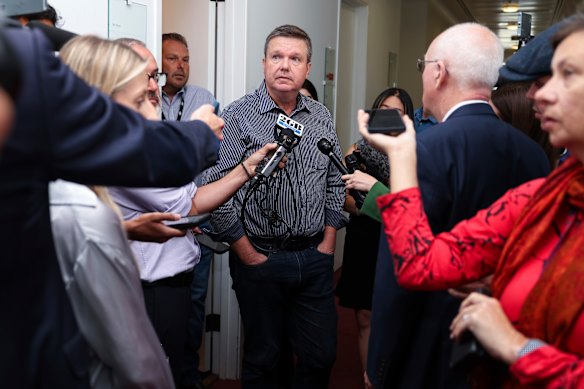 Senator Ross Cadell speaks to the media at Parliament House on Wednesday morning.Alex Ellinghausen
Some Nationals MPs earlier on Wednesday said they felt it would be over-the-top to force resignations, given Labor forced the chaotic and rushed legislative process.
Former Nationals leader Michael McCormack earlier said he held out hope that Nationals frontbenchers would stay in the shadow cabinet, arguing the two parties had split on policies in previous decades.
“If the Liberal Party was sensible, they would not be going down that path,” McCormack said on Sky News.
The Nationals baulked at a watered-down section of the bill on prohibiting hate groups after Nationals backbencher Matt Canavan raised concerns that the laws could target political and religious groups.
The four Nationals senators, McKenzie, Cadell, McDonald and Canavan, voted with the Greens and several crossbenchers against Labor’s bill at about 11pm on Tuesday. Liberal senators joined Labor senators to pass the laws.
Earlier in the day, Liberal MPs in the lower house voted for the bill, including Ley and Andrew Hastie. Nationals MPs abstained from that vote.
Shadow ministers are obliged to follow the position agreed by the cabinet.
Cadell on Wednesday morning said he is currently considering offering Ley his resignation from shadow cabinet. He also acknowledged that he voted against the bill with the expectation that he may be sacked from his position as opposition water and emergency services spokesman.
“Shadow cabinet solidarity is that we have to be prepared not to have our positions should we vote against it,” he told media at Parliament House. “I take responsibility for my own actions.”
Earlier on Sky News, he said: “If I am still a member of this shadow cabinet next week it’s because of the understanding, tolerance and leadership of Sussan Ley.
“I understand if you do the crime, you have to do the time and if it is requested, I will stand down.”
McKenzie, the Nationals Senate leader, refused to answer questions about her future within the Coalition.
Asked repeatedly on Wednesday whether this made her position as opposition infrastructure spokeswoman untenable, McKenzie said she was “very aware of the conventions of parliament”.
Related Article
“I will be doing what I’ve always done, which is trying to do my very best to conduct my career here with integrity,” she said on Sky News.
“The National Party made a principled decision on the hate laws. We’re very glad to vote, and lead on voting, against the flawed firearm legislation.”
Nationals MPs met on Wednesday morning while Ley consulted her Liberal colleagues on the best course of action. Some MPs believe it would be harsh and needless to sack the Nationals shadow ministers because the rushed legislative process made it hard for opposition MPs to feel comfortable backing Labor’s legislation.
Complicating matters for Ley was that Liberal frontbenchers, including Michaelia Cash, abstained from voting.
Foreign Minister Penny Wong seized on the tension to create a leadership test for Ley.
“A very important question now is there for Sussan Ley. The shadow cabinet made a decision to support this legislation, but shadow cabinet members have voted against it. Will she enforce the convention that people, shadow cabinet members, who vote against the shadow cabinet position have to resign, or will she squib it?” Wong said.
Cut through the noise of federal politics with news, views and expert analysis. Subscribers can sign up to our weekly Inside Politics newsletter.
Save
You have reached your maximum number of saved items.
Remove items from your saved list to add more.
 Paul Sakkal is chief political correspondent. He previously covered Victorian politics and has won Walkley and Quill awards. Reach him securely on Signal @paulsakkal.14Connect via Twitter or email.From our partners