
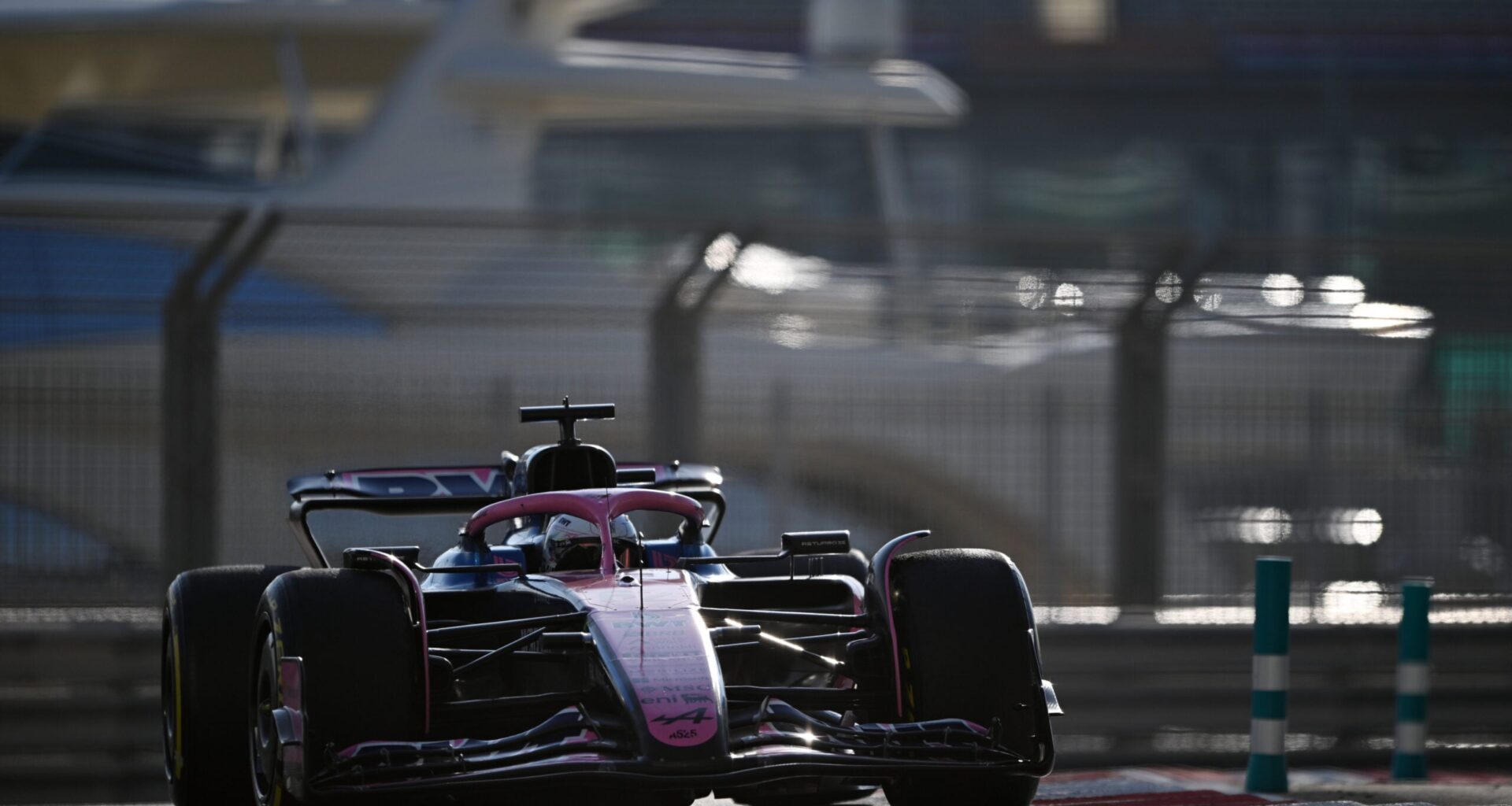
When Alpine first announced their deal to use Mercedes engines for 2026 and beyond, the reaction was generally sceptical. At face value, opting for Mercedes power over Renault is logical from a pure performance perspective.
Still, Renault’s unwillingness to invest more heavily in their own engine programme was seen as a sign of limited belief in the Alpine F1 project.
Of course, this controversial choice will be praised if the French team secure strong results this year. Though the upcoming 2026 season is still largely a step into the dark, there are positive reports coming about about Flavio Briatore’s squad.
Aside from the growing confidence in Mercedes power units, Alpine are reportedly making good strides on the aerodynamic side.
Alpine could benefit from lightweight car to start 2026
Although the 2026 regulations are a huge technological shift, some themes from previous years that will repeat themselves.
Something which is likely to grab headlines over the coming months is weight. At the beginning of the 2022 rule change, most teams started the season significantly over the minimum weight.
Given that a few kilograms of additional weight translates into several tenths per lap, shaving off excess weight was an important story in early 2022.
A similar situation is set to repeat itself this year. With the minimum weight reduced from 800kg to 768kg for this season, any teams who are already at the minimum value could see a significant benefit to start the year.
According to AutoRacer, Alpine’s 2026 challenger is already at the 768kg figure. At least initially, this could prove an important edge for the Enstone-based operation compared to other teams.
There have been whispers and reports about other teams being over 10kg heavier than the minimum weight. Of course, this is not necessarily a negative in the long-term.
Achieving aerodynamic performance is more difficult than making a car lighter, so most technical departments will prioritise lap-time over finding ways to cut weight. As the year unfolds, manufacturing lighter parts will be a natural part of the development process.
In this sense, Alpine cannot be said to have a long-term benefit from meeting the 768kg target. Still, at least for the first part of the season, the French squad will certainly see some gains.
Assuming the Mercedes engine performs as anticipated, this paints an encouraging picture for the team under Flavio Briatore’s watch. The question is whether their aerodynamic package is competitive, especially compared to other Mercedes-powered teams.
An opportunity to change the narrative
Instability and uncertainty have characterised Alpine F1 Team in recent years. The dismissals of team principals, senior engineers and even drivers have become relatively commonplace.
For obvious reasons, such changes are a negative when trying to climb the field. Moreover, the team’s difficulties and doubts about Renault’s commitment have sparked rumours about a potential sale of the team.
Christian Horner’s talks with Alpine are widely perceived as an indicator that Alpine are assessing their options, should they deem a continued presence on the grid is no longer worthwhile.
However, the recent scaling back of investment does not necessarily guarantee this outcome. As ever, performance will be front and centre.
Should Alpine’s structural adjustments (including relinquishing their manufacturer status) fail to yield results – especially after abandoning 2025 early to focus on 2026 – then more uncertainty could follow the team.
By contrast, a competitive start to 2026 could encourage Renault to stay the course, particularly as F1 becomes more profitable for teams.
It was only four years ago that Alpine finished 4th in the standings to start the 2022 regulations. Of course, they achieved this despite losing an estimated 3-4 tenths per lap from their engine.
This time, should the technical department in Enstone deliver, they expect to be rewarded.
Main photo: Rudy Carezzevoli/Getty Images (Alpine F1 Media Gallery)