

The new Sydney Fish Market has opened to the public, marking the first stage of a broader renewal of the foreshore precinct and replacing the former market facility at Pyrmont. Designed by 3XN GXN in collaboration with BVN Architecture, the scheme is the largest fish market in the southern hemisphere.
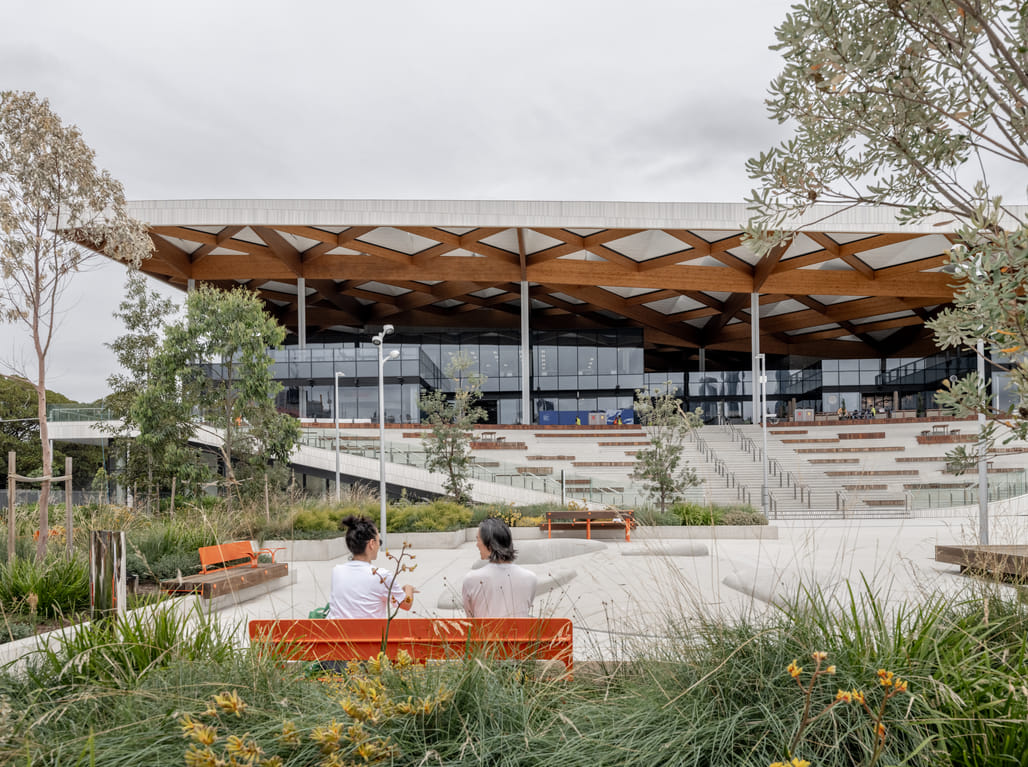
Image credit: Rasmus Hjortshoj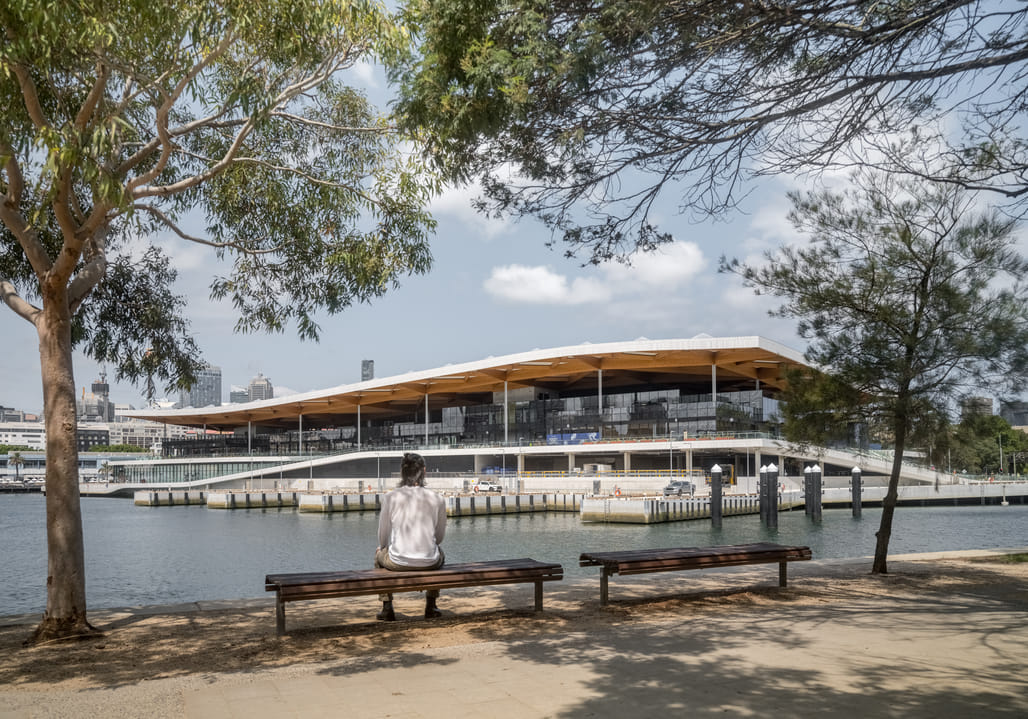 Image credit: Rasmus Hjortshoj
The publicly accessible market hall accommodates approximately 120,000 square feet of fishmongers, restaurants, cafes, and specialty food vendors. The design of the scheme separates public circulation from industrial operations, allowing wholesale trading, retail activity, and tourism to operate concurrently within the same structure. Visitors are able to observe daily market processes, including auctions, seafood handling, and ice production, through extensive internal glazing.
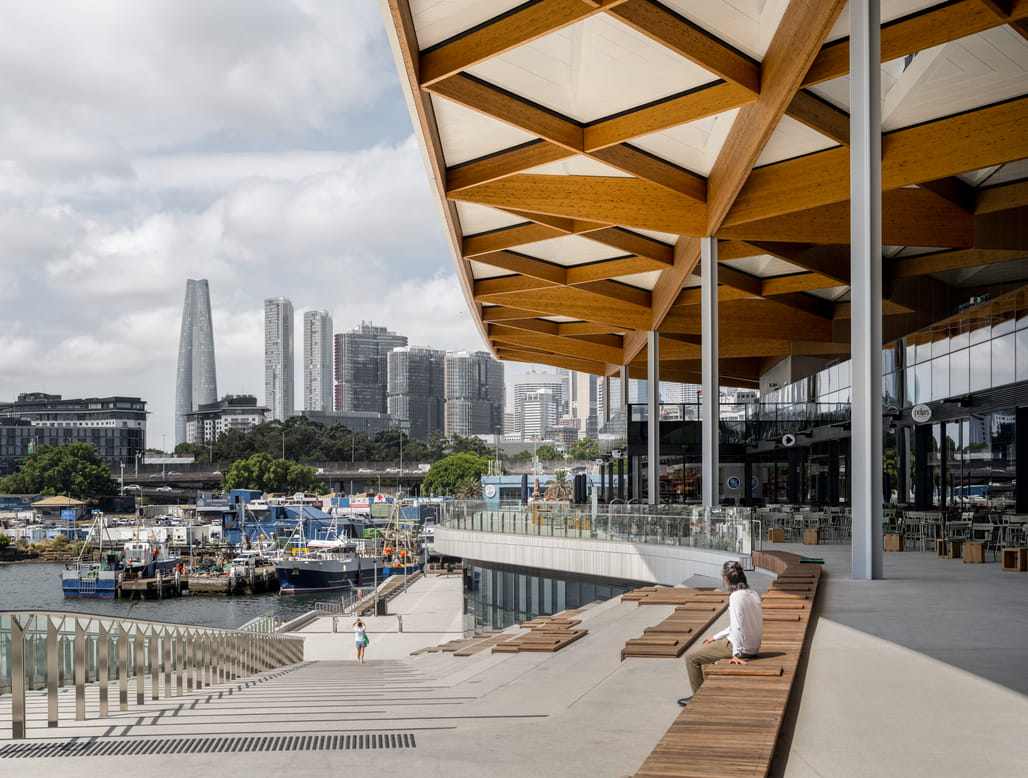
Image credit: Rasmus Hjortshoj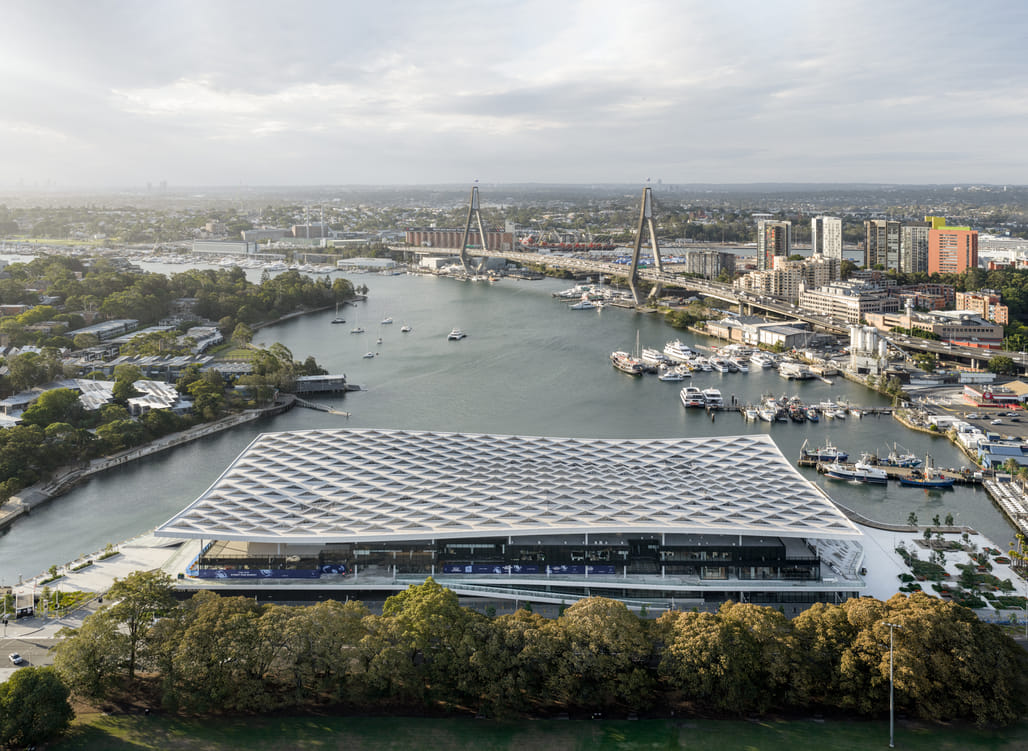 Image credit: Rasmus Hjortshoj
“With the new Sydney Fish Market, our ambition was to design more than a building that houses a fish market,” 3XN senior partner Kim Herforth Nielsen said about the scheme. “We aimed to create a cultural global food destination that also serves as a centre for the local community. We always strive to give our designs greater meaning and functionality beyond their basic purpose, because, as we believe, architecture shapes behaviour, and we can with the right design make life better for the public.”
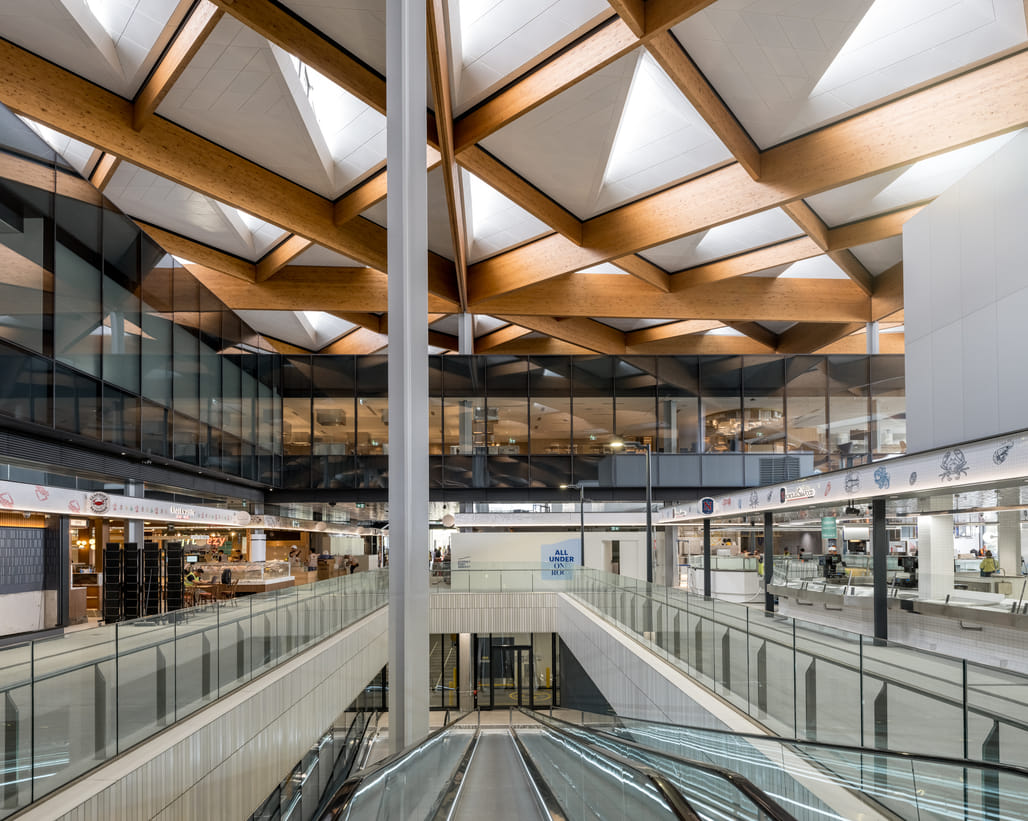
Image credit: Rasmus Hjortshoj
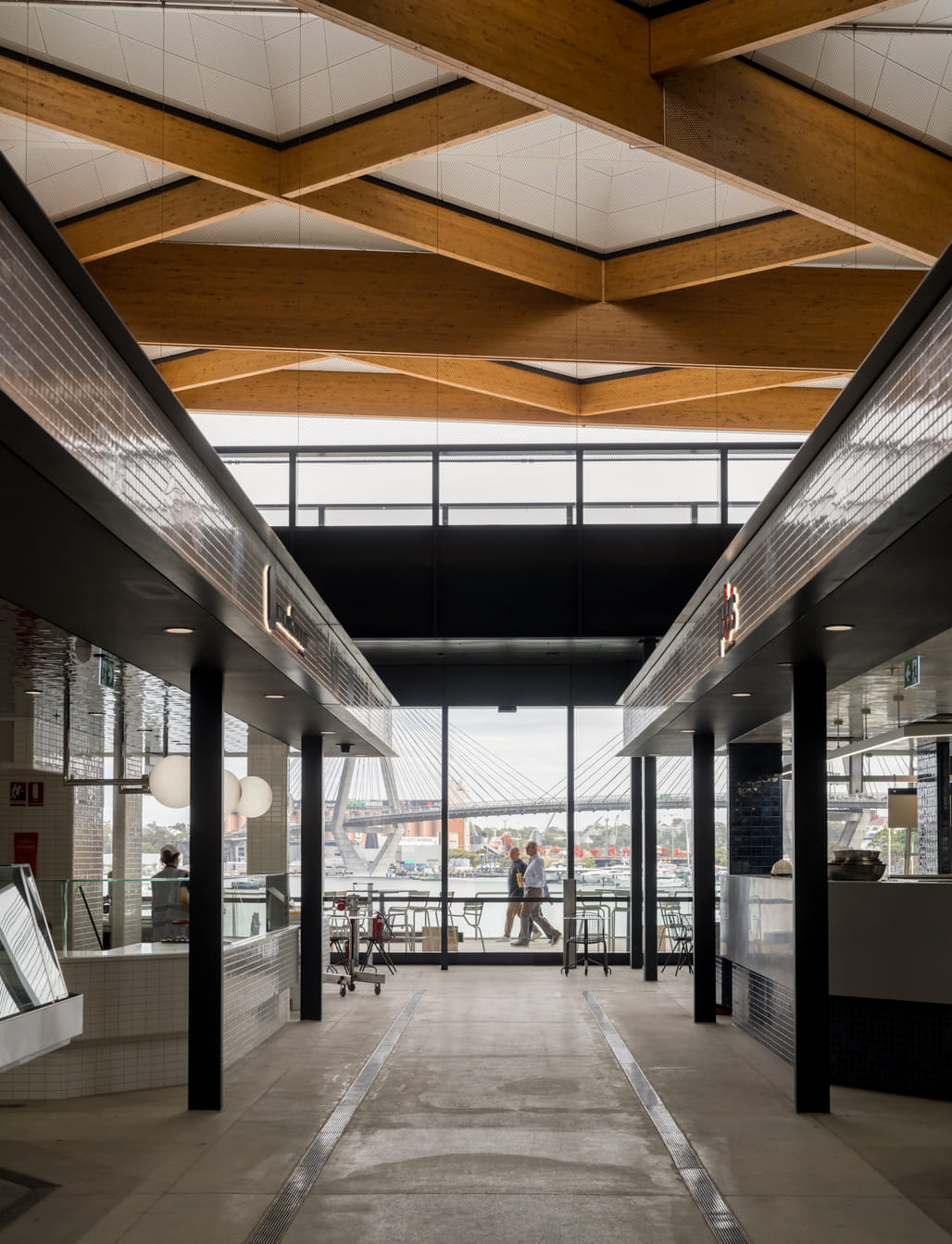
Image credit: Rasmus Hjortshoj
The facility includes a Dutch-style auction hall for up to 160 buyers, supported by digital display systems. Operational infrastructure spans four levels, including an underwater basement, and is serviced by 26 lifts to manage product and personnel movement. The building has been designed to meet strict hygiene, humidity, and operational requirements, while achieving a 5 Star Green Star rating. Waste diversion strategies aim to send up to 80 percent of operational waste away from landfills.
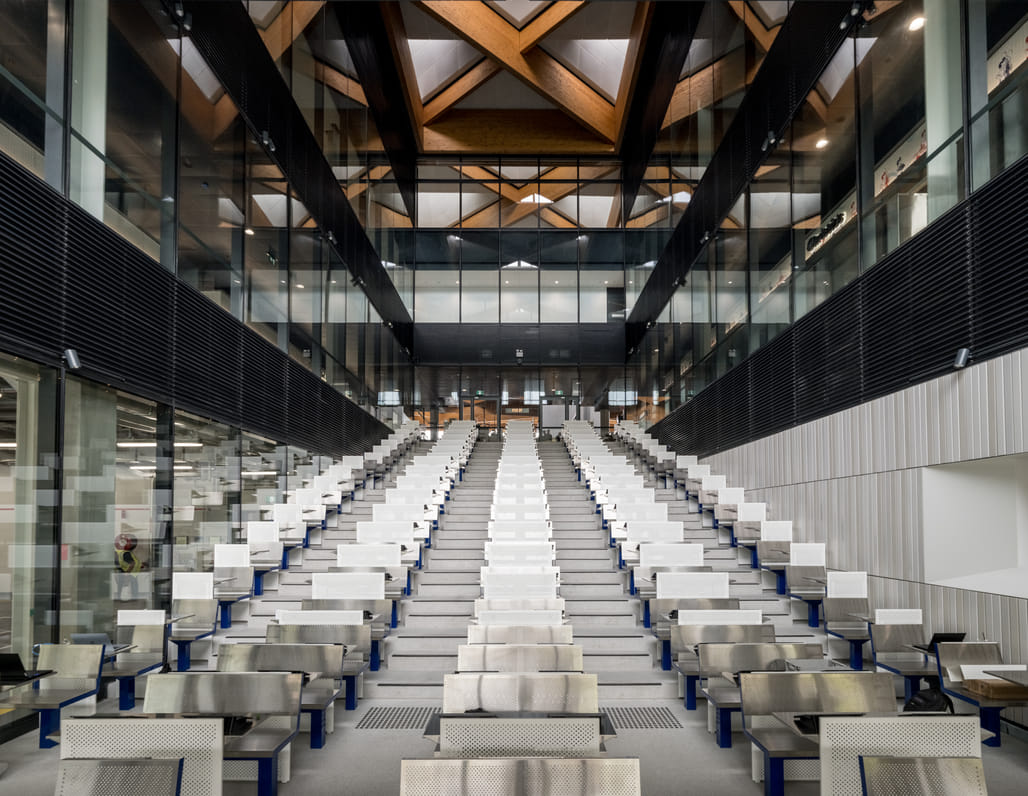
Image credit: Rasmus Hjortshoj
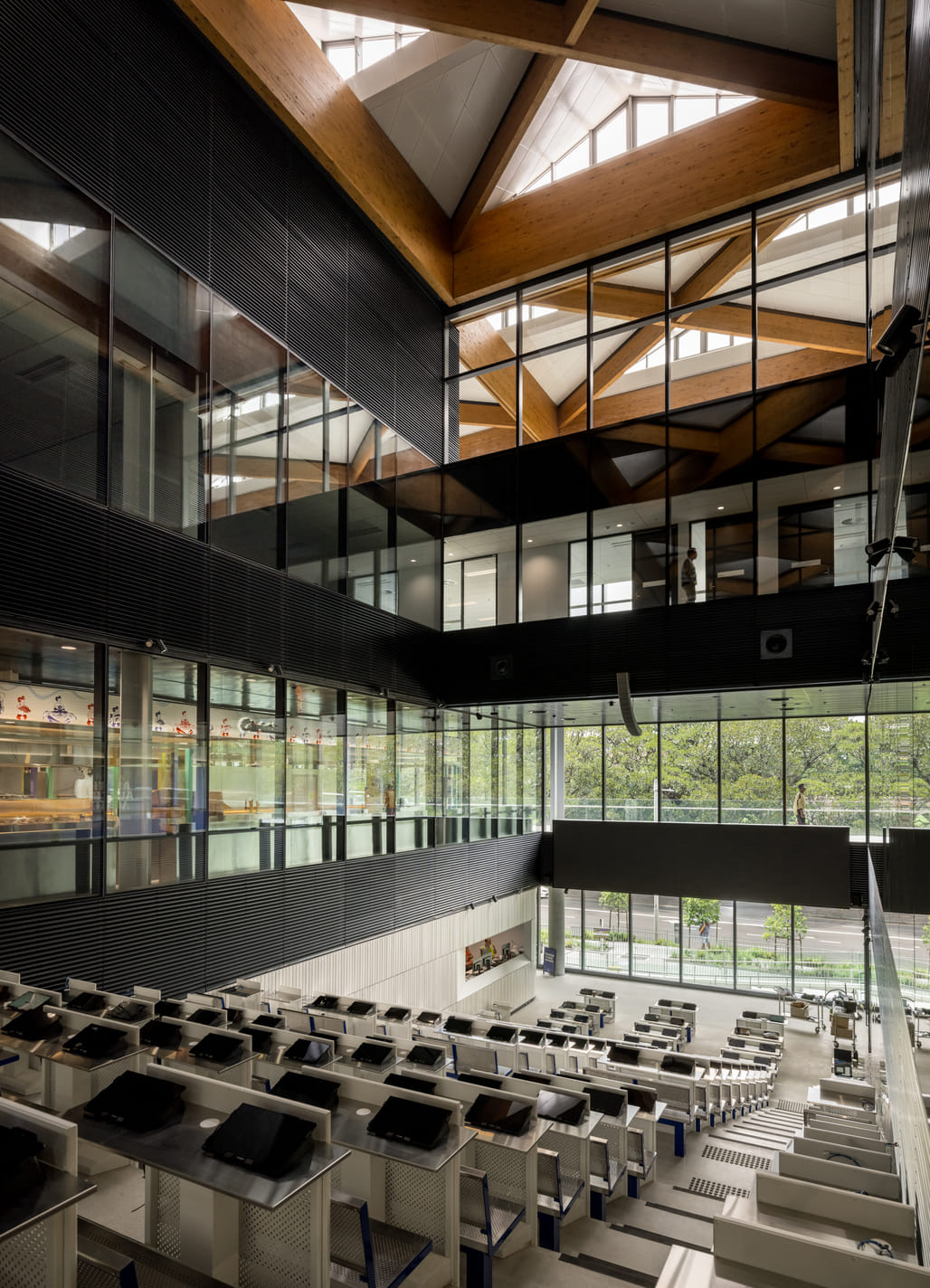
Image credit: Rasmus Hjortshoj
Arguably the defining feature of the scheme is a 200,000-square-foot undulating roof canopy, constructed from glued laminated timber beams and aluminium cassettes integrated with photovoltaic panels. The roof supports daylighting, natural ventilation, rainwater harvesting, and solar energy generation, contributing to reduced energy and potable water consumption.
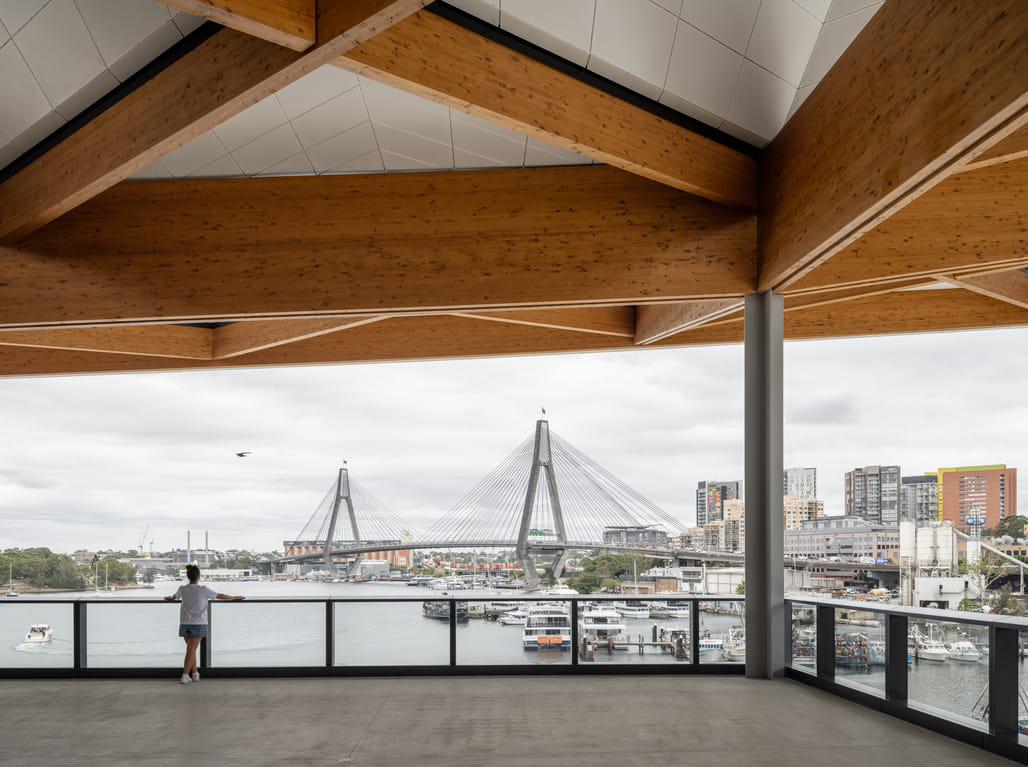
Image credit: Rasmus Hjortshoj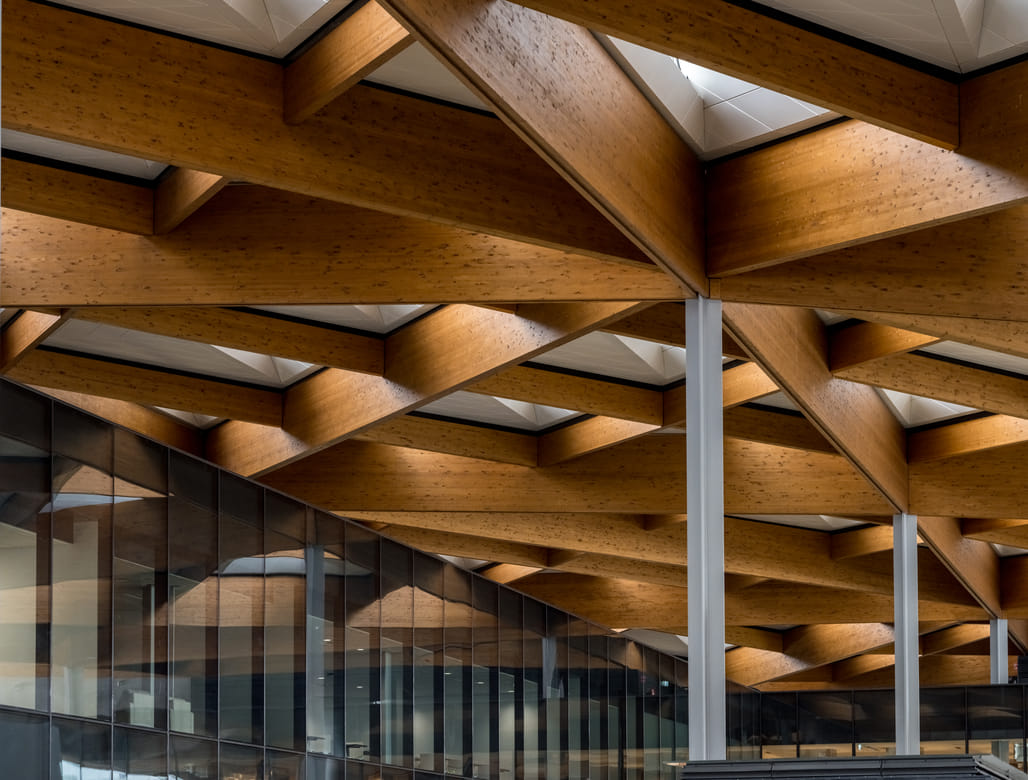 Image credit: Rasmus Hjortshoj
The project also includes more than 60,000 square feet of public open space and completes a missing link in the ten-mile harbour foreshore walk between Rozelle and Woolloomooloo. Integrated stairs, promenades, and landscaped areas connect the market to Blackwattle Bay and Wentworth Park. ASPECT Studios was the landscape architect for the scheme.
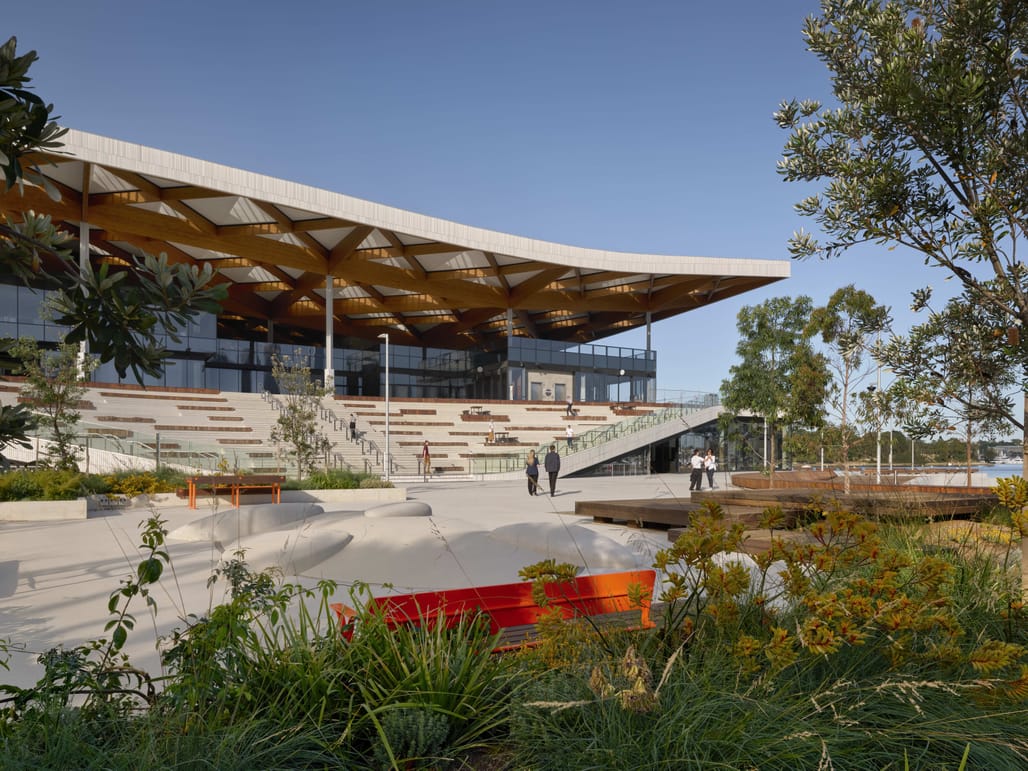
Image credit: Tom Roe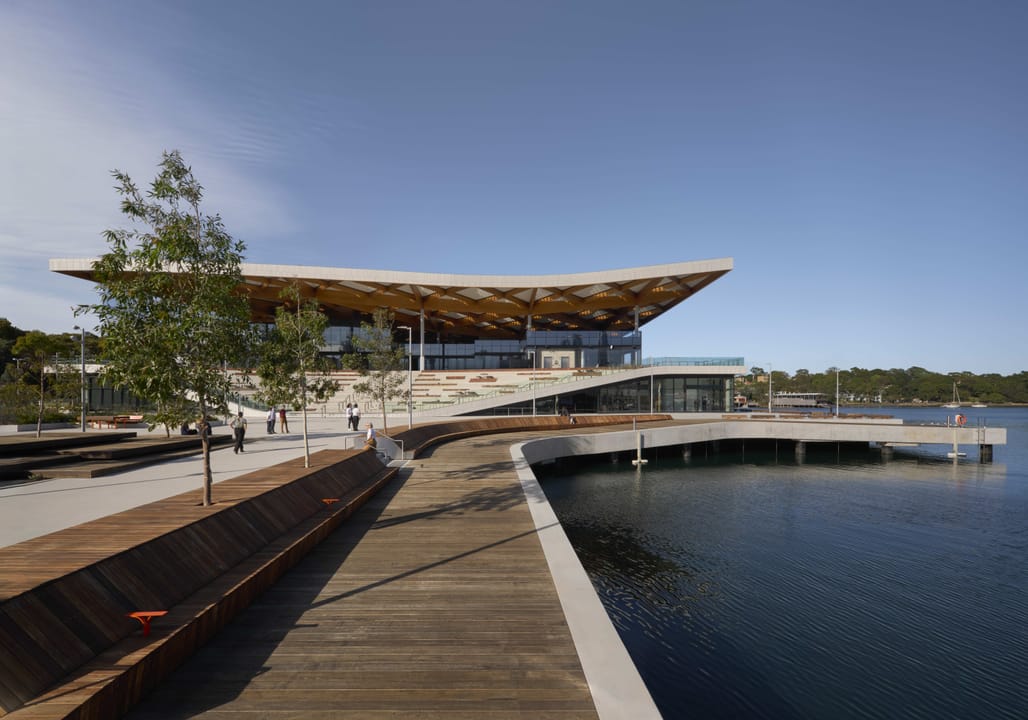 Image credit: Tom Roe
“One of the greatest achievements is that the technical demands never overwhelm the visitor experience,” BVN principal Catherine Skinner said. “Beneath the calm public realm sits an intricate operational engine, resolved to perform with the same clarity and confidence as the architecture above it. While the public enjoys effortless movement through a generous waterfront market. What lies beneath is an extraordinary depth of coordination that enables four levels of industrial and public activity to operate without conflict.”