
January 23rd, 2026
By Australian Golf Digest
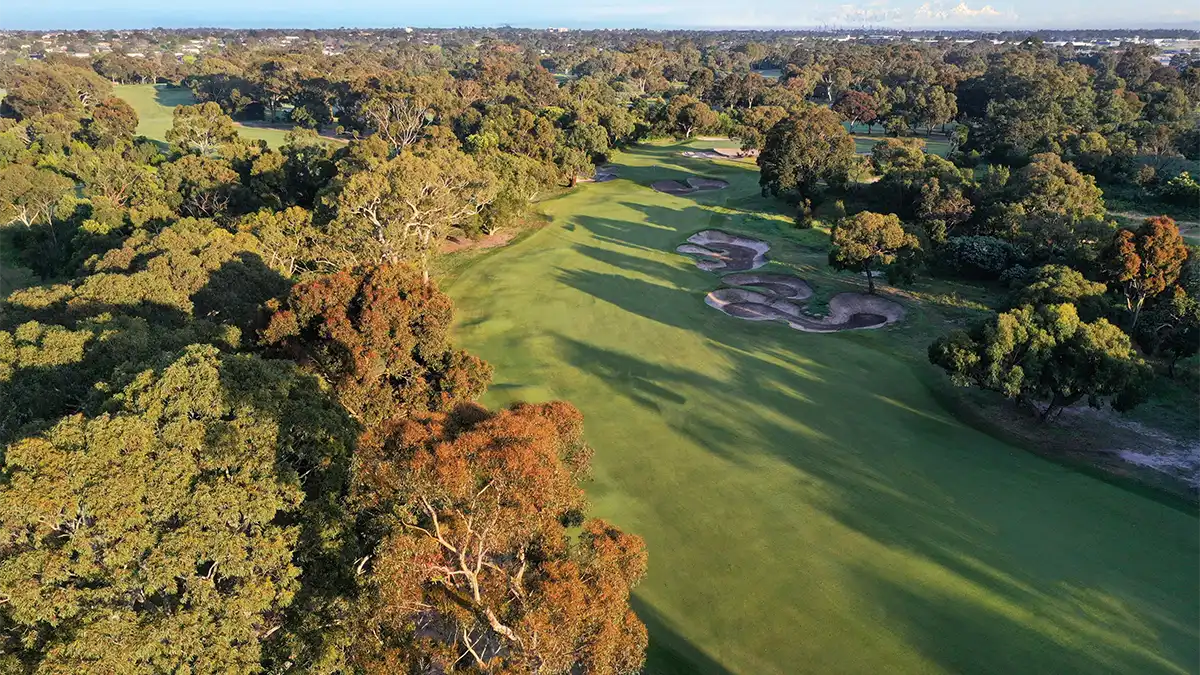
Melbourne’s Woodlands Golf Club is evolving in ways that will improve the time-honoured golf course along with the biodiversity of its site.
The ongoing evolution of Woodlands Golf Club stands to become a vital future reference tool for many clubs when it comes to managing a golf course and overall site health. Biodiversity is more than just a buzzword in golf-course circles now; it’s a necessity, as more and more clubs realise their responsibility is not just to maintain the 18 playing corridors but to also nurture everything inside the fencelines.
Woodlands, which occupies a suburban site in Melbourne that is rich in flora and fauna, is embracing its role within the broader ecology of the city by means of a Vegetation Management Plan that looks to manage invasive species while strengthening and reintroducing flora endemic to its site.
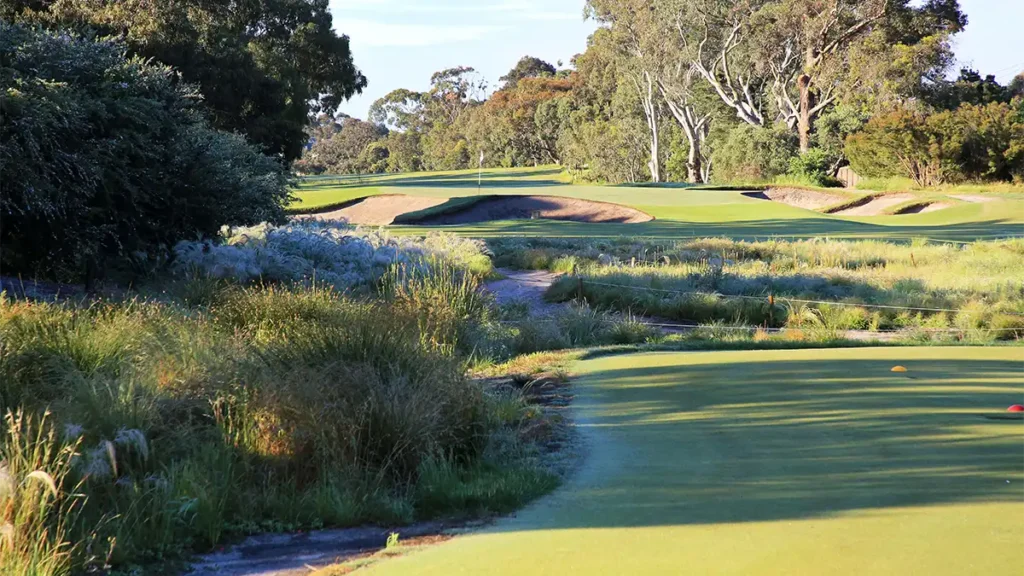
Most treed golf courses older than 50 years will have vegetation challenges of some description. It might be overplanting, planting in the wrong places, planting the wrong species or a combination of each. These challenges also compound with time. Under the club’s plan, prepared by course architect Harley Kruse of KruseGolf, Woodlands intends to protect endangered species and enhance its natural attributes in a 10-year plan that focuses on total improvement.
“Importantly, the ground at Woodlands is relatively undisturbed compared with its other Sandbelt peers,” Kruse wrote in his summary to the club. “This little disturbance is felt when you walk and play over the ground. It provides a hint that old soils and latent seed of local flora remain.
“For many courses, the proper management of the vegetation is the missing piece. Woodlands is by no means alone here and in recognising the need for a Vegetation Management Plan based on sound principles is an excellent beginning.
“In many ways this is an environmental responsibility/obligation for the club and golf will be better for it, too.”
The club in the suburb of Mordialloc seeks to transition away from non-indigenous flora, prioritise and encourage vegetation endemic to the site – including local tree species such as Manna and River Red gums – maintain open sightlines and playlines from tee to green and strengthen boundaries with thoughtful planting to screen the visual impact of nearby buildings and traffic. Kruse implored the club to follow sound principles and guidelines that remain practical within the working environment of an operating golf course, while being implementable and managed over time.
“Developing a 10-year plan is a good starting point to achieve the desired vegetation outcomes across such a large-scale property as Woodlands,” Kruse added. “Ecological principles as applied in a golf-friendly way will create the highest quality of result. It will provide great habitat value for fauna and exhibit a great biodiversity that can become a real point of difference.”
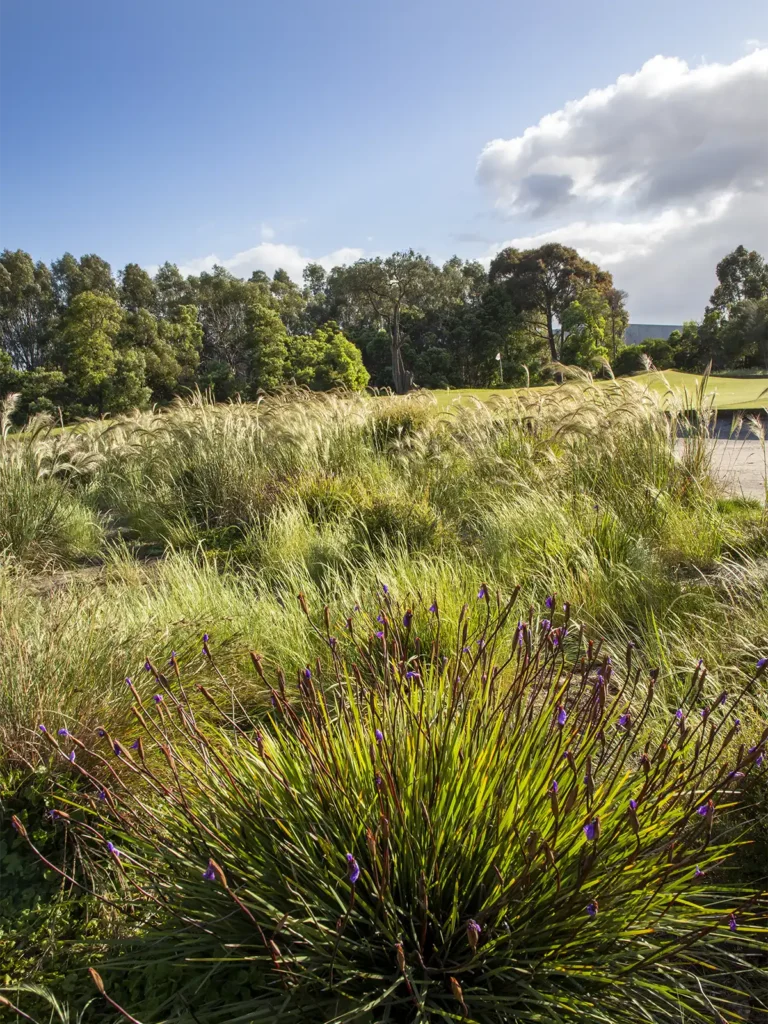
In Woodlands’ case, its vegetation is unique to the Sandbelt. Nowhere else across the famed stretch of Melbourne golf courses can you find Damp Sands Herb-rich Woodland, or the endangered Plains Grassy Woodland and Swamp Scrub Grassy Wetland Mosaic. With more active management, these communities are now being given greater opportunity to thrive, allowing native flora to breathe and express itself after careful management.
EMBRACING A CLASSIC DESIGN
Kruse’s vegetation work will take place concurrently with colleague Mike Clayton, who will focus on the course architecture at Woodlands. About 20 of the club’s 59 hectares is mown turf, while another 1.5 hectares comprises bunkers. Which means most of the site (about 37ha) is roughs and landscape roughs that help frame and enhance the course’s architectural intent.
“Woodlands, by the virtue of good management… has kind of left the place alone,” Kruse said in the early stages of his 2024 review. “It’s really good. So our advice to Woodlands is: we love the architecture; it’s a classic Melbourne Sandbelt 18. It’s an outstanding, fun and strategic test of golf. So let’s celebrate the golf architecture and look at the vegetation and where trees are crowding holes or where a different species could better support the design.”
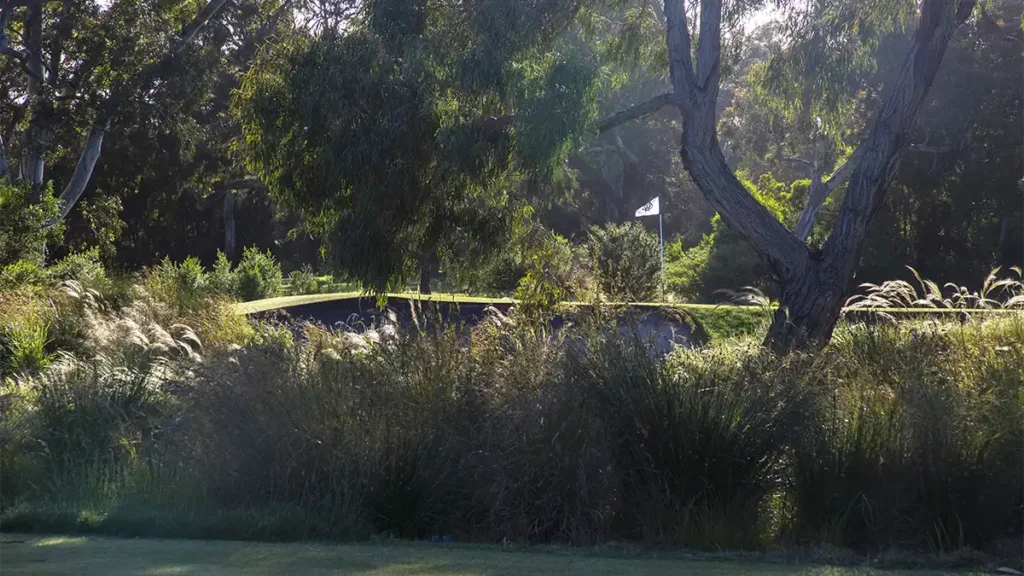
A tremendous example of what the club hopes to further showcase comes at the genius fourth hole. Long held up in golf architecture circles as an example of a short par 4 done right, the 251-metre hole is light on conventional hazards but rich in elite contouring. Only the very best pitch shots will hold the pulpit-style green, to say nothing of how difficult it is to drive the ball aboard the putting surface. The hole itself is exceptional, and the Vegetation Management Plan includes maintaining and augmenting screen planting behind the green to better frame the setting and enhance the experience of playing it.
As part of its evolution, Woodlands is also reflecting on its place within the geographical Sandbelt. Woodlands has never been the longest course; instead, it aims to be recognised as the Sandbelt’s definitive strategic experience and a place where Australia’s architectural golf heritage is preserved and presented in its most authentic form.
While brilliant short par 4s are its calling card, a school of thought suggests Woodlands has an opportunity to further unify its presentation to match its architectural quality. The club’s solution is to better reveal and showcase its architectural bones via the Vegetation Management Plan, emphasising strategy over strength, maintaining greens to the same exacting standards as Royal Melbourne and enriching the overall experience.
“Some of the greatest architects in the world have left their fingerprints on Woodlands over the years,” says Woodlands general manager Cameron Tortolano, “from the early days of greats such as Mick Morcom and Alex Russell to more recent years of OCM, Tom Doak and now Clayton and Kruse. Though many have played their part, the original design has remained largely unchanged, which is testament to how fantastic this strategic masterpiece is.”
By identifying its strongest architectural elements, analysing and assessing each one – then respecting and gently reinforcing them where necessary – Woodlands is ensuring nothing is left unaccounted for as it moves into the next phase of its long and venerable history.
THE DETAILS
Woodlands Golf Club
Where: White St, Mordialloc VIC 3195
Phone: (03) 9580 3455
Web: woodlandsgolf.com.au
Photographs by Gary Lisbon