
A sixth-generation Peranakan Baba, Chua came from a family with two ancestral homes in Malacca. One of them – where the family still lives – is now the Malacca Heritage Centre, showcasing a large collection of Peranakan furniture, antiques and household objects.
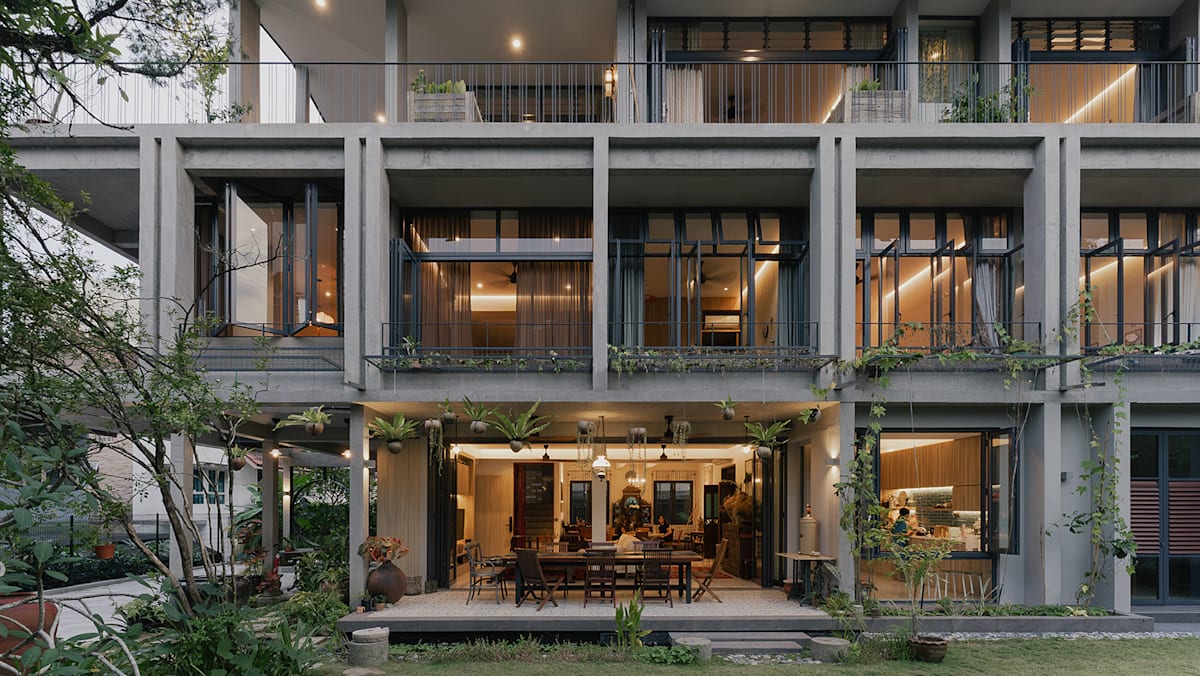
In the Singapore house, the new attic storey houses a second family room, the master bedroom en-suite, a laundry room and a generous terrace decked with timber from the former house’s pitched-roof rafters. The concrete grid contains these new spaces neatly, offering a clear reading of old and new – and a stoic backdrop to the garden’s wild proliferation of plants.
Besides integrating existing brick walls into the new layout, old window and door grilles were turned into flooring details and facade screens. Timber roof rafters were also repurposed into movable planters. “This plays on the notion of ‘embodied memories’ of reinterpreting and inhabiting the spaces, and helps reduce the house’s carbon footprint,” Seow said.
Inside the house, the wife reused many of the old timber furniture, and introduced new ones that evoke memories of her family home in Malacca. “We try to reuse as much as possible,” she said. “The family has this ethos of trying not to have too much waste,” Seow added. Between the living room and kitchen is a timber swing door, known as a pintu pagar, commonly found in Peranakan shophouses and fitted with stained-glass infill. The wife said it was bought on Carousell from a homeowner. Together, these elements add charm and a tangible sense of time.