

For many of us, especially as we age, pain becomes an unfortunate, daily part of life. In fact, according to the Centers for Disease Control and Prevention (CDC), as of 2023, around 24% of adults reported having chronic pain. Consequently, people are relying on regular pain medication for relief.
For some, this pain stems from arthritis, old injuries or chronic conditions, while for others it may be tied to repetitive strain, inflammation, or simply the wear and tear of everyday life. When pain becomes constant rather than occasional, reaching for medication can feel less like a choice and more like a necessity.
But people can become overly dependent on pain meds as well. As Boston University cited in 2018, nearly one in five NSAID users exceeded the recommended dose of ibuprofen or other NSAIDs within one week. This suggests that many people may be taking more than they realize, either by increasing the dose or taking it more frequently than advised. Because NSAIDs are available over the counter, it’s easy to assume they’re completely harmless—but that isn’t always the case.
It can be a delicate balance to achieve the ideal, and recommended, amount of medication in your system. Ibuprofen is an over-the-counter drug that many of us have taken, with the ability to decrease inflammation and provide pain relief. But you may not be familiar with its specific guidelines. How long does it last? And when do you know it’s time for another dose? Here’s everything you need to know.
Related: This Everyday Pain Reliever Could Help Prevent Dementia
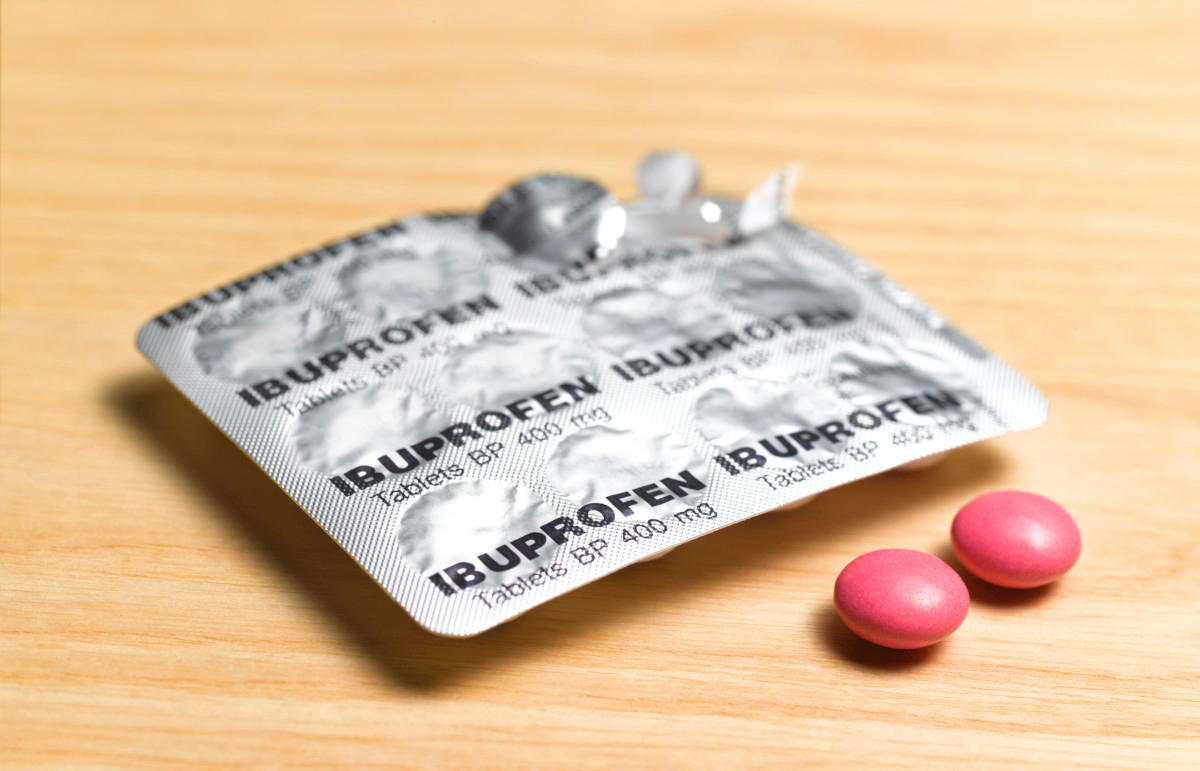
Peter Dazeley/Getty Images
(Peter Dazeley/Getty Images)How Long Does Ibuprofen Last?
Nicole Henry, PharmD,District Leader at CVS Pharmacy, says that over-the-counter doses of ibuprofen are typically given every 4 to 6 hours. “Doses available by prescription may be dosed less frequently, such as every 6 to 8 hours,” she adds. Keep in mind that this recommended dosing is for adults only—not children under the age of 12.
There are some factors that can impact the clearance of ibuprofen in your body. For instance, Henry says that those with limited kidney function can experience an increase in the potential toxicity of the medication.
But ultimately, with any drug, Sarah R. Sheley, PharmD, OSF HealthCare pharmacist, says that there’s an amount of time that it takes your body to get rid of half the original dose.
Related: How To Build Total-Body Strength Without Lifting Heavy Weights
“This is called the elimination half-life,” she explains. “For ibuprofen, the half-life is about two hours, regardless of the dose you take. After two hours, there is still half of that original dose left in your body. It will take two more hours for the remaining drug to be decreased by half. It takes about four to five half-lives for almost all of the medication to be eliminated from your body. So, the dose does not necessarily affect how long ibuprofen lasts in your body so much as how much is left after that half-life.”
As a result, it takes longer for a larger dose to be cleared when compared to a smaller dose.
“For this reason, smaller doses (like 200 milligrams) may be taken every 4 to 6 hours, and larger doses (400 to 800 milligrams) should be taken every 6 to 8 hours,” Sheley tells Parade. “This gives your body adequate time to get rid of enough medication to avoid harm.”
She adds that once you take a dose of ibuprofen, you should start to feel the effects relatively quickly, usually within 30 minutes to one hour.
“The maximum effect is felt between 2 and 4 hours after you take a dose,” she says. “The duration of the effects of that dose lasts between 6 and 8 hours. These are general numbers, as it can be different from person to person.”
🩺SIGN UP for Parade’s health newsletter with expert-approved tips, healthy eats, exercises, news & more to help you stay healthy & feel your best self💊
How Do You Know It’s Time for Another Dose?
It’s important to strictly follow the recommended dosing that’s on your bottle of ibuprofen, whether it’s over-the-counter or prescription.
“Over-the-counter products instruct to start with one tablet, but state that if pain persists, then a second tablet may be taken,” Henry says. “However, it is important to not exceed the recommended dose per day. Adults should not exceed 1200 milligrams per day, unless directed by a healthcare provider.”
Henry advises setting a reminder to help ensure that the ibuprofen is taken appropriately.
Is there an option to take ibuprofen around the clock? Before moving forward, you’ll need to speak with a healthcare provider, particularly if a fever gets worse or lasts more than three days, or if pain worsens and lasts more than 10 days, as Henry says.
If you get the go-ahead, Sheley says that it’s then essential to keep to your medication schedule. “If a dose is forgotten, do not double up the next dose,” she warns.
When you’re dealing with a fever or pain, she explains that it’s important to always start with the smallest dose that’s effective in alleviating symptoms.
Related: Could This Common McDonald’s Order Be the Secret To Getting Rid of Migraines?
What Happens if You Exceed the Recommended Dosage?
“If you take another dose too soon, you may begin to feel overly tired, dizzy or confused,” Sheley warns. “Your stomach may become upset, causing stomach pain, nausea or vomiting. You may also experience ringing in your ears. These are all signs that you have taken too much ibuprofen. It is best to stick to the recommended dosing schedule on the bottle or as prescribed by your doctor.”
There are other more serious outcomes as well, which Sheley says include kidney damage, stomach and esophageal ulcers and cardiovascular issues, including heart attack or stroke.
“Using the medication as directed will greatly reduce the risk of overdose,” she says.
If you ever have any misgivings or questions regarding taking ibuprofen, always err on the side of caution and consult a medical provider or pharmacist. And if you or a loved one is experiencing any signs of ibuprofen overdose, as Henry says, immediately call 911 or the Poison Help hotline at 1-800-222-1222.
Up Next:
Sources:
This story was originally published by Parade on Jan 15, 2026, where it first appeared in the Health & Wellness section. Add Parade as a Preferred Source by clicking here.