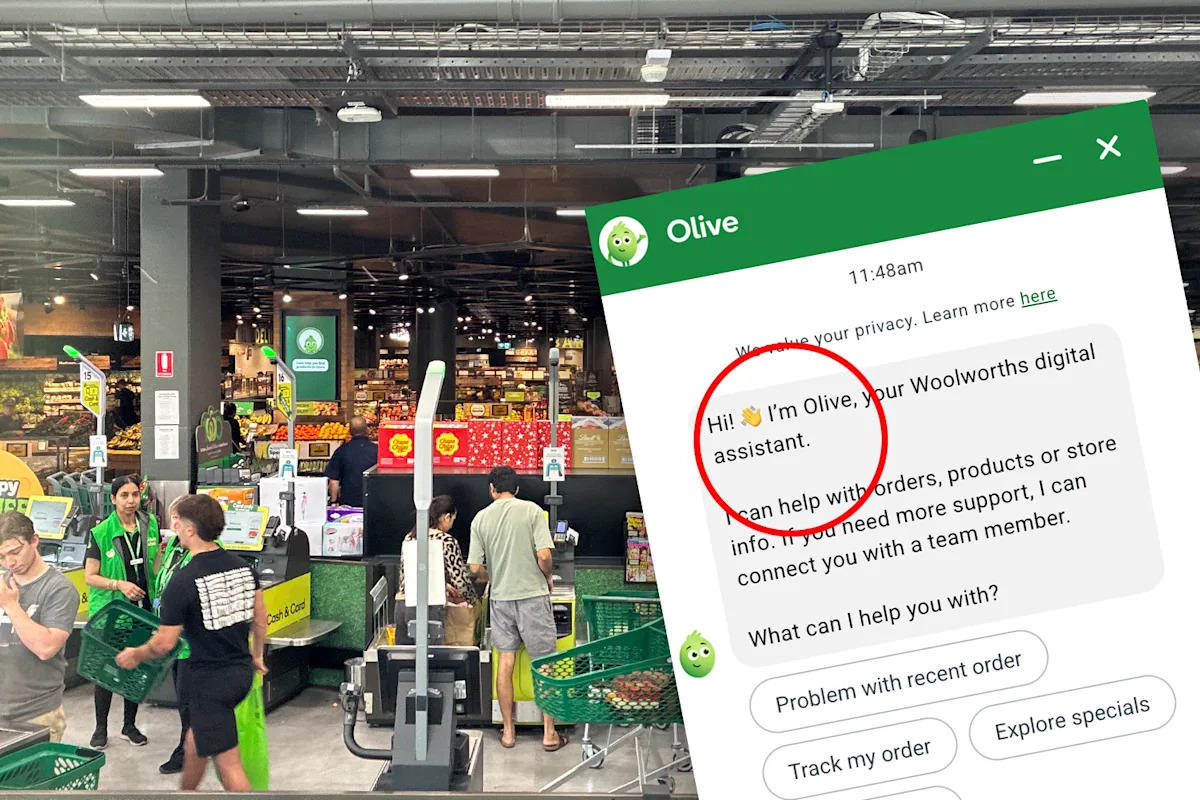
A new AI agent that adds items to your shopping cart is coming to Woolworths, promising a new level of convenience for customers. But an expert warns it could quietly “influence” shoppers towards higher-margin products, raising concerns about transparency.
Woolworths’ AI chatbot, Olive, is about to get a major upgrade, soon able to plan meals, interpret handwritten recipes, and fill online shopping baskets with suggested items.
Consumer specialists expect shoppers to flock to the handy technology, which Woolworths said will make shopping easier and save people time.
In partnership with Google’s Gemini platform, Woolworths said Olive will evolve into an “intuitive partner” that anticipates customers’ needs, planning meals based on their tastes and highlighting specials that matter to their budget.
Major US retailers such as Walmart and Lowe’s are also adopting the technology, as part of Google’s wider push to advance agent-based commerce in the retail sector.
Professor Uri Gal of The University of Sydney Business School warned that in Australia, Woolworths isn’t legally required to disclose how its Olive algorithm works.
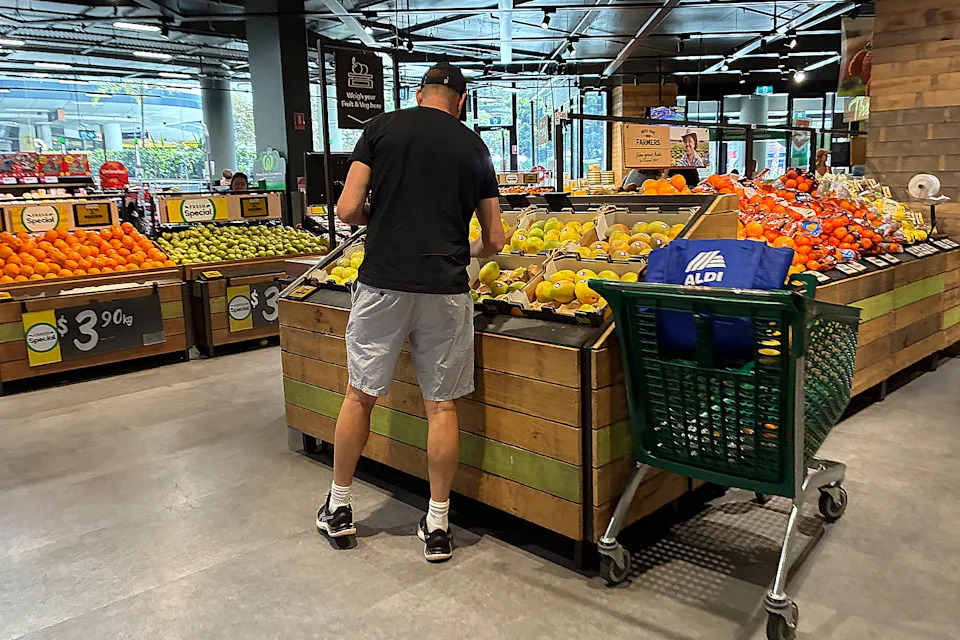
The technology could influence what goes into your shopping cart. Source: Yahoo News Australia
That means Australians could be steered towards products it prioritises.
In an interview with Yahoo News, Professor Gal said that if AI begins filling shopping carts, who’s really making the decisions — the shopper or the system? He said it depends on its design, which is still largely unclear.
“In principle, users give AI agents basic parameters, for example, ‘I want to eat clean food’, or ‘we are a family of four with two young kids’,” he said.
“What matters is how much discretion the system has in translating those preferences into action.
“Once an AI begins inferring priorities, ranking options, or nudging choices rather than simply executing instructions, decision-making becomes shared, and influence shifts from the user to the system.”
Who is really making the decision?
Professor Gal said that, unlike chatbots, which simply respond to questions, AI agents are proactive and can act on behalf of users.
This could include planning meals, applying discounts, or even adding suggested items directly to a customer’s shopping cart.
“One incentive is to reduce friction and increase convenience for customers,” he said.
“Another is to shape purchasing behaviour in ways that align with the supermarket’s commercial interests, such as promoting certain products, brands, or baskets that improve margins or retention.”
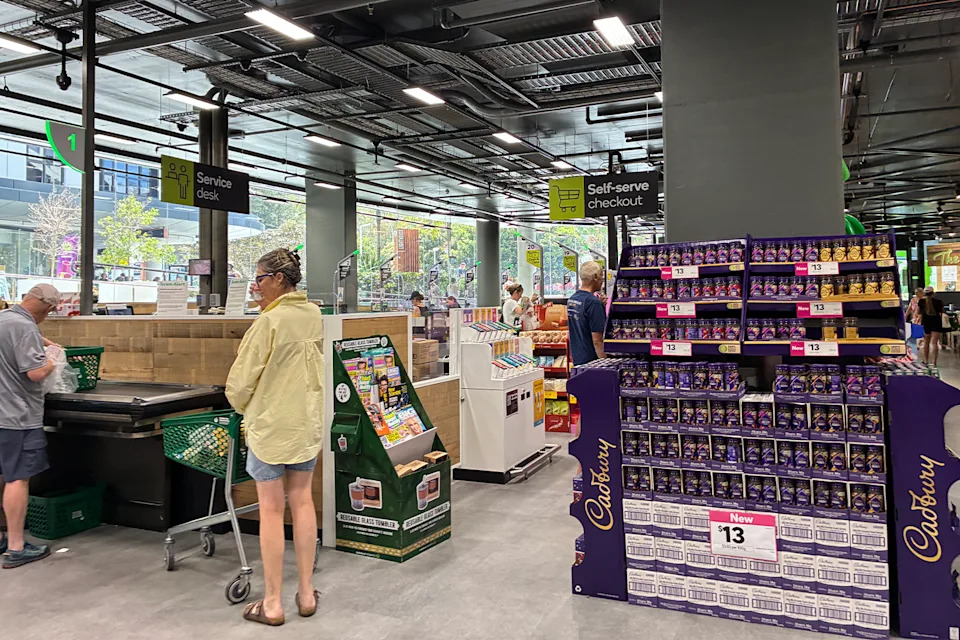
Olive’s upgrade is aimed at making life easier, but could it also steer shoppers towards products Woolworths prioritises? Source: Yahoo News Australia
Is existing data needed for the technology to work effectively?
Professor Gal said an AI shopping agent needs data like past purchases, browsing habits, household details, and lifestyle preferences to work effectively.
Because it interacts continuously, it collects more personal information than traditional systems, raising concerns about profiling, data retention, and how information may be combined with other sources.
“Legally, I believe Woolworths is not required to disclose the inner workings of its algorithms,” he said.
“Ethically, however, a strong case can be made that consumers should be told in general terms whether recommendations are driven by their preferences, commercial incentives, or a mix of both, so they can understand how their choices are being shaped.”
Professor Gal said this could mark a shift toward supermarkets acting more like digital platforms.
When an AI sits between customers and products, the retailer isn’t just selling goods — it’s mediating choices, prioritising suppliers, and shaping demand in real time, effectively operating a “decision-making infrastructure”.
“In that sense, the AI agent plays a role similar to a search engine or app store: it governs access, attention, and discovery,” he said.
“The supermarket may still own inventory, but functionally it begins to behave like a platform because it controls the rules by which choices are presented and made.”
Coles and other supermarkets may follow suit ‘very quickly’
Some advocacy groups may express concerns, but most shoppers are expected to either “be indifferent to or use the new technology”.
However, there may be a paradoxical effect.
“While these systems are designed to reduce effort, they can actually increase cognitive load by shifting the burden from choosing products to judging whether the system itself can be trusted,” he said.
Nonetheless, if Olive’s upgrade is successful, other retailers will likely follow suit “very quickly”.
“Because Woolworths and Coles control much of the market, if one successfully deploys an AI shopping agent, the other would face strong competitive pressure to follow quickly to avoid losing customers or data advantages,” Professor Gal said.
Woolworths weighs in
Speaking to Yahoo News, a Woolworths spokesperson said when Olive’s upgrades are live, “customers will still have full control of the review and check out process.”
“For customers who choose to use Olive, our main focus is on making the planning and cart-filling process seamless,” they said.
“We recently announced a new partnership with Google to enhance Olive, the virtual assistant on our website and app. These improvements will allow Olive to anticipate customer needs to make life easier – helping plan meals, spot specials and shop for specific occasions like birthday parties.”
Woolworths said further upgrades to Olive, developed in partnership with Google, will roll out in the coming months, including personalised suggestions based on customers’ purchase history and interactions with the assistant.
Do you have a story tip? Email: newsroomau@yahoonews.com.
You can also follow us on Facebook, Instagram, TikTok, Twitter and YouTube.