
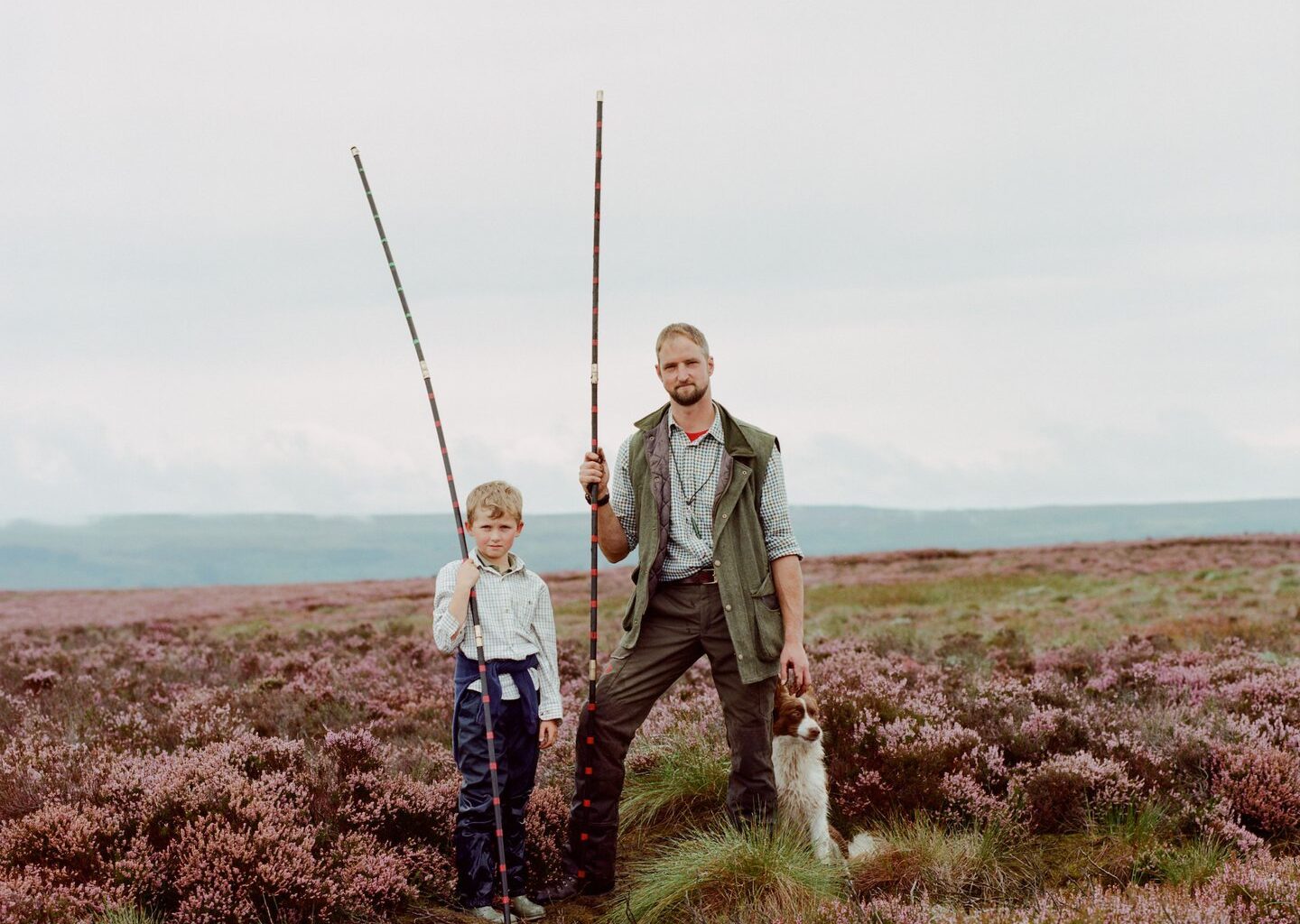
Now somewhat familiar with spending a great deal of time in these “large, open landscapes”, Juliet’s shares, she has spent more than a number of years “decoding them beyond data and through art”, working alongside local communities, conservationists and ecologists to portray the positive environmental impact of restoration, capturing images that can only come from forming a deep connection to people and place.
“Time is always important when learning about a new landscape,” the photographer shares, “in order to pay close attention you need lots of it.” Each visit to the moor revealed something new for the photographer; her creative process growing and changing throughout this collaboration with local residents and environmental experts. Paying close attention to methods others were using to engage with the landscape – from walkover bird surveys to ground-truthing and even drawing as a form of data collection – Juliet let these approaches refocus how she looked at the moors at different scales. New forms of observation for her tool belt, these techniques “offered an expansive way of understanding the land” as an image maker.
The resulting collection of photographs – decisively caught on the slowness of analogue film – are “an expression of the landscape where data stops and colour, interpretation and understanding begins”, Juliet shares. With a focus on capturing portraits of the people behind the project, “it always felt important to bring the human story to the forefront to show how closely people are connected to the land,” she says. The set of studies of the natural landscape and its visitors capture an array of characters that have put their boots on to explore, understand and respond to the moorland.
As this conservation work at the Peat continues, the lands ecological value is better understood, and the photographer perceives this long-term documentary series as the creation of “a living recording” of the place, one that offers others a human-centred understanding of its impact on the local community. “It’s only when people understand something that they come to care about it and want to see it restored or protected,” Juliet ends.