
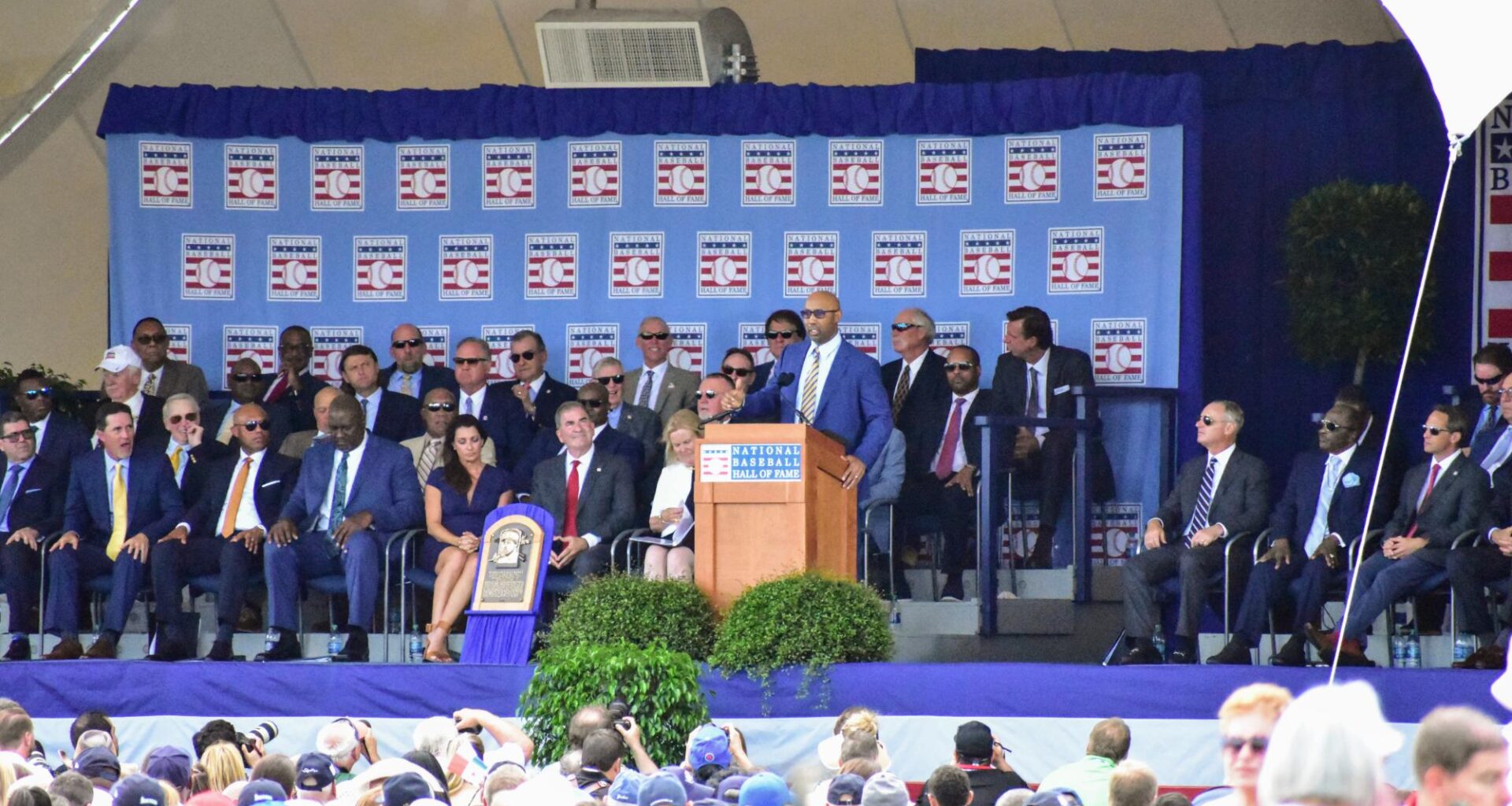
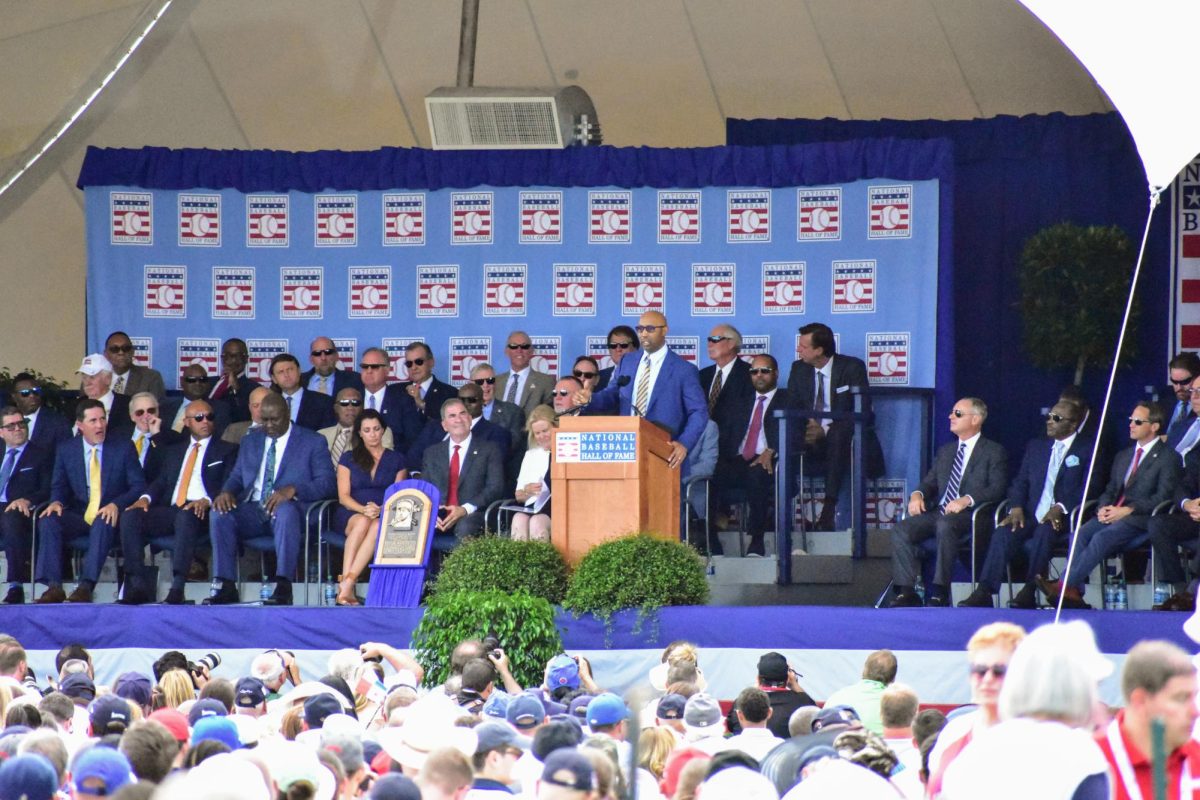
The induction of players like Harold Baines, who was a very good but not great player, symbolizes the over-expansion of the National Baseball Hall of Fame.
Sometimes, the hardest word to say is “no.”
The National Baseball Hall of Fame would know. Cooperstown has become overinclusive: The Hall of Fame is well on its way to becoming a “Hall of Very Good.”
Every year, approximately 400 journalists from the Baseball Writers’ Association of America (BBWAA) cast a Hall of Fame Ballot. To be inducted, a player must be listed on 75% of ballots. So long as a player earns at least 5% of the vote, they remain on the ballot the following year until they are elected or fail 10 times.
A player becomes eligible for the Hall of Fame ballot five years after they step off the field for the final time after playing at least 10 seasons in MLB.
Typically, between 25 and 35 players appear on a given ballot. Voters may select up to 10 candidates, but do not have to select any at all.
The strength of the ballot varies from year to year. In more crowded years, candidates who are on the bubble receive fewer votes. In years with weaker ballots, however, voters tend to select borderline candidates more often.
This year, the prospective class was particularly weak. I would have proudly submitted a blank ballot, and indeed, the 2026 ballot saw the highest number of blank ballots since 2011. Yet only 11 of the 425 voters selected zero candidates.
Evidently, voters hesitate to be overly selective. But I will say about the Hall of Fame what I previously said about the MVP award — it is not a participation trophy. Carelessly handing the highest honor in the sport to undeserving players dulls the shine of the award itself.
Still, a number of talented players on this year’s ballot were undeserving for reasons beyond their statistics. The Hall directly asks voters to consider players’ “integrity, sportsmanship, character and contributions to the team” when evaluating their candidacy.
This “character clause” doomed a number of 2026 candidates that would have otherwise been shoo-ins. Manny Ramírez and Álex Rodríguez were suspended during their careers for taking performance-enhancing drugs. Andy Pettitte admitted to the same misdeeds, although he escaped suspension. Omar Vizquel has been accused of sexual harassment and domestic violence, both of which he has denied. None have been elected.
Given the Hall of Fame’s many constraints, it is easy to forget about its most basic threshold: actually being excellent — not just good — at baseball.
The Hall’s committees offers what has, too often, become a workaround to that requirement: a second chance on the ballot.
To be more accurate, an 11th chance. Or a 12th one. Or a 13th. Or 14th. Keep counting, I won’t stop you.
In the world of Hall of Fame voting, “no” is not a final answer. Since 2001, every player — barring those on MLB’s ineligible list (such as, formerly, Pete Rose) — with 10 years of MLB experience who “has not been active in the previous 20 years” is eligible for re-consideration by the committee after failing to get elected by the BBWAA.
Of the 281 players honored in the Hall, 118 have been elected by the Eras Committee.
The committee is responsible for admitting the owners of many of the Hall’s most lackluster resumes. Contemporary-era inductees such as Bill Mazeroski (42.3%), Red Schoendienst (42.6%) and, perhaps most egregiously, Harold Baines (6.1%) failed to gather even close to the required 75% on the main ballot.
In what appears to be an attempt to course-correct, the Hall has recently decided that — against the wise advice of “Mean Girls’” Cady Heron — the limit does exist.
Starting March 2025, players may only appear on a committee ballot three times. Three chances is noticeably fewer than infinity, so the new rule will hopefully create some much-needed guardrails on the Hall’s overinclusiveness.
But the Hall has already opened its doors too wide — closing them will be significantly harder. Now, whenever a good-but-not-excellent player appears on the ballot, fans will point to history.
My misguided Philadelphia Phillies-fan editor, for one, would surely argue that if Baines is in the Hall of Fame, voters must let in Philadelphia’s paradigmatic “Hall of Very Good” power-hitting second baseman Chase Utley.
The problem is, he would not necessarily be wrong.
Utley amassed 64.6 Wins Above Replacement to Baines’ 38.8 according to Baseball Reference, and he did so in almost 1,000 fewer games. Utley was better than Baines, with little room for debate.
My opinion is that neither is deserving of baseball’s highest honor. But Baines cannot be uninducted. The bar has already been lowered, and raising it to an appropriate level would be unfair to modern-era players.
Pandora’s box, once opened, might never be closed.