
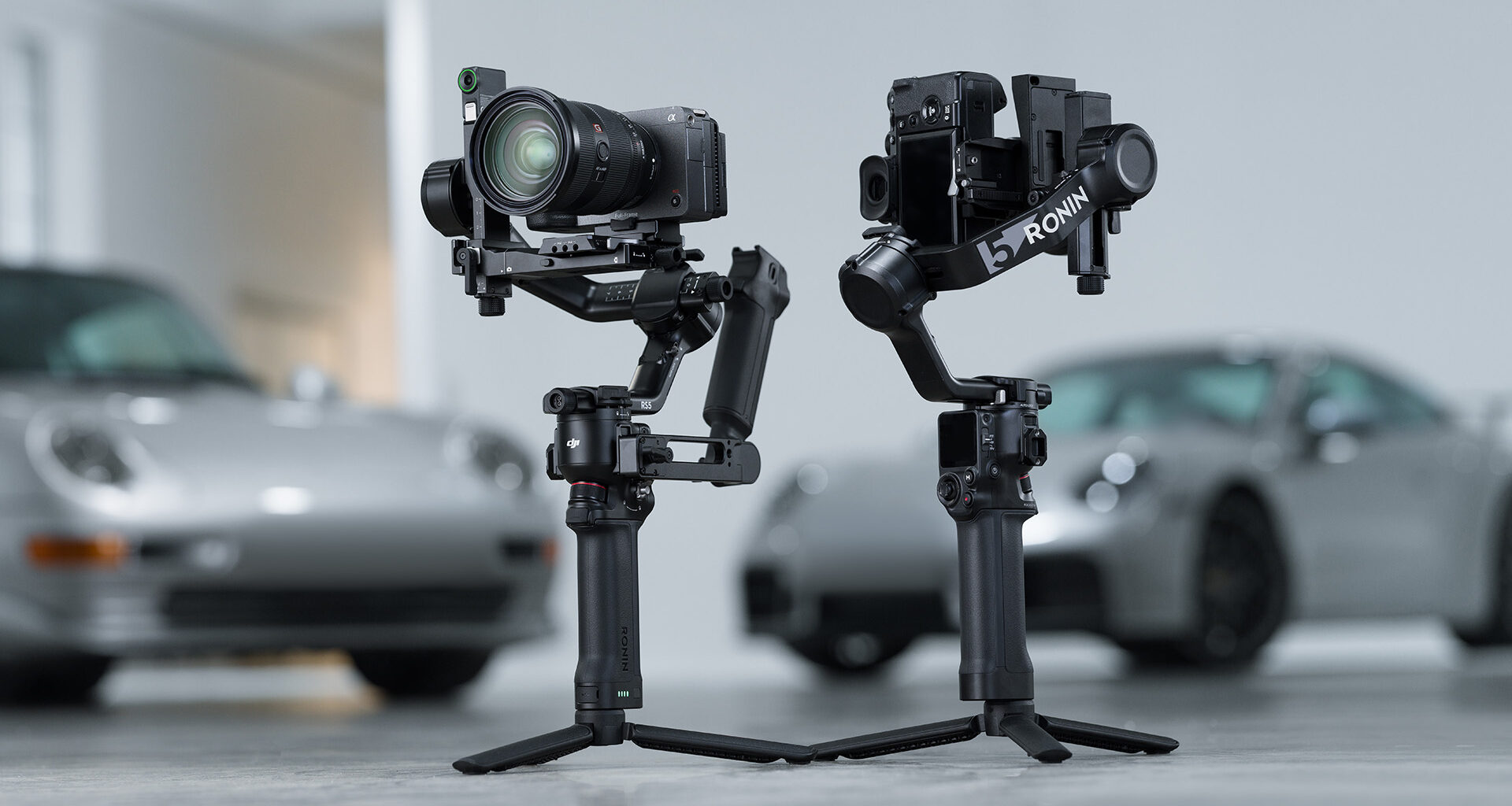
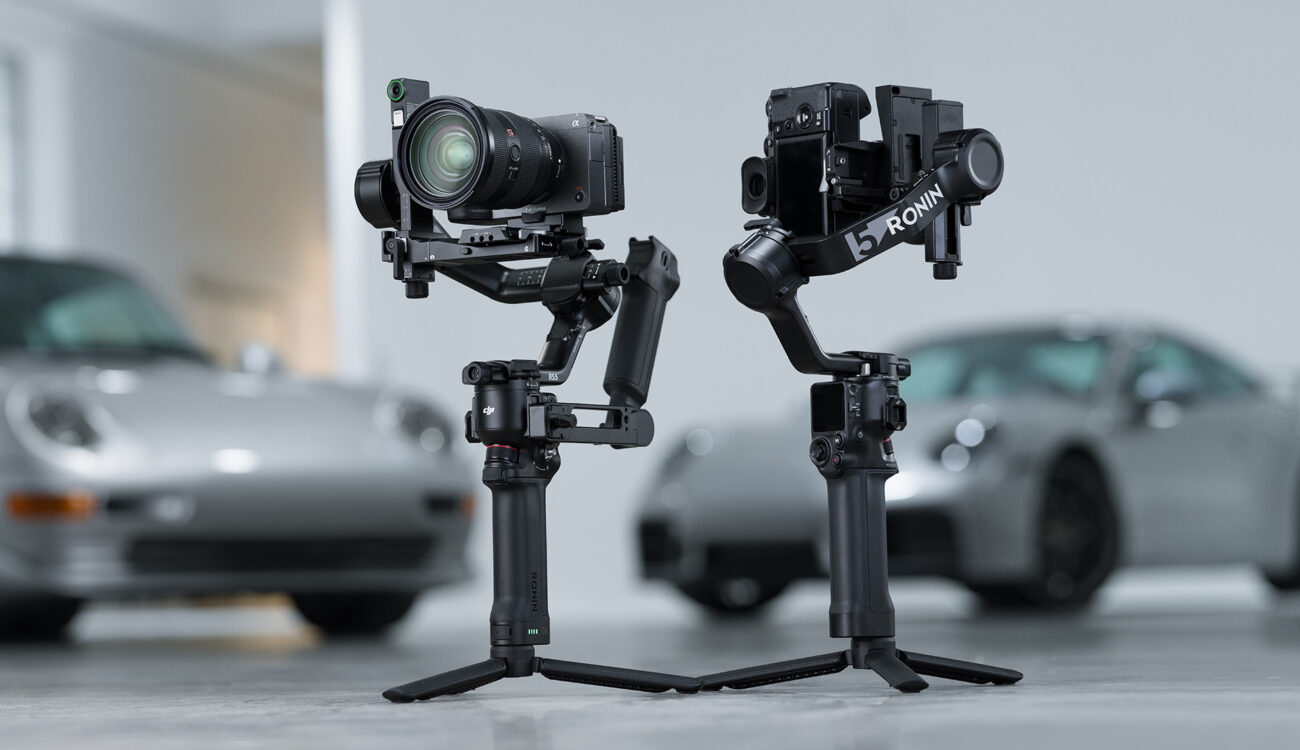
DJI just unveiled its next-generation commercial gimbal, the RS 5, introducing the new RS Enhanced Intelligent Tracking Module for object and subject tracking directly from the touchscreen, alongside a 5th-generation stabilization algorithm with 50% increased motor torque and significantly improved charging efficiency.
The Ronin lineup continues to evolve with DJI’s latest single-handed stabilizer, positioned squarely at videographers who work solo and need maximum flexibility without sacrificing professional performance. Building on the foundation established by the RS 4 series announced in April 2024, the RS 5 brings several meaningful upgrades while maintaining the compact form factor that made its predecessors popular among run-and-gun shooters and content creators alike.
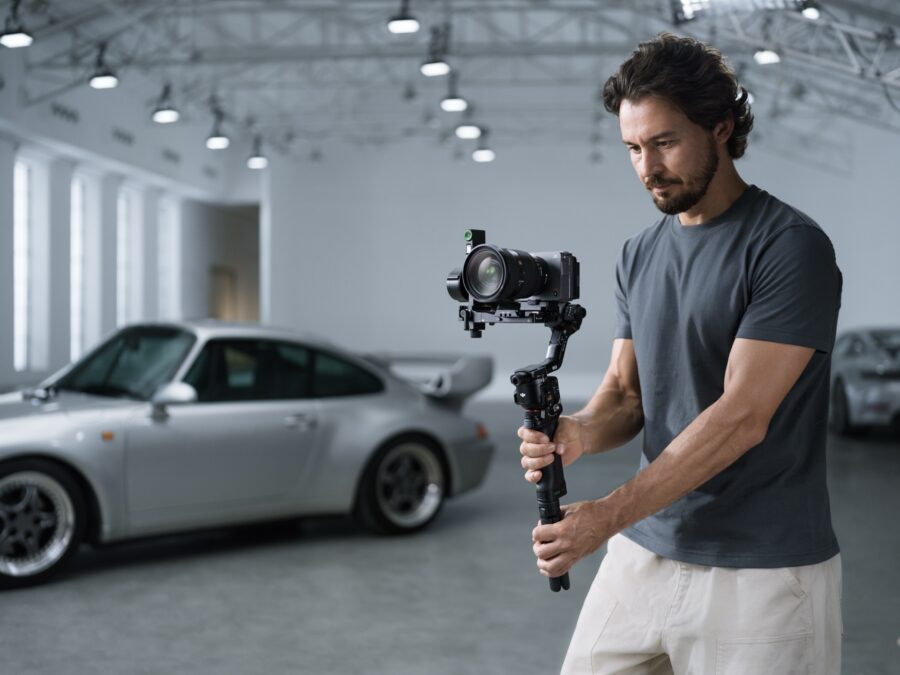 The DJI RS 5 gimbal supports 5th generation stabilization for Ronin-series gimbals. Image credit: DJIRS Enhanced Intelligent Tracking Module
The headline feature of the RS 5 is undoubtedly the new RS Enhanced Intelligent Tracking Module, which builds upon technology first introduced with the RS 4 Mini about a year ago. What sets this enhanced version apart is its ability to track not just people but also vehicles, pets, and arbitrary objects directly from the gimbal’s touchscreen, something that should prove particularly useful for documentary work and event coverage where subjects vary constantly.
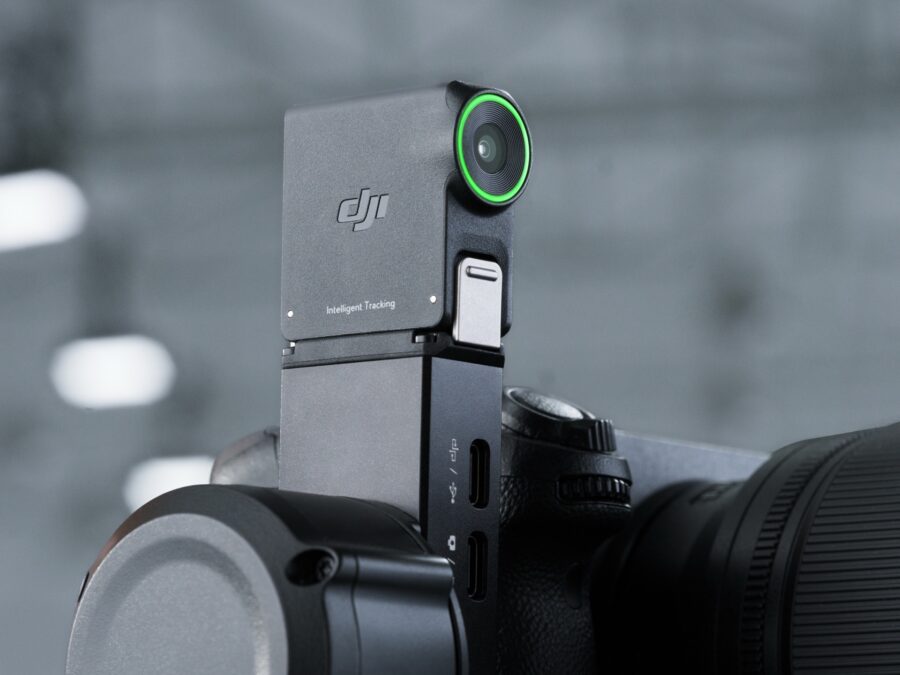 Headline feature of the DJI RS 5 is the RS Enhanced Intelligent Tracking Module. Image credit: DJI
DJI claims the module can maintain locked focus on human subjects up to 10 meters away, even in crowded environments. If your subject temporarily leaves the frame, the system can automatically reacquire them when they return. The module attaches magnetically without adapters or additional accessories, reducing setup friction on location. For solo operators, this opens up shots that would typically require a dedicated camera operator or focus puller: surround shots, reverse tracking, and fixed-camera tracking sequences become achievable single-handed.
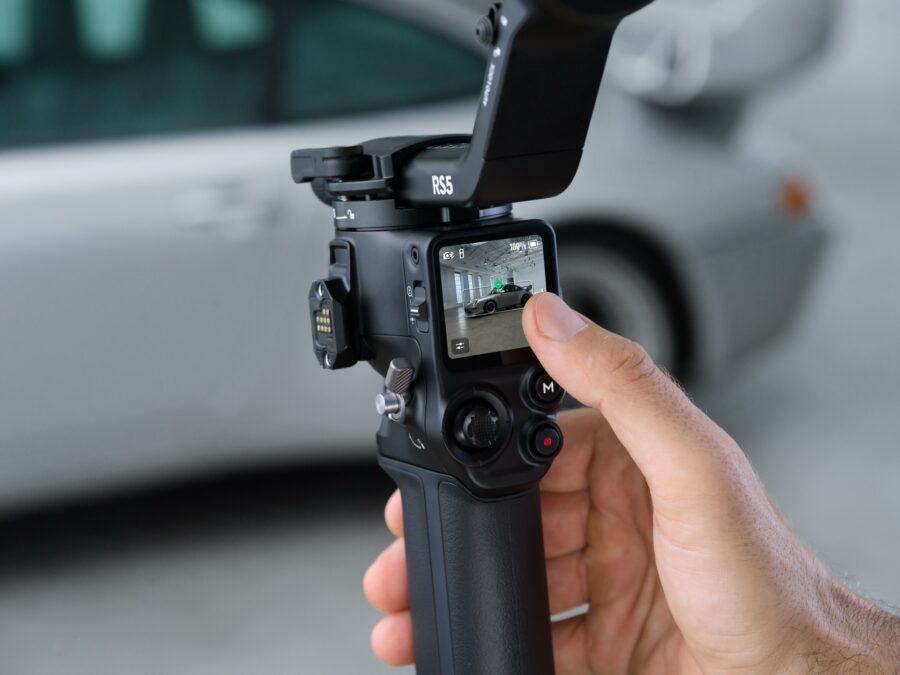 Touchscreen tracking for subject and humans via the module. Image credit: DJI5th-generation stabilization algorithm
Under the hood, DJI has implemented its 5th-generation RS stabilization algorithm, which the company says improves peak motor torque by 50% compared to the RS 4. The practical implication is greater stability during fast-moving scenarios (walking, running, or rapid angle changes) and notably improved performance when shooting vertically, a mode that has become increasingly important for social media content production.
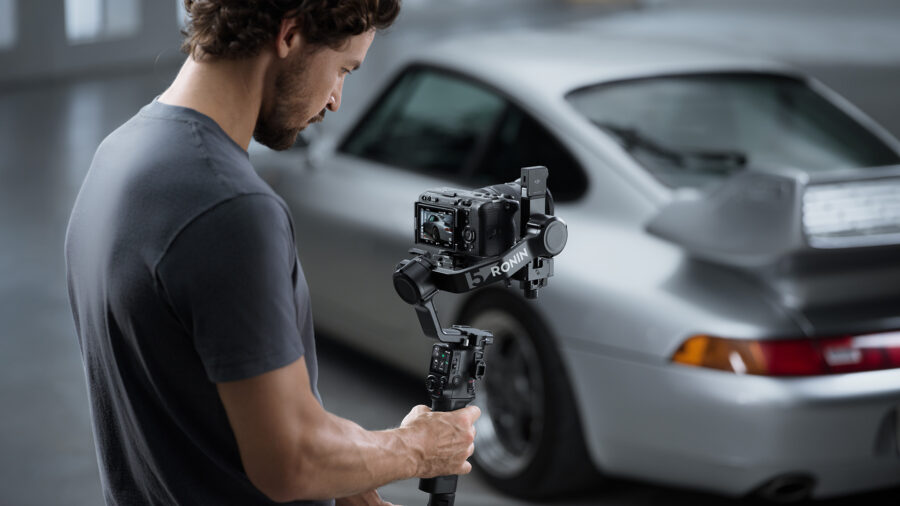 DJI claims greater stability during fast-moving scenarios with the RS 5. Image credit: DJI
The gimbal weighs 1.46kg with the battery grip and quick-release plates included, supporting payloads up to 3kg. That payload capacity positions it for mainstream mirrorless cameras with standard zoom lenses, though users running cinema glass or heavily accessorized rigs will still want to look at the higher-capacity options in DJI’s lineup. The extended tilt axis arm accommodates more camera and lens combinations while supporting ND filter installation without clearance concerns.
A new on-screen Z-Axis Indicator provides real-time feedback on vertical movement, helping operators adjust their gait and pace to minimize image shake. This is the kind of subtle feature that experienced gimbal operators will appreciate, particularly when training muscle memory for steadier walking shots.
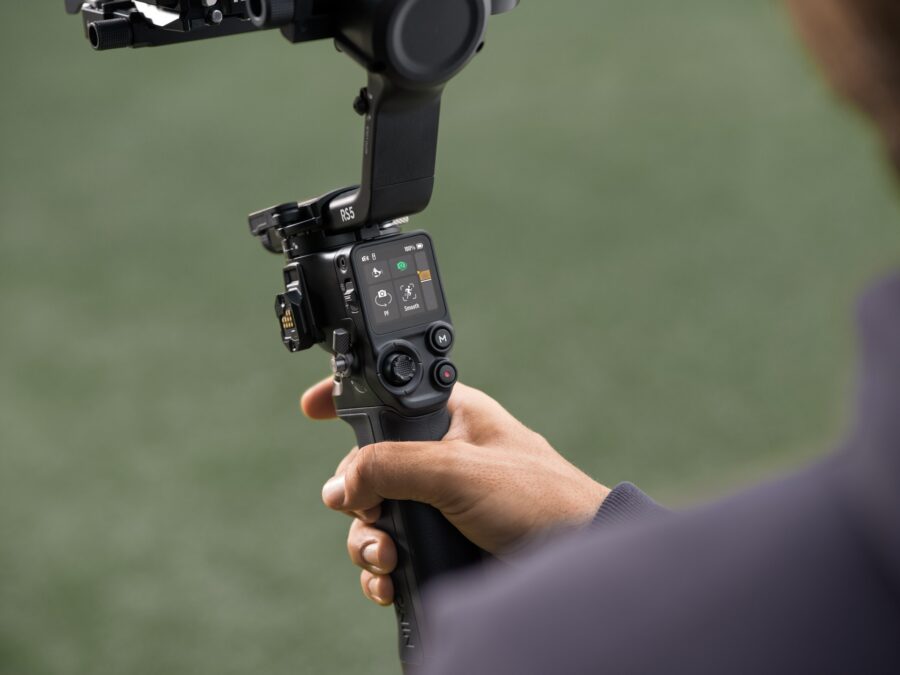 The new Z-axis indicator on the right hand side of the screen gives real-time feedback on vertical movement. Image credit: DJIElectronic Briefcase Handle and control improvements
The RS 5 introduces an all-new Electronic Briefcase Handle designed for capturing high and low angles with full electronic control. The handle includes a joystick and button controls accessible during one-handed operation, with smooth transitions designed to reduce wrist fatigue during extended shooting sessions.
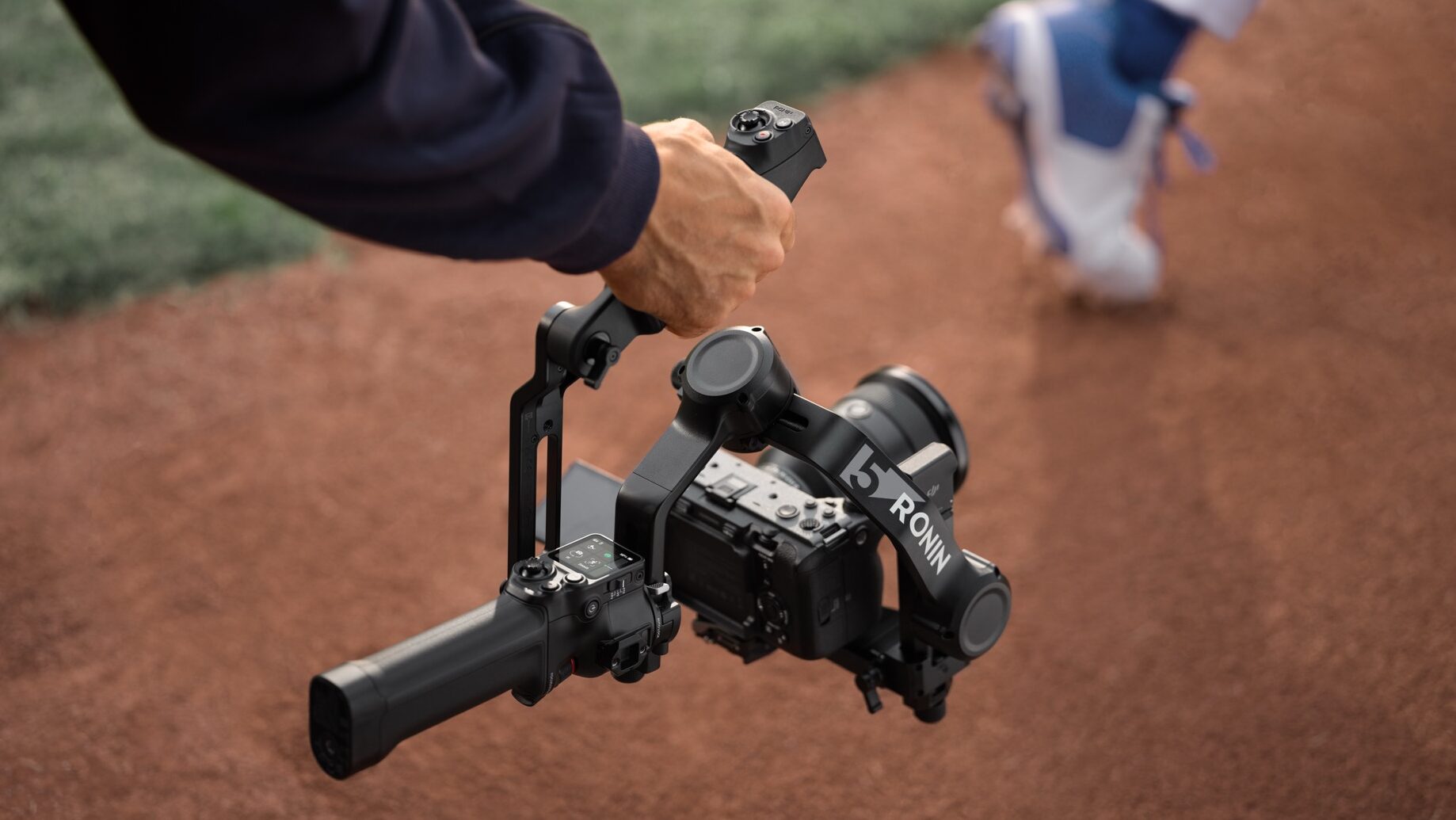 The DJI RS 5 has a new Electronic Briefcase Handle that allows full control of the gimbal from the second grip, which is very convenient. Image credit: DJI
For camera control, DJI has expanded Bluetooth shutter compatibility to include Panasonic and FUJIFILM cameras alongside previously supported Sony, Canon, and Nikon models. This wireless control eliminates cable clutter while enabling remote recording triggers. The new fine-tuning knobs with Teflon interlayers on each axis arm provide smoother balancing, even with heavier professional setups.
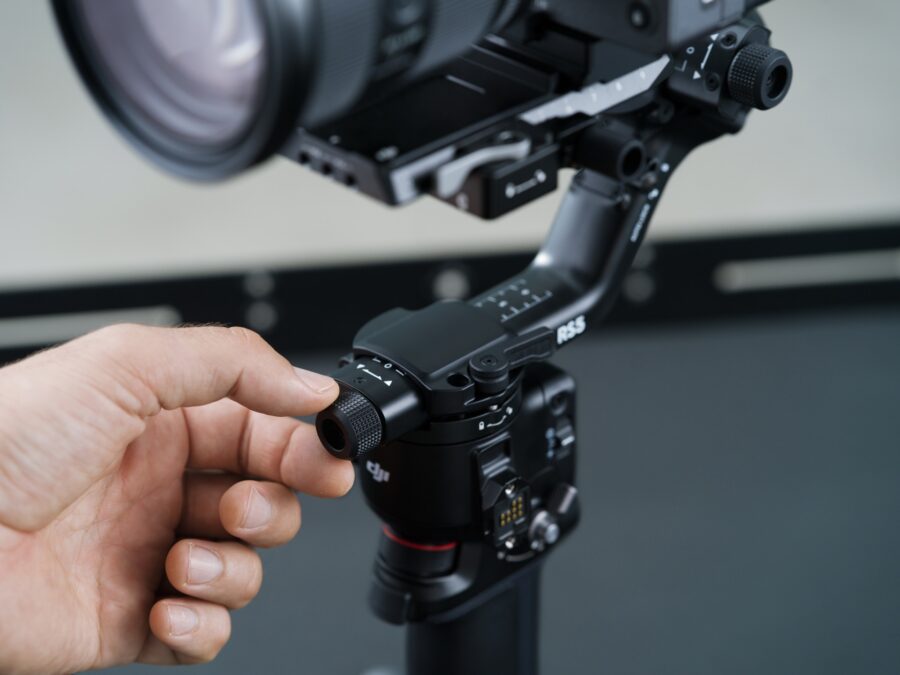 New fine-tuning knobs with Teflon interlayers allow for quick rebalancing when performing a small change on the camera package. Image credit: DJIBattery life and charging
Charging efficiency sees a significant improvement with the RS 5. A full charge now takes just one hour (with a 65W PD-protocol charger and the BG33 battery grip), representing a 60% improvement over the RS 4’s 2.5-hour charge time. The standard battery delivers 14 hours of runtime, up from the RS 4’s 12-hour rating.
For extended shoots, the optional BG70 High-Capacity Battery Grip pushes runtime to an impressive 30 hours, while also supporting 18W external power output through its bottom USB-C port. This means the grip can simultaneously power the gimbal and supply juice to accessories or even charge a smartphone during downtime.
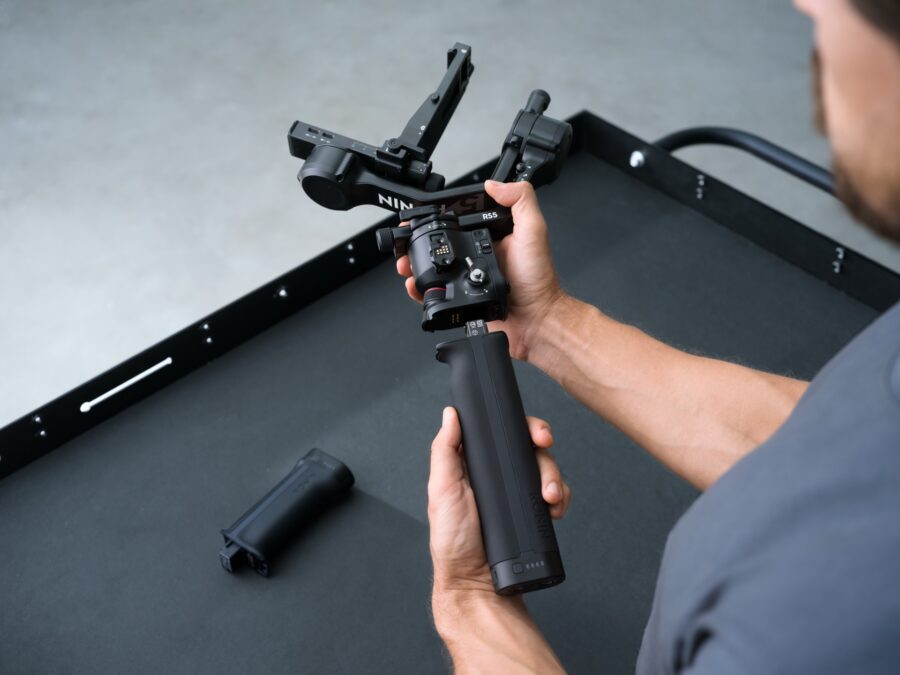 The large – still optional – BG70 Gih-Capacity Battery Grip gives a whopping 30 hours of runtime. Image credit: DJIEcosystem compatibility
The RS 5 maintains compatibility with DJI’s broader professional ecosystem. Pairing two DJI Focus Pro Motors enables zoom control via the joystick and focus adjustment through the dial wheel. The Focus Pro Motor itself has seen a 40% speed increase over the previous generation while supporting 15mm universal rods with adjustable torque, direction, and speed settings.
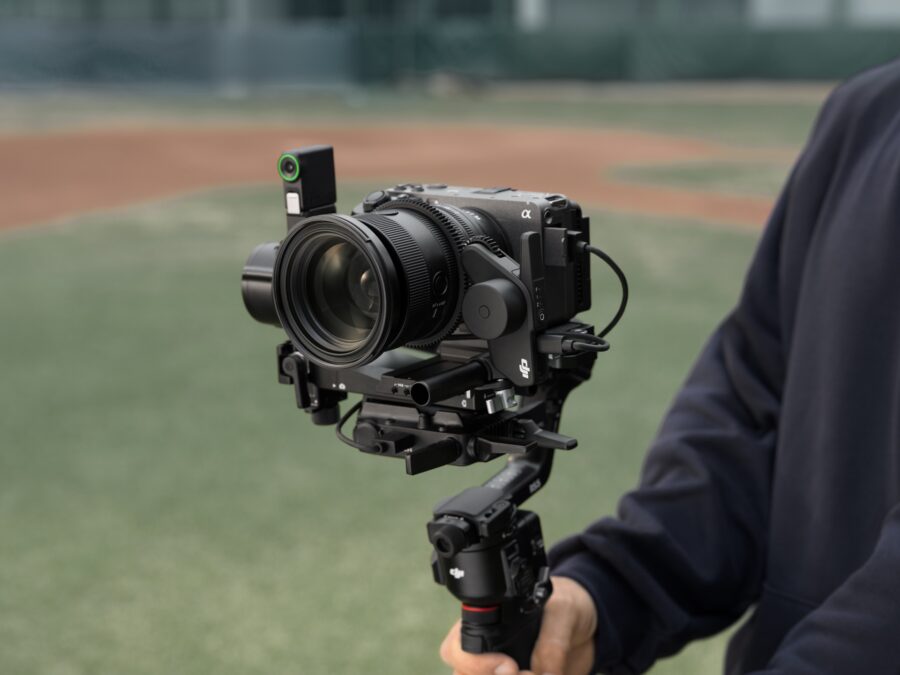 DJI Focus Pro motor installed on the RS 5. Image credit: DJI
DJI SDR Transmission support provides high-definition live feeds and remote gimbal control, opening up collaboration possibilities on larger productions. The RSA Communication Port connects to the Electronic Briefcase Handle, RS Tethered Control Handle, and third-party ring handles, allowing operators to configure their preferred shooting combinations.
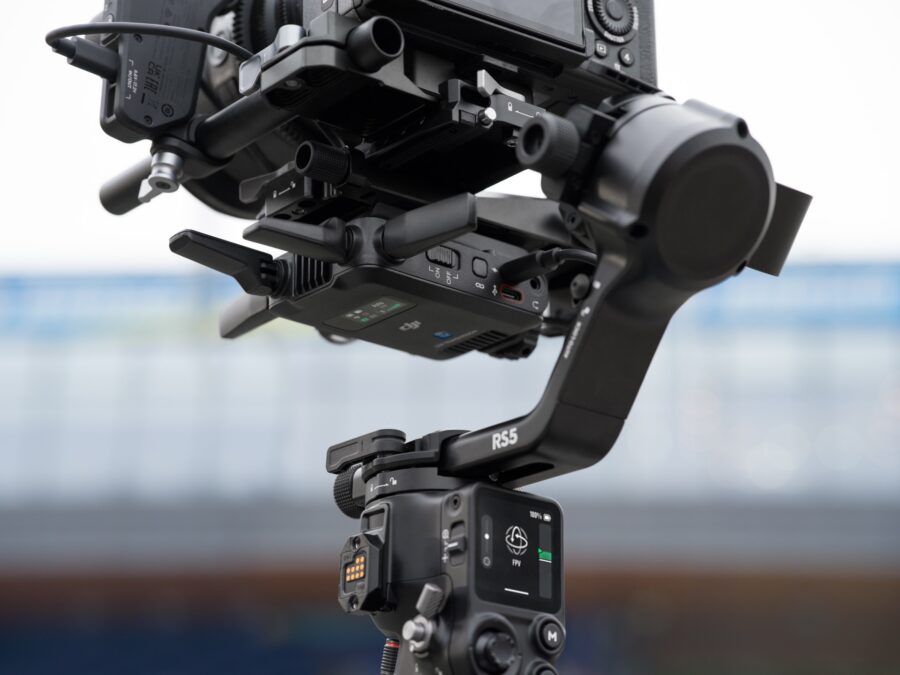 DJI SDR Transmission attached to the RS 5. Image credit: DJI
Existing DJI RS users will recognize the 2nd-generation Automated Axis Locks, which unlock when powering on and automatically lock during power-off or sleep mode. The 3rd-generation Native Vertical Switch allows switching to portrait orientation within seconds without additional accessories or plate swaps.
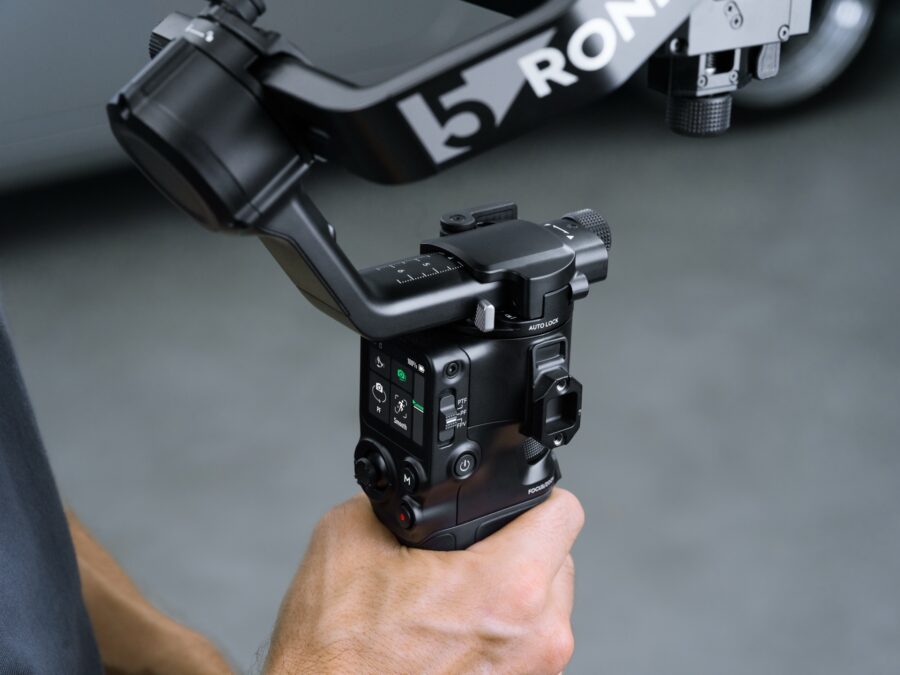 DJI’s very convenient Automated Axis Locks are of course still part of the RS 5. Image credit: DJI
For developers and third-party manufacturers, the open RS SDK enables custom function development, extending the RS 5’s capabilities beyond DJI’s standard feature set.
Price and availability
The DJI RS 5 is available now from authorized retailers and store.dji.com in two configurations:
The standalone DJI RS 5 retails for £485 / €569 and includes the gimbal, Quick-Open Tripod, Lens-Fastening Support, Screw Kit, Upper and Lower Quick-Release Plates, BG33 Battery Grip, and Multi-Camera Control Cable.
The DJI RS 5 Combo retails for £619 / €719 and adds the RS Enhanced Intelligent Tracking Module, Electronic Briefcase Handle, L-Shaped Cable, and a Carrying Case.
DJI Care Refresh protection plans are available, with the 1-Year Plan covering up to 2 replacements and the 2-Year Plan covering up to 4 replacements for accidental damage including collisions and water damage.
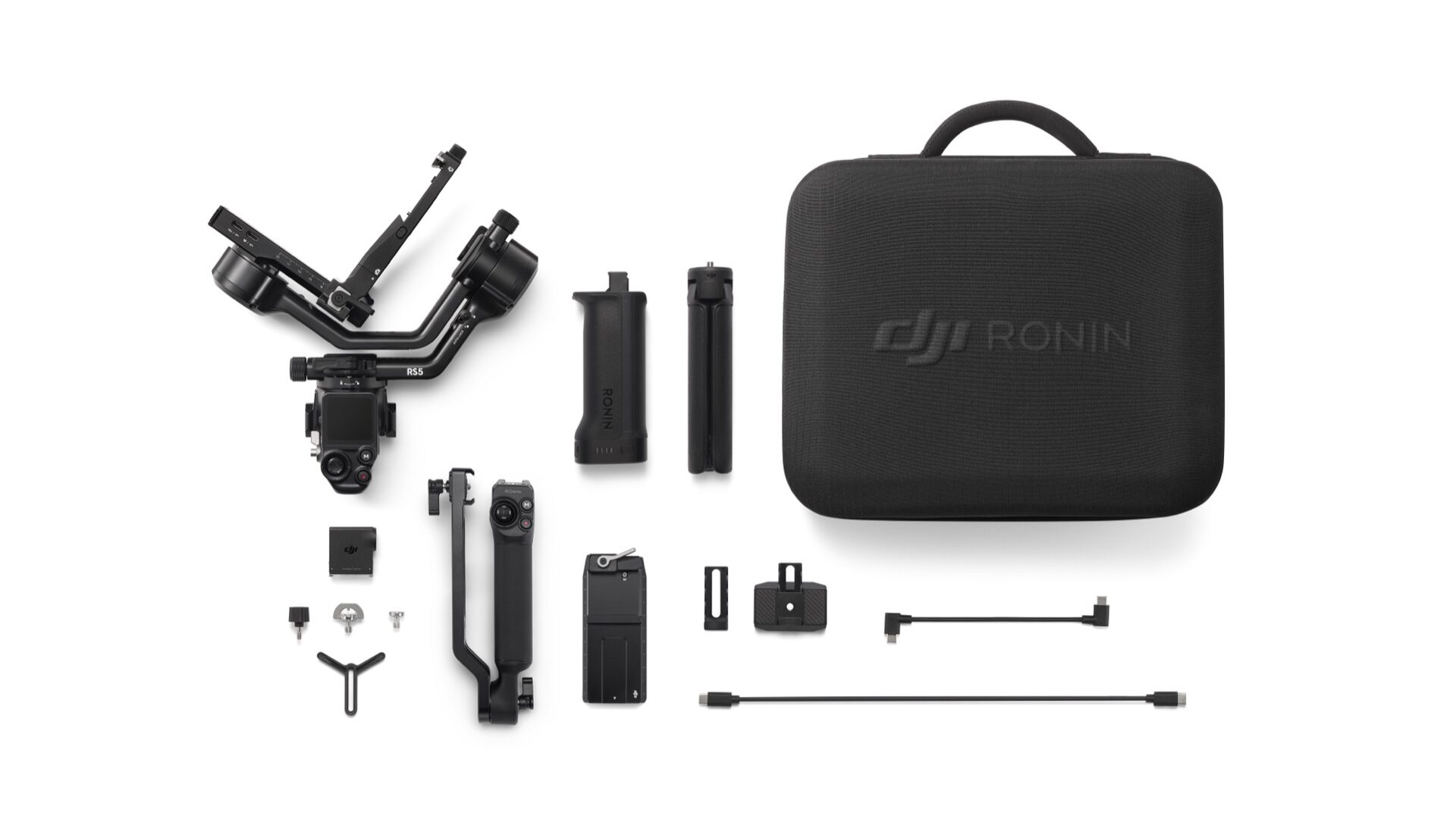 Package content of the DJI RS 5 Combo. Image credit: DJICineD video review and overview coming soon
We are currently starting to work on an extensive video review of the RS 5, which will include a comprehensive overview of the evolution of the Ronin ecosystem over the last decade. Expect that video towards the end of February 2026.
What do you think about the DJI RS 5? Does the enhanced tracking module address a gap in your current workflow, or would you prefer to see higher payload capacity at this price point? Let us know in the comments below!