
Former South Australian Liberal leader David Speirs has suggested there is “definitely a pathway” for him to run at the next state election, despite the electoral commission declaring that his drug supply convictions make him ineligible to nominate as a candidate.
Speirs, who resigned from parliament in October 2024 before his 2025 conviction on drug supply charges, is yet to declare whether he intends to run as an independent in his former southern suburbs seat of Black at March’s state election.
The ABC revealed last week that the Electoral Commission of South Australia (ECSA) had deemed Speirs was “not eligible” for public campaign funding because “he would not [if applied for] fulfil the nomination requirements”.
“If a person/potential candidate has a conviction of an indictable offence they would be ineligible to nominate,” an ECSA spokesperson said earlier this month.
“In this case, the potential candidate would not be entitled to any funding whatsoever.”
However in a statement provided this afternoon, South Australian Electoral Commissioner Mick Sherry issued a clarification regarding the determination of election candidates’ eligibility.
“A recent ECSA statement offered an initial view of eligibility when responding to a media query about public funding,” he said.
“The final determination regarding candidate eligibility will be made once nominations have been received and assessed against the requirements of the Electoral Act and Constitution Act.
“I do not intend to provide a running commentary on individual prospective candidates in the meantime.”
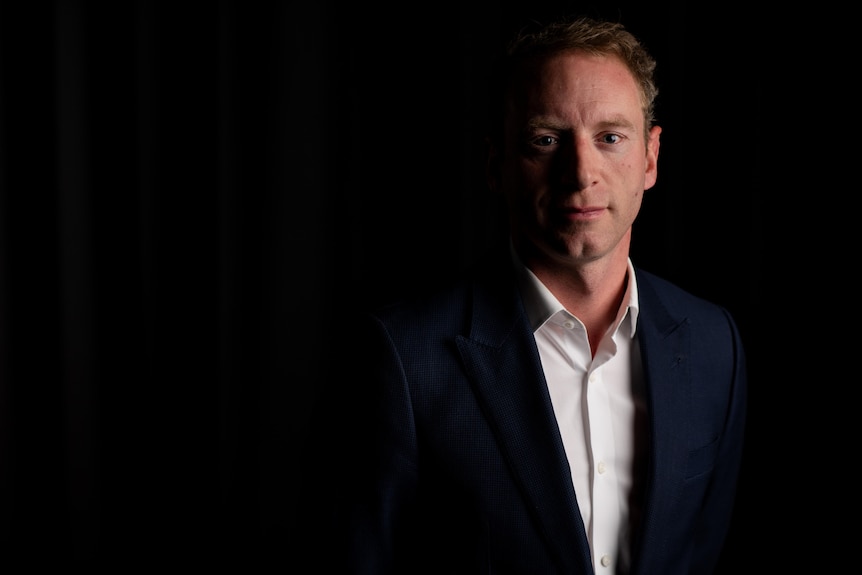
David Speirs is yet to declare whether he will run at the upcoming March election. (ABC News: Che Chorley)
Earlier, in his first public comments since ECSA’s initial advice was revealed last week, Speirs said there was some “uncertainty” over his eligibility “that needs to play out”.
“There’s lots of different views on that,” Speirs told Adelaide radio station FIVEaa on Wednesday.
“There’s constitutional issues in the mix; there’s been different people who’ve weighed into that.
“Look, I think there’s definitely a pathway there for me if I wanted to push it along, but it just comes down to whether I have the appetite for that and to weigh into a public debate.”
Speirs has not responded to the ABC’s requests for comment.
David Speirs says he’s ‘not done with public service’
The former environment minister said questions over his eligibility were “for other people to work through at the moment and come up with advice”.
“There’s definitely very differing views as to what I can and can’t do which is quite interesting as a spectator from the sidelines,” he said.
“I haven’t weighed into that and of course I haven’t confirmed my own intentions either.
“But it’s interesting to listen to people talking about me.”
‘I sorted that out last year’
The Adelaide Magistrates Court convicted and fined Speirs $9,000 in April 2025 and sentenced him to 37-and-a-half hours community service.
That was after the former MP pleaded guilty to two charges of supplying a controlled substance to another person, with court documents showing he supplied cocaine to two men, one of whom he knew had been attending Narcotics Anonymous.
Speirs said he completed his community service hours last year, which involved “doing maintenance work in parks and things like that”.
“My view was take the path of least resistance through that process and get it done and do my bit to give back and get on with life,” he said.
Last week, Adelaide University Law Professor John Williams suggested that one interpretation of the law would suggest “an individual who has served their penalty should at least be eligible to put themselves before the electorate”.
ECSA’s interpretation about Speirs’ eligibility was based on the provisions of the electoral act which state a “person is not qualified to be a candidate for election … if the person would, if elected … be required to immediately vacate his or her seat” under the state’s constitution.
The constitution states that if an MP “is convicted of an indictable offence” their seat becomes vacant.
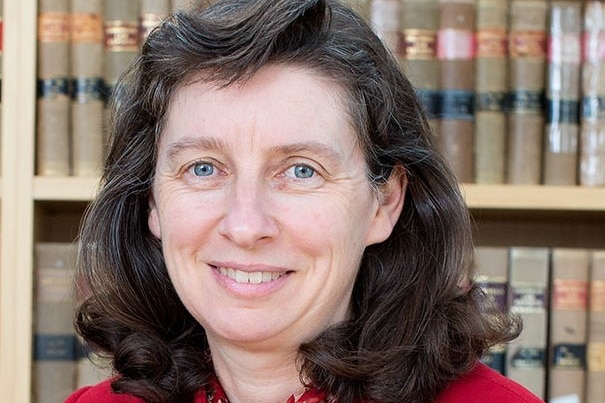
Constitutional law expert Anne Twomey says there is ambiguity about the interpretations. (Supplied: Anne Twomey)
But University of Sydney Professor Emerita Anne Twomey, an expert in constitutional law, said she had “doubts” about the electoral commission’s interpretation, noting that the constitution disqualifies an MP who “is” convicted of an indictable offence, not one who “has been”.
She said there was a difference between the two terms.
“[‘Has been’] would be the more obviously terminology to use if the intention was to ban for life from election to parliament anyone who had been convicted of an indictable offence,” she said in a video posted on her educational YouTube channel “Constitutional Clarion”.
“Personally, my instinct is that it would be quite hard to say that a person who has been convicted in the past and served their sentence and has subsequently been elected to the House of Assembly can be treated under section 31 [of the constitution] as a member who ‘is’ convicted of an indictable offence, as opposed to ‘has been’ convicted.
“But there is ambiguity here, particularly in relation to when a conviction ends and whether this is when a sentence has been fully served as initially recognised in the constitution act, or perhaps when a conviction is deemed to be spent.
“In the face of ambiguity, a court may be inclined to err towards giving effect to the democratically expressed wishes of the electorate.”
The seat of Black is held by Labor MP Alex Dighton on a nearly 10 per cent margin, after he won the November 2024 by-election triggered by Speirs’s resignation.
Candidate nominations for the state election do not open until February 23 and will not be declared until March 2.