

Bajaj Pune Grand Tour
When you think of cycling-mad nations, India probably doesn’t spring immediately to mind. But after the inaugural edition of the Bajaj Pune Grand Tour, held a week or so ago, it might be time to re-evaluate that perception.
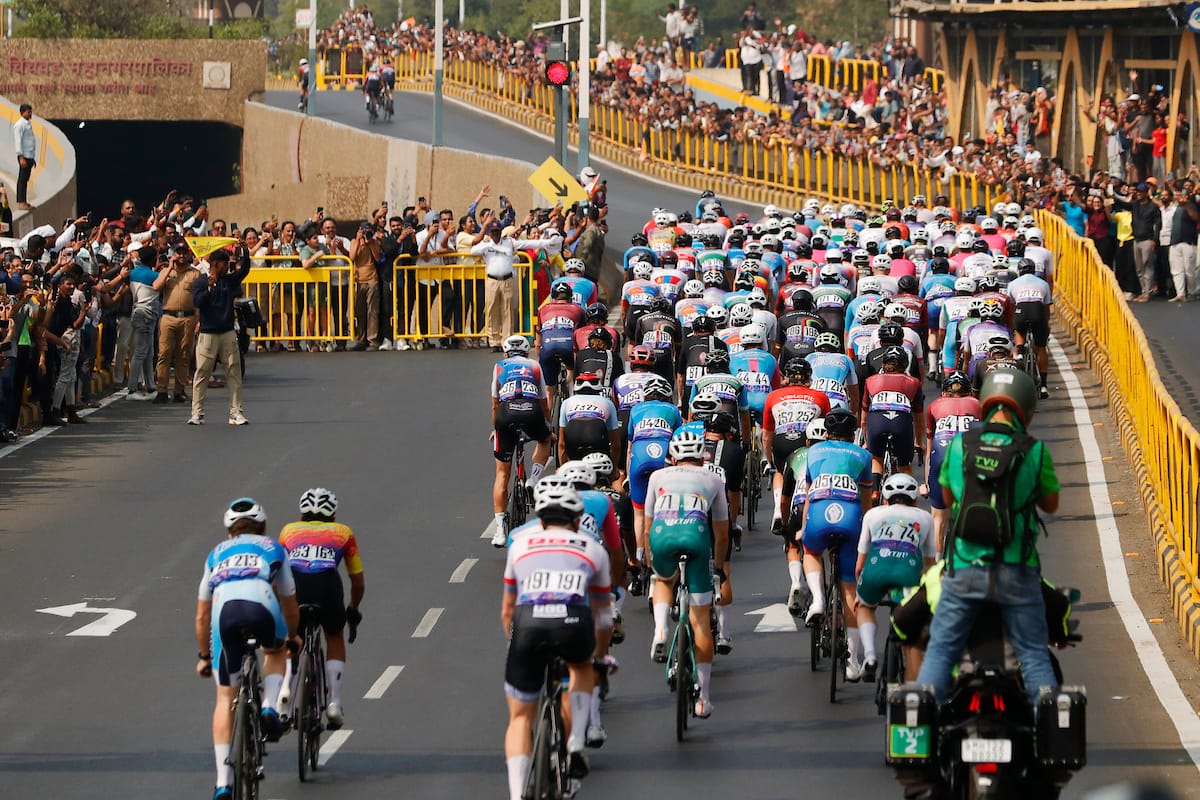
Based in the city of Pune, a city of roughly six million people in western India, the Pune Grand Tour was the country’s first-ever UCI-classified stage race and billed as “a watershed moment for India’s presence in the global professional circuit”. Raced across five stages, the Pune Grand Tour might have been a UCI 2.2 event but it attracted far more attention – both online and in person – than its fourth-tier classification might suggest. In fact, the crowds that turned up, particularly on the final stage, might be some of the biggest we’ve ever seen at any bike race, anywhere.
We thought we’d never top Rwanda.
Then came Stage 4 of the @PuneGrandTour.
About 1.5 million people cheering the riders through Pune.
Goosebumps. @Bajaj #PuneGrandTour pic.twitter.com/fiIhFTKnml
— 🟥🟥⬛️ ProCyclingStats.com (@ProCyclingStats) January 23, 2026
To get a first-hand view of what it was like racing on the streets of Pune, Escape spoke with overall race winner Luke Mudgway. The 29-year-old Kiwi has raced as high as the ProTeam level but since 2024 he has raced for the Li Ning Star Continental team based in China.
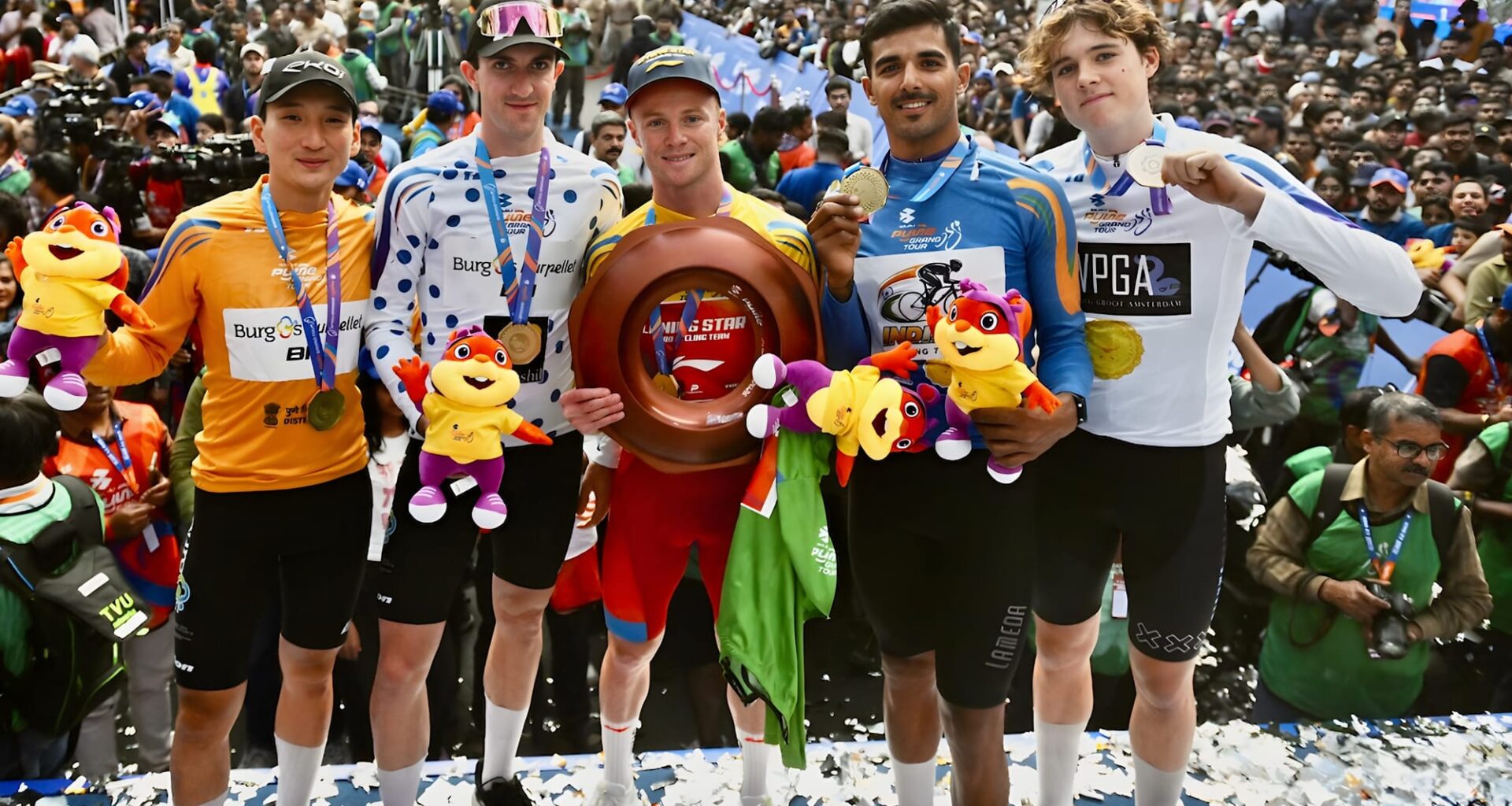
Mudgway and his team had a remarkable race. They won four of the five stages, with Mudgway winning two himself en route to overall victory, a win in the points classification, and the teams classification for Li Ning Star.
In the following interview Mudgway takes us behind the scenes of one of the most fascinating new races we’ve seen in a while. Speaking from his home in Girona, Mudgway also provides a fascinating perspective on what it’s like racing on the UCI Asia Tour more generally, and what a win like this means for him and his career. The following interview has been lightly edited for clarity and fluency.
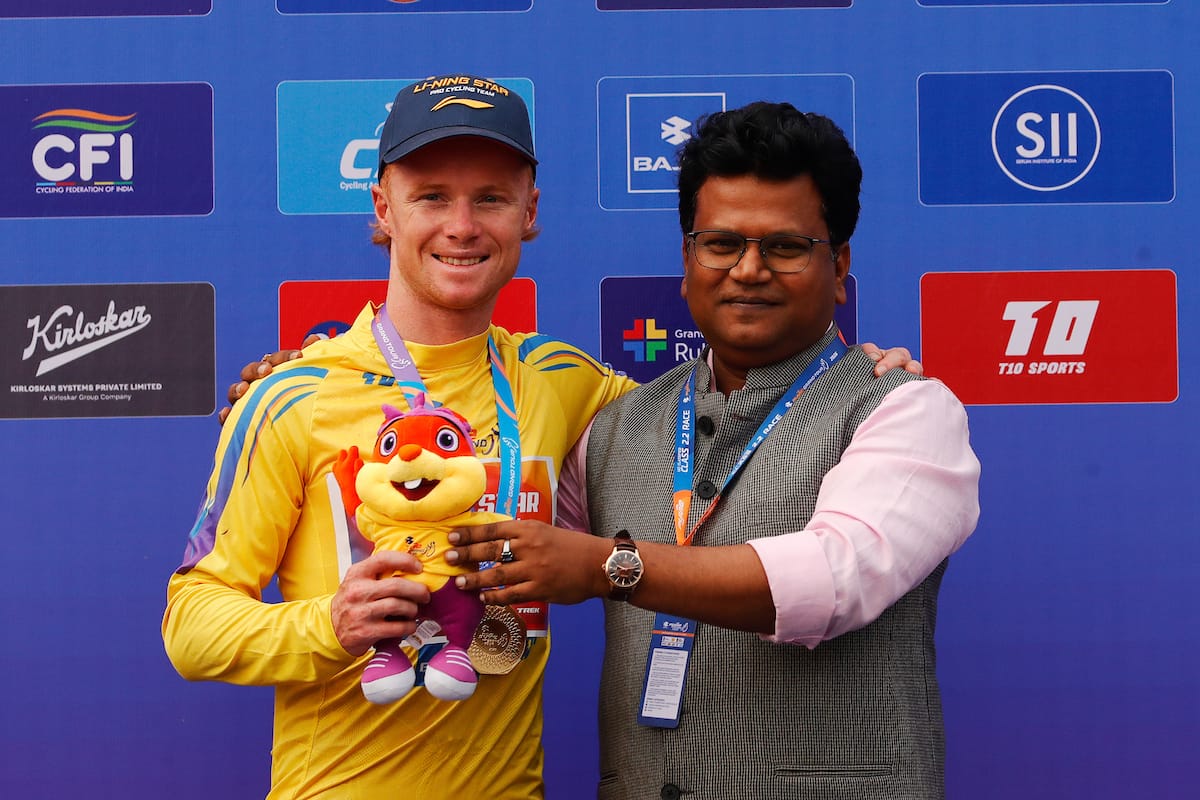 Mudgway after winning his second stage of the week.
Matt de Neef: What had you guys heard about the Pune Grand Tour before you headed over there?
Luke Mudgway: Not much at all, really. I just knew it was the first [edition of the] race. I basically just got on the flight and went there, and then, yeah, it was just massive.
I looked at the race program, and I could see that they had put quite a bit of prize money up, and I heard that the hotels were nice. I was like, ‘Maybe they’re trying to make it seem like a pretty cool first experience for us.’ But yeah, when I got there the hotels were just five-star with amazing chefs. We basically had our own apartments each. It was pretty impressive.
MdN: When did you have a sense that the organisers had gone all out? Was it at the airport pickup or once you got to the start?
LM: Basically the airport pickup. We got there, and there were a few people waiting for us as we exited, which is quite normal in Asia for a race. But yeah, they took us to the van, and they just had all these cars, loaded our bikes, and then a police escort to the hotel. Which, to be fair, we had to have. You can’t get through the traffic without a police escort. And even then it was still really congested. The traffic was the one thing that was just insane. If you missed the convoy it was pretty hard to get to the race.
And then we got to the hotel, and it was just like, wow. They opened the bonnet of the car to check for bombs. They had mirrors underneath the cars to check for bombs. All our bags went through screening, we had to walk through metal detectors, and then straight into the hotel.
Usually you get your room key, you go up to your room, and you’re sharing a room with your roommate. And I was with Cam Scott, and then I go in, and there’s basically a house. We have these two massive bedrooms, we both have our own bathroom, we have a kitchen, we have washing machine, dryer, we have this huge lounge area, outdoor balcony, and every one of us got it. That was one of the nicest hotels I’ve been in, for sure.
And then the restaurant was really, really nice as well. And basically it got to the point where the chef would come up and just ask what meal I’d like and then he’d go prepare it. We also had a vegan in the team and and he would go prepare him a vegan dish. There were probably 15 cooks there.
It was definitely another level, and something that you don’t expect for a 2.2 race. So it was quite impressive.
MdN: Did you get a sense of who was funding the whole thing?
LM: Yeah, it’s all government. So the deputy minister of that region was there quite a lot. He would come and the press and all the spectators would kind of engulf him. I assume it was the sports federation, but funded by higher-ups in the government.
The scale of it was incredible. Every road we raced on, they built for us. I think there was just under 500 km of racing, and they built every single road that we raced on, and we’re going over hills and all this kind of stuff. So the cost of that alone was pretty impressive.
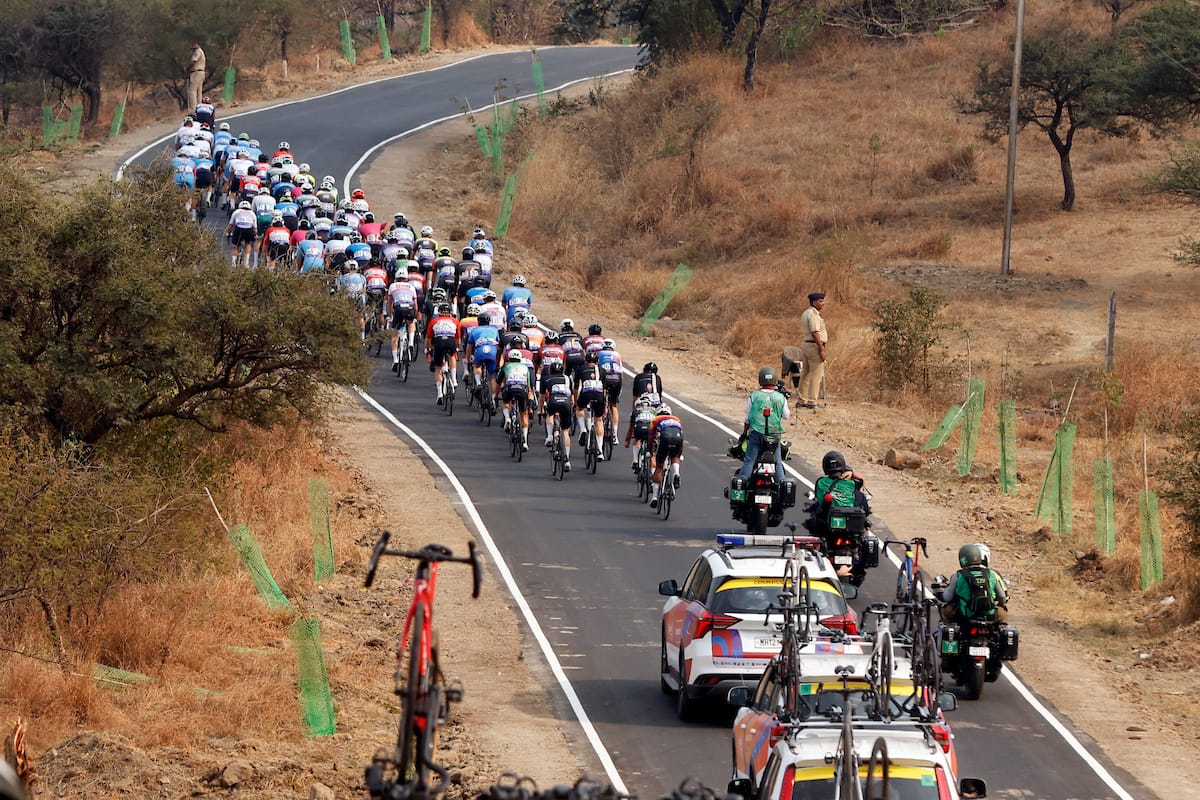 Brand news roads for a brand new bike race.
MdN: Tell me about these crowds. I’m keen to get a feeling from you about whether they were as big as they looked on social media.
LM: They were bigger. Even out in the middle of nowhere there was just a lot of people. That last stage, that whole circuit, there was people at least 10 deep. And in the interview, they’re like, ‘Oh, how many people do you think were out there?’ I really wanted to say, ‘I’m pretty sure there would be close to a million.’
This post is for paying subscribers only
Subscribe now
Already have an account? Sign in
Did we do a good job with this story?
👍Yep
👎Nope