
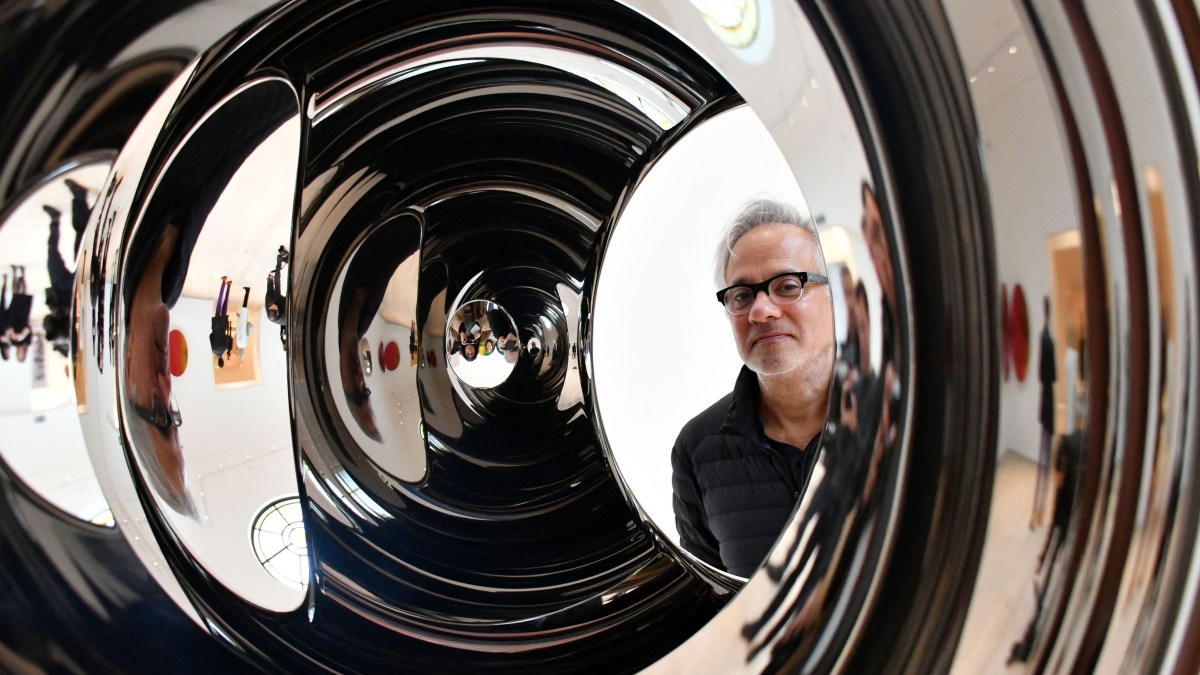
Sir Anish Kapoor is planning to send a sculpture the size of a house into space in a launch that will cost hundreds of millions of dollars.
The British sculptor suggested that the work would be visible from Earth and would highlight the “inestimable magic of space” in a protest against the commercialisation of the heavens.
“It is hard not to sound pompous, but what we are trying to do is bring back the early sense of adventure in space,” Kapoor, 71, told The Times on Thursday. “It was a whole new frontier, but now there is a sense we are conquering it for other purposes — it is all about money.”
Kapoor, who won the Turner prize in 1991, is known for bold works including the ArcelorMittal Orbit tower, Britain’s tallest sculpture, which was built for the London 2012 Olympic Games and helped to secure Kapoor’s place in the cultural icons section of UK passports.

The ArcelorMittal Orbit tower
JACK TAYLOR FOR THE TIMES
Pondering his new challenge, he said: “What is adequate? What can stand up against vast, eternal, cosmic space? It’s ambitious to put something in space which is visible from Earth.”
The Mumbai-born artist was tight-lipped on details, revealing only that the work “might” have mirrors to make it stand out to the naked eye, like his Cloud Gate in Chicago, which, inspired by liquid mercury, is made of polished stainless steel plates.

Cloud Gate, nicknamed “the bean”, in Chicago
LHONGFOTO/GETTY IMAGES
“You can just about see satellites, which are big but not huge,” he said. “I am thinking of something three to four times the size of a satellite — the size of a house. I doubt it will have writing on it, but it will be ‘interpretable’.”
Kapoor said that existing rockets would be able to deliver the sculpture into orbit. “There is all kinds of technology to make this possible,” he said. He acknowledged that “even sending a few kilograms into space costs a huge amount of money” and suggested the price tag would be in nine figures.
He was reluctant to name his backers, saying only that they were “not necessarily American” and did not include Elon Musk, whose Starlink network of more than 9,000 satellites in low-earth orbit are used by nine million people and made a profit of $72 million in 2024.
“I cannot stand Musk’s approach to space, which is deeply entrenched in money and gross capitalism. I also object to his political reach in the UK,” Kapoor said, in reference to Musk’s support for Tommy Robinson’s anti-migrant rally in London last September.
“Space politics is currently rather disgusting,” he added. “We are instead hoping to launch a work of art which is useless, which is something rather magical. The people backing me agree with this.”
Kapoor said he was inspired by the 1969 moon landing and the work of the International Space Station. The challenge, he said, was “physical, poetic and intellectual” and “not about occupying space”.
The sculptor, who was the first living artist to have a solo exhibition at the Royal Academy of Arts, in 2009, and was knighted in 2013, has been unafraid to use his work as a form of protest. Last year he backed Greenpeace when it hung Butchered on a Shell gas rig as part of its campaign against climate change.
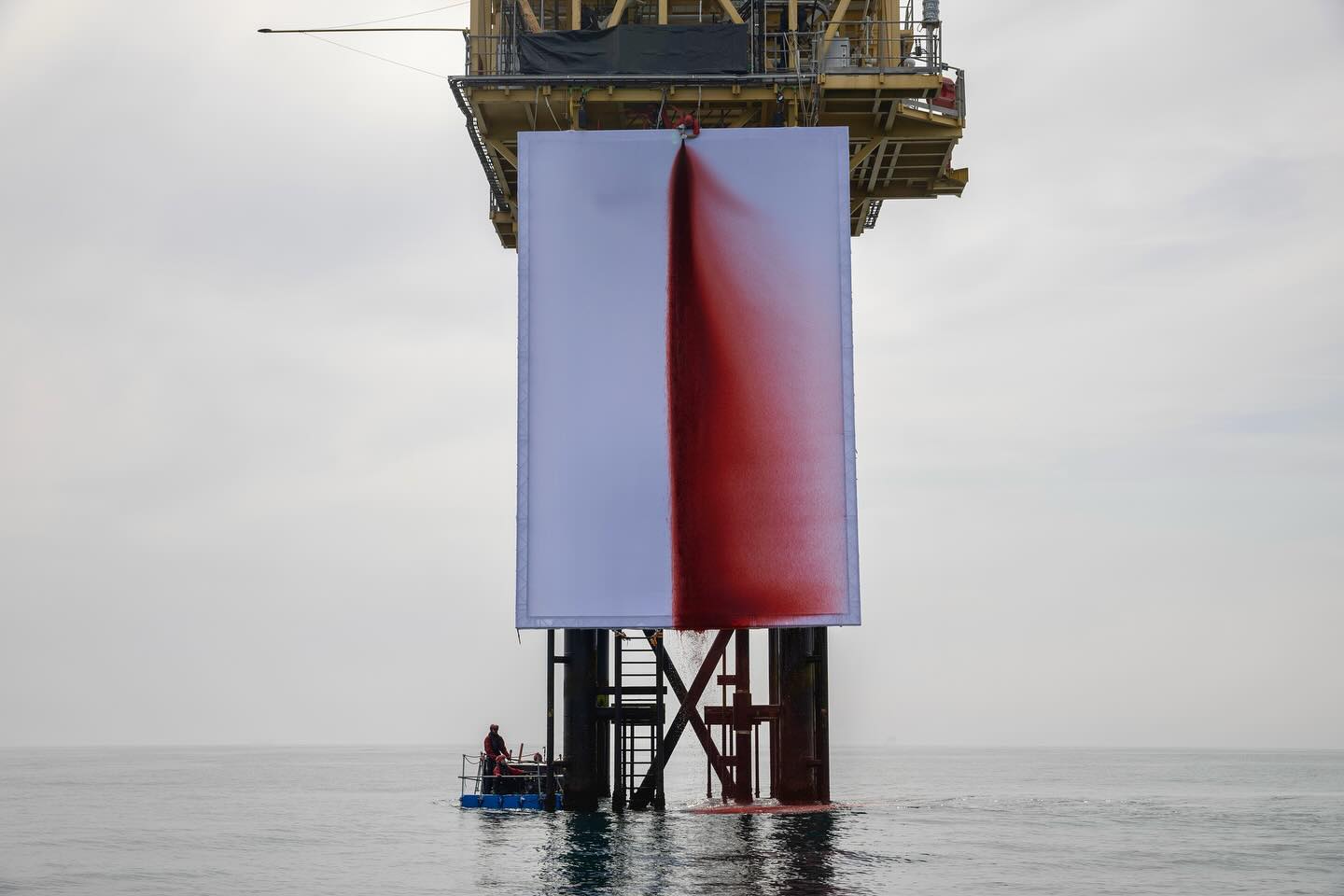
Butchered on a North Sea gas platform
His work has focused on the concept of infinity, and he said his interest in black holes in space was spurred by his artistic use of Vantablack, a black coating touted as the blackest known substance, which absorbs more than 99 per cent of light.
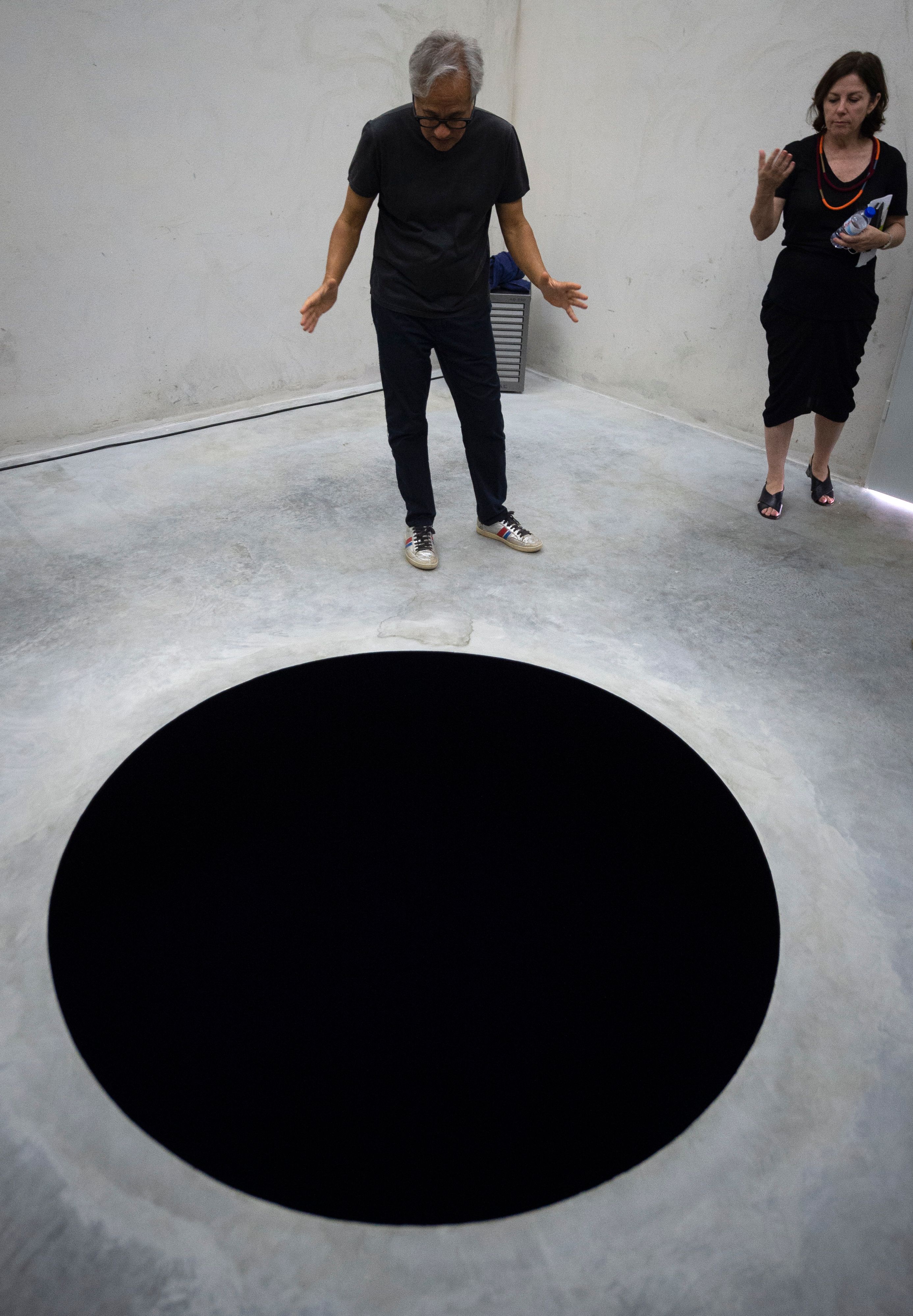
Kapoor with Descent into limbo in Porto, 2018
MIGUEL RIOPA/AFP/GETTY IMAGES
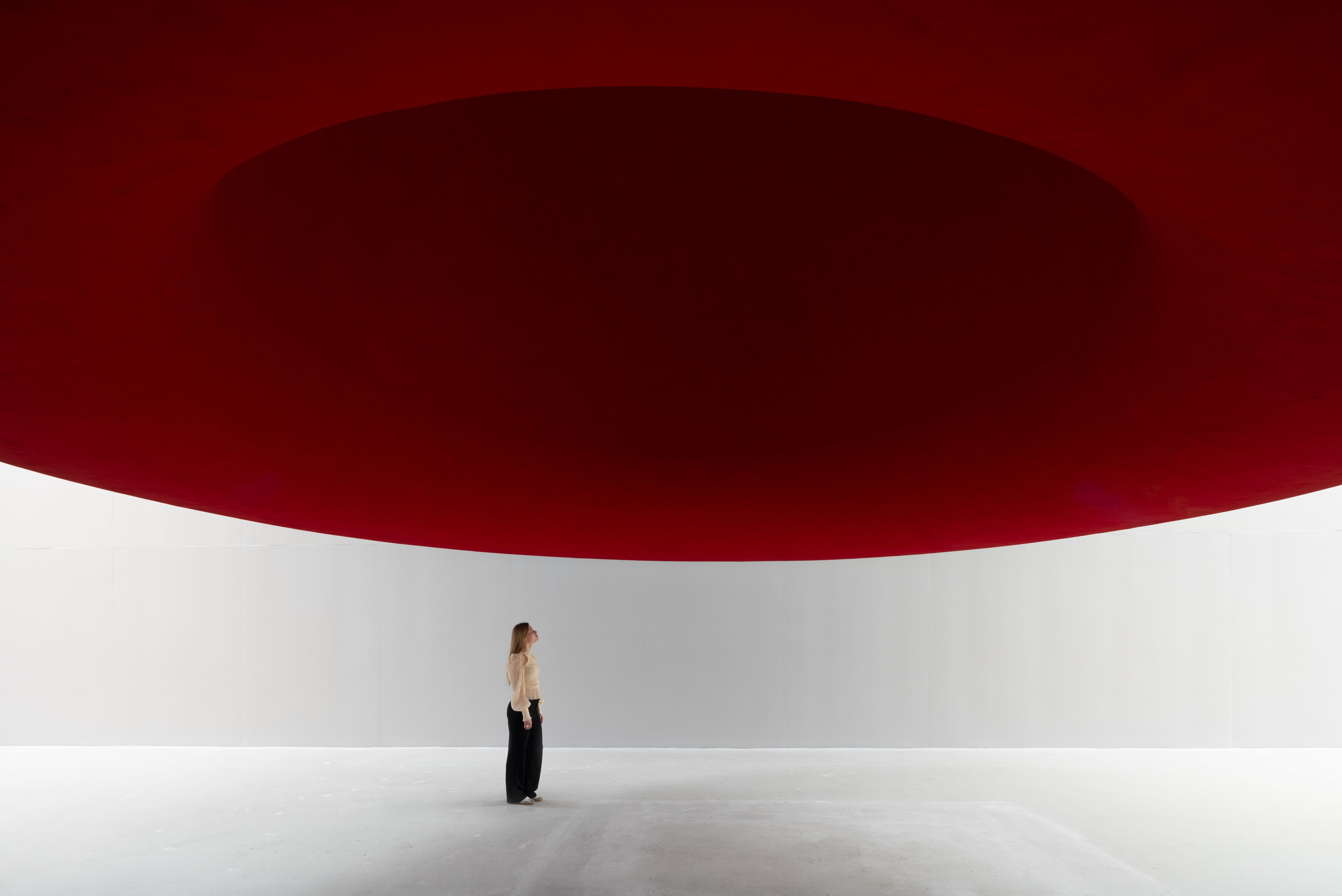
At the Edge of the World (1998)
DAVID STJERNHOLM
He will not be the first person to fire artwork into space. In 2014, the Japanese artist Makoto Azuma attached a bouquet of flowers to huge balloons that rose to 100,000ft, on the edge of space, where the petals detached and fell to Earth like confetti.
Four years later, the Mexican artist and musician Nahum sent up an interactive work to be put on the International Space Station and Trevor Paglen, an American, teamed up with the Nevada Museum of Art to launch the arrow-shaped sculpture Orbital Reflector into space.
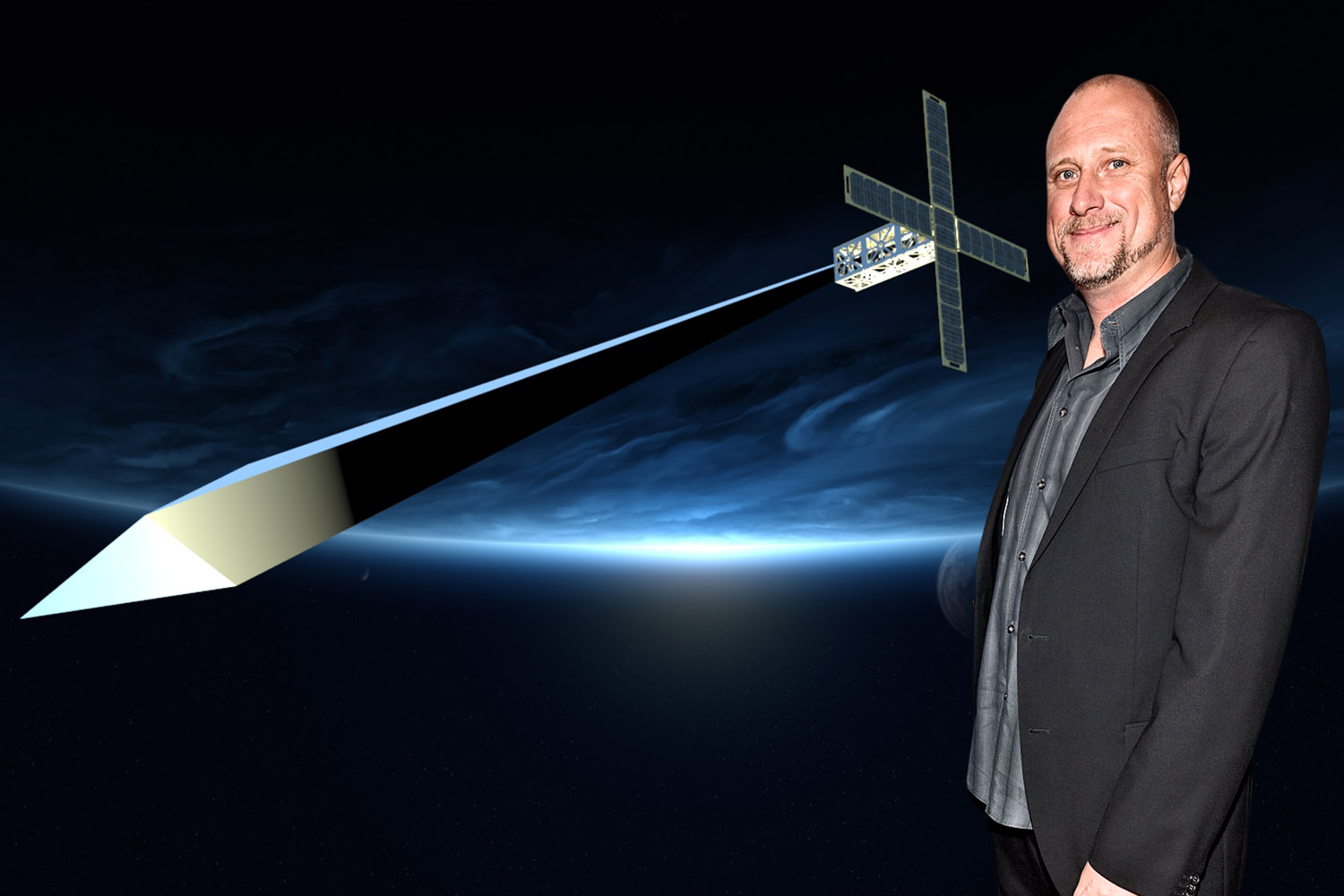
Trevor Paglen with a rendering of his Orbital Reflector
GETTY IMAGES
The record for the largest amount of art and culture packed into one launch goes to the two 1977 Voyager probes, which hold discs containing data about human life, language and history for aliens to study. Works by Bach, Mozart, Beethoven, Louis Armstrong and Chuck Berry were included, although the record company EMI refused to give the rights to include the Beatles’ Here Comes the Sun.
However, Kapoor’s sculpture will be the largest sent into space. “Many projects which start as fiction slowly become reality,” he said. “The aim is to poetically occupy the unoccupiable.”