

“I had a six-month period when it was just crazy, my usage was ridiculous. I was completely blacked out, I’d wake up and I wouldn’t even remember the conversations that I’d had with people the night before. I would be on the phone to people and saying all kinds of madness, having crazy conversations. The next morning, I wouldn’t remember that I even spoke to that person, never mind the conversation that we had.”
Striker Omar Bogle, who plays for Crewe Alexandra in League Two, is recalling to The Athletic the frightening moment last year when he became addicted to sleeping pills and painkillers.
He initially started taking the pills after suffering a back fracture during pre-season in the summer of 2024.
Bogle described the back fracture as the worst pain he’d ever felt. In agony and struggling to sleep, he turned to sleeping pills and, similarly to the painkillers he was taking, at the beginning, he found them helpful.
“But then it becomes about the feeling that it gives you,” he said. “They make you feel euphoric, make you relax and all the rest of it. You get addicted to the feeling then. That’s what it was for me. You become numb, you don’t really think about much, you don’t feel anything.”
However, the more he relied on sleeping pills, the less effective they became.
“They basically got to a stage where, no matter how much I was taking, they would knock me out for three or four hours and then you’d wake up.”
Bogle said it was around four weeks after he started taking the pills that he realised he was becoming dependent on them. From January 2025, his usage accelerated to an alarming level.
“No one knew the extent of what I was doing,” he said. “I never told anyone I was popping 18 or 19 of the things in the night. I never told that to anyone because I knew that would ring alarm bells. I wasn’t getting it from a doctor, I was outsourcing it.
“I already had my own demons and battles that I fight daily anyway, because of things that have happened in my life, things I go through. The drugs just amplified it. It made me not think, it made me not feel. I was in La La Land. They are your friend until they’re not your friend anymore. The come-downs were ridiculous. And obviously, because of my usage, because of how much I was taking, I was in a constant state of sedation all the time.”
Bogle said his addiction affected his relationship with his family and changed him as a person. He became more withdrawn.
His behaviour became erratic, as he started drinking and partying more. He struggled to stay fit during the season — he kept picking up injuries because he wasn’t getting his proper recovery sleep.

Bogle (left) playing for Crewe (James Gill – Danehouse/Getty Images)
He thought he was going to have to retire from the game he loved, aged just 31, as his performances were so below par.
“Football became so hard for me and it became so difficult to do the basics,” he explained. “To control a ball, to ride a challenge, to make a run in behind, everything felt so hard. I felt like I lost everything. Obviously, I couldn’t understand why, and I wasn’t linking it with the drugs.”
It was only following an intervention from his agent, Jake Speight, that Bogle ended up in rehab in July. By November, after a full recovery, Bogle was back on the pitch for Crewe against Shrewsbury Town. He scored.
Bogle’s story is not an isolated one. He’s not the first footballer to document their struggles with sleeping pills.
Earlier this month, former England midfielder Jonjo Shelvey explained on the Undr The Cosh podcast how he had become addicted to sleeping pills because of the loneliness he felt while playing in Turkey. Shelvey, who played for Liverpool, Swansea City and Newcastle United in the Premier League, said his dependence impacted his relationship with his children.
Former Manchester United midfielder Darron Gibson also developed a sleeping pill addiction, telling The 42 how he was taking 12 to 14 tablets a night at his worst point. Arsenal’s Christian Norgaard spoke to The Times about his previous struggles with sleeping pills while at Brondby in his native Denmark. He believed it helped him get a full night’s sleep before a game, thereby improving his performance.
In 2023, former Spurs and England midfielder Dele Alli told The Overlap how he had become addicted to sleeping pills to block out past traumas, such as being molested by a friend of his mother’s when he was six. “I would take them throughout the day, to just escape, sometimes from 11am if I’ve got the day off,” he told The Overlap. “I would never take them if I’m playing, but I’d start early if I had the day off, just to escape from the reality. It started with a doctor — a doctor was giving (sleeping pills) to me to sleep, and then it turned into more than that.”
Sleeping pills are easy to access. Players are also allowed to take them, as they are not on the World Anti-Doping Agency’s (WADA) banned list.
However, experts have warned about their addictive nature.
“I think most clubs have got at least three or four people who are taking sleeping pills on a regular basis,” James Wilson, a behavioural sleep expert who has worked with EFL and Premier League clubs, tells The Athletic. “(Those are) quite high numbers. Some clubs, you hear everyone is taking them, and they are being handed out like candy.”
According to former Northampton Town defender Ryan Cresswell, it’s “rife” throughout the game. In a stark warning to others, he tells The Athletic he hit “rock bottom” after becoming hooked on them.
Cresswell said his cycle was painkillers, sleeping tablets and then alcohol, with that vicious loop starting when he sustained a serious knee injury. Sleeping tablets were the easiest to get addicted to, he said, and that zopiclone, a prescription sleeping pill used to treat insomnia, was the worst for him.
He would prefer a limit on the amount of sleeping tablets allowed in the system rather than the ban that was given to painkiller tramadol in January 2024. Anybody found with tramadol in their system faces the prospect of a ban.
“My honest opinion of sleeping tablets is when you very first have one, and it does what it says on the tin, then you think, ‘Wow’, I have just had eight hours solid sleep,” he tells The Athletic. “But it leaves an aftertaste in your mouth, an aftereffect of drowsiness. You come around from that because you’ve had such a good sleep.
“Sleeping tablets, you take one, go to sleep. You fast-forward six months, and you’re not just taking one, once a week to go to sleep, that’s the nature of addiction… it craves more of something that it thinks is good. So players take more.
“And the process of that is you go into blackout, you can still be awake, and you blackout, you are not in control of anything you’re doing.
“It’s a form of psychosis, really. And if you look at the side effects of what sleeping tablets do, it messes with your mind. You think you see things that you don’t, that you hear things that you can’t, it’s such a dangerous substance to put into your system.
“I hit rock bottom. It’s scary that medication is so easy to get in society, not just football. The usage of sleeping tablets is horrendous. Hundreds of players are in denial about the amount they have. The number of people I’ve spoken to, and when I do my talks and people who put their hands up, young professionals, it’s rife across the sport.

Norgaard struggled with sleeping pills during his time at Brondby (Boris Streubel/Bongarts/Getty Images)
“I came to a point when it was one way or the other. That’s literally it, when you’re at the point of desperation, at complete and utter devastation. You lose yourself, your wife, your kids, your house, cars, jobs, the people you love around you. That state. Players are fearful of coming out and saying they are addicted to something because of the potential backlash.”
As more players open up about their struggles with sleeping pills, it raises the question of why footballers may be more vulnerable to their use than those in other professions.
One factor is their increasingly hectic schedules and intense travel demands.
“The demands placed on Premier League footballers are relentless,” Geoff Scott, former head of medicine and sports science at Tottenham Hotspur, tells The Athletic. “Players may compete in Europe on a Wednesday (or Tuesday or Thursday) night, then return to domestic action at the weekend. This schedule involves extensive travel and frequent late-night matches.
“In the build-up to a game, players experience high levels of stimulation — adrenaline, heightened focus, and often caffeine — all of which help them perform at peak intensity. However, once the match ends, many struggle to switch off. For some players, this isn’t a problem, but for others, falling asleep after a night game can be extremely difficult.
“As a result, some players look for ways to help them sleep, and sleeping tablets can seem like an easy solution. These medications can help induce relaxation and promote sleep, so on the surface, it’s understandable why players might consider them.
“However, sleeping pills also come with significant drawbacks. They can be addictive, have negative effects on the body, and are not a healthy long-term solution.”
Wilson said, from his experience, the footballers turning to sleeping pills were often those with niggling injuries.
He warned that this could actually have the opposite effect intended, as players using sleeping pills were not getting proper recovery sleep.
“I think we are becoming more wary,” he tells The Athletic. “What I found heartbreaking with the Dele interview was that he thought sleeping pills were helping him sleep, but they don’t — they knock you out.
“The most important night’s sleep for a player is the night after a game in terms of recovery. It’s more difficult because of the very nature of what they’ve just done. But four hours of poor-quality sleep is better for recovery than eight hours on sleeping pills, although it doesn’t necessarily feel like that. It’s a real sad issue, the pill not doing what it should do, and it can lead to addiction.”
Scott agreed that their use could, in fact, heighten risk of injury — which is exactly what happened with Bogle last season at Crewe.
“Like all medications, sleeping tablets have a half-life,” he said. “Even if taken in the evening, they can still be affecting the body the following day during training or competition. This means a player may not be operating at 100 per cent physically or mentally, increasing the risk of poor performance or injury.”
They both said there were issues around sleeping pills when players reported for international duty, which was outside a club’s control.
Experts were eager to emphasise the importance of education around sleep.
“Sleep is the foundation of creating success in any of the other performance domains,” Anna West, a sleep and recovery specialist who has worked with clubs such as Brentford — helping Norgaard — and Arsenal, tells The Athletic.
“We are dealing with young, healthy, active people, so theoretically, we should not medicate them unless there’s a clinical diagnosis behind it. We should teach them methods to deal with poor sleep, and we should not create a dependency on a tablet to be the source of a solution, whether it’s zopiclone or melatonin. Education is just as powerful.”
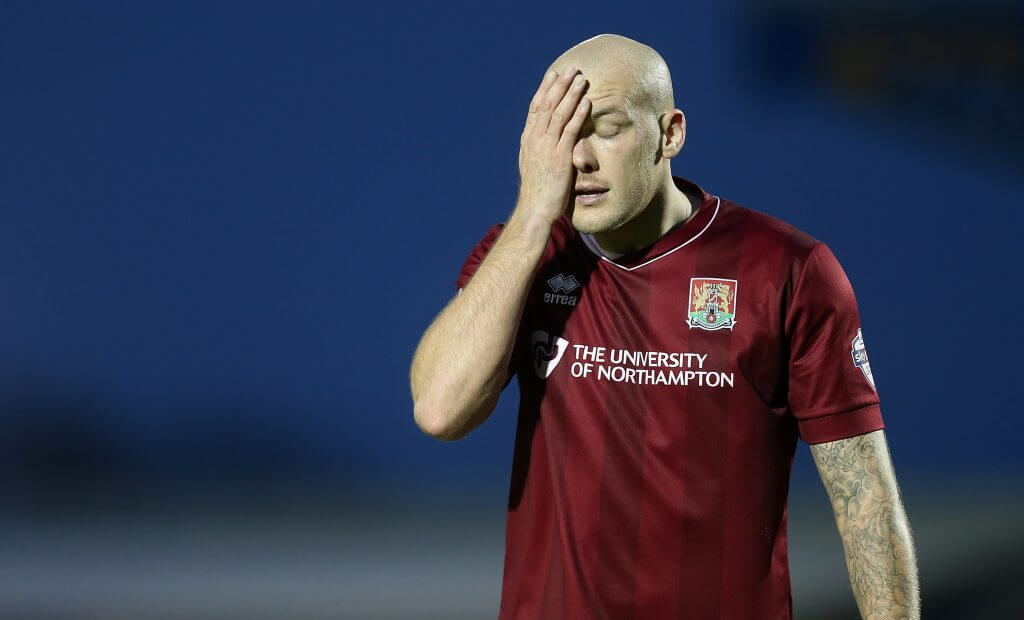
Cresswell said he hit “rock bottom” when taking sleeping pills (Pete Norton/Getty Images)
Scott agreed. He said that because access to sleeping pills was relatively easy, it increased the risk of misuse, which was why education was so key.
At Tottenham, he said they regularly gave presentations to players explaining why the club wouldn’t provide sleeping medication, and why they should avoid seeking it elsewhere.
The Professional Footballers’ Association (PFA) tell The Athletic that it aims to catch any players facing wellbeing difficulties before they turn to outlets such as sleeping pills or other substances. Via the union, players can access therapeutic support, but in more serious situations, they can also be referred for residential rehab. That is free to PFA members.
Bogle is now looking forward again. He’s hoping to make his mark in the second half of the season as Crewe look to cement a playoff spot.
In a message to other players about sleeping pills, he said: “Be careful of how potent they can be and how easy it is to get addicted.
“If players get to that stage where they are addicted and they feel like they can’t be without, I’d just say speak to someone close to you, not necessarily even about the usage, but about the things you’re going through and feeling. It’d be easier to then get help for the drugs.”
If you would like to talk to someone having read this article, please try Samaritans in the UK or U.S. You can call 116 123 for free from any phone